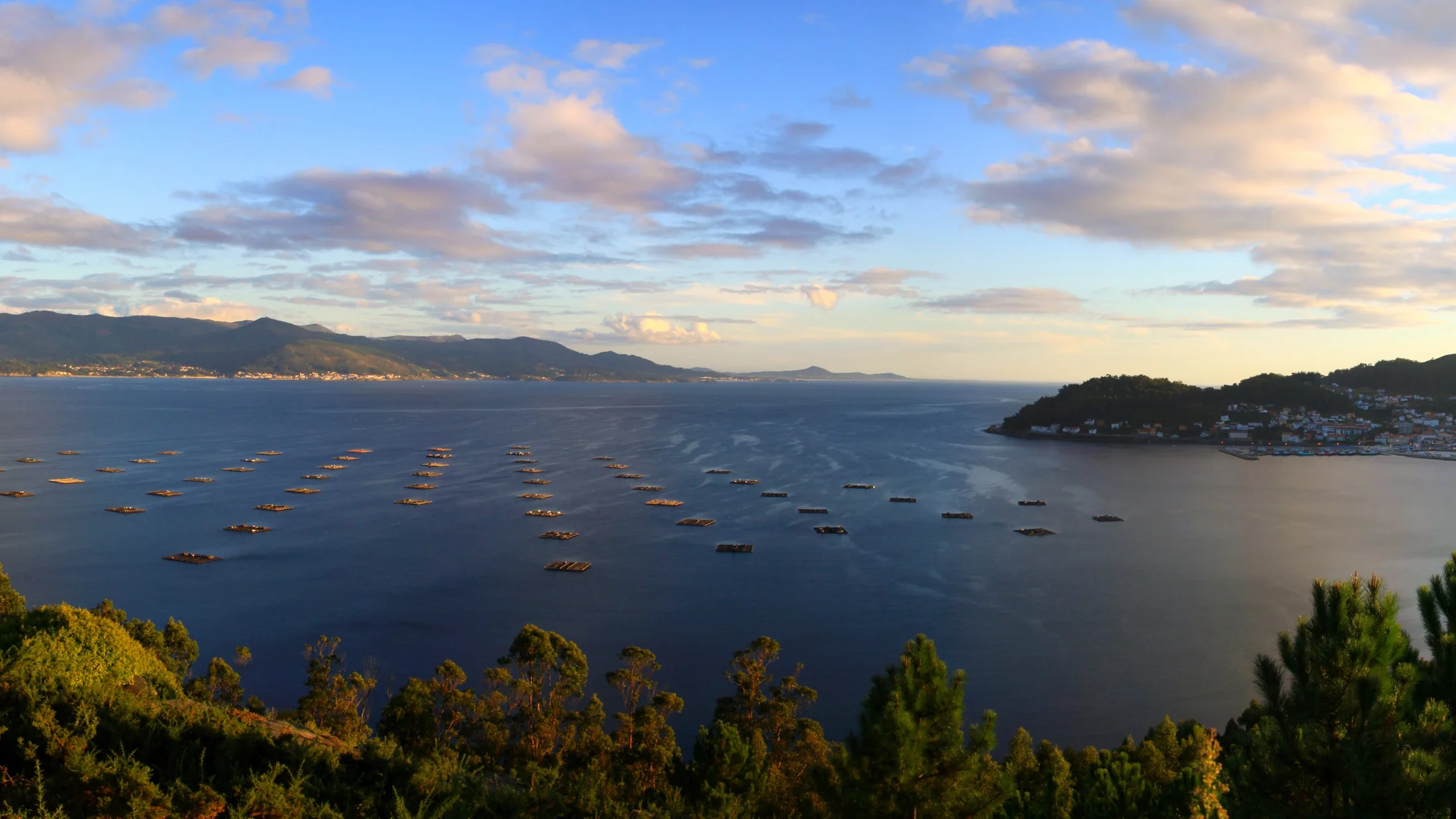
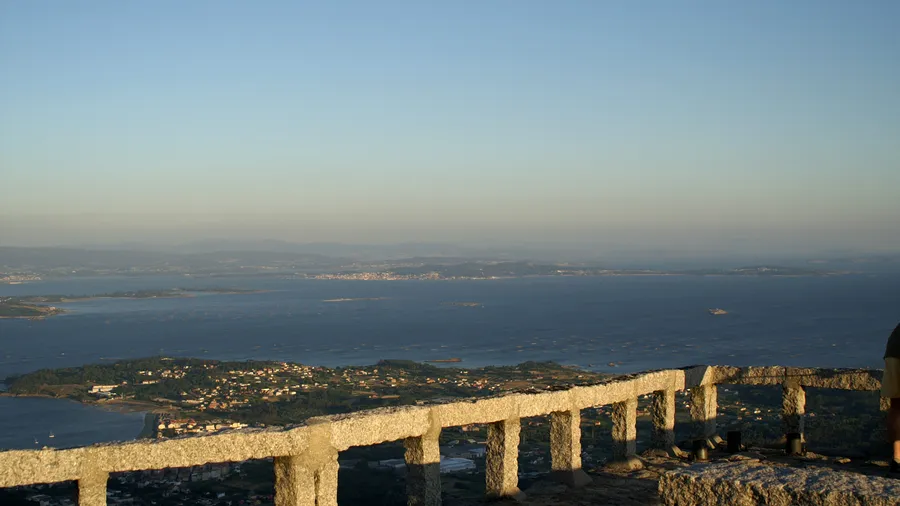
The Ría de Muros e Noia occupies the southernmost position among the Rías Baixas, where the Galician coast transitions towards the rugged character of the Costa da Morte. Five municipalities line its waters — Muros, Noia, Outes, Porto do Son, and Lousame — each with its own personality but united by a sea-based economy. The ría's calmer waters sustain one of the most productive shellfish beds in Galicia, where Noia cockles have earned recognition for their quality and central role in the livelihoods of shellfish-gathering families.
The ría's beaches offer notable variety within a relatively compact area. Ancoradoiro, in Porto do Son, stretches out as a white-sand beach sheltered from direct swell. As Furnas, also in Porto do Son, features rock formations that create natural pools at low tide. San Francisco beach in Muros sits just metres from the historic centre. Along the southern shore, beaches are more exposed and receive some wave action, making them a good choice for those who prefer livelier water. The smell of salt and seaweed blends with that of the wet grass growing right to the sand's edge.
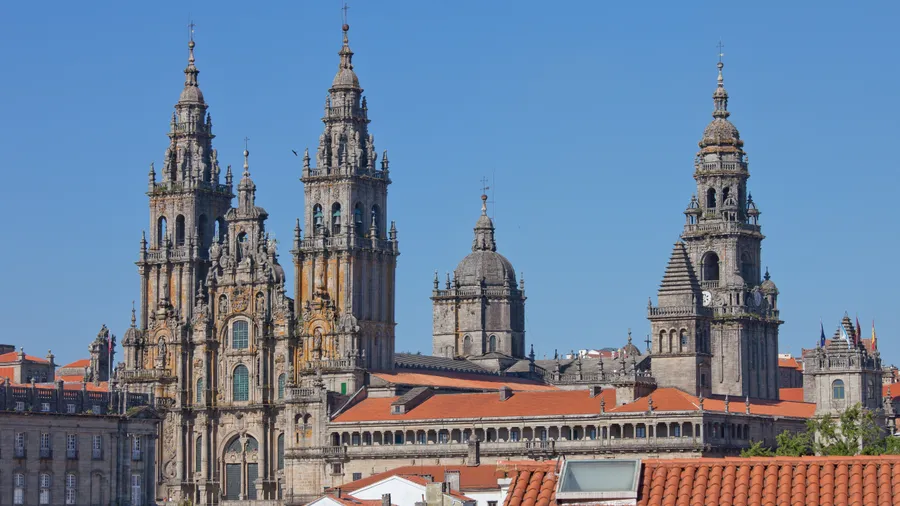
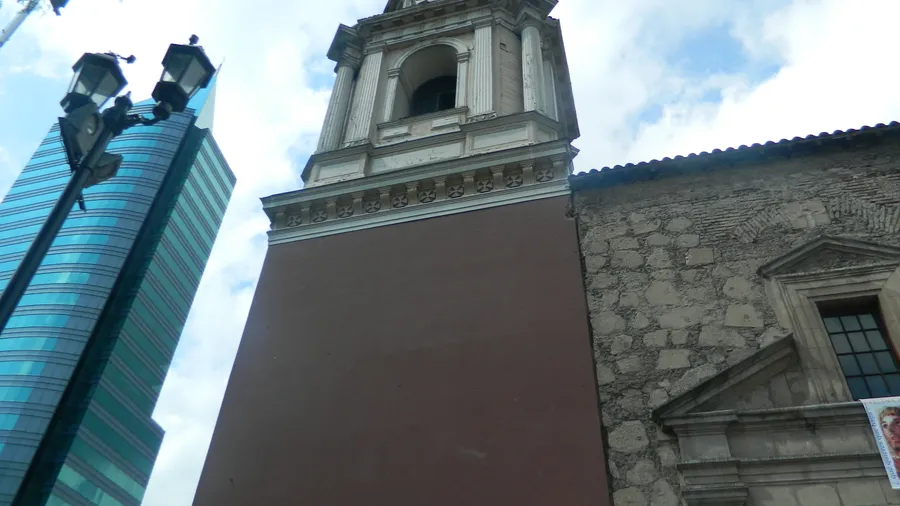
Historic heritage centres on the towns of Muros and Noia, both designated Historic-Artistic Sites. Muros preserves a medieval quarter of arcaded streets with granite colonnades, fish auction halls, and houses displaying noble coats of arms on their facades. Noia, at the head of the ría, holds the church of Santa María a Nova with its collection of medieval guild tombstones in the churchyard — one of the largest in Europe — where each slab shows the deceased's trade carved into stone. The Castro de Baroña in Porto do Son is the best-known Iron Age hillfort in Galicia: a fortified settlement on a rocky headland jutting into the sea, inhabited between the first century BC and the first century AD.
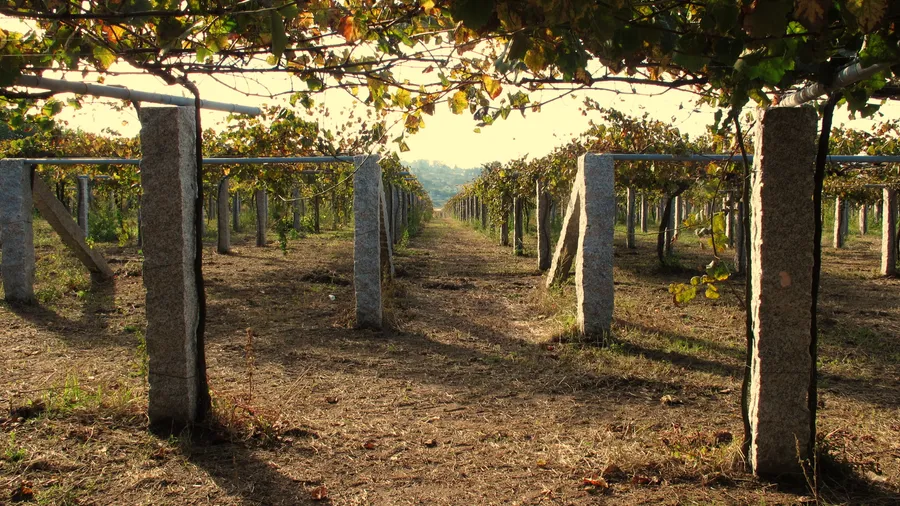
The cuisine revolves around shellfish and fish. Noia cockles are steamed or baked into empanada pies. Goose barnacles from the outer coast, razor clams, regular clams, and variegated scallops round out an offering served in the taverns and restaurants of both towns. Maize-flour empanadas filled with sardines or zorza sausage are a local speciality not always found on tourist menus. Rías Baixas DO wines, made from albariño grapes grown just kilometres from the ría, accompany every table.
Coastal trails link beaches and lookout points along both banks. The Monte Enxa route above Castro de Baroña provides views of the coastline and the archaeological site from above. Inland, the River Tambre meets the ría near Noia, and its lower course allows walks through riverside woodland of alder and willow. The shellfish-gathering community, predominantly women, works the ría's sandbars at low tide — an everyday scene that defines this stretch of Galician coast.