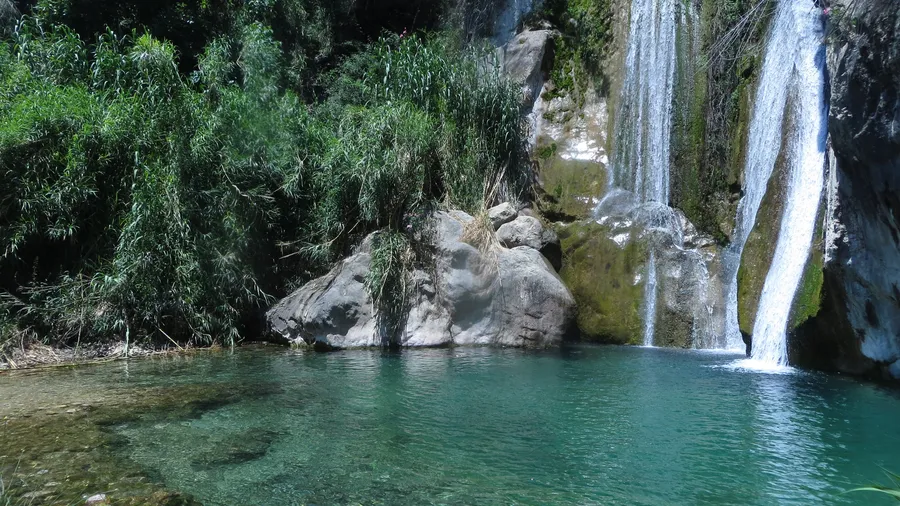
The essentials of Parque Natural del Carrascal de la Font Roja

  • • Two bioclimates in one park: Mediterranean and Atlantic
  • • Relict yews surviving from colder eras on the northern slope
  • • Menejador summit at 1,356 m with views to the Mediterranean Sea
  • • Cava de Don Miguel, an eighteenth-century snow well
  • • 11 marked hiking trails through centuries-old holm oak forest

Description

The Carrascal de la Font Roja Natural Park protects 2,298 hectares of Mediterranean forest in the Sierra del Menejador, between the municipalities of Alcoi and Ibi in northern Alicante province. Declared a natural park in 1987 by the Valencian Government, it is one of the best-preserved forest areas in the entire Comunitat Valenciana. Its name comes from the iron-rich spring that emerges on the northern slope, whose reddish tint stains the streambed stones and gave rise to the place name.

The vegetation shows a vertical distribution that changes across a few hundred metres. The northern slope, damp and shaded, hosts a deciduous woodland of Portuguese oak, ash, Montpellier maple, and yew — a plant community more typical of northern Spain than the dry Mediterranean. The yew, a relict species from colder climates, survives here in small clusters that evidence the territory's climatic evolution. On the southern slope, vegetation is strictly Mediterranean: holm oaks form a dense forest whose understorey includes hedgehog broom, gorse, Mariola sage, pebrella mint, and thyme. This duality of aspects turns the park into a natural laboratory where two bioclimates coexist in a compact space.

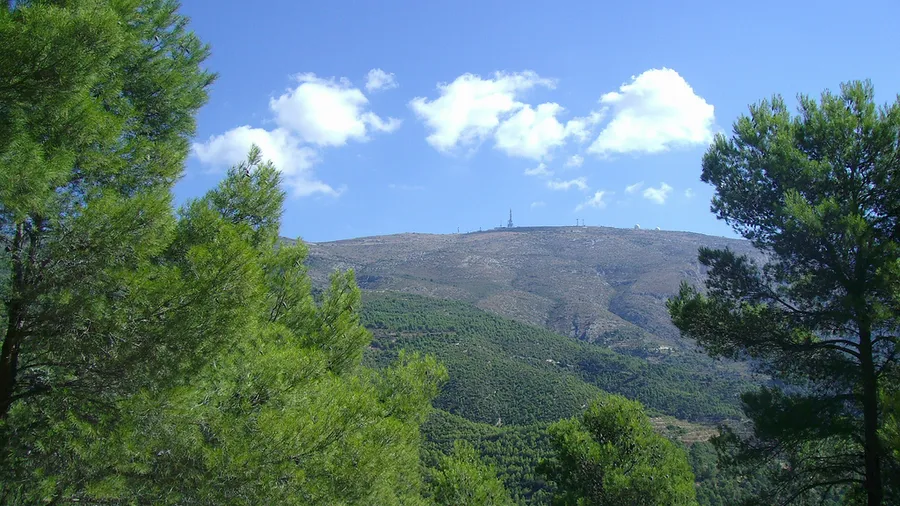
The park's highest point is El Menejador at 1,356 metres, from where the comarcas of l'Alcoià, El Comtat, and Foia de Castalla spread below. On clear days, the view reaches the Mediterranean Sea some 40 km away in a straight line. The limestone formations have produced dolines, sinkholes, and an underground karst system that feeds the park's springs. The Cava de Don Miguel, an eighteenth-century snow well, recalls the old ice-storage and transport industry that operated in these mountains until the early twentieth century.

Wildlife includes wild boar, genet, badger, and red squirrel. Among raptors, Bonelli's eagle, sparrowhawk, and kestrel are present. Reptiles are well represented, with the spiny-footed lizard and ladder snake. In spring, wild orchids bloom in forest clearings, and the crested tit sings from first light until late afternoon.

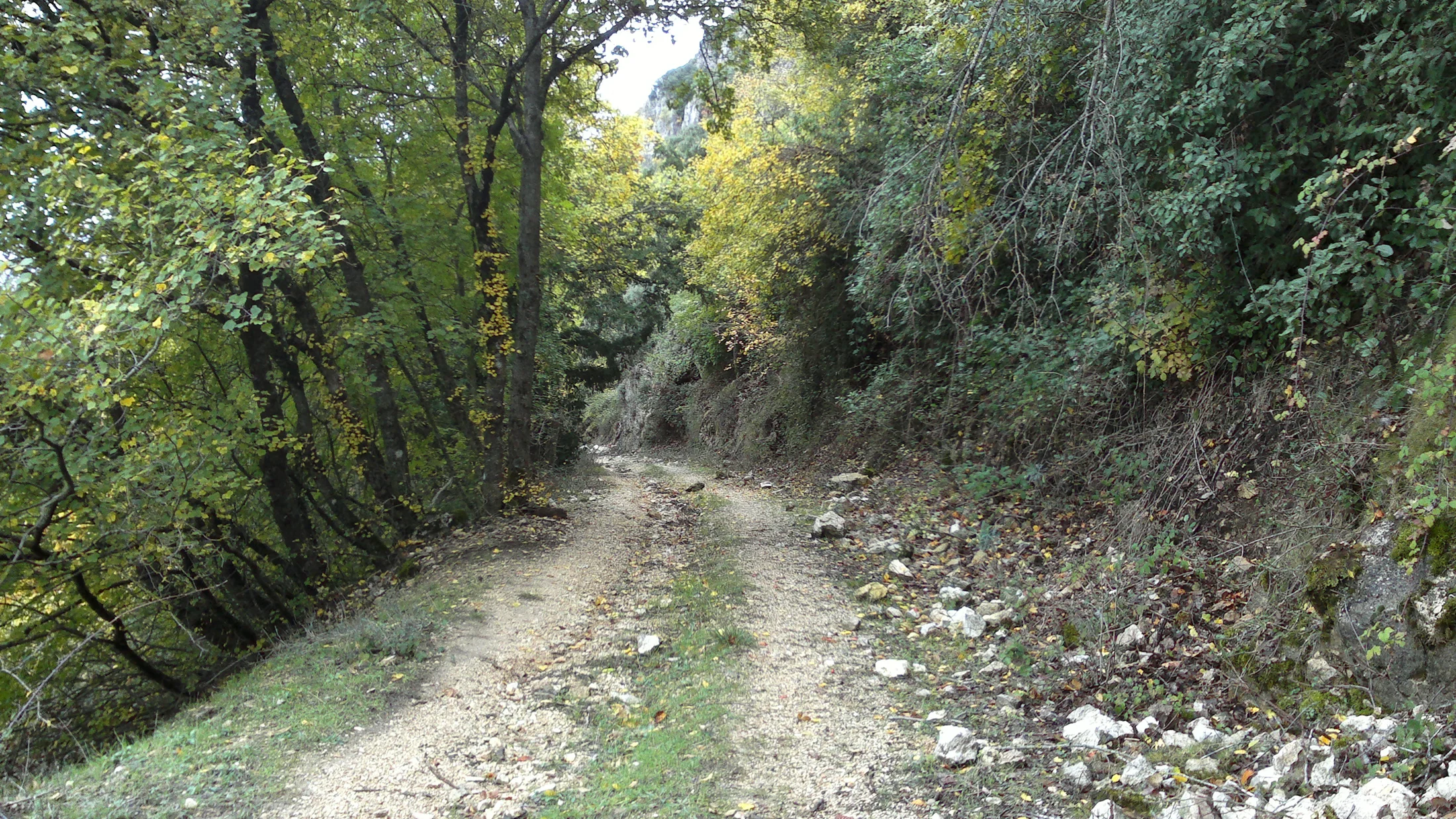
The trail network offers 11 marked routes covering the park's main ecosystems. The Menejador route climbs to the summit along a cobbled path through holm oaks. The Barranc de l'Infern trail descends through the northern ravine amid Atlantic-type vegetation. The interpretation centre, beside the Font Roja Sanctuary — a fifteenth-century building still functioning as a guesthouse — provides maps and documentation on the park's geology, flora, and fauna. The cool air beneath the centuries-old holm oaks, even on the hottest July days, is one reason the people of Alcoi have used this sierra as a summer retreat for generations.
Practical information

Everything you need to know for your visit to Parque Natural del Carrascal de la Font Roja

How to get there
The park is 11 km from Alcoi via the CV-797 road. From Alicante city, it takes about 55 minutes via the A-7 and CV-795. Buses connect Alicante and Valencia with Alcoi, from where a private vehicle or taxi is needed to reach the park. Free parking next to the Font Roja Sanctuary.
Area Information
The park spans Alcoi and Ibi, in the comarca of l'Alcoià. The Font Roja Sanctuary operates as a guesthouse. Interpretation centre beside it. Industrial Alcoi contrasts with the park, located just 11 km from the town centre.
Geography
Sierra del Menejador, between Alcoi and Ibi, in northern Alicante province. Summit at 1,356 m. Limestone terrain with dolines and underground karst system. Two slopes of contrasting character: damp and shaded north, dry and sunny south.
Flora & Fauna
Northern slope: Portuguese oak, ash, Montpellier maple, yew. Southern slope: dense holm oak forest with gorse, Mariola sage, pebrella mint, and thyme understorey. Wildlife: wild boar, genet, badger, red squirrel, Bonelli's eagle, sparrowhawk. Wild orchids in spring.

Things to do

Find the best plans and things to do in Parque Natural del Carrascal de la Font Roja

20

Accommodations

Best accommodation options in Parque Natural del Carrascal de la Font Roja

Loading accommodation options...

Frequently Asked Questions

Get answers about Parque Natural del Carrascal de la Font Roja

The car park area and the surroundings of the Font Roja Sanctuary are accessible. Some short routes have adapted paving. However, most trails are on dirt or uneven cobblestones and are not wheelchair-friendly. The interpretation centre is fully accessible.
Yes, very noticeable. The north slope has deciduous woodland with Portuguese oak, maple, and yew, similar to what you would find in northern Spain. The south slope is a typical Mediterranean holm oak forest with aromatic scrub. In a one-hour walk you can experience both ecosystems, making the park quite unusual.
Yes, the sanctuary functions as a guesthouse and offers rooms at moderate prices. It is an appealing option for those wanting to start early and walk the trails at first light. Advance booking is recommended, especially on spring and autumn weekends.
The Menejador route is the most popular, covering about 5 km to the summit with panoramic views of the comarca. For biodiversity, the Barranc de l'Infern trail on the north slope passes through the Atlantic-type vegetation zone with yews and maples. Both are moderate difficulty and take 2-3 hours.
Yes, that is one of the park's draws. The altitude (between 1,000 and 1,356 m) and the shade of centuries-old holm oaks keep temperatures 5 to 8 degrees below those in Alicante city. The people of Alcoi have historically gone up to Font Roja in summer for exactly this reason.