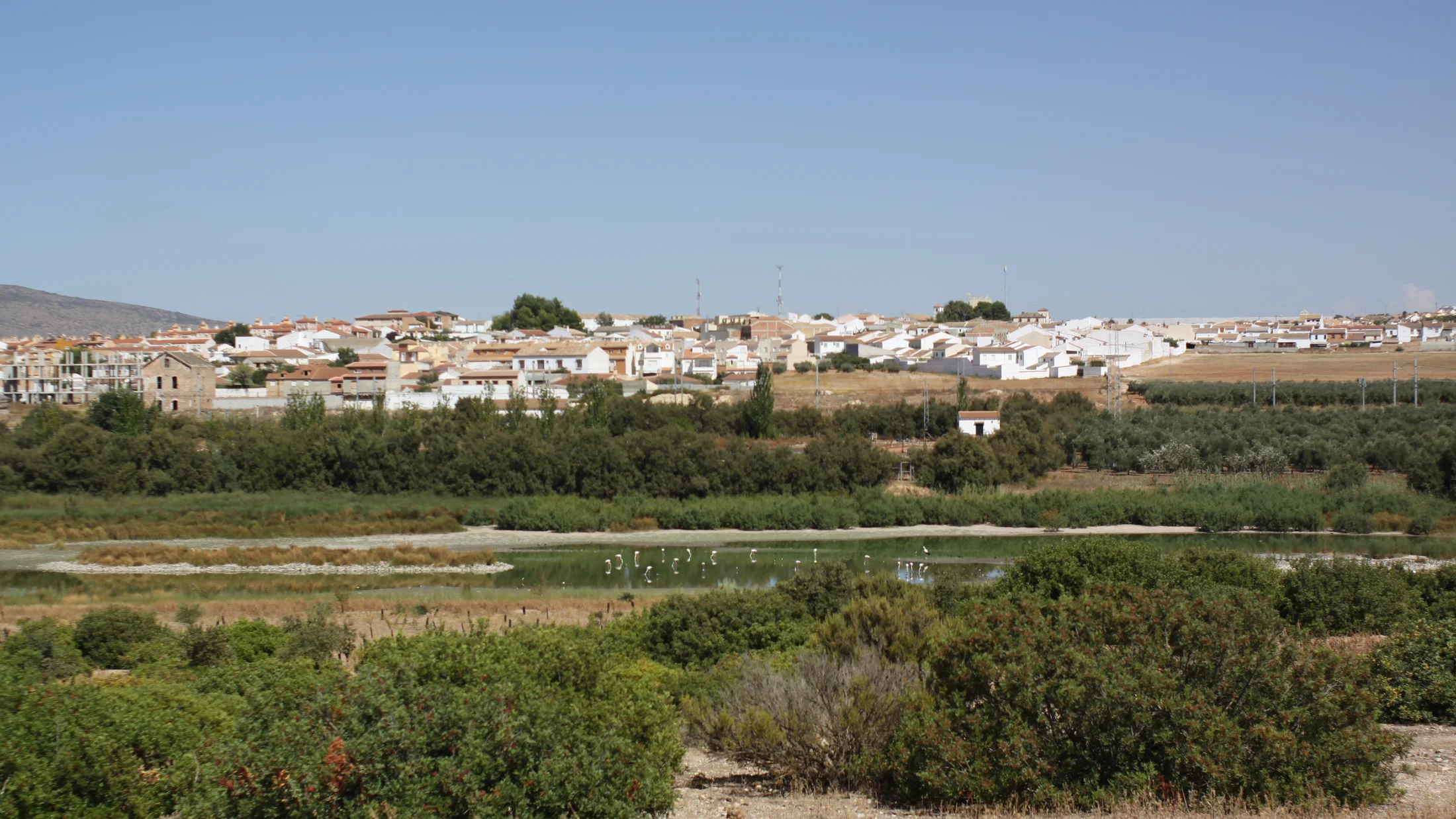
Laguna de Fuente de Piedra fills an endorheic basin of 1,364 hectares at the heart of the Antequera district, 410 metres above sea level. It is the largest inland wetland in Andalusia and the most extensive salt lake on the Iberian Peninsula. The water level fluctuates with seasonal rainfall: at its fullest, the lagoon stretches 6.5 km long and 2.5 km wide. Its clay bed retains salts that give it salinity comparable to seawater, and when the water drops in summer the surface turns white with crystallised chlorides and sulphates. From the southern shore, a faint brine scent drifts on the breeze crossing the plain.
What sets Fuente de Piedra apart from other Spanish wetlands is its colony of greater flamingos (Phoenicopterus roseus). Each spring, between 15,000 and 20,000 breeding pairs gather here to nest, making this the second-largest breeding colony in the western Mediterranean after the Camargue in France. The flamingos build mud nests on the central islands, visible from the Cerro del Palo and Laguneto hides. Beyond flamingos, the lagoon hosts over 170 recorded bird species: black-winged stilts, avocets, shelducks, common cranes in winter, and marsh harriers gliding above the eastern reedbeds.
A network of signed trails lets visitors explore the lagoon without disturbing wildlife. The main route starts at the Centro de Visitantes José Antonio Valverde and runs 4.5 km along the northern shore to the Laguneto hide, with panels identifying species visible in each season. For a wider view, the climb to Cerro del Palo (488 m) provides a full panorama of the lagoon and the surrounding olive groves and cereal fields. Wildlife photographers find optimal conditions here: clean light, broad horizons, and birds at workable distances. At dawn, the pink silhouette of flamingos against the still water forms one of the most recognisable scenes in Iberian birdlife.
The village of Fuente de Piedra, two kilometres from the lagoon, has a centuries-old bond with the wetland. Salt was harvested from Roman times until the mid-20th century, and the old salineros' path still connects the town centre with the shore. Today the local economy blends dryland farming with birdwatching tourism that draws visitors from across Europe between March and July. Village bars serve Antequeran fare — molletes with olive oil, porra fría, bienmesabe — at modest prices. A 20-minute drive reaches Antequera, with its monumental ensemble including El Torcal, the Menga and Viera dolmens (UNESCO World Heritage) and the Alcazaba.