The essentials of Embalse de Aracena

  • • 91-metre dam holding 128 hm³ within the Sierra de Aracena y Picos de Aroche Natural Park
  • • Holm oak and cork oak dehesas where Jabugo DO Iberian pigs graze
  • • 172 bird species recorded in the Natural Park, with herons and cormorants on the reservoir
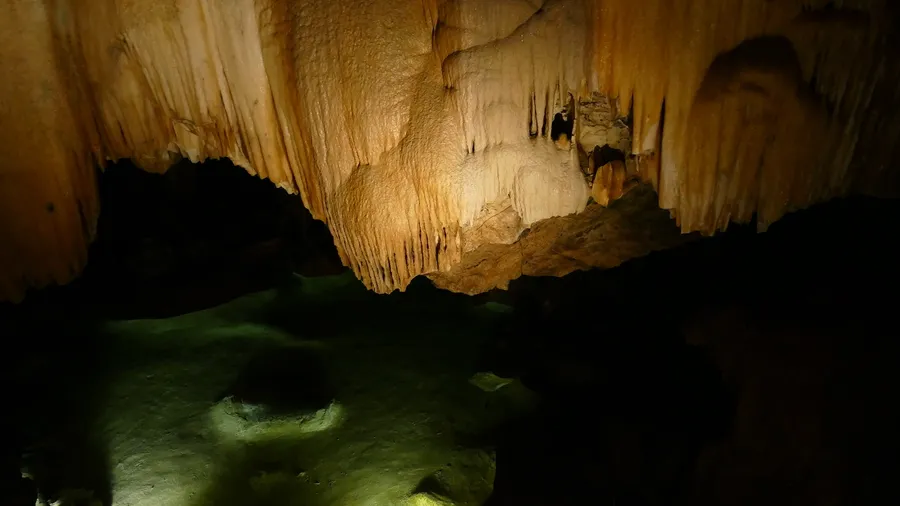
  • • Gruta de las Maravillas in Aracena: 1,200 m of karst galleries just 5 km from the water
  • • Trails through centuries-old chestnut groves and stone villages like Linares de la Sierra and Alájar

Description

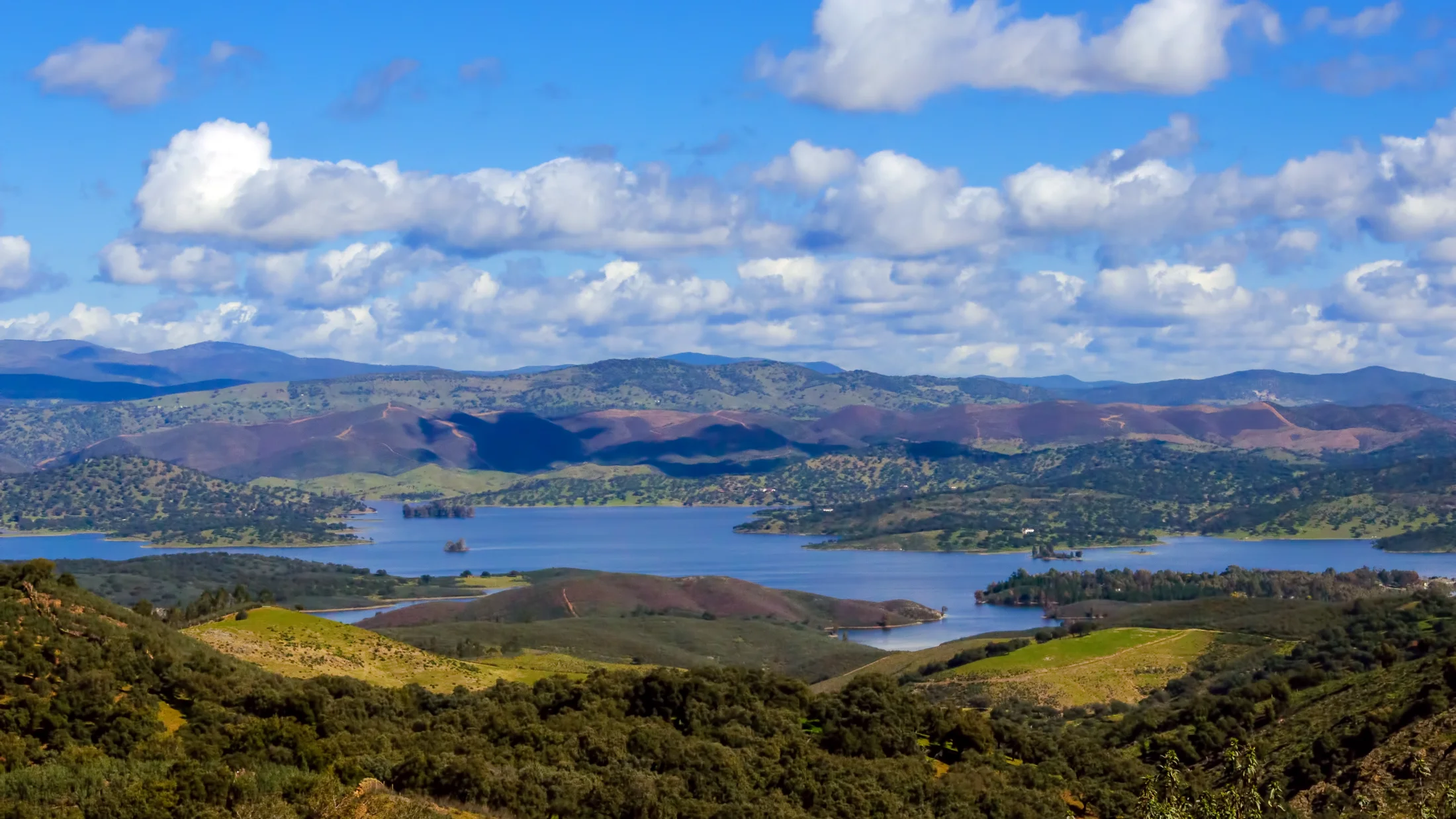
The Embalse de Aracena dams the Rivera de Huelva river in the heart of the Sierra de Aracena y Picos de Aroche, within the namesake Natural Park. The gravity-and-buttress dam stands 91 metres high with a crest length of 390 metres. Built between 1970 and 1986, it holds approximately 128 cubic hectometres, making it the main water supply for the city of Huelva and surrounding municipalities, managed by Emasesa. At full capacity, the water surface covers around 844 hectares with a shoreline perimeter of 135 kilometres winding between holm oak and cork oak dehesas.

The reservoir's surroundings form part of the classic dehesa landscape of the Sierra de Aracena, where holm oaks produce the acorns that feed the Iberian pigs behind the Jabugo Denomination of Origin ham. Cork oaks, stripped every 9-10 years, show reddish trunks among the green hillsides. The Natural Park hosts 172 bird species, 44 mammals and 18 reptiles. On the reservoir itself, grey herons, great cormorants and mallards are common; in surrounding forests, red deer, wild boar and Egyptian mongoose appear at dawn and dusk.

Water activities have historically been a draw, though current regulations should be checked as navigation has been restricted in recent years due to water management policies. Kayaking and paddleboarding have been practised on these waters, and coarse fishing for carp and barbel remains possible with a Junta de Andalucía fishing licence. Nearby trails wind through centuries-old chestnut groves, natural springs and whitewashed stone villages such as Linares de la Sierra and Alájar, less than 20 minutes' drive from the reservoir.

The town of Aracena lies about 5 kilometres away, providing restaurants, rural accommodation and attractions such as the Gruta de las Maravillas, a karst cave system with over 1,200 metres of accessible galleries. The air carries the scent of rockrose and damp earth after the autumn rains, and the reflection of holm oaks in the still water creates one of the most recognisable images of the Huelva sierra. The area serves as a weekend destination for visitors from Seville, roughly 100 kilometres away via the N-433, offering a slow pace that contrasts with the energy of the Andalusian capital.
Practical information

Everything you need to know for your visit to Embalse de Aracena

How to get there
From Seville, take the A-66 north towards Zafra and join the N-433 to Aracena, about 100 km total (roughly 1 h 15 min). The reservoir lies 5 km east of Aracena town centre. No direct public transport reaches the reservoir; a private vehicle is recommended.
Area Information
No visitor centre at the reservoir. Aracena town (5 km) has restaurants, rural accommodation and the sierra tourist office. The Gruta de las Maravillas offers guided tours on schedule. Picnic areas and rest stops are located at several points along the shore.
Geography
Reservoir on the Rivera de Huelva river, set within the Sierra de Aracena y Picos de Aroche Natural Park. Average altitude 400–600 m. The dam stands 91 m high with a 390 m crest. Rolling dehesa terrain with hillsides of holm oak, cork oak and chestnut.
Flora & Fauna
Holm oak and cork oak dehesa, with chestnuts on wetter slopes and riparian forest along the reservoir. Fauna: 172 birds (grey heron, black vulture, black stork), 44 mammals (red deer, wild boar, Egyptian mongoose), 18 reptiles. Fish: carp, barbel and bass in the reservoir.

Things to do

Find the best plans and things to do in Embalse de Aracena

20

Accommodations

Best accommodation options in Embalse de Aracena

Loading accommodation options...

Frequently Asked Questions

Get answers about Embalse de Aracena

Navigation has been restricted in recent years for water management reasons. Before planning kayaking or paddleboarding, check with the Guadalquivir River Basin Authority or local active tourism companies such as Sierra eXtreme, who can suggest nearby alternatives like the Jarrama reservoir.
Yes. Coarse fishing is permitted with a Junta de Andalucía fishing licence. The most common catches are common carp, barbel and largemouth bass. Several signed access points along the shore are set up for fishing. Seasonal closures and restrictions under current Andalusian regulations apply.
From Seville, the drive via the A-66 and N-433 covers about 100 kilometres and takes roughly 1 hour and 15 minutes. There is no direct public transport to the reservoir; a private car is the most practical option. Once in Aracena, the reservoir is just 5 kilometres east of the town.
Aracena and its surrounding area offer several attractions: the Gruta de las Maravillas (1,200 m of accessible karst galleries), trails through centuries-old chestnut groves, visits to Jabugo DO Iberian ham curing houses, and whitewashed stone villages such as Linares de la Sierra, Alájar and Fuenteheridos. The local cuisine — ham, autumn mushrooms and goat's cheese — is another draw.
Aracena has rural hotels, country houses and holiday apartments for all budgets. Nearby villages such as Linares de la Sierra and Alájar also offer charming rural lodging. There are no campsites or accommodation at the reservoir itself. Booking ahead is advisable during bank holidays and the mushroom season (November).