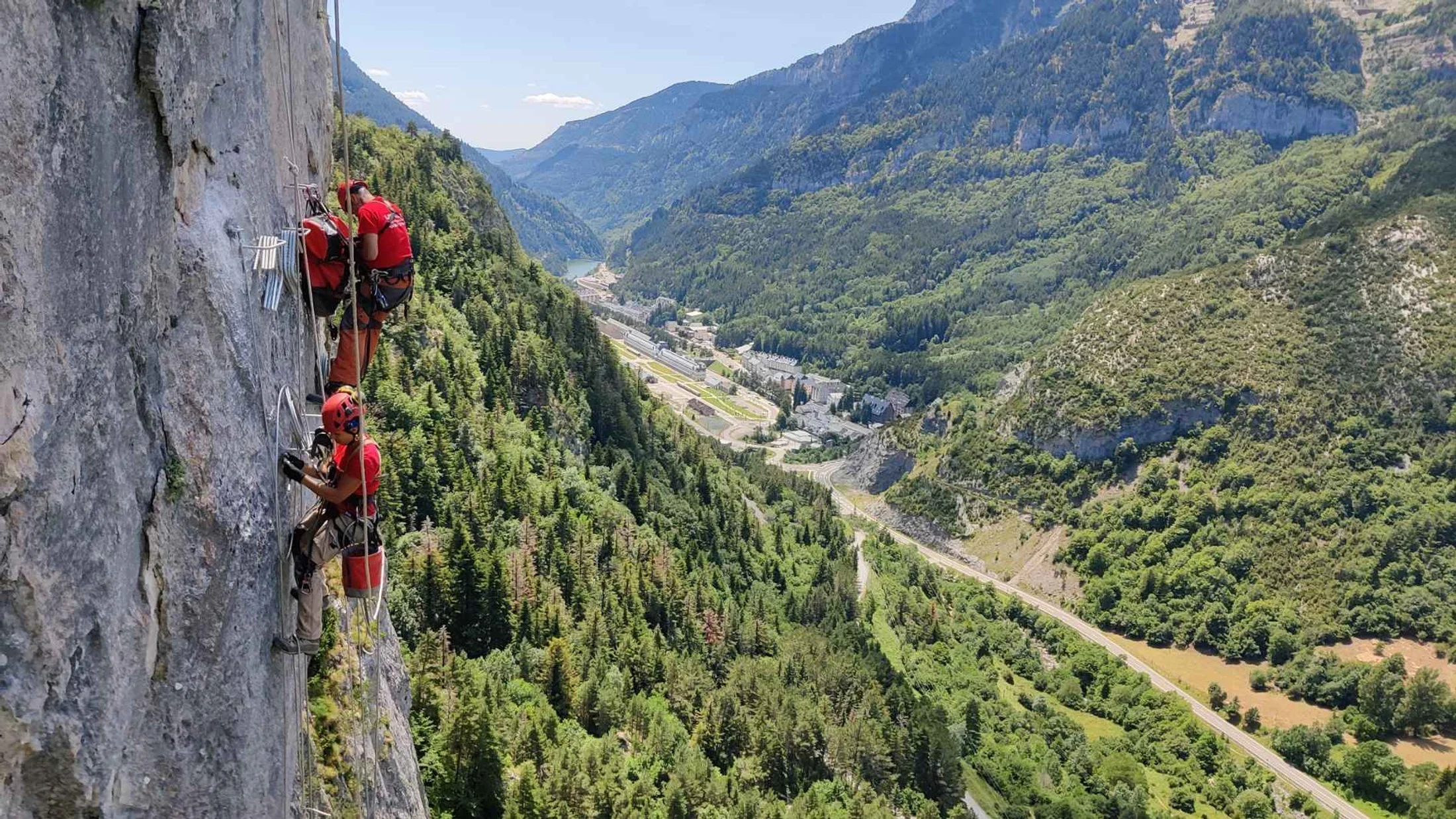
Introduction
You’re here for the rush and the view, and via ferratas in Spain deliver both without leaving safety behind. If you’ve searched for via ferratas Spain or the best via ferratas Spain, this guide gives you a ranked selection with quick facts, difficulty notes, standout features, and when to go. One steel cable and a head for heights can carry you from sea cliffs to high limestone walls.
Context and relevance
A via ferrata is a protected climbing route with steel cables, rungs, bridges, and anchors that let non-climbers move safely along rock—always clipped in with a lanyard that absorbs shocks in a fall. Across Spain, new routes have multiplied over the last decade thanks to local councils, mountain clubs, and certified operators; that’s why searches for the best via ferratas keep climbing. Think balcony-like ledges over turquoise reservoirs and gullies ringing with choughs.
Safety is the thread that holds the fun together: you progress like a hiker who can suddenly go vertical, using continuous lifelines, helmets, and proper fall absorbers. If you’re new, choose an easier grade with a guide; confidence grows step by step like catching rhythm on ladder rungs.
How we selected the routes
We ranked these ten by a blend of difficulty (K1–K6 on the Hüsler/Schall K-scale used widely in Europe), spectacularity (exposure, bridges, zip lines, big views), access (parking, approach time), seasonality (heat, shade, snowfall), and services (nearby guides, rental). We also weighed guide feedback and public reviews for consistency and maintenance quality. On a cool morning, the metal rungs feel crisp to the touch.
Use each entry’s quick facts—location, K-grade, duration, best season, who it suits, and what stands out—to match your level and travel dates. Confirm local details on prices and schedules with certified guides or municipal notices; conditions and regulations can change quickly.
Picuco te puede ayudar
Does something here catch your eye?
Tell us.
Write to us on WhatsApp or email: we answer questions, find the best options and help you sort out the booking.
Top 10 Via Ferratas in Spain
1.Fuente Dé (picos de Europa): Vertical and emblematic
The Picos de Europa loom like a stone tide at Fuente Dé, where a bold line of rungs climbs above the Liébana valley. This route sits near the Cantabria–León boundary (Camaleño, Cantabria) and is a reference point in vías ferratas Cantabria thanks to long, clean walls and airy traverses. On clear days, you swing your boots over limestone ribs as griffon vultures circle below.
- Location: Camaleño (Cantabria), near the Fuente Dé cable car base
- Difficulty: K4 (hard) — sustained vertical sections, some overhang moves
- Duration: 2.5–4 hours on route, plus approach/return
- Elevation gain: 250–350 m (approx.), exposed ledges
- Best season: Late spring to early autumn; avoid snow/ice
- Ideal for: Fit intermediates and experts; not for first-timers
- Guiding/cost: Guided outings commonly 55–90 € p.p.; confirm locally
- Permits: Check current municipal/park notices; weather can close it
Why it’s emblematic: long fall lines beneath your heels, big-mountain backdrop, and a flow between vertical ladders and airy traverses. Pack a certified via ferrata kit (EN 958 lanyard, helmet, gloves) and check vías ferratas dificultad updates from local clubs and the regional park. Wind can whistle suddenly through the cirque like a door opening.
Safety tip: Picos weather shifts fast; if forecasts mention storms or rime, postpone. Verify with local guides based in Potes, who monitor conditions daily and can provide alternative routes.
2.Montserrat (barcelona): Classic and accessible
Montserrat’s serrated conglomerate towers are a natural playground with multiple equipped lines suited to newcomers. Close to Monistrol de Montserrat and the rack railway, this is a friendly entry-point for a vía ferrata para principiantes, with short, well-bolted routes and easy escapes. The rock’s pebble-studded texture grips like rough bread crust.
- Location: Montserrat massif (Barcelona), near Monistrol and Monastery
- Difficulty: K2 (easy-moderate) typical; some variants K3
- Duration: 1.5–3 hours depending on route
- Best season: Spring and autumn; winter on sunny faces
- Ideal for: Beginners and families with teens; supervised groups
- Guiding/cost: 45–75 € p.p. typical; confirm current rates
- Access: Excellent public transport; parking by the rack railway
What stands out: panoramic ledges, short Tibetan bridges, and the chance to pair ferrata with hiking paths like the network around Sant Jeroni. Expect queues on weekends; early starts buy quiet stone corridors and warmer light.
Safety tip: The conglomerate can shed pebbles—wear helmets and mind parties above. In summer, heat radiates off the rock; carry more water than you think, and consider shaded lines or late-afternoon laps.
3.El Chorro (málaga): Canyon walls and southern skies
Above the famous Caminito del Rey gorge, El Chorro’s limestone amphitheater hosts a scenic ferrata that threads pillars and slabs with views to reservoirs and olive hills. The setting hums with climbers’ chatter, swifts, and the distant rattle of trains. The sun paints the canyon gold by late afternoon.
- Location: El Chorro (Álora, Málaga), near the Guadalhorce reservoirs
- Difficulty: K3–K4 depending on line and variants
- Duration: 2–3.5 hours
- Best season: October–May; avoid peak summer heat
- Ideal for: Intermediates; strong beginners with a guide
- Guiding/cost: 50–85 € p.p.; confirm locally
- Combine with: Hiking the Caminito (advance booking needed), sport climbing
What stands out: clean vertical ladders, a couple of spicy traverses over void, and big-sky southern views. Although inland, it’s a good base if you want vías ferratas costa nearby for rest days—Benalmádena and coastal towns are about 60–80 minutes by car.
Safety tip: Wind funnels through the gorge; gusts can unbalance on bridges. Helmets and snug lanyard management keep you tidy against the cable; if thunder is forecast, do not enter the route.
4.Los Cahorros (granada): Bridges and playful walkways
Los Cahorros de Monachil is a crowd-pleaser for those who want fun more than fierce verticality: hanging bridges, narrow catwalks, and short equipped steps hug a cool gorge within an hour of Granada. Water murmurs beside polished rock like a quiet metronome.
- Location: Monachil (Granada), Sierra Nevada foothills
- Difficulty: K1–K2 (easy); more an equipped gorge walk than a sustained ferrata
- Duration: 2–3 hours for the circuit
- Best season: Year-round; avoid ice after winter storms
- Ideal for: Families with teens, beginners, mixed groups
- Guiding/cost: 35–60 € p.p. for guided introductions; confirm locally
- Access: Popular trailhead with limited parking; arrive early
What stands out: long suspension bridges, squeezes under overhangs, and safe, scenic variety. It’s a gateway to movement on rock—great for learning clipping habits and pace before stepping up to steeper K2–K3 ferratas.
Safety tip: Weekends can be busy; keep helmets on and be patient on bridges. After heavy rain, expect slick boards and puddles—wear grippy footwear and consider postponing if flows rise.
5.Peña Cortada (valencia): Historic ledges and big views
Peña Cortada near Chelva and Calles blends history and exposure along sections of the Roman aqueduct route with tunnels, carved ledges, and some modern safety aids. Afternoon light warms the sandstone and thyme-scented scrub. It feels like walking a balcony from another age.
- Location: Chelva/Calles (Valencia), Los Serranos comarca
- Difficulty: K1 (easy) with short equipped steps; not a continuous ferrata
- Duration: 2–3 hours for the loop and aqueduct out-and-back
- Best season: October–May; summers can be very hot
- Ideal for: Beginners, families used to moderate hikes
- Guiding/cost: 30–55 € p.p. for interpretive outings; confirm locally
- Logistics: Limited shade and parking; carry headlamp for tunnels
What stands out: the blend of carved rock, short protected ledges, and sweeping views toward the Turia basin. Treat it as an “equipped route” more than a technical ferrata; clipping may be intermittent.
Safety tip: Respect heritage sections—stay on marked lines and avoid pulling on loose edges. In hot months, start early and bring 2 liters of water per person.
6.Alquézar, Sierra de Guara (huesca): Canyons and adventure
Above the turquoise Vero and the stone lanes of Alquézar, the Sierra de Guara offers ferratas that taste of canyon country—runnels, bowls, and bands of pale limestone. Swallows stitch the air over olive terraces and almond trees. The village bells float faintly up the ravines.
- Location: Alquézar (Huesca), Sierra de Guara Natural Park
- Difficulty: K2–K3 typical, with variants
- Duration: 2–3 hours per route
- Best season: Spring and autumn; avoid stormy days
- Ideal for: Beginners stepping up to K2, confident intermediates
- Guiding/cost: 45–80 € p.p.; confirm locally
- Combine with: Canyoning (permits/flows), signed hiking loops
What stands out: dramatic steps over sculpted canyons, short bridges, and photogenic ledges with village views. This is an excellent classroom for movement on steeper ground without jumping straight to K4.
Safety tip: After heavy rain, canyon winds and spray can make rock slick; bring gloves with good grip and reconsider if thunderstorms are forecast. Park rules may restrict group sizes—check current notices.
7.Aýna (albacete): Limestone ribs and surprising vistas
Aýna, in the Sierra del Segura, hides a compact ferrata that mixes vertical ladders, traverses, and playful features over the Río Mundo valley. The scent of pine and rosemary drifts from the slopes, and the village perches like a swallow’s nest. Late light turns the crags honey-colored.
- Location: Aýna (Albacete), Sierra del Segura
- Difficulty: K3 (moderate-hard), with possible K4 variant moves
- Duration: 2–3 hours
- Best season: September–May; avoid midsummer heat
- Ideal for: Intermediates; ambitious beginners with a guide
- Guiding/cost: 40–70 € p.p.; confirm locally
- Logistics: Short approach from village parking; limited shade
What stands out: solid limestone, a Tibetan bridge or two, and the rewarding balcony views down to the river bend. Hardware is generally modern, but always inspect for wear before committing.
Safety tip: Check the state of fixed gear before leaving the ground—look for tight cables, sound anchors, and minimal rust. If anything seems suspect, choose a different route or hire a certified guide who knows recent maintenance cycles.
8.La Hermida (cantabria): Wild North and big walls
In the deep cleft of the Desfiladero de La Hermida, this route is a flagship for vías ferratas Cantabria—steep, scenic, and long enough to feel like a full day out. Mist can cling to beech and oak on cool mornings as the cable hums under your hand. The river threads silver at the bottom of the gorge.
- Location: Peñarrubia/La Hermida (Cantabria)
- Difficulty: K3–K4 depending on segment; exposed traverses
- Duration: 3–4.5 hours
- Best season: Late spring to early autumn; winter only in stable windows
- Ideal for: Strong intermediates and experts
- Guiding/cost: 55–90 € p.p.; confirm locally
- Permits/logistics: Some sections may require booking or have access rules—check municipal info
What stands out: height over the valley, long traverses, possible zip-line segments, and raw Atlantic-slope atmosphere. Weather in the north changes fast—carry an extra layer and be ready to turn around if the cable drips with incoming rain.
Safety tip: Wet steel is slick steel; if drizzle starts, manage three points of contact and shorten lanyard slack. If thunder threatens, descend immediately—cables attract lightning.
9.Sierra Helada, Benidorm (alicante): A coastal line with sea views
Between Albir and Benidorm, a coastal via ferrata delivers not-to-be-missed maritime panoramas and breezy exposure on the Serra Gelada cliffs. Gulls wheel at eye level while the sea throws shifting light on the limestone. Waves pulse softly against the base far below.
- Location: Serra Gelada (Alicante), near Albir/Benidorm
- Difficulty: K2–K3 (easy-moderate), windy exposure
- Duration: 2–3 hours
- Best season: October–May; mornings in summer if not too hot
- Ideal for: Beginners with head for heights, intermediates
- Guiding/cost: 45–75 € p.p.; confirm locally
- Combine with: Coast walks on the Serra Gelada trails, swims at nearby coves
What stands out: true coastal via ferrata Spain character—blue horizon at your shoulder, bridges with sea air, and moderate steps perfect for a first taste of exposure.
Safety tip: Coastal gusts can be strong; clip short to reduce swing, and avoid days with levante or storm warnings. Sunscreen and windproof layers both matter here.
10.Ronda (málaga): History and spectacular stone windows
Ronda’s ferrata rises within sight of the Puente Nuevo and the famous Tajo, offering gorgeous lines that tie climbing movement to a living townscape. Swallows dart beneath the stone arch while you perch on rungs above whitewashed roofs. Evening lights make the canyon glow.
- Location: Ronda (Málaga), Tajo de Ronda area
- Difficulty: K3 (moderate), brief athletic moves
- Duration: 1.5–2.5 hours
- Best season: Spring and autumn; winter on clear days
- Ideal for: Intermediates; fit beginners with a guide
- Guiding/cost: 45–75 € p.p.; confirm locally
- Permits/logistics: Municipal rules may limit group size—check at the tourist office
What stands out: photogenic positions under the Puente Nuevo, short bridges, and ledges that frame the town like a stage. It’s a memorable way to anchor a weekend of culture, tapas, and walking.
Safety tip: Expect other users and curious onlookers—keep helmets on, manage rope/lanyard neatly, and communicate with teams below before starting bridges.
Interactive Map: Where Each Route Is Located
Use the interactive map to see the ten ferratas pinned with quick facts: K-grade, ideal season, and a one-line “spectacularity” tag. Click a pin to open the corresponding entry and plan logistics like approach time and nearby lodging. Filter by difficulty (K1–K6), region (north, Mediterranean coast, interior), or season to shortlist options around your trip. We recommend implementing a Google Maps embed or a privacy-friendly Leaflet layer with OpenStreetMap tiles; make sure you respect map provider terms and attribution rules. The map helps you cluster activities—do two routes near Málaga or pair La Hermida with a coastal day.
Difficulty and Spectacularity: Reading the K1–k6 Scale
Ferratas in Spain most often use the Hüsler/Schall K-grade from K1 (easy) to K6 (extreme), which reflects technical difficulty and sustained exposure. K measures the steepness, hold size, spacing of rungs, and how much arm strength you need; spectacularity is related but separate, describing scenic drama, bridges, and emptiness under your boots. Sun on the cable can feel like a warm, reassuring hand.
Think of it this way:
- K1: hiking with occasional steps; little exposure; suitable for cautious beginners. Example: Peña Cortada (selected sections).
- K2: more frequent rungs, short verticals, light exposure. Example: Montserrat (easier lines), coastal Sierra Helada.
- K3: clear verticals/traverses, moderate exposure, bridges. Examples: Ronda, Alquézar (some lines), Aýna.
- K4: sustained verticals, possible overhangs, strong exposure. Examples: Fuente Dé, El Chorro (variants), La Hermida (segments).
- K5–K6: very athletic/overhanging, sparse holds; typically for experts—none in this selection.
To read our entries, match your fitness to grade, then weigh spectacularity (bridges, zip lines, big walls) against head for heights. Length also matters: a short K3 after-work line can be easier than a long K2 on a hot day. If in doubt, downshift one grade or go with a certified guide who can adjust the itinerary.
Gear, Safety, and Preparation
Go with the right kit, checked and ready:
- Harness rated for climbing
- Certified via ferrata lanyard with energy absorber (EN 958)
- Helmet (EN 12492) and full-finger gloves
- Grippy approach shoes or light boots
- Optional: short safety cow’s tail for resting, compact first-aid kit, headlamp
Before you clip in, scan the fixed gear: cables should be taut with no broken strands, anchors tight with no spinning hangers, and rungs solid without flaking rust. If something looks off, turn back or hire a professional. On cold mornings, metal bites at fingertips until your movement warms you up.
Basic technique reminders:
- Keep at least one carabiner clipped at all times; never unclip both from the cable.
- Move one anchor segment at a time; announce “clipping” with your partner.
- Stand on your feet, not your arms; push through legs to save energy.
- Keep slack short to reduce fall factor; rest on built anchors if needed.
Checklist before leaving home:
- Weather window checked for wind, rain, storms, heat
- Fitness honest appraisal and route grade chosen accordingly
- Insurance that covers mountain activities
- Emergency contact notified of plan and return time
- Headlamp, extra layer, water, and calories packed
When to hire a guide: first time on ferratas, stepping up a grade, managing a family group, or if route info is unclear. Rental shops and certified providers operate near many of the routes listed; compare options and, if you prefer a curated approach, explore activities curated by Picuco.
Choosing the Right Route for Your Level and Season
For beginners: look at K1–K2 with short length, easy escapes, and minimal exposure—Montserrat and Peña Cortada are good vía ferrata for beginners Spain picks. Choose cool hours, and practice clipping on the ground first. The first safe reach from rung to rung feels like learning a steady dance.
For intermediates: K3–K4 lines with bridges and traverses—Ronda, Aýna, and parts of Alquézar—offer variety without brutal overhangs. In summer, shade and early starts matter; in winter, pick sunny aspects.
For experts: K4 routes like Fuente Dé and segments at La Hermida and El Chorro deliver sustained exposure; plan for wind and carry layers.
Season matters: coastal via ferrata Spain routes like Sierra Helada can be windy and hot—aim for October–May. Northern mountains get wet and icy; shoulder seasons shine. Families or mixed groups should prioritize short approach, escape options, and a guide who can set pace.
Frequently Asked Questions
Do I need a permit or reservation?
Some municipalities or parks require reservations or limit group sizes, especially near popular gorges or heritage zones. Check the local council or natural park website the week you plan to go.
Is a guide mandatory?
Not always, but a certified guide is strongly recommended for first-timers, families, or when stepping up a grade. Guides bring route knowledge, safety oversight, and adaptable plans.
What is the minimum age and fitness?
Minimum ages vary by operator (often 10–14 years) and route. Everyone must wear a helmet and harness correctly and be able to climb a household ladder repeatedly without distress.
Can I book online?
Yes—many local operators offer online calendars. If you’re comparing options in one place, explore curated experiences on Picuco and confirm availability directly.
What about insurance and rescue?
Ensure your travel or sports policy covers via ferratas and mountain rescue. In Spain, coverage varies by region—carry ID and know the emergency number 112.
How do I read the K grades?
K1 is easy and close to hiking; K6 is expert, very athletic. Our comparison section summarizes what to expect at each grade and lists examples from this top 10.
Book your experience — discover active nature experiences across Spain with providers verified by Picuco.
Conclusion
Across cliffs, gorges, and sea headlands, these ten routes combine clear grading, exciting features, and memorable views, making them standout choices among via ferratas Spain. Pick by K-grade, season, and who’s in your group; safety and scenery both matter. If it’s your first time or you’re moving up a level, consider a certified guide and double-check local notices for access and weather. For practical planning, revisit the interactive map above, choose a base nearby, and give yourself time for a slow breakfast and an early start. Crisp air, steady feet, and one clean click on the cable set the tone for a day you’ll remember.