Why Tarifa Is a Special Place to See Orcas
Orca watching in Tarifa is unlike anywhere else in Europe. You are standing at a natural bottleneck where the Atlantic squeezes into the Mediterranean through a 14-kilometre throat, stirring currents, nutrients and prey into a moving feast. On windy days, you can taste salt on the air and hear rigging hum under the Levante. This guide sets you up to choose when to go, where to book, and what to expect.
Tarifa sits at the hinge of two seas and two continents, and that geography shapes wildlife behavior. Atlantic bluefin tuna migrate through the Strait of Gibraltar each year, and transient orcas (Orcinus orca) track them with precision, especially when tuna are concentrated by currents or local fishing gear. Researchers from regional NGOs and universities (e.g., CIRCE, Universidad de Cádiz) have documented this predator–prey dance for decades, pairing photo-identification catalogs with seasonal observations. For travelers, that means short boat rides with real chances of orca encounters, plus encounters with bottlenose dolphins, pilot whales, and fin whales in the same waters.
History matters here. Whale and dolphin sightings off Tarifa began drawing small groups in the late 1990s, around the time responsible-watching guidelines took root in Spain under Royal Decree 1727/2007. Those rules—approach angles, minimum distances, time limits—shaped a local culture of respectful viewing that still defines the experience. The Strait is also a live science classroom: guides often point to upwellings (cold, nutrient-rich waters pushed up from depth) and explain why fronts—where water masses meet—concentrate life the way a market concentrates voices.
How is Tarifa different from other cetacean hotspots? Three things stand out:
- Proximity: productive water is minutes from the harbor, so two- to three-hour trips can reach action quickly.
- Diversity: at least seven cetacean species appear regularly across seasons, giving you a plan B if orcas stay out of sight.
- Seasonality you can plan for: “when to see orcas Tarifa” is a practical question with patterns tied to wind, tuna movement, and daylength.
Throughout this guide, we’ll use the primary keyword orca watching Tarifa and secondary terms like whale watching Strait of Gibraltar and best time to see orcas Tarifa to anchor what you need to decide. We’ll cover current-backed facts, plain-language tips, and the local knowledge of crews who work these waters daily. Skippers here know the Strait’s two famous winds—Poniente from the west and Levante from the east—and how each opens or closes a sea window like a shutter, which is why timing matters as much as place.
Picuco te puede ayudar
Does something here catch your eye?
Tell us.
Write to us on WhatsApp or email: we answer questions, find the best options and help you sort out the booking.
Orientation: Port, Meeting Points and Getting There
Tarifa occupies Spain’s southern tip, with the town’s castle and white streets just above the harbor that faces Africa across the Strait. Plug these approximate coordinates into your map: 36.013°N, 5.606°W. On a clear morning, the Atlas looks close enough to touch across a ribbon of steel-blue water. Getting the meeting point right means you board smoothly and spend more time at sea.
Distances by road help you plan:
- Cádiz to Tarifa: ~105 km via
A-48/N-340(about 1 h 30–1 h 45, traffic depending). - Málaga to Tarifa: ~160 km via
AP-7/A-7andA-381or coastalN-340(about 2 h). - Seville to Tarifa: ~210–215 km via
AP-4/A-4andA-381(about 2 h 30–3 h). - Algeciras to Tarifa: ~21 km via
N-340(about 25–30 min).
Boat trips usually depart from the town’s main harbor, a short walk from the old town. You’ll see two distinct areas:
- Municipal quay/fishing harbor (near the fish market “lonja”): many small- and mid-size boats check in here.
- Marina area/outer quays near the ferry terminal: larger catamarans and some RIBs (rigid-hull inflatables) stage from marked berths.
Look for these practical signs of your meeting point:
- A small office or kiosk on the harbor front with daily departure boards and sea-state notices.
- A WhatsApp or SMS confirmation from your operator telling you “Gate X” or “Pantalan Y” 30–45 minutes before departure.
- Staff in branded jackets gathering the group near the security gate; they will escort you onto the dock as a group.
For maps, use trusted apps like Google Maps, OpenStreetMap, or Spain’s Instituto Geográfico Nacional viewer; search “Puerto de Tarifa” and verify the pin against your confirmation. Parking is limited in high season; arrive 45–60 minutes early to find street parking or a paid lot along Avenida de Andalucía. If Levante is howling, gusts can slam car doors, so park facing into the wind for easier exits.
Permits and paperwork are simple for visitors: you do not need a special license to join an orca tour; licensed companies hold the maritime authorizations. You may be asked for an ID at the dock entrance during busy days, so keep a passport or national ID handy. Drones are generally prohibited around ports and near cetaceans under Spanish aviation (AESA) and wildlife rules; leave them ashore unless you have explicit written authorization. Seasickness medication is allowed; take it 30–60 minutes before boarding if you are prone to motion sickness.
When you reach the quay, the smell of diesel and seaweed mixes with warm stone from the city walls. A quick check-in, a safety briefing, and you’ll step onto the deck that becomes your floating viewpoint over one of Europe’s busiest marine corridors.
Best Time and Probabilities for Orca Watching in Tarifa
Timing your trip boosts your chances without gambling your day on luck. The better you understand wind, sea state, and tuna movement, the better you can answer “orcas Tarifa cuándo ir” and decide your dates. Locally, crews talk about windows—two- to four-day spells when wind and swell flatten, light improves, and prey behavior stabilizes. If “best time to see orcas Tarifa” headlines your plan, think in seasons, not single days. On calm evenings, the Strait’s surface turns satin-grey and flickers where dolphins cut a line of foam.
Probabilities are always approximate, and orcas are wild animals. Still, patterns help:
- Winter (Dec–Feb): low probability (roughly 5–15% on dedicated outings), with more weather cancellations.
- Spring (Mar–May): rising probability (around 20–40%), better light and more stable windows.
- Summer (Jun–Aug): good to very good probability in the right weeks (about 40–70%), highest demand and more departures.
- Autumn (Sep–Nov): steady probability (around 30–50%), fewer crowds and warm seas.
Wind is the chief spoiler. Poniente (westerly) tends to bring cleaner swell and more comfortable trips; strong Levante (easterly) can stack steep seas that force cancellations even under sunny skies. For the latest, check AEMET marine forecasts and ask your operator about Beaufort sea states; most companies sail up to Beaufort 4 and pause above Beaufort 5.
Winter (dec–feb): low odds and tougher conditions
Short days and frequent storms make winter the least predictable period for orca sightings. The Strait sees strong frontal systems, cool air temperatures (~12–17°C), and frequent Beaufort 4–6 days that limit departures. In choppy, wind-driven seas, spotting blows or fins at distance becomes hard, and tuna schools are less consistently present in nearshore corridors. On silent breaks between squalls, the harbor smells of wet rope and fresh fish.
Why go then? You avoid crowds, find lower prices, and still have meaningful whale watching in the Strait of Gibraltar: common and bottlenose dolphins are resident, and pilot whales and occasional fin whales pass through. Operators may run fewer trips, but you’ll have space at the rail and guides with more time for questions. For orcas Tarifa cuándo ir, winter is a contrast case: you trade lower odds of orcas for a quieter, more intimate sea. If you are flexible and can jump on last-minute good-weather days after a Levante break, you improve your odds. Pack warm layers, gloves, and a windproof shell, and plan a land backup (e.g., Baelo Claudia ruins at Bolonia) in case the wind shuts the port.
Spring (mar–may): more sightings and good windows
Daylength increases, wind intervals open up, and prey behavior steadies along fronts and shoals. Sea surface temperatures climb from ~15–18°C, and visibility often improves with cleaner light and fewer haze days. In March and April, your odds of orcas tick up as scouting increases and more boats are out to find and share information. When the sea lies under a soft Poniente, you can hear dolphins breathe before you see them.
Expectations:
- Relative probability: roughly 20–40% for orcas on dedicated “orca-focused” outings, higher for multi-species cetacean tours.
- Sea state: more
Beaufort 2–4days than winter; Levante still interrupts with multi-day spells. - Practical gains: shoulder-season prices, more departure choices than winter, and less competition for last-minute seats.
Planning tips:
- Aim for midweek dates to reduce crowding.
- If you can, book a two-day window; reschedule flexibility doubles your odds of matching a calm morning.
- Choose early or late departures for softer light and lower glare, which helps you spot distant fins.
Summer (jun–aug): peak activity, tourism and plan-ahead tactics
This is high season for both visitors and orca interest. Bluefin tuna move through the Strait predictably in many years, and some weeks—especially during stable Poniente spells—see concentrated activity. Air temperatures reach 25–30°C, but on deck the apparent temperature drops with wind-chill and spray. In calm afternoons, the water flashes metallic blue under a leveled Levante.
What it means for you:
- Relative probability: about 40–70% on the right weeks, but variable year to year; ask operators about recent patterns and orca sightings Tarifa 2026 updates.
- Demand: highest of the year—families, photographers, and day-trippers fill boats quickly.
- Sea state: frequent sailable windows, though Levante heatwaves can push steep seas that prompt morning-only operations.
To stay ahead:
- Reserve 2–3 weeks in advance for weekend slots, and at least 7–10 days in advance midweek; “book orca tour Tarifa” early if your dates are fixed.
- If you are sensitive to motion, favor larger catamarans or morning departures when wind is gentler.
- Build a second-chance slot into your itinerary; many companies offer a free or discounted re-ride if no cetaceans are seen, but orca-specific guarantees are rare.
Note: Since 2020, media has covered unusual orca–boat interactions along Iberia’s Atlantic façade. In the Strait, operators follow strict approach protocols and avoid any behavior that might disturb cetaceans; ask about current guidelines and routing practices for peace of mind.
Autumn (sep–nov): steady chances with migration tailwinds
Autumn keeps sea temperatures pleasant (20–24°C in September), winds can stabilize after midsummer extremes, and prey movement remains dynamic as water masses shift. Some years see excellent September and early October windows, with calmer seas and warm light that makes surface signs pop. In September evenings, a warm, honeyed haze hangs over the dunes of Valdevaqueros.
What to expect:
- Relative probability: about 30–50% for orcas on targeted trips, with strong chances for dolphins, pilot whales, and occasional fin whales.
- Comfort: fewer boats and cooler air than August, but still T-shirt days in the lee of the wind.
- Resilience: if Levante reasserts strongly, operators may shift to lee-side routes or pause until safe.
Planning tips:
- Watch AEMET’s 3–5 day wind trend; look for
Beaufort ≤3in the morning and small swell periods for the best ride. - Choose days after a wind break; post-Levante windows often bring clear visibility and refreshed water masses.
- Autumn sunsets are special; ask if late-afternoon sailings are planned during your dates.
Across seasons, the rule holds: build flexibility, talk to your operator about the last 7–10 days of sightings, and prioritize safety windows over fixed hours. The Strait rewards patience and preparation.
Booking Your Trip: Operators, Boats and How to Choose
You will find several licensed companies offering Tarifa cetacean tours, each with a distinct style—large catamarans with wide decks, fast RIBs that cover ground quickly, and small cabin boats geared to photographers. All operate under the same Spanish wildlife protection rules (Royal Decree 1727/2007) and local port regulations. On the pier, flags flap and departure boards click over like a small airport. Your job is to match boat type, group size, and guiding approach with your priorities.
Start with clear criteria:
- Safety and permits: ask for their permit to operate cetacean tours in the Strait of Gibraltar and a quick rundown of safety equipment (lifejackets, AIS, VHF).
- Group size and boat type: smaller groups mean more rail space and quicker repositioning; larger boats mean more stability and shade.
- Duration and timing: standard trips last 2–3 hours; sunrise and late-afternoon sailings can have quieter seas and better light.
- Language: English and Spanish are standard; many boats also offer French and German interpretation.
- Responsible practices: look for adherence to RD 1727/2007, ACCOBAMS code of conduct, and data-sharing with research groups.
- Price and guarantees: typical adult fares run 45–75 € per person; confirm family rates, student discounts, and re-ride or refund policies for no sightings or cancellations.
Here is a quick comparison of typical offerings you will encounter (categories, not brand names):
| Operator profile | Boat type | Duration | Group size | Guide languages | Typical price | Guarantee/policy | Sustainability focus |
|---|---|---|---|---|---|---|---|
| Science-led local operator | Mid-size monohull/cabin boat | 2–3 h | 10–30 | ES/EN (+FR/DE on request) | 55–75 € | Re-ride if no cetaceans; weather refunds | Data collection on board; strict approach rules |
| Family-friendly frequent sailings | Large catamaran | 2 h | 40–80 | ES/EN/FR/DE | 45–65 € | Flexible rebooking; partial refund options | Accessibility features; educational talks |
| Small-group photo-focused | RIB (zodiac) or small cabin boat | 2.5–3 h | 8–12 | ES/EN | 65–85 € | Weather-based rebook/refund; limited seats | Low-impact maneuvers; longer observation time |
| Eco multi-activity operator | Mixed fleet; combos | 2–3 h (or combos 4–6 h) | 12–40 | ES/EN (+others) | 50–80 € | Combo credits; standard cancellations | Carbon offsets; local community projects |
Prices and offerings change; confirm on the operator’s website or consult Picuco for current availability across providers. Sunrise trips sometimes cost a little more due to limited seats and special crew hours.
Science-led local operator: research spirit on deck
These crews weave field data into their commentary and often carry photo-ID sheets for resident pilot whales and known orca family groups. They run 2–3 hour outings on mid-size boats that balance stability with maneuverability, ideal for scanning fronts and bird lines for activity. As the hull cuts into a slick where gannets plunge, you smell clean iodine on the breeze.
Practical notes:
- Good for travelers who value interpretation depth and smaller groups.
- Expect 55–75 € adult fares; children’s rates are common.
- They commonly offer a re-ride if no cetaceans are seen; orca guarantees are rare and usually avoided for ethical reasons.
- Ask how they share sightings with researchers and how they apply RD 1727/2007 rules in practice (distance limits, time with animals).
- Booking: online booking works well in spring and autumn; in summer, reserve 7–14 days ahead to secure the morning slot you prefer.
Family-friendly frequent sailings: space and stability
Big-deck catamarans offer shade, seating, and onboard toilets—useful for families, multi-generational groups, and anyone who gets queasy on small boats. Crews run multiple departures per day in summer, pairing short safety talks with accessible natural history. When the catamaran glides down a long, blue-green swell, deck rails shimmer with spray.
Practical notes:
- Typical duration is 2 hours with several daily slots in peak months.
- Prices often range 45–65 € for adults, with family packs and child discounts.
- Expect multilingual briefings (Spanish, English, French, German) and clear instructions for kids.
- Accessibility: ramps and handrails make boarding easier; check about wheelchair accommodation before booking.
- “Book orca tour Tarifa” early in July–August weekends; these boats fill fast because of capacity and convenience.
Small-group photo-focused: nimble and patient
If you want less crowding at the rail and slower, more deliberate positioning for photography, small-group boats shine. RIBs or compact cabin boats reach fronts quickly and can hold station with minimal engine use, extending quiet observation time when conditions allow. The bow bounces lightly, and you feel the cool slap of spray on your forearms.
Practical notes:
- Group sizes of 8–12 mean higher per-seat prices (65–85 €) but more one-on-one guidance.
- Some offer early or late “golden hour” departures and targeted sessions on behavior and ID.
- Cancellation policies are strict about wind thresholds; be ready to pivot dates if Levante spikes.
- Ask about camera care on deck (dry boxes) and whether the skipper can position for sun angle when safe.
- In peak summer, reserve at least 10 days ahead; in spring/autumn, 4–7 days is often enough.
Eco multi-activity operator: combine, learn and give back
Some companies blend orca and whale watching with other low-impact activities: birdwatching on the migration flyway, coastal hiking, or even an introduction to kitesurfing on calmer days. Their messaging leans into carbon accounting, local sourcing, and conservation donations. Over the bar at check-in, you might catch the earthy scent of wet neoprene and coffee.
Practical notes:
- Look for combo packages (e.g., morning orca watch + afternoon birding at
Mirador de Cazalla) in spring and autumn migration peaks. - Prices range 50–80 € depending on duration and add-ons; check if combos come with flexible rebooking if weather cancels one component.
- Sustainability: ask about carbon offset partners, local volunteer days, and how they minimize engine use near cetaceans.
- Ideal for travelers who want a slower, fuller day in nature anchored in the same coast.
In all cases, compare not just price but guarantees, group size, and how the crew describes their responsible-watching approach. Booking online secures your slot and gives you terms in writing; booking in town can work off-season when you can time your departure to an actual weather window. For availability across operators and to keep options open, consult Picuco’s curated activity pages.
On Board: Duration, Conduct, Safety and Accessibility
Most sailings run 2–3 hours, with popular departures mid-morning and mid-afternoon; sunrise and late-evening slots appear when sea forecasts look promising. Expect a safety briefing, an introduction to local species, and periodic updates from deck guides as they scan for blows, fins, birds, and slicks. When engines throttle back and the sea turns to satin under the bow, you’ll hear the soft puff of a dolphin’s exhale carry across the water. Going in with clear expectations keeps you comfortable and focused.
Typical flow:
- Departure and safety: lifejacket locations, handhold etiquette, and how to move safely on a rolling deck.
- Transit to search area: 15–40 minutes depending on sea and where the action is.
- Observation windows: engines slowed or in neutral while maintaining legal distances and angles.
- Return: time for questions, species recap, and conservation messages.
Guiding and languages:
- Most crews provide commentary in Spanish and English; many add French or German on peak routes.
- Guides explain behaviors in plain language (e.g., “foraging” means animals are feeding, “traveling” means steady directional movement).
- You may hear the phrase avistamiento cetáceos Tarifa used locally; it simply means “cetacean watching in Tarifa.”
Conduct and ethics:
- Do not whistle, clap, or play sounds to attract animals; noise can disturb foraging and resting.
- Never throw food or objects; feeding alters behavior and is illegal.
- Keep gear inside the rail; selfie sticks and dangling straps can spook animals and are a hazard on moving decks.
- Follow the crew’s cue for side-to-side movement; sudden crowd shifts can destabilize a small boat.
Safety and seasickness:
- Wear closed, non-slip shoes; wet decks get slick even in light spray.
- Dress in layers year-round; wind-chill at 15–20 knots can turn a warm day cool at sea.
- Take seasickness medication 30–60 minutes before boarding; non-drowsy options and acupressure bands help some people.
- Hydrate lightly; avoid heavy meals right before departure.
- If you feel unwell, tell a crew member early; moving to midship and fixing your gaze on the horizon often helps.
Accessibility:
- Larger catamarans often provide ramps, more stable boarding, and accessible toilets; small RIBs usually require stepping down onto a low tube and holding tight handholds.
- If you or someone in your group has reduced mobility, contact the operator in advance to match the right boat and agree on boarding assistance.
- Ask about seating options, shade availability, and whether a carer travels free or at reduced cost.
What to ask when booking:
- “What is your cancellation threshold for wind and swell?”
- “What languages will guiding be offered in on my departure?”
- “Do you offer a re-ride if no cetaceans are sighted?”
- “Is there shade on deck and a toilet on board?”
- “Can you accommodate my mobility or medical needs?”
Mental preparation helps: celebrate the whole encounter, not just a single species. The Strait’s seabirds, fronts, and even merchant-shipping choreography make this one of Europe’s most dynamic sea stages.
Species You May See and Responsible Watching
The Strait is a crossroads for marine mammals and pelagic life. You might come for orcas, but the roll call often includes dolphins, long-finned pilot whales, and occasionally fin whales crossing between basins. When a fin whale’s blow drifts in the breeze like a brief white veil, it’s a reminder that giants still use this ancient route. Knowing who’s who deepens the experience.
Common sightings and what to watch for:
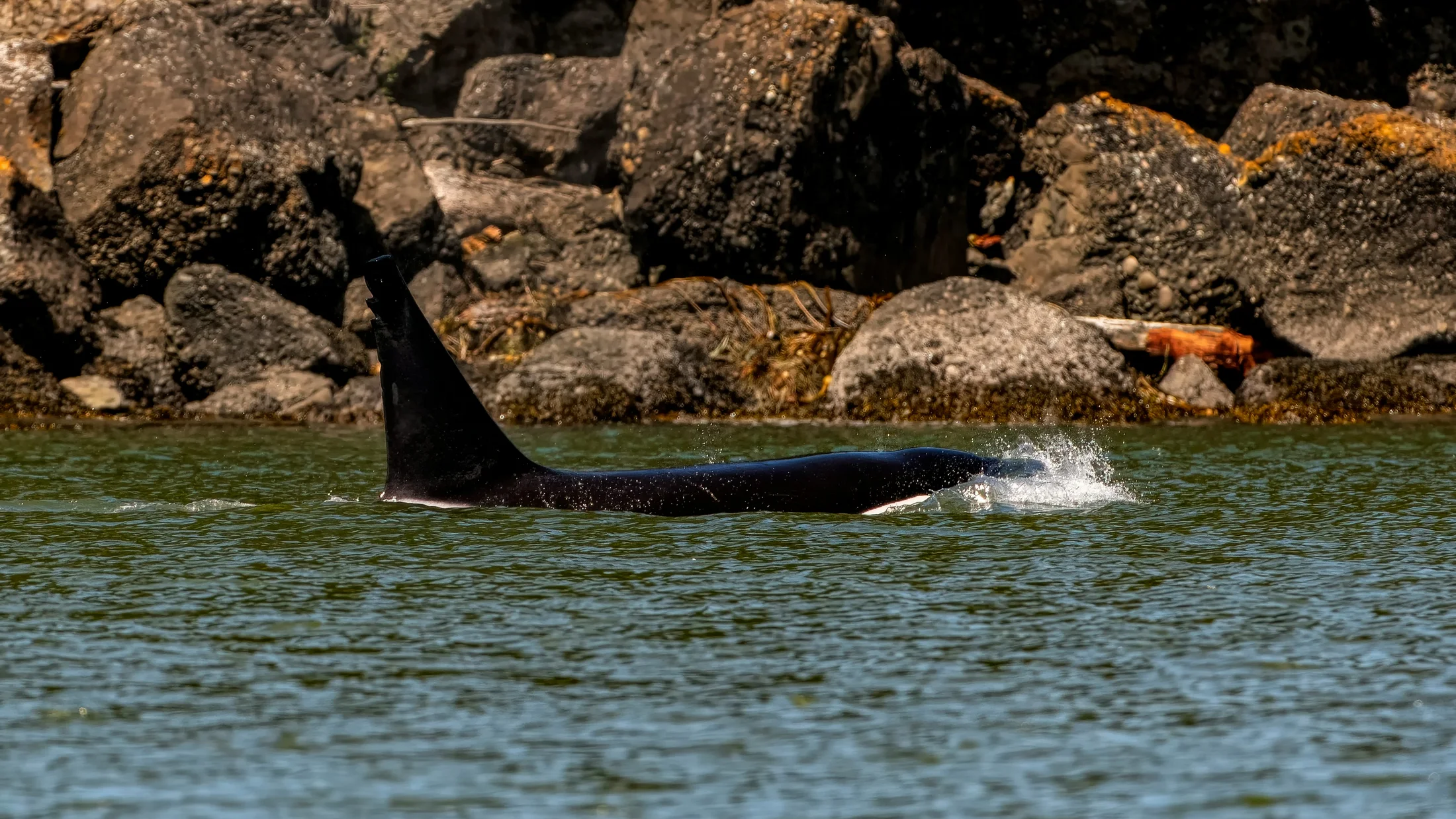
- Orca (Orcinus orca): transient groups linked to bluefin tuna runs; look for black-and-white saddle patches and tall dorsal fins (adult males up to 1.8 m tall). Behavior includes coordinated hunting and fast, directed swimming. Appearances can be brief and purposeful.
- Bottlenose dolphin (Tursiops truncatus): robust bodies, curved dorsal fins; often surf bow waves and approach boats on their terms.
- Common dolphin (Delphinus delphis): hourglass flank pattern, energetic groups, frequent porpoising.
- Striped dolphin (Stenella coeruleoalba): thin, pointed rostrum, sleek bodies with pale side stripes, often in large, coordinated pods.
- Long-finned pilot whale (Globicephala melas): dark bodies, bulbous heads, social groups that linger; frequent in the central and western Strait.
- Cuvier’s beaked whale (Ziphius cavirostris): elusive deep divers; tall, forward-leaning dorsal fin; short surfacings—best seen on calm days away from traffic.
- Fin whale (Balaenoptera physalus): second-largest whale; tall, columnar blow and asymmetrical jaw coloration; quick, purposeful transits across the Strait.
Why orcas here? The Strait funnels migratory prey, chiefly Atlantic bluefin tuna. Upwelling brings cold, nutrient-rich water that fuels baitfish and draws larger predators. Fronts—visible lines where water masses meet—can hold fish and plankton, attracting seabirds that act as surface flags for skippers. Local science groups (e.g., CIRCE) maintain photo-ID catalogs and collaborate with operators to monitor health and movement; you may see crews record time, GPS, group composition, and behavior during encounters.
Responsible watching matters:
- Distances and time: Spanish Royal Decree 1727/2007 sets minimum approach distances (commonly ≥60 m) and limits per encounter (typically ≤30 minutes), with larger buffers around calves and resting groups; operators know and enforce these.
- Approach rules: approach from the side and slightly astern, never head-on; maintain steady speed under
4–5 knotsnear animals; one boat inside the approach zone at a time. - Engines and noise: minimize throttle changes; avoid revving; keep PA systems low during close observation.
- Your role: follow crew instructions, keep quiet during close passes, and let wildlife set the terms.
Contribute to conservation:
- Choose operators who adhere to RD 1727/2007 and recognized codes like ACCOBAMS Guidelines; ask them to explain their protocol.
- Consider donating to local research NGOs that study Strait cetaceans; small contributions support photo-ID, strandings response, and outreach.
- Share photos with date/time to support citizen science when asked; clear shots of dorsal fins and saddle patches can aid ID.
Knowing the code keeps animals undisturbed and your memories unspoiled. Responsible choices today protect orca watching in Tarifa for seasons to come.
Where to Stay, Practical Tips and Essential Faqs
Planning your base, packing right, and setting realistic expectations will smooth your trip. Tarifa’s lodging ranges from simple hostels near the old town to rural houses tucked in cork oak valleys 10–30 minutes away. At dusk, the scent of jasmine and woodsmoke drifts through narrow streets as swallows loop over the walls. Use the tips below to match your style and season.
Places to stay near the port: town and countryside options
If boarding ease matters, staying in Tarifa’s center puts you a 5–15 minute walk from the harbor. Boutique hotels and apartments inside the old walls suit couples who want tapas and late strolls, while hostels near Avenida de Andalucía give budget travelers quick road access. In the surrounding comarca, rural guesthouses between Bolonia and Facinas offer quiet nights, starry skies, and parking for families or groups.
- Town center: best for car-free travelers and early departures; expect higher prices in July–August and on long weekends.
- Coastal barrios (Los Lances, Valdevaqueros): great for beach access and kitesurf ambience; a short drive to the port.
- Rural stays (La Ahumada, El Bujeo, Betis): ideal for nature-minded travelers; plan 15–30 minutes’ drive to the harbor.
Prices fluctuate with season; July–August can be 30–60% higher than spring or autumn shoulder weeks. Book flexible rates if wind forecasts guide your final dates.
Practical tips: clothing, seasickness, accessibility and photos
Dress and gear:
- Layer up: even in summer, bring a windproof shell; in winter, add a fleece and beanie.
- Footwear: closed, non-slip shoes; avoid flip-flops on moving decks.
- Sun: hat with chin strap, sunglasses with retainer, reef-safe sunscreen; glare is intense at sea.
Seasickness:
- Take medication 30–60 minutes before departure; ask a pharmacist about meclizine or dimenhydrinate if suitable for you.
- Eat light: a small, bland snack helps; avoid heavy, greasy meals and alcohol before boarding.
- On board: fix your gaze on the horizon, stand midship, and keep your head steady.
Accessibility:
- Tell the operator your needs when booking: mobility, hearing, or visual considerations.
- Ask about boarding height, ramp availability, seat types, and onboard toilets.
- Bring any assistive devices (folding canes, braces) and notify crew on arrival.
Photography:
- Camera settings: start around 1/1000–1/2000 s shutter, f/5.6–f/8, auto-ISO; burst mode for breaches/porpoising.
- Stabilization: brace elbows on the rail; keep straps wrapped to avoid swinging.
- Respect distance: long lenses (200–400 mm) help you capture detail without crowding wildlife; never ask skippers to get closer than the code allows.
How and when to book a sighting: quick steps to secure your seat
- Check your dates against a 5–7 day marine forecast (wind and swell) and recent reports of orca sightings Tarifa 2026 or the current season from operators.
- Shortlist two boat types that fit your group (e.g., catamaran for stability or small boat for fewer people).
- Compare terms: duration, languages, re-ride policy, and cancellation thresholds; read conditions carefully.
- Reserve online 2–3 weeks ahead in summer, 7–10 days in spring/autumn, and 3–5 days in winter fair-weather windows; this is the safest way to reservar avistamiento orcas Tarifa with clear paperwork.
- Add a backup slot in your plan in case wind cancels your first choice.
- Confirm the meeting point the day before; watch for operator SMS about gates and timing.
Look for deals midweek or on first/last departures of the day, but never trade away safety guarantees or re-ride policies to save a few euros.
What are my chances of seeing orcas?setting realistic expectations
Chances depend on season and sea state. As a rule of thumb, winter sits lowest (about 5–15%), spring rises (20–40%), summer brings the strongest orca weeks (40–70% on the right windows), and autumn stays steady (30–50%). These are relative ranges, not promises, and they can shift year by year with tuna timing and weather. On glassy mornings, a single dorsal fin can turn a good outing into a great one.
Operators rarely guarantee orcas specifically; ethical practice avoids pushing close calls. Many do offer a re-ride if no cetaceans at all are seen. Go in aiming to meet the Strait’s cast of dolphins, pilot whales, and seabirds—and treat orcas as the bonus that often arrives when conditions align. If you do not see orcas, use your re-ride or ask for a seat on the next good-weather window.
Is it safe for children and travelers with reduced mobility?guidance and options
Yes, with the right boat choice and preparation. Larger catamarans with wide decks, handrails, and toilets are best for families with small children and strollers. Spanish regulations require child lifejackets; crews will brief you on fitting and movement on deck. For travelers with reduced mobility, confirm boarding arrangements in advance and choose a sailing with calmer forecast conditions. The deck smells of sun-warmed rope and sunscreen when families settle into the lee side.
Recommendations:
- Bring layers and snacks for kids; shade is key in summer.
- Ask about seating and shade before booking; some boats have covered areas.
- If balance is a concern, avoid RIBs and choose a catamaran or stable monohull.
- Notify the operator of any medical devices or assistance needs; early boarding can help.
Cancellation and refund policy: what happens if the wind changes?
Wind and swell dictate departures. Most operators cancel when forecasts exceed safe thresholds (often Beaufort 5/short, steep seas for small boats), and you should expect:
- Rebooking on the next available calm slot at no cost.
- Full refunds if your schedule prevents rebooking.
- Partial refunds or credits for combo packages if one component runs and another is canceled.
Before you pay, ask:
- “What specific wind/swell criteria trigger cancellation?”
- “Is the refund automatic, or must I request it?”
- “How far in advance will you confirm a go/no-go decision?”
For multi-day itineraries, consider travel insurance that covers weather cancellations of pre-booked activities. Keep receipts and confirmation emails for smooth claims.
Other ways to round out your trip:
- Beaches and wind: watch kites at Valdevaqueros or Los Lances; take a beginner lesson on calmer Poniente days.
- Bird migration: visit
Mirador de Cazallafor raptors in spring/autumn flyway peaks. - Roman heritage: explore Baelo Claudia at Bolonia (~22 km NW); pair with dunes and anchovy-scented chiringuitos.
- Food: try almadraba bluefin tuna (seasonal, spring–early summer) and local retinto beef; book restaurants on weekend nights.
Plan with the wind, keep expectations flexible, and Tarifa will reward you with sea and sky in motion.
Book your experience — discover verified outdoor activities across Spain with providers curated by Picuco.
Conclusion: Reserve Early, Choose Well and Travel Kindly
Tarifa’s narrow gateway between seas turns currents, prey, and predators into a living lesson—and that is why orca watching Tarifa belongs on your 2026 plan. Your best time depends on your priorities: quiet decks and lower prices in spring and autumn, or peak orca windows and more departures in summer. Pick your operator by safety, group size, language, and responsible-watching credentials, and dress for wind even on warm days. As the sun sets behind the dunes and the harbor cranes silhouette against rose light, the Strait feels both intimate and immense.
Keep the essentials close: check AEMET forecasts, book a backup slot, and confirm meeting points the day before. Know that dolphins, pilot whales, and fin whales often share your stage even when orcas are elsewhere, and that every minute with wildlife is a privilege under clear rules designed to protect them. Reserve early, choose crews who follow the code, and bring quiet curiosity on board. The reward is simple and rare: wild animals doing wild things, just off the wall of Spain’s southernmost town.