Introduction
The May Bank Holiday of 2026 brings spring days to move around Spain without rushing. Here you have a guide to active getaways with proven plans for different levels and types of adventure.
The plans last from 2 to 4 days and include routes, indicative prices and practical tips. They are designed for couples, families and groups of friends.
The proposals are chosen according to accessibility, safety and sustainability, so that you travel light and with judgement. In May, the whole of Spain peeks into spring: it smells of thyme on the trails and of salt on the coast.
Why May invites you to move
May lengthens the days, fills the valleys with flowers and leaves mild temperatures in much of Spain. With the bank holidays linked together, you can go away for 3-4 days without stress, perfect for trying something new or resuming the activity you left behind.
June is not yet hot and summer is still far away, so you avoid the heat and the crowds. Bookings are cheaper and many activities work with small groups, which adds safety and quality.
The early light paints the slopes yellow and the sea smooths out at dawn. If you want the plan to leave something good behind, choose local operators and protected areas with clear rules.
How we choose these proposals
Four departure cities and a three-day bank holiday: that is how we have filtered the plans. We ensure that Madrid, Barcelona, Valencia and Sevilla are within a reasonable time, with train, bus or short flight as an alternative to the car.
Physical level also counts. There are routes with easy and moderate variants, and guided options for those who prefer to go with someone who knows the terrain. In the mountains and on the coast we look for the same: suitable season, qualified guides and clear official rules.
For families, we choose manageable distances and simple logistics. We discard areas with a high risk of snow or storms during these dates and provide realistic cost ranges per person, including activity and accommodation.
Prices are indicative. Before setting off, check updated capacities, permits and schedules.
The afternoon wind on the coast and the freshness of the high mountains close the day with the same cold caress.
Picuco te puede ayudar
Does something here catch your eye?
Tell us.
Write to us on WhatsApp or email: we answer questions, find the best options and help you sort out the booking.
The essentials to make the most of the long weekend
May extends the days up to 14 hours of light at middle latitudes and leaves mild temperatures in the north and the centre. With that margin, you can walk, cycle or row without extremes, and the blooms at altitude add colour to the routes.
Active tourism companies are working at full capacity and summer has not yet saturated schedules. You will find a variety of proposals and small groups.
The 1st of May and, in many communities, the 2nd of May allow you to fit in 3 or 4 days: you leave on Wednesday afternoon or early Thursday and return on Sunday. With that margin, a two-stage trekking, a kayak + snorkel combo or two mornings of surfing plus a coastal route fits in.
Book with moderate notice: 2-4 weeks are enough in most destinations, except for specific slots and permits such as Teide peak. The average daily budget ranges between 40 and 120 € (guided activity + basic accommodation), with room to adjust in rural pensions or apartments.
Depending on what you feel like, these are the options that work best during these dates:
- Hiking: north and central systems with marked routes and family variants.
- Cycling: safe greenways, gentle profiles and easy rental.
- Surf: Cantabria and Asturias with active schools and wetsuit included.
- Kayak: Costa Brava with protected coves and 2-3 hour outings.
- Multi-adventure: mountain with via ferratas, canyoning and introductory climbing.
At sunrise, the silence in the valleys is only broken by a distant cowbell.
Getaways by type of adventure
1. Picos de Europa: alpine hiking with gorge and lakes
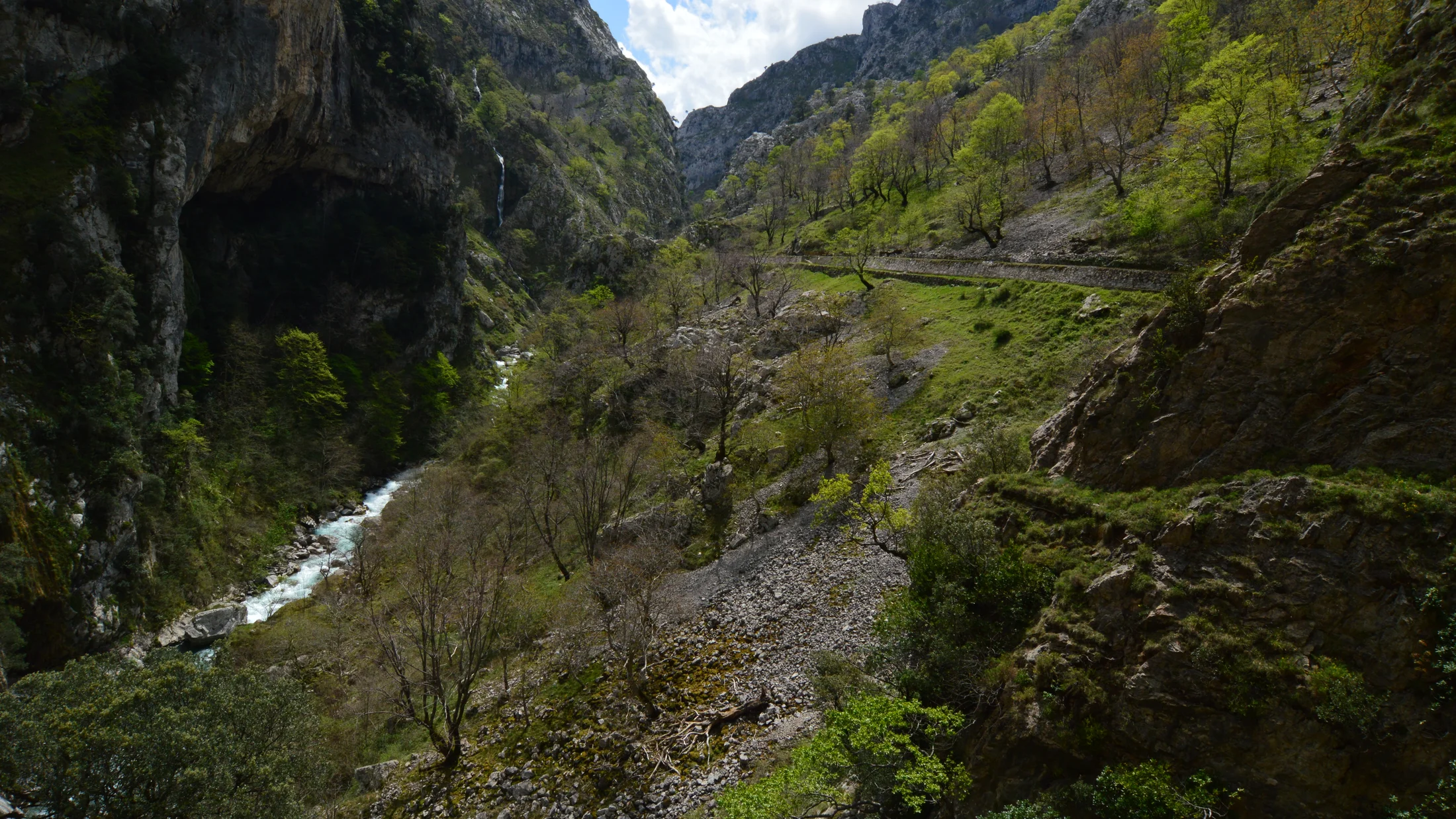
In May, the Picos de Europa offer green mid-mountain and a humid breeze in the Cares Gorge. It is an alpine hiking getaway for the May long weekend, with iconic routes and variants for different levels.
The Cares Route is the best-known plan: the most popular section is slightly more than 12 km between Caín and Poncebos. It does not accumulate large elevation gains, but it does have aerial terraces. The Cares Gorge, known as "the divine gorge", runs through grey limestone walls over unprotected precipices.
In the Covadonga Lakes, you have longer variants towards the Ordiales Viewpoint, with more than 5 estimated hours and 1759 m of maximum altitude.
On the second day, you can do the Covadonga Lakes with a gentle circular route, and on the last day, visit a village with a local cheese factory before returning.
- Optional guide for Cares or Lakes: 35–60 € per person.
- Bus to the Lakes: 9,00 € per adult.
Make the most of the clear mornings and avoid the middle hours if there is high attendance; spring is a recommended season for the Lakes. The plan fits couples, families with children from 8–10 years old and moderate hikers.
Bring hiking shoes, a waterproof jacket, a headlamp and water, and a thermal layer even if it is sunny, because the weather changes. Check the status of routes and residual snow at high altitude (AEMET, National Park). The Cares has exposed sections: be careful with wind and with children, do not step on hard snow patches without equipment and avoid ridges if ice remains. Parking at the Lakes may be restricted, so consider shuttles if they are active.
2. Teide National Park: volcanic trekking and clear skies
It is one of the most consistent May Bank Holiday 2026 getaways in terms of weather, with a sky that seems to draw closer at night.
The Cañadas Trail covers 16 km between lava flows and viewpoints. The Samara Trail is a low-difficulty circular route, with panoramas of several volcanic cones from the foothills of the Sámara volcano; it is advisable to check for possible closures due to European mouflon control days. The Arenas Negras Trail leads to the PNT 04 Siete Cañadas Trail, which takes you back to the starting point at the El Portillo Visitor Centre.
To reach the peak, the cable car goes up to 3,555 m and the final section (Telesforo Bravo) requires a mandatory permit and a restricted time slot. The permit costs 15 € for non-residents and 6 € for residents in the rest of the Canary Islands; it is free for residents in Tenerife and children under 14, with limited slots that must be booked weeks or months in advance. You can also ascend on foot via Montaña Blanca–Refugio/La Rambleta, which is highly demanding. The cable car costs 35–45 € per person (check current rates).
At night, guided astronomical observation starts from 35.00 €. In the morning, skies are more stable; in the afternoon, developing clouds are possible. This plan is perfect for couples and groups looking for unique landscapes and for lovers of volcanic trekking.
Book the peak permit in advance. Bring warm clothing due to the low temperatures at altitude and high sun protection. A car makes it easier to move between viewpoints; there are buses with limited schedules. Listen to your body and stay hydrated due to the altitude, and have a plan B on lower trails if the strong wind stops the cable car. Respect the paths: the ground is fragile and the regulations are strict.
3. La Rioja and greenways: easy cycling and village flavour
The pedal turns smoothly between vineyards and poplars that shine in the sun. La Rioja offers safe greenways and stretches of quiet roads for family cycle touring and relaxed getaways. At midday, it smells of vine shoots and warm bread.
-
What to do:
-
Oja Greenways (Ezcaray–Casalarreina): ~26 km, gentle profile, ideal for out-and-back trips in sections.
- Cidacos Greenways (Calahorra–Arnedillo): ~34 km, tunnels and riverside landscapes.
- Wine tourism: wineries with tasting and traditional menus.
- Thursday: arrival in Ezcaray or Arnedillo, bike adjustment.
- Friday: Oja section (20–30 km out and back) and an afternoon in the village.
- Saturday: Cidacos section with a stop at the Arnedillo spa.
- Sunday: local market and return.
-
Indicative price:
-
Bike rental: from 25 € per day; e-bike: from 45 € per day.
-
Best time during the bank holiday:
- Cool mornings; mild afternoons for visits to wineries.
-
Ideal for:
- Families, beginners, relaxed cycle touring.
-
Practical recommendations:
- Book bikes (sizes/e-bikes) in advance.
- Helmet, lights for tunnels and windbreaker.
- Check the Greenways Network for maps and temporary diversions.
-
Safety:
- Respect signage, pay attention at road crossings.
- Hydration and sunscreen; May can be deceptive with moderate temperatures.
If you are looking for bike routes during the May Bank Holiday without traffic and with a gastronomic plan, here you set the pace and the landscape accompanies you. The wheel creates a constant hum when passing over the planks of a footbridge.
4. Cantabria and Asturias: spring surfing and lively beaches
The schools offer classes for beginners and rent equipment: wetsuits in all sizes and boards for all levels, from softboards to evolutionary boards.
A 3–4 day itinerary works well: arrive on Thursday and stroll along the coast; on Friday, take a surf lesson in the morning and spend the afternoon at the beach or at the viewpoints; on Saturday, it's time for a free session or a second class and seafood tapas; on Sunday, the local market and return. The best time during the long weekend is the morning with mid-tide and light winds, always with the local forecast at hand. This plan is great for groups of friends, active couples and families with teenagers.
For the water, bring a 4/3 mm wetsuit and booties: it's around 13–16 °C. Book classes during the best tide slots and ask for photos to improve, and pack a dry change of clothes and a thermos with a hot drink. Respect currents and peaks and ask lifeguards and schools: in May, there might not be daily rescue services, so stay within your level. Warm up out of the water and avoid hypothermia.
5. Costa Brava: kayaking between coves and clear snorkelling
In May, the sea in Costa Brava is usually calm in the morning and the coves have very transparent water, with fewer people than in summer. It is the perfect time to paddle between caves and rocky arches.
The classic route is Llafranc–Calella–Tamariu, with caves and rock arches. Another option is Cala Montgó–Punta Milà: cliffs with views of Cabo de Creus and seabeds. It is a 10.5 km (5.7 nautical miles) route, of medium difficulty and 4.5 h, starting and ending in Cala Montgó (L'Escala).
There is guided kayaking for 2–3 h, kayak + snorkelling and paddle surf combos, with stops in coves to swim and have a snack. The guided kayak tour costs 58 € per person (VAT included), with equipment and life jacket included. Guided snorkelling costs 20–35 € p.p.
A 2–3 day itinerary works well with the long weekend: arrive on Saturday and explore the coast from the viewpoints; on Sunday, head out by kayak early in the morning and go snorkelling; on Monday or the holiday, walk along the coastal path and return. Get up early to avoid the tramuntana wind and the afternoon swell.
The plan is great for couples and families, and absolute beginners are welcome. Book your spots 1–2 weeks in advance and bring a UV shirt, a cap, water and a dry bag. Check the sea conditions before heading out.
For the Cala Montgó–Punta Milà route, you need to be at least 14 years old, be at least 145 cm tall, not exceed 120 kg or 2 m in height and know how to swim. Keep your distance from the rocks with side swell, always keep your life jacket fastened, do not force long crossings with wind and watch out for the occasional jellyfish.
6. Sierra de Gredos and Sierra Nevada: high-altitude multi-adventure
The May Bank Holiday is a great time to try via ferrata, canyoning and introductory climbing with mountain guides: the water flows and temperatures are moderate. These are the adventure options you can combine in Gredos and Sierra Nevada.
In Sierra Nevada, the Río Verde gorge (Otívar) has slides, rappels and clear pools. For climbing, Cahorros (Monachil) is a classic school with a short approach and guide.
In Gredos and its surroundings, between Ávila and the Tormes/Jerte Valley, you can try a climbing baptism in sunny, low-altitude sectors. In the nearby gorges of northern Cáceres, there are introductory canyons with controlled spring water flow and a guide. If you travel with children, the treetop adventure parks are the simplest plan.
Dedicate one day to each activity and leave room for travel between valleys.
- Day 1: arrival, equipment check and acclimatisation.
The first day is for arriving, checking your gear and getting used to the altitude before starting the activities.
Book your accommodation for the night of arrival and leave the rest of the day free from demanding plans. This way, you start the activities the next day with your gear checked and your body adapted to the altitude.
- Day 2: star activity (Canyon or ferrata).
You dedicate the second day to the star activity: a canyon or a ferrata, depending on the terrain you choose. Book your spot in advance for the May Bank Holiday, because these are the dates with the highest demand at guide companies.
- Day 3: climbing/short trekking to loosen up.
On the third day, it's time for climbing or a short trek to loosen up your body before returning. Choose a simple route or a trek of a few hours and leave the afternoon free for the return journey.
- Day 4: village and return.
The fourth day is dedicated to visiting a village and returning. Before leaving, check the local water flow reports and the AEMET forecast.
Mornings are the best time during the bank holiday: May brings occasional convection and storms usually arrive in the afternoon. If there is a storm, the activity is cancelled or relocated, so ask about the policies before booking.
Qualified guides work here and the group ratio is small.
Bring footwear with good soles, thin gloves for ferrata and a swimsuit with a thin thermal for canyoning. In ferrata, follow the progression and the rest points; do not move ahead without permission.
The plan is perfect for groups and couples eager to try something new, and for families with children from 10–12 years old depending on the activity. It is one of the most complete active May Bank Holiday getaways: adrenaline, basic technique and landscape in a single backpack. The metal of the carabiner tinkles like a metronome on the wall.
Location map
An interactive map saves you from doubts and road time. You will see six markers with activity cards, best time of day windows, and nearby services. The colours will distinguish mountain, coast, and cycling, and the lines will mark main access points. The northern breeze seems to push the route across the map.
-
What it will show:
- Approximate driving times from cities:
-
Madrid: Picos 5 h 40 min.
-
Barcelona: Costa Brava 1.5–2.5 h.
-
Valencia: Costa Brava 4–5 h.
- Notable public transport:
-
Nearby stations (Santander for Picos; Girona for Costa Brava; Logroño for greenways; Granada for Sierra Nevada; Tenerife North for Teide).
- Main roads: A-8 (Cantabrian), AP-7/C-31 (Costa Brava), A-92 (Andalusia), A-1 (northern access).
- Links to recommended routes and official car parks (no account required).
-
How to use it:
- Activate layers by activity.
- Check "best window" for wind/temperature (AEMET base data).
- Download simple tracks where applicable.
This way you can adjust departures and returns according to traffic and weather, and decide whether it is worth it to take the train + local transfer or drive directly.
How to choose your getaway
With two days, choose one central activity and cut down on travel; with three or four, add a second experience or a circular route. Before booking anything, look at the actual time you have and the energy you have when arriving for the long weekend.
Duration dictates the plan. In two days, you can fit in the nearby coast with kayaking or surfing, or a local greenway. With three days, aim for hiking in Picos or cycling in Rioja with a tasting. With four, the Teide with an ascent or multi-adventure in Sierra Nevada.
Practical tip
Travel with two versatile layers and leave space for a thermos and a minimum first-aid kit; May changes from cool to mild quickly. Gather bookings and weather reports in a single note on your phone to decide on optimal windows each day.
Position yourself at a level so you don't choose wrongly. In easy, you walk 2–3 h continuously through comfortable terrain and you recover quickly the next day. In moderate, you accept elevation gain or basic technical activity, such as an introductory via ferrata or a short canyoning trip. In demanding, you accumulate 6–8 h of effort or notable elevation gain and altitude, such as Teide on foot.
Bookings are made in layers. Block accommodation 3–4 weeks in advance in popular destinations like Costa Brava and Picos. For activities with limited capacity, canyoning, and via ferratas, request them 2–3 weeks in advance; for the permit for Teide peak, even further in advance. For rental equipment, bikes or e-bikes, and boards, book 1–2 weeks in advance and indicate size and time.
The estimated budget per day and person is around 40–120 € (guided activity + basic accommodation), with margin to adjust in rural guesthouses or apartments.
Equipment changes depending on the plan. For hiking, trainers or boots, a 20–30 L backpack, waterproof jacket, thermal layer, headlamp, and a basic first-aid kit. For cycling, helmet, gloves, front and rear lights, water bottle, and cycling shorts or chamois. For surfing, suitable wetsuit (usually provided), towel, waterproof sunscreen, flip-flops, and a change of dry clothes. For kayaking or snorkelling, UV shirt, cap, sunglasses with a strap, dry bag, water, and a snack. For multi-adventure, sticky-soled shoes, thin gloves, swimwear, thin thermal for canyoning, and a windbreaker.
Buy local, respect the rules, and leave the place a little better: the guides and the villages that host you sustain these landscapes.
Frequently asked questions
How far in advance should I book activities and accommodation?
For the May Bank Holiday, booking 2–4 weeks in advance is usually enough. With that margin, you will find spots for most activities and accommodation at reasonable prices.
There are exceptions that require more foresight: Teide permits and highly sought-after accommodation on the coast and in Picos. If your plan depends on them, settle it before that window.
When booking, confirm the cancellation policies so you don't lose your money if the weather changes.
What weather can I expect in May depending on the Zone?
May distributes very different temperatures depending on where you go, and that changes the plan. In the north and in the mountain systems, you will have between 8 and 18 °C, with possible rain and afternoon storms.
On the Mediterranean coast, the range rises to 14–22 °C and mornings are calmer. In the Canary Islands, you will find mild and dry weather at altitude, and cool at sunrise.
Bring a waterproof layer and check the weather report 24–48 h before heading out.
What is a must-have for an active 2–4 day plan?
An active 2–4 day plan can be managed with little luggage, but with the right items well chosen. Think about what you are going to do and about the weather that can change in the middle of the day.
Bring suitable footwear, a lightweight raincoat, sun protection, water, and some warm clothing, even on the coast. If the plan includes cold water, such as surfing or kayaking, ask beforehand if a wetsuit is included. For mountain plans, add a headlamp and a basic first aid kit.
Prepare your backpack the night before and leave out what you are not going to use. This way you leave early and make the most of the full day.
Are licences or permits necessary?
In Teide, the final stretch to the peak requires a permit with an assigned time (National Parks). Request it before your getaway and carry the confirmed time.
Check the conditions a few days before heading out.
What insurance do I need?
Before booking, ask the company if it includes civil liability (CL) and accident insurance. It is standard for serious companies, and knowing this avoids surprises on the day of the activity.
If you are going independently, consider accident insurance with coverage for outdoor sports and rescue. Ask about the conditions before taking it out and check that the activity you are going to do is listed in the policy.
How do I manage cancellations due to bad weather?
In the event of bad weather, companies usually offer a date change, an alternative activity, or a partial refund depending on their conditions. Before booking, ask for the cancellation policy to be provided in writing.
To decide, look at the official reports: AEMET and, on the coast, the Maritime Captaincy. With that information, you can speak with the company and choose between changing the date or requesting the refund specified by their policy.
Is it safe to bring children?
Yes, as long as you choose adapted proposals: greenways, kayaking in calm areas, and marked trails. Under those conditions, the May Bank Holiday works well for families.
Before booking, confirm the minimum ages, equipment sizes, and the actual duration of the activity with the company. This way you can adjust the plan to what your children can handle.
Book with margin and plan stops and snacks during the activity. A relaxed pace ensures everyone enjoys the day.
Can I go without a car?
Yes, in several destinations during the long weekend you can get around without a car. Arrive by train or bus in base cities such as Girona, Oviedo, Logroño or Granada and from there sort out your local transfers.
In Picos and in remote coves, a car saves time. Consider carpooling or combining public transport with a local taxi.
Conclusion
Six plans for the May long weekend, with a clear balance between accessibility, safety and variety: kayaking on the Costa Brava, rock climbing in Gredos, Picos de Europa, Teide lava, cycling among vineyards and the northern wave.
Book in advance, check the weather forecast and choose local providers with qualified guides and up-to-date insurance. If a specific plan attracts you, book your base accommodation and block out the activity during the best time of day.
Before setting off, check the official permits and schedules for National Parks, the Greenways Network and the Teide Cable Car. Enjoy the plan without rushing and with respect for the environment: good tiredness tastes like bread, river and a small bonfire.