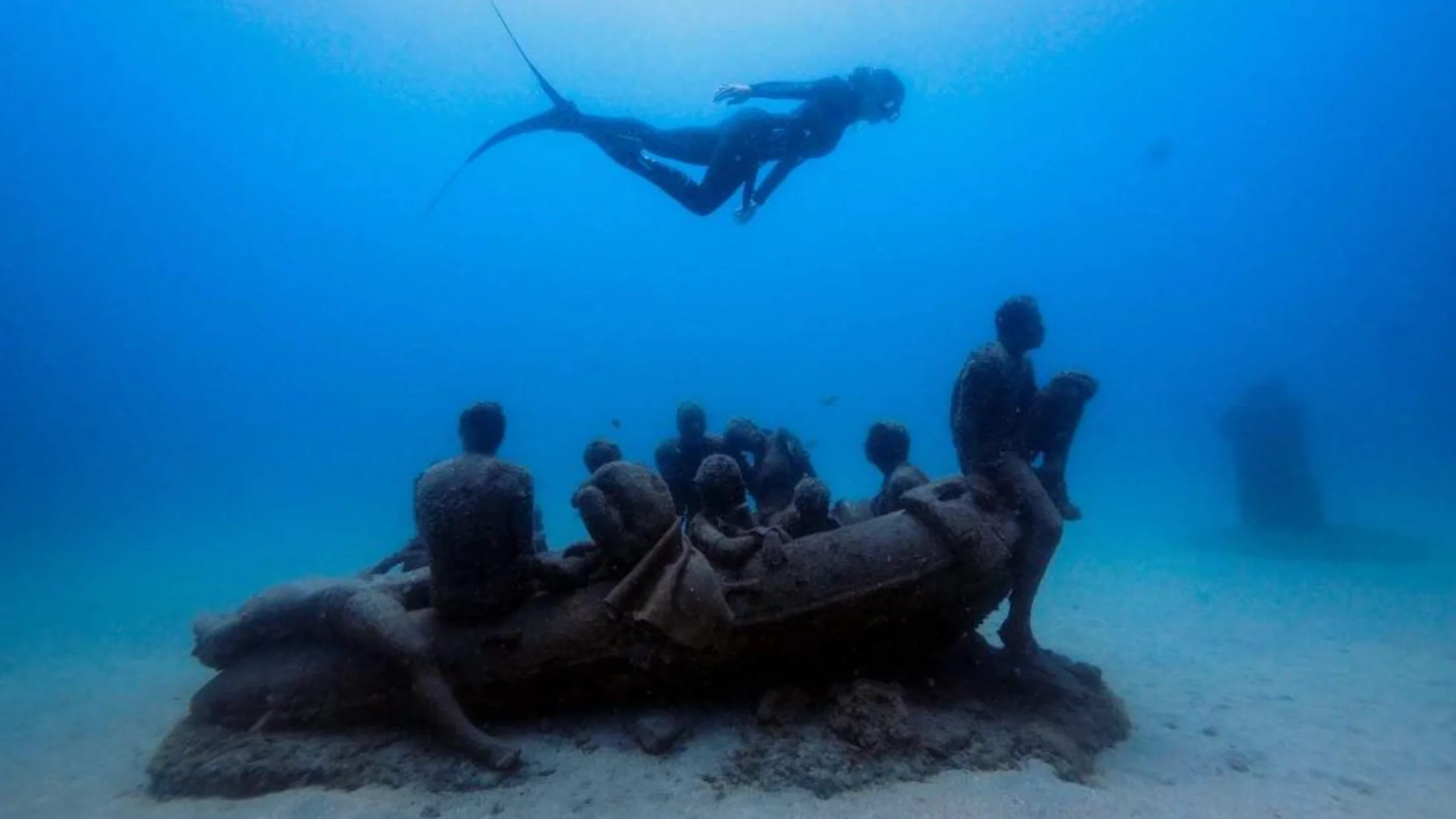
Between tides: a first dip in the Atlantic
Sunrise and first immersion
The sand is cold and the Atlantic, calm, invites you to enter. Adjust your mask well, take a deep breath and take your first step into the water at sunrise.
Snorkelling in Galicia attracts you with its wild landscapes and encounters with marine fauna. Beneath the surface, clarity comes and goes, rocks form refuges and small schools of fish swirl around you. A ray of sun pierces the green of the water and ignites, for a second, the spines of a sea urchin.
You don't need to go down much: the Atlantic character consists of rocky bottoms and meadows that sustain marine life. Wear a wetsuit to protect yourself from the cold and an orange buoy to signal your position on the surface.
What comes next
Three seas of cold and temperate water, and the same question: where do you put on your goggles? In the following pages, you have the essentials to plan your immersion: when to go, where to start and what equipment to bring.
The comparison progresses step by step between Galicia, Cádiz and Canarias: access, visibility, temperature and the fauna you will likely see. There is also space for safety, ethics and how to move with respect in protected areas, from marine reserves to national parks.
If you want to start with snorkelling in Galicia, you will find a minimal map to do it sensibly. The idea is that you leave the water having discovered something and without leaving more of a trace than an ephemeral trail of bubbles.
Picuco te puede ayudar
Does something here catch your eye?
Tell us.
Write to us on WhatsApp or email: we answer questions, find the best options and help you sort out the booking.
When, where and what to bring for Atlantic snorkelling
When to go: seasons, tides and visibility
In Galicia, the best window is from June to September, when the swell softens and the water is around 16–20 °C. In spring tides, enter near high tide to find less current.
In Cádiz, the pleasant peak is usually from May to October. The Levante wind can reduce visibility and stir up suspension, so check the wind before heading out.
In Canarias, you can snorkel almost all year round, with 18–24 °C. Maximum clarity arrives in autumn-winter, when the trade winds are dampened.
Check wind and swell forecasts with hourly data. If you are not used to it, avoid a swell higher than 1.5 m.
Visibility suffers after storms and with crosswinds. After 24–48 h of calm, it usually improves significantly.
Enter early: with low light, you see more contrast and the fish are more active at sunrise. The silence of dawn mixes with the hollow thud of a wave against the stone.
Where to start: accessible sites by Region
In Galicia, the Cíes Islands are a good first dip: mixed seabeds and partial shelter on beaches like Rodas and in the rocky areas of the Nosa Señora zone. The relief combines cliffs of more than 150 metres on the west face with beaches on the east face.
You arrive by boat from Vigo, Cangas or Baiona (40–45 min). In high season, you need prior authorisation from the Xunta de Galicia due to the limit of 1,600-1,800 daily visitors, and when buying the ticket from Vigo, the permit management is already included. Prices range from 24 € in low season and 27.50 € in summer from Vigo; transporting pets on the boat to the islands is not permitted.
If you are looking for open coast, the small protected coves of the ría de Aldán are friendly alternatives. Choose shores with moderate foam and progressive entry.
In Cádiz, the coves of Roche and the surroundings of Zahara or Bolonia allow access on foot. West wind days leave clear waters; look for corners sheltered from the east wind and avoid river mouths after rain. On boat trips near the Parque Natural del Estrecho, the skippers know the reefs and shallows that remain safe from the wind that day.
In the Canary Islands, choose volcanic bays with shelter such as La Restinga (El Hierro), Las Teresitas on the breakwater side (Tenerife) or Caleta del Sebo in La Graciosa, situated in the south-eastern part of the island and on the Atlantic coast, near the core of Pedro Barba. Entries via ramp or rock pool and frequent signage of bathing areas help beginners. In areas with rip currents, plan a parallel coastal route and a marked alternative exit.
The black stone of the Canarian coastline absorbs the sun and warms your feet before the plunge.
What to bring: equipment, safety and useful extras
A well-fitting mask and a simple snorkel, with a valve if you find it comfortable, are enough to start. Add short-to-medium blade fins: you manoeuvre better in shallow water and near rocks.
The neoprene changes depending on the region. In Galicia, a full 5 mm suit in summer if you are sensitive to the cold; in Cádiz, 3–4 mm; in the Canary Islands, 2–3 mm or a shorty in the warm months. Hard-soled booties protect you on rock or rock pools, and in Galicia, thin gloves and a hood are appreciated.
Safety is worn. A buoy with an alpha flag and a short rope makes you visible and allows you to rest if there is a swell. Always enter with a partner (buddy system) and agree on basic signals before getting into the water. Leave your phone in a waterproof case on the shore and fix a clear exit point.
To observe and remember, bring laminated Atlantic marine fauna identification charts or an offline app. A compact camera with a strap and float serves to immortalise what you see: do not chase the animals, observe them from a distance. Add "reef-safe" sunscreen and a dry bag for your clothes.
In Cádiz and the Canary Islands, a light neoprene vest provides extra buoyancy without reducing mobility. If you are starting out, an inflatable vest facilitates rest and relaxed breathing. A salty breeze dries the skin while the neoprene drips as if counting the time.
Galicia, Cádiz and the Canary Islands underwater: similarities and contrasts
Galicia, Cádiz and the Canary Islands share the ocean, but the water changes a lot from one coast to another. The temperature, visibility and the type of seabed decide where you are going to feel more comfortable with your mask and snorkel.
In Galicia the water stays between 16 and 20 °C in summer and typical visibility goes from 5 to 15 m, variable. Below the surface there are seagrass meadows, rocks and a wild environment.
Cádiz increases the temperature: an average of 22,4 °C in summer and 23,4 °C in August. There are protected coves, mixed seabeds and a luminous coast, with access from the beach and local departures.
The Canary Islands win in clarity, with 5–15 m of visibility depending on the conditions, and are explored from beaches and volcanic coves between May and November. The lava seabeds and subtropical species make the difference. From December to March, look for the south and west coasts: the north and east receive more swell.
In El Puertito (Adeje) resident green turtles, parrotfish and octopuses swim at depths between 2 and 5 m. Turtles are protected by law: do not touch them, do not feed them and do not approach them with sudden swimming.
Some accesses require effort. To the northeast of the Canary Islands, off the north coast of Lanzarote, is the Archipiélago Chinijo marine reserve, the largest in the European Union at 700 km².
If you want to try scuba diving, a discovery dive costs between 80 and 120 € depending on the centre. Book in advance during high season and choose the coast according to the time of year.
1. Galicia: Cíes Islands, rocks, meadows and cold encounters
Galicia is cold water loaded with nutrients: visibility changes with the background sea and upwelling. In Cíes, Rodas beach and Nosa Señora are the most prominent beaches of the islands.
Look for areas sheltered from the dominant wind and enter at sunrise, when the sea tends to be calmer. In high season you need prior authorisation from the park to land on the Cíes Islands; the marked paths allow you to move on foot.
kayaking through the sea of Galicia
In the ría de Aldán you will see numerous mussel farming bateas, and the island of Ons has rocky seabeds with abundant Atlantic fauna. The round trip to these rias costs between 18 and 25 €. Boat departures through the ría de Aldán are from 10:00 to 14:00 or from 16:00 to 20:00, with a meeting point at the Puerto de Aldán (Cangas).
Visibility varies between 5 and 15 metres depending on the conditions, and a wetsuit is essential. Wear a 5 mm wetsuit with a hood if you stay for more than 45 minutes, thin gloves and a visible buoy due to the traffic of small boats.
In the temperate rocky areas there are sea urchins, elusive lobsters, seabass hunting at the tips and, occasionally, juvenile groupers in deep pools. A greenish glow envelops the pebbles as if the forest reached the water.
The best colour arrives with high sun after two days without a storm. Avoid very low tide hours due to the currents in narrow passages.
2.Cádiz: temperate waters, sheltered coves and coastal life
Cádiz has a friendlier Atlantic without losing its character: sheltered coves and entries from the beach for simple circuits, with the exit in sight at all times. Access is easy, you park nearby, walk for a few minutes and enter via sand or pebbles.
The mixed rock and sand seabeds host obladas, salemas and doncellas. The midday light breaks on the surface like broken mirrors and clearings. In Bolonia, there are bottlenose dolphins and Roman-era archaeological remains underwater.
The wind rules. With a strong Levante, schools cancel outings because it generates complex currents and reduces visibility; the Poniente cleans and cools the water slightly. In Zahara, a light or moderate Levante flattens the sea and improves transparency.
The seagrass meadows are mainly Cymodocea nodosa and Zostera, essential for juvenile fish: do not step on them or lean on them, float above. In Zahara, the snorkelling areas are on the rocks of Playa de los Alemanes and in Cala del Búnker (Atlanterra), and the best time is high tide. Do not snorkel alone, stay close to the shore and watch the currents when approaching the capes.
Spring and autumn are the best seasons, with fewer swimmers and a more stable sea. Always carry a buoy: sometimes small boats approach the calm coves.
3.Canarias: clarity, subtropical species and volcanic landscapes
In Canarias, the water is at 22–24 °C in summer and snorkelling can be comfortably extended. Beneath the surface, the lava and dark sand seabeds are filled with viejas, fulas negras, pejeverdes, roncadores and salemas. With luck and from a prudent distance, you will see chuchos and loggerhead turtles.
In La Restinga-Mar de Las Calmas, in El Hierro, there are sheltered volcanic walls and easy entries into the water. La Graciosa, in the northeast of Canarias facing the north coast of Lanzarote, adds transparent bays with shallow seabeds. Its marine reserve is the largest in the European Union, covering 700 km², and forms part of the Parque Natural del Archipiélago Chinijo and the Los Islotes integral natural reserve.
In Tenerife, the coast of Anaga and Teno has sheltered coves when the sea allows; Teno is a botanical area of interest in the northwest of the island. The volcanic stone, to the touch, feels like freshly baked bread under the clear water.
Before entering, adjust your route according to the lateral current and the swell at the breakers: if the forecast indicates more than 1 m of north swell, look for leeward. Wear a 2–3 mm shorty in warm months, without gloves, and medium fins to cover calm distances. Avoid underwater fishing zones and stay within the buoyed areas where they exist.
On days of rough seas, hiking in Canarias allows you to explore the same volcanic landscape from land.
Safety, respect and meaningful routes
Always go in with someone: the buddy system is your safety net. Share basic signals with your partner and set clear limits for time and distance before getting into the water.
Mark your presence with a visible buoy and schedule breaks floating beside it. Fatigue sets in sooner in fresh water and with swell.
Check the report before entering: AEMET for wind, Puertos del Estado for swell and tide. From the shore, observe the current patterns and the breaking waves.
If you see persistent foam in narrow inlets, look for another area. Always have an alternative exit point and let someone on land know your estimated time of return. If in doubt, desist: the sea will be there tomorrow.
Book your experience — discover active tourism activities in Spain with providers verified by Picuco.
Do not touch or feed the wildlife: you alter their behaviour and expose yourself to accidents. Keep your distance from sea urchins, octopuses and rays. Over seagrass meadows (Cymodocea in Cádiz, sebadales in the Canary Islands) float and never propel yourself with hands or fins over the vegetation: they are nurseries for hundreds of species. In Galicia and Cíes, respect bird nests on the shore and anchoring zones.
Protected areas have their own rules. In the Canary Islands, the Chinijo Archipelago (La Graciosa and islets) stands out—the largest marine reserve in the European Union with 700 km², located off the north coast of Lanzarote—as well as La Restinga-Mar de Las Calmas (El Hierro). In Galicia, the Parque Nacional das Illas Atlánticas and reserves such as Os Miñarzos protect resources and habitats; in Cádiz, the Parque Natural del Estrecho, and marine ZEC and ZEPA regulate uses.
In the Parque Nacional das Illas Atlánticas, authorisation is required to visit Cíes or Ons during high season. Fire and bonfires, camping outside designated areas, leaving solid or liquid waste, accessing areas marked as inaccessible, and disturbing, harming, capturing or killing wild animals are prohibited. Get information at visitor centres and captaincies, and always follow the signage on the beach.
To design a meaningful route, start with the entry and exit: stable sand or rock, without slippery steps or direct breaking waves. Trace the route parallel to the coast, at 10–30 m from the shore, with a depth of 2–6 m and a marked alternative exit. Choose a window of good sea with wind < 15 knots, significant wave height < 1 m and a favourable tide; avoid peak currents in the passes.
Hire local and listen to skippers, shellfish gatherers and guides: their knowledge of the report and the rocks is worth more than any application. If you carry a camera, the best photo is the one that does not disturb. The hollow sound of your breathing in the snorkel sets a serene rhythm that invites prudence.
Conclusion: plan your responsible immersion
Galicia is the option for those seeking untamed coasts and rocky bottoms. Snorkelling near Cíes or in sheltered rías requires tolerance to the cold and patience. Cádiz fits if you prefer temperate water, accessible coves and long beach days. Canarias has clear waters and colourful fish over lava, and there you can practise snorkelling all year round. If you want to compare with other coasts, snorkelling in the Spanish Mediterranean is a warmer alternative.
Choose your window well: two days of calm after a storm improve visibility, and in Canarias autumn-winter is the best time. Design a short route with an alternative departure and check the tide and wind on the same day. Adjust your equipment to the region and to your tolerance to the cold, and practise buoyancy over seagrass meadows.
Hiring local certified guides provides safety and learning, and supports the coastal community. Share real conditions, access points and rules, and do not locate fragile sites that could become overcrowded.