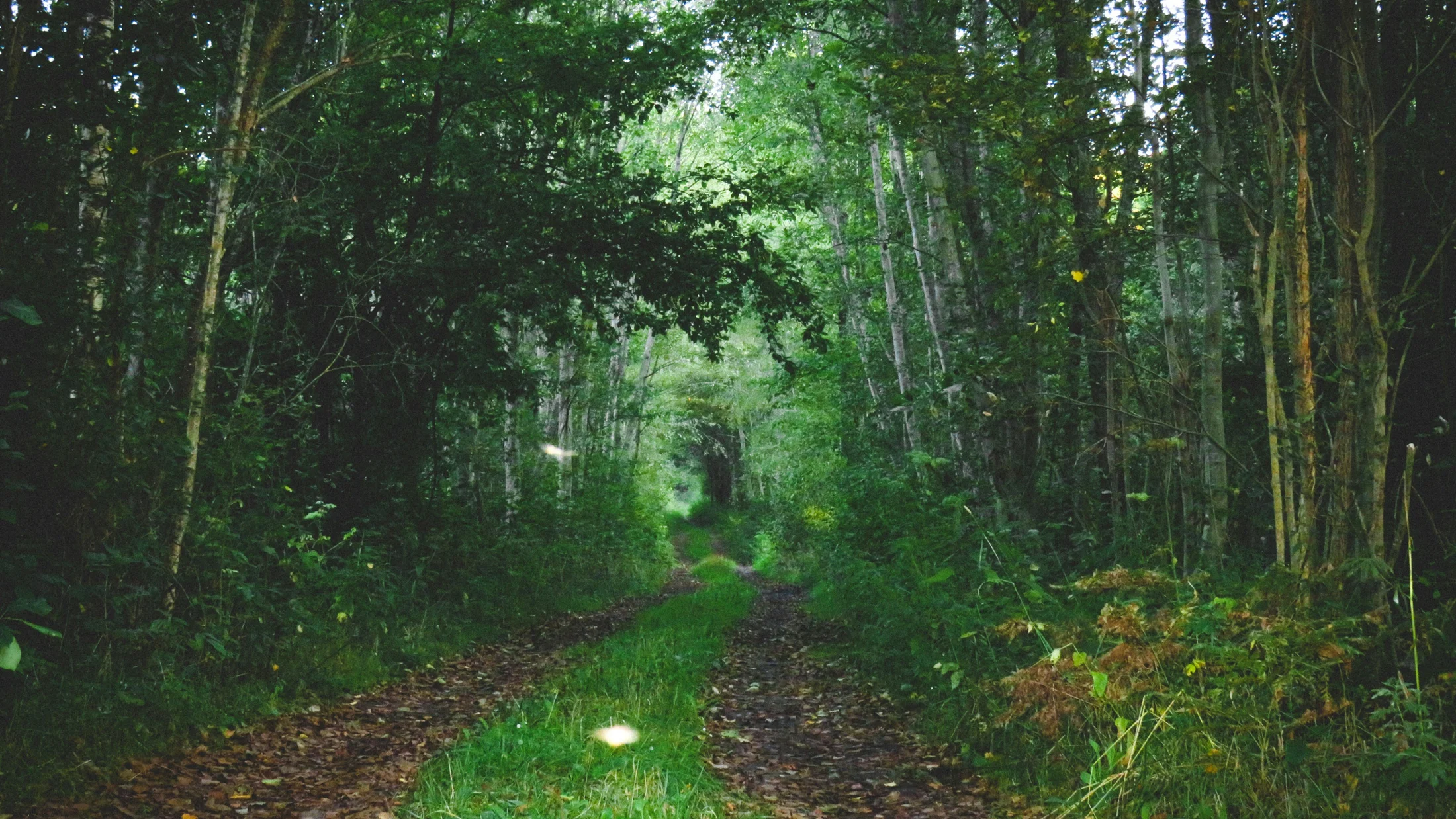
Why the Faedo de Ciñera looks like something out of a fairy tale
In Ciñera, León, a beechwood of centenarian European beech trees meets wooden walkways and a stream flowing down the valley. It is the Faedo de Ciñera, one of the most beloved forests in the province.
Mosses cover trunks and stones, roots twist, and the light turns green among the leaves. This mixture changes with every season and explains its reputation as an enchanted forest. Among the trees lives "Fagus", a European beech that can be about 800 years old.
The Faedo is part of the Alto Bernesga Biosphere Reserve (UNESCO, 2005) and received recognition as the "Best cared-for forest in Spain" by the Bosques Sin Fronteras association (2007).
The route starts at the Plaza de la Iglesia, in Ciñera, and there is free signposted parking next to the start. Wear footwear with good grip and respect the walkways to protect fragile roots and soil. Dogs are allowed, but they must be on a lead.
Quick context: what is the Faedo de Ciñera
The Faedo de Ciñera is a European beechwood (Fagus sylvatica) on the southern slope of the Cantábrica, near Ciñera de Gordón, in the municipality of La Pola de Gordón (León).
It is not an enormous forest, but it gathers many mature specimens and can be walked easily. That is why it has earned its fame among travellers looking for a forest walk in León.
It is called the "enchanted beechwood" because of its aesthetics: carpets of leaves, moss-covered rocks, and light filtered through the canopy. It occupies a small valley fed by the Villar stream, with walkways and bridges that organise the traffic.
The mixture of ancient European beech trees, water, and wood attracts visitors all year round. For the local population, it is a symbol of community care, the result of years of conservation and careful signage.
What you are going to learn in this guide
Getting to the Faedo de Ciñera has its tricks, and this guide starts right there: how to come from León and other cities, by road and by public transport. You will also see where to park and what restrictions must be respected.
Then we help you choose when to go depending on what you are looking for: a photography outing, a peaceful stroll, or a family plan. The Faedo Ciñera route is presented step by step, with distances, times, and variations.
The route is better understood knowing what to look for: unique European beech trees, streams, walkways, and key corners. Added to that are the legends, the mining memory, and the conservation values of the beechwood.
The guide ends with practical tips, a block of frequently asked questions, and resources to plan your getaway. Book a full day if you want to do the route calmly and stop at every point.
Picuco te puede ayudar
Does something here catch your eye?
Tell us.
Write to us on WhatsApp or email: we answer questions, find the best options and help you sort out the booking.
The essentials before you go: location, protection and the best time
The Faedo de Ciñera is in the province of León. The hike starts next to the urban centre and goes into the Villar stream valley towards the heart of the beechwood.
Just before entering the forest, the air cools down and smells of damp earth. The beechwood has a high ecological value and has been worked on for years to maintain it in good condition, so the visit requires care: do not leave the path or leave any litter.
Each season changes the forest. Autumn brings reds and ochres, spring the acid green of the buds, summer the cool shade, and winter the ice and silence for those who enjoy it. Choose the date according to what you want to see and wear footwear with good grip if you are going in the cold or rain.
Where it is and what protection it has
The Ciñera beech forest grows among the mountains, in a small mining village about 35–40 km north of León city. The route starts in Ciñera, next to the church, with approximate coordinates 42.885°N, -5.611°W.
Getting there is easy. There is free signposted parking next to the start of the route, and you can also come by ALSA bus to Ciñera or by FEVE train to La Robla and then take a taxi. From the square or the church, a signposted path leads you in a few minutes towards the walkways and the stream.
The beech forest is part of the Alto Bernesga Biosphere Reserve, declared by UNESCO in 2005. The reserve extends across the municipalities of La Pola de Gordón and Villamanín, with about 3,800 inhabitants in 36 localities, on the Leonese side of the Cordillera Cantábrica. In 2007, the Bosques Sin Fronteras association recognised this enclave as the “best-kept forest in Spain”.
Access is free and open, except for occasional restrictions due to adverse weather. Stick to the marked paths, do not make fires or camp, and look after the flora and fauna. Respect the walkways and do not climb on trunks or roots. Pets are welcome, provided they are kept on a lead to protect the wildlife and avoid trampling off-trail. If you are going in a large group, check with the town hall to coordinate times and minimise impact.
The best time to visit is autumn (October–November) or spring (April–May).
When to go and how it changes with the seasons
Spring and autumn provide the most sought-after views; summer and winter call for a different way of walking.
It is a good time for macro photography and tranquil strolls, although you may find mud on the path. The days are longer, so allow 2–3 hours of margin to enjoy it calmly.
The beech forest can be visited all year round, although it is hot in summer. You can combine it with nearby pools in the stream without leaving the permitted areas. If there is a heatwave, avoid the middle hours and bring extra water.
Weekends have maximum attendance: arrive early or go during the week. For photos, look for the early hours or the late afternoon.
Wear footwear with aggressive soles and consider lightweight microspikes if there are patches of ice. The days are short: check the sunset time and do not rush at the last minute.
Before setting off, check the weather forecast (strong winds, heavy rain) and the state of the stream, which can flood specific sections after storms.
How to get there and where to sleep nearby
Al Faedo de Ciñera is reached by road, and the journey by public transport is viable with a last mile by taxi. Calculate that final stretch before setting off so you don't get stuck halfway.
Parking usually has no cost, but it is advisable to know where to do it so as not to saturate the narrow streets of the village. Leave the car in the designated areas and finish the access on foot.
To sleep, there are rural houses and simple hostels in Ciñera de Gordón and the surrounding areas, useful for extending your getaway. Book in advance if you are going on a weekend or in autumn, when the beech forest attracts more visitors.
Road access: recommended routes
Ciñera de Gordón can be reached via well-maintained asphalt, without the need for a 4x4. The beech forest is about 35–40 km north of León city, in Ciñera de Gordón.
From León capital, you combine dual carriageways and local roads. You can go via the N-630 towards La Robla/La Pola de Gordón or via the A-66, on the section parallel to the AP-66 toll motorway, until the La Robla/La Pola de Gordón exits. From Oviedo, you drive via the A-66/AP-66 towards León and take the detour towards La Pola de Gordón/Ciñera. From Burgos, you arrive via the A-231 and the N-621/N-630 towards León and continue north to La Robla/La Pola de Gordón.
Once in La Robla or La Pola de Gordón, follow the signposted local roads to Ciñera de Gordón. The "Faedo de Ciñera" signs and local signage will guide you to the start of the route.
Leave your car in Ciñera, where there is a free signposted car park next to the start of the route.
Parking and public transport
In Ciñera, you can park in the designated areas of the village, in the large areas next to municipal facilities: the field, the sports centre or the swimming pools, depending on the local signage. Parking is free, but it can get full on autumn weekends, so arrive early or go during the week.
Do not park on narrow verges, estate entrances, meadows or unauthorised margins: it compacts the soil and damages neighbours' pastures. Respect the signs.
By train, Renfe regional services stop at nearby stations such as La Pola de Gordón or Santa Lucía. From there, you have to continue by local taxi to Ciñera. The La Pola de Gordón station has one daily train in each direction and the building is closed and fenced; only the platforms are operational.
The last bus to Ciñera leaves at 20:30 and the price starts from 4,09€. Book in advance due to the high demand for economy fares.
The last mile to Ciñera usually requires a taxi or an additional walk. Ask at your accommodation or at the town hall for local taxis and book them in advance during high season.
Rural accommodation in Ciñera and surroundings
Sleeping in Ciñera leaves you a step away from the beech forest and with the morning free to enter before the cars. The village and the nearby valleys have beds for almost any plan: families with their own kitchen, hikers who get up early or couples who want a nice dinner upon return.
Rural houses are rented in full or by room. They are great for families and groups of friends looking for their own kitchen and fireplace, and their hosts usually recommend routes and quiet spots.
Hostels and simple accommodation suit hikers and photographers who want to get up early to have the beech forest in calm. If you travel as a couple, rural hotels and charming inns offer comfort and local dinners, and they can be combined with nearby visits such as Valporquero or Vegacervera.
In high season, in autumn, it is advisable to book in advance.
The Faedo de Ciñera route: itinerary, distance and duration
The route starts from the village of Ciñera itself and goes up through the Villar stream valley to the beech forest. The path combines walkways and well-defined trails, so it is easy to follow.
It is a short and accessible itinerary, designed for families and for walking without rushing. Allow time for photography and to return to the village for lunch.
Step by step through the beech forest
Just a few minutes before you start walking, you can already hear the Villar stream and the first wooden walkways appear. The path follows the riverbed from there, with bridges that change banks and help you cross the waterlogged sections.
The forest closes in during the central section: the European beech trees cover the sky and the ground is covered with leaves and moss. That is where the oldest specimens are, some with twisted trunks and scars that reveal centuries.
An interpretive sign marks the "heart" of Faedo de Ciñera. Look at it without leaving the path, because the surrounding terrain is fragile.
The return journey is made via the same path, retracing the walkways back to the village. Keep these landmarks in mind: the start next to the local signage, the first walkways after a few minutes, the central section with interpretive signage, and the return via the same itinerary.
Distance, times and difficulty
The Faedo de Ciñera route starts from the Plaza de la Iglesia, in Ciñera. It is 4–5 km round trip, depending on the exact starting point in the village, with 120–180 m of accumulated positive elevation gain, gentle and progressive.
Calculate 2–3 hours if you are going with families or with a camera, because stops for photos and rest will be extended. The technical difficulty is low, although there are sections of walkways and wooden steps: with humidity and leaves on the ground, exercise extreme caution.
In winter there may be ice on planks and roots, so adjust your pace. It is also advisable to recalculate the estimated time if there is mud, snow, or if the group includes children. Bring a headlamp if it gets dark early in winter: the forest darkens before the plain.
Along the way, you will see the wooden bridge built by local miners and the giant's kettles, natural pools excavated by water over centuries.
Variants, extensions and safety
The route allows for two paces: that of someone going with children and that of someone who wants to follow the riverbed further upstream. Choose yours before setting off and adjust your time.
The short and family-friendly variant goes as far as the heart of the beech forest and returns via the same route. If you want more, continue upstream along the marked path: you will gain more open views of the riverbed and different perspectives.
In the surrounding area, there are tracks and traditional paths that connect to higher altitudes. Before venturing out on them, inform yourself at the town hall or consult updated topographic maps.
Four guidelines for walking without damaging the forest or complicating things:
- Do not leave the path or step on exposed roots: this way you avoid erosion.
- Use footwear with a grippy sole; walking poles help in mud or snow.
- Bring enough water and some warm clothing even in summer, because the shade is cool.
- After heavy rains, check the flow before entering the low walkways.
If you come across wildlife, observe it in silence and from a distance. If you are going with a dog, keep it on a lead at all times.
What to see in the Faedo: unique European beech trees, streams and walkways
In the Faedo de Ciñera, the light filters through in green between the European beech trees. The interest of the beech forest lies in the details: smooth bark, lichens, and roots that embrace moss-covered rocks.
The walkways and bridges organise the passage and allow you to walk along the Villar stream without degrading the soil. The route is done slowly, looking to the sides.
It is a good place for photography and for observing calmly. Bring footwear that grips well and set aside time to stop at every section.
Monumental European beeches and the centenarian Fagus
The centenarian Fagus is commonly cited as the emblem of the forest and exceeds 6 metres in circumference at the base.
It is considered one of the 100 most unique trees in Spain. Around it grow old European beeches over 400–500 years old, with considerable diameters and very widespread shallow roots. These trees serve as a refuge for insects, birds and fungi, and function as a key genetic bank.
To observe them without damaging them, do not climb or sit on the roots and photograph from the path; a short telephoto lens helps to compress the planes.
Streams, walkways and postcard landscapes
Wooden walkways and bridges cross its meanders and floodable areas, opening up views over pools, fallen logs and curtains of leaves.
Upstream, the stream carves a small crescent into the limestone. The most photogenic sections are the low walkways covered in moss, with diagonal lines of planks and roots, and the bridges over clear pools, which reflect on cloudy days or at sunset. In the clearings of the European beech canopy, beams of light filter through after light rain and under leaden skies.
If you are going to photograph, look for the early and late hours of the day; cloudy days provide more saturated colours. Bring a lightweight tripod and a polarising filter to control the glare from the water and the leaves.
Between 15 July and 15 September, a guided route is available. Respect the route: the difference between conserving the beech forest and deteriorating it is significant.
Recommended activities: photography, observation and picnic
Faedo invites you to slow down and leave your watch in the village. The average time for families and photographers on the Faedo de Ciñera route is 2–3 hours.
To photograph, bring a polariser and lenses between 24–70 mm and 70–200 mm, and avoid using flash. To observe, pack lightweight binoculars and a notebook: in silence, forest birds such as the great spotted woodpecker, the Eurasian jay and the European robin appear, as well as amphibians after the rain and fungi in autumn.
Picnicking works best outside the heart of the beech forest, in open areas and without leaving a trace: everything that comes in, goes out. Avoid setting up hammocks or hanging from branches, because they damage the bark and change the habits of the wildlife.
Alternative itineraries and guided tours
A guide is useful to learn how to identify trees, fungi and traces of wildlife. Also if you are interested in the mining history of the valley integrated into the route. And if you travel as a family, to make the visit more dynamic with games and interpretations.
To find out about visit schedules, check with the La Pola de Gordón town hall or the regional tourist office. If you extend itineraries outside the main section, use reliable maps and confirm the condition of the paths after storms.
Legends, mining memory and biodiversity
Faedo de Ciñera combines local culture and nature in the same stroll. A legend speaks of a good witch who protects the forest, and the mining past shaped the villages and paths of the area. Added to this is a biodiversity that explains why the beech forest is protected.
Knowing these layers of history and tradition changes the visit: there is more than just the photo of the forest. When the wind filters through the branches of the beech forest, the sound is associated with the stories that local tradition tells in your ear.
Set aside time to read the panels and to listen to someone who knows the valley. The visit gains value when you arrive with some context and walk without rushing.
The good witch and the mining past
The story passes from families to children and changes depending on who tells it, but it always puts nature at the centre of the community and reminds us that the forest is a place of respect and shelter.
Shafts, inclined planes and railway tracks marked the landscape and the daily life of those who lived off the mine.
After the closure of mining, neighbours and administrations promoted signage, walkways and environmental education. The idea was to direct the gaze towards the natural and cultural heritage of this area of Montaña.
Traces remain: wide paths and old service tracks now converted into trails. Memory remains alive in bars, old photos and stories from elders.
The forest is where it was before, but its organised access responds to a new relationship with the mountain. Knowing this history helps you walk through it with respect and gratitude towards those who care for it.
Biodiversity and conservation: why it is a protected forest
The Faedo de Ciñera beechwood is a temperate ecosystem where every shadow counts for the life it shelters. European beech (Fagus sylvatica) dominates, accompanied by English holly (Ilex aquifolium), whitebeam (Sorbus aucuparia), isolated European yew (Taxus baccata) and an understorey of ferns, heath and bilberry in suitable areas.
Fungi that recycle nutrients thrive on dead wood, an essential part of the cycle. The mature woodland remains continuous, with veteran trees key to specialised fauna, and the whole area functions as a biodiversity refuge in a high-humidity Cantabrian gradient.
Among the forest birds are the great spotted woodpecker, the Eurasian nuthatch, the Eurasian jay and the white-throated dipper in the stream. Mammals are discreet: roe deer, red fox and wild boar, as well as bats in cavities and hollows. In sunny clearings, the fire salamander, the Iberian frog and lizards appear.
Threats come from occasional recreational pressure, with trampling off-trail, compaction and litter, and from episodes of drought and extreme events linked to climate change. Active conservation is supported by signage, walkways, environmental education and local surveillance.
You can help too. Walk on paths and walkways, and do not pick plants, mushrooms or wood: observe, photograph and leave everything as it is. Take your litter back to the village, minimise noise and keep your dog on a lead.
Tips, frequently asked questions and planning
Before your visit, bring suitable equipment and follow some simple guidelines so that the excursion is safe and respectful to the environment. Grip footwear, water and warm clothing are enough for a damp beechwood.
The route ends and begins in the village: the return to the urban centre marks the end of the excursion. Calculate your return with daylight and leave your car in Ciñera without blocking access.
Choosing the date well and setting off walking with time is the final recommendation before your visit. Autumn tints the beechwood, but it also fills the trail: get up early if you want to walk in peace.
Practical tips for your visit
The beech forest of Faedo de Ciñera is best enjoyed with the right equipment and clear rules. The route starts with tracks and boardwalks, but it is not fully accessible for wheelchairs or strollers: if you are travelling with a baby, bring a baby carrier.
Wear hiking boots with good grip and use poles if you usually rely on them. Dress in layers, with a thin waterproof jacket and a hat in winter. Bring water (0.5–1 l per person) and some snacks, and head out with a fully charged mobile phone, an offline map, and a headlamp if the days are short.
There are steps and planks that can be slippery due to humidity. Do not stray from the path, in order to protect roots and soft soil, and always keep dogs on a lead. No fires, camping, or loud music. If you eat, do so outside the heart of the beech forest and follow the "leave no trace" philosophy.
Check the forecast and daylight hours before setting off. In autumn, arrive early or go during the week to avoid crowds. In winter, assess the ice and snow: microspikes can be useful. A coffee beforehand or a meal afterwards helps the forest continue to be cared for.
Can Faedo de Ciñera be visited all year round?
Yes, Faedo de Ciñera can be visited all year round: access is free and open to the public. However, there may be occasional closures due to adverse weather, so it is advisable to check before setting off.
Adjust your equipment and timings to the season and the available light. In winter, there are fewer daylight hours and the ground may be frozen; in summer, the beech forest appreciates the early morning hours.
Is it suitable for children?
Yes, it is an ideal family route to do with children. However, leave the stroller at home: there are steps and boardwalks, so a baby carrier is the most comfortable option.
Watch the little ones on the bridges and near the water, and pace the walk according to their rhythm.
Are there toilets on the route?
There are no toilets in the forest. Before starting the route, use the facilities at bars or in the village. If you are looking for toilet alternatives in the heart of nature, check this information about the forest.
Do I need a permit or do I have to pay an entrance fee?
No permit or entrance fee is required to visit Faedo de Ciñera. You can arrive and walk through the beech forest without any prior formalities.
However, respect the basic rules and the signage of the Alto Bernesga Biosphere Reserve. The beech forest is within a protected area and the path is shared with other visitors.
Can I bring a dog?
Yes, you can bring a dog to Faedo de Ciñera, always on a lead. Keep it on a lead and prevent it from straying from the path at any time.
Also, do not let the dog drink from stagnant pools. When you finish the route, pick up its droppings and take them with you.
Is camping or making fires allowed?
No. Protected area regulations prohibit camping and making fires in the beech forest, and safety rules follow the same line.
If you want to eat there, have a picnic outside the central section of the beech forest and leave no trace.
How is the mobile coverage?
In Ciñera there is usually coverage, but inside the beech forest the signal may fail. Mobile coverage is irregular throughout the entire route.
Before entering the beech forest, download offline maps and let someone know your plan if you are going alone.
Book your experience — discover active tourism activities in Spain with providers verified by Picuco.
Conclusion
El Faedo de Ciñera is a forest cared for by its community, with walkways and roots that are kept intact. That care is noticeable in every section of the trail.
Choose the date according to what you are looking for: ochre tones in autumn, greens in spring, freshness in summer or silence in winter. Before going, check the weather forecast and prepare simple equipment.
In high season, book nearby accommodation and arrive early to explore it calmly. Upon your return, share your photos and your experience: every respectful step helps to conserve the beech forest.