Introduction
Andalusia has greenways, mountain ranges with mountain passes and a luminous coast, with varied and well-connected routes between olive groves, white villages and cliffs. The region can be explored by bicycle in many ways and at many different paces.
This selection of cycle tourism brings together routes with clear access, landscape and cultural interest, reasonable safety and nearby services. Connectivity with greenways, rural accommodation options and stretches that can be linked to create multi-day trips are also key factors.
The levels are progressive, from family strolls to mountain stages. In each route, you will see the most suitable surface: gravel, trekking or road.
Each entry includes location, distance and route, difficulty, surface, duration, best times, access, accommodation and supplies, points of interest, estimated costs and recommended activities. There you will find where to get supplies, when to go and how to arrive by public transport when viable, with realistic distances per stage and shortening alternatives.
The trip is enhanced if you add local activities: olive oil mills, birdwatching or mining and maritime heritage, which support the local communities. In spring, the air smells of thyme and, by the sea, of salt.
Picuco te puede ayudar
Does something here catch your eye?
Tell us.
Write to us on WhatsApp or email: we answer questions, find the best options and help you sort out the booking.
Ten routes to pedal between olive groves, mountain ranges and the coast
1. Vía Verde del Aceite (Jaén / Córdoba): From olive groves to mills
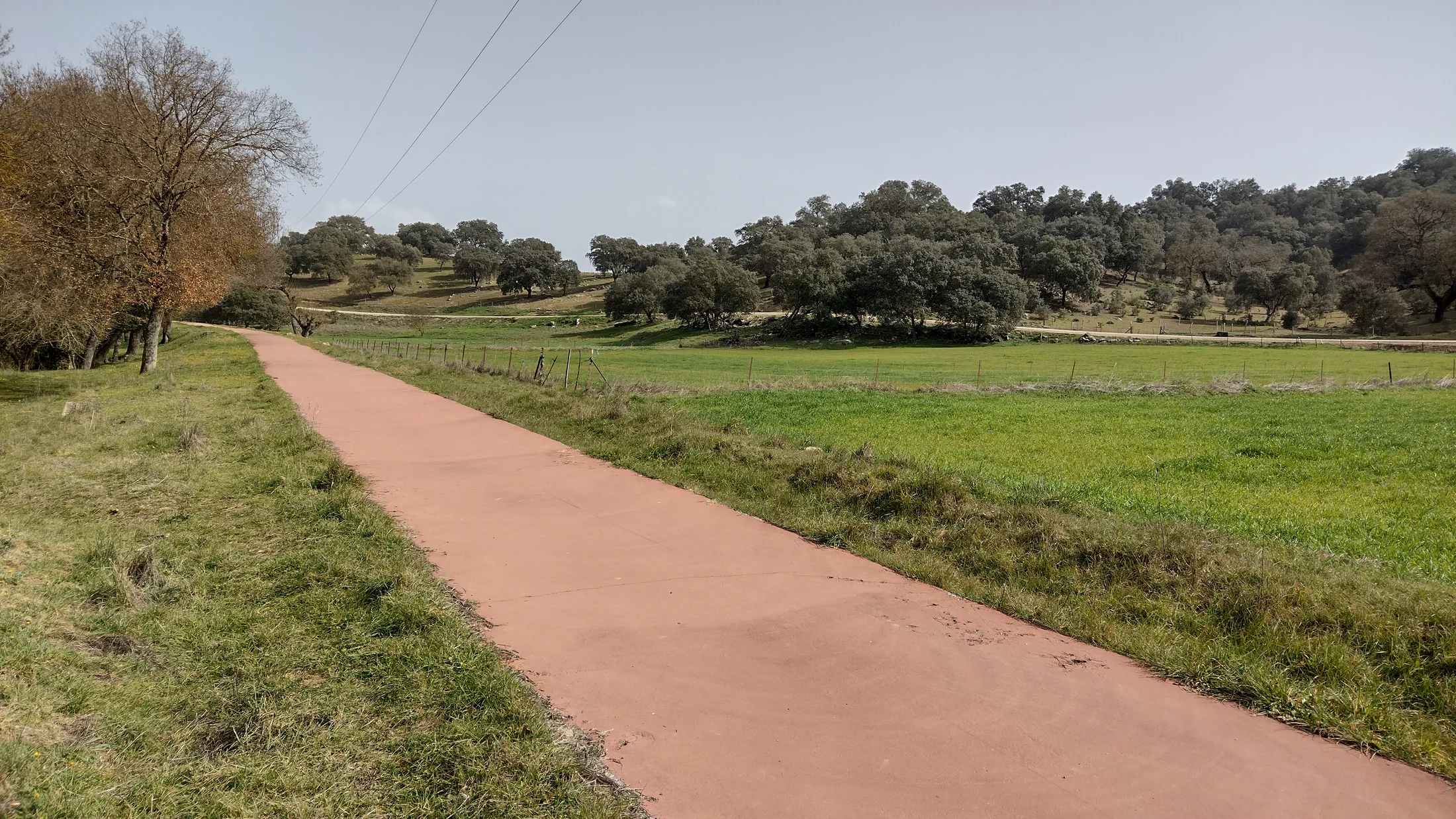
The Vía Verde del Aceite is an old railway line converted into a cycle path that crosses a sea of olives. The route passes through viaducts and recovered stations, and the compacted surface and the scent of alpechín during the season accompany the kilometres.
The total length of the wayway is around 120–128 km, with easy to moderate difficulty and the gentle slope typical of an old railway line. The surface is compacted gravel with paved sections: you can ride well with gravel or trekking bikes, and it is also possible with a mountain bike.
It is advisable to plan stages of 25–40 km to be able to enjoy the stops. Among the points of interest are the industrial heritage, olive grove viewpoints, the Subbética cordobesa and the stations with interpretive panels. The numerous metal bridges from the last quarter of the 19th century and three tunnels stand out.
The best time is autumn and winter due to the mild temperatures, and spring for the flowering and the light; avoid the central hours of summer. To sleep, there are rural houses in Alcaudete, Luque and Doña Mencía, and old station buildings converted into cafés for you to get supplies.
Access is via local roads; if you want to combine it with a bus or taxi, find out about the nearby stations.
2. Vía Verde de la Subbética (Córdoba): Sierras and white villages
The Vía Verde de la Subbética crosses short tunnels and panoramic viaducts between the Zuheros valley and its cliffs. At sunset, a falcon glides over the rock walls.
Its axis connects Lucena, Cabra, Doña Mencía, Zuheros and Luque.
The difficulty is easy, with minimal gradient and safe passes, so it works well for beginners or for going with family. It is only used by cycle tourists, walkers, hikers and riders.
Book a full day or two half-days with cultural stops. Spring and autumn are the best time; a clear winter also works and in summer it is advisable to start early.
Among the points of interest are the Cueva de los Murciélagos in Zuheros, the Oil Museum, the karst landscape and the Subbético viewpoints; local museums cost 2–6 €. There is rural accommodation in Zuheros and Doña Mencía, and bars next to the old stations.
With children, divide the route into Lucena–Cabra (≈20.5 km) and Cabra–Doña Mencía. Access is via the A-45 and local roads, and there is a connection with regional buses in Lucena and Cabra.
3. Transandalus: a recommended section for cycle travellers
The TransAndalus is a circular route of more than 2,000 km that traverses all Andalusian provinces via tracks and secondary roads. The route runs mainly through forest tracks or unpaved paths, so choose your bike well before setting off.
The surface combines rough asphalt and compact dirt tracks. A gravel bike or a mountain bike with short gearing is advisable for the toughest sections.
In Órgiva, Pampaneira and Trevélez you have hostels and rural houses, and in the villages there are grocery stores to resupply yourself. The scent of pine and rosemary accompanies the pedalling when the gravel crunches under the tyres.
Along the way, ravines, Alpujarran architecture and historic irrigation channels appear. You can add visits to ham drying rooms and artisan workshops.
TransAndalus publishes updated tracks and variants based on weather. Download the latest route and a plan B before starting.
4. Sierra de Grazalema (Cádiz / Málaga): Passes, viewpoints and white villages
The Sierra de Grazalema is travelled by road bike or gravel bike, and each option requires different planning.
The classic circuit links Grazalema, the Puerto de las Palomas, Zahara de la Sierra and the loop back to Grazalema. The profile is demanding on the passes and adds technical sections if you choose tracks, so it is advisable to arrive with solid fitness.
With gravel, it combines asphalt and tracks; with a road bike, stay on the asphalt and pace your effort on the long passes. The route surface includes the A-372 and CA-9104 roads. Avoid days of strong wind on the ridges.
Spring and autumn are the best times. In winter it is cold and it can snow at high altitudes; in summer, start early and finish in the early afternoon. Bring a raincoat, lights and a thermal blanket, check the weather forecast and respect protected fauna.
There are bike-friendly hotels and rural houses, and fountains and roadside inns in the main passes. Among the points of interest are the Hundidero-Gato caves, with regulated visits.
Access is via the A-374 from Ronda and via the A-372 from El Bosque. The A-397 may suffer closures due to storms and landslides, and local buses with bike carriers are limited.
5. Guadalimar olive groves and pastures (Jaén): Agricultural landscape and tradition
Between farmhouses, holm oaks and olive groves, the Guadalimar draws meanders at the foot of tranquil mountain ranges. Early in the morning, the dew perfumes the ploughed land.
The route has moderate difficulty, with an undulating profile and short climbs, and is well-suited for gravel or trekking. The surface combines compact earth and rural asphalt; after it rains, the mud suggests leaving it for another day.
Autumn, with the olive harvest, and spring are the best times; a clear winter also works. Along the way, you will find oil mills with tastings, viewpoints over the sea of olives, rural architecture and small pastures.
Sleep in rural houses or roadside inns and carry water during long agricultural stretches. Respect the farm work: do not trespass on estates, close the gates and reduce your speed when crossing paths with livestock and machinery.
6. Cabo de Gata (Almería): Salt pans, lighthouses and volcanic coves
In Cabo de Gata, you pedal alongside salt pans with greater flamingos and black lava coves, with the sea breeze leaving a salty veil on your skin.
The route runs mostly along forest tracks or unpaved paths, aiming to minimise the asphalt sections.
Spring and autumn are the best time. In summer there is extreme heat and little shade, and in winter the wind is frequent.
The M-202 line arrives from Almería with stops in Retamar, Cabo de Gata and La Fabriquilla, and you can also access it by motorhome or van. For supplies, there are seasonal beach bars and basic shops.
Carry a minimum of 2–3 l of water per person and sun protection, and avoid the middle hours of the day. Respect nesting in the dunes.
If you get up early, the sunrise at the lighthouse provides the best photos. The Mónsul rock formation appears in the film Indiana Jones and the Last Crusade. You can combine the bike ride with birdwatching in the salt pans.
7. Transnevada / Sierra Nevada (Granada): Mountain heights and valleys
The Transnevada goes around Sierra Nevada via high tracks and valleys, with summits of more than 3,000 m in view and a maximum altitude of 2,351 m. It is about 450–460 km and 9,000 m of accumulated positive elevation gain, divided into 8 stages, about 8 days.
The difficulty ranges from moderate to demanding: the altitude and the weather can make the route harder. The terrain mixes forest tracks and rural asphalt, so a gravel or mountain bike is advisable, with 40–50 mm tyres and short gearing.
Along the way, ravines, Berber architecture and irrigation channels appear.
The best time is late spring and autumn. In summer you have to get up early and in winter there is a risk of snow at high altitudes.
Monitor your altitude due to mild altitude sickness and carry thermal layers, an emergency blanket and a reliable track.
8. Vía Verde de la Sierra (Seville / Cádiz): Recovered railway and vultures
The Vía Verde de la Sierra connects Puerto Serrano and Olvera via a recovered railway route: 36 km, 30 tunnels and 4 historic viaducts. The route crosses mountain landscapes and passes by the Peñón de Zaframagón Reserve, where there are signposted viewpoints to observe griffon vultures.
The difficulty is easy, with the gentle slope of a railway, and the route works well with children. The surface is compacted gravel and some tunnels are lit, so bring lights on your bike.
The track is open 24 hours a day and does not allow the circulation of motorised vehicles. In Olvera, the Vía Verde de la Sierra Interpretation Centre is open from 09:30h to 17:30h and closes on Tuesdays and Wednesdays.
Spring and autumn are the best time; in summer, avoid the hot hours. Along the track, there are restaurants in old stations and nearby rural accommodation.
You can arrange a shuttle or taxi for the return, and keep in mind that local buses have variable schedules.
If you go as a family, plan 12–18 km and return, or coordinate a transfer from Olvera so as not to force the return.
9. Guadiamar Green Corridor and Olivares surroundings (Seville): Wetlands and groves
The Guadiamar Green Corridor connects Sierra Morena with Doñana through groves, reed beds and riverside pastures. It was the first Protected Landscape declared in Andalusia and today is an example of environmental recovery following the Aznalcóllar mining spill in 1998.
The route is linear or in easy loops, almost flat: easy to moderate difficulty, suitable for beginners and for families with basic experience. The surface consists of compacted dirt tracks and walkways, so you will have a better time with a gravel or trekking bike. Within the corridor, you can only travel using non-motorised means.
Go in autumn, winter or spring: there are more birds and the temperatures are mild. Along the way, you will find bird observatories, interpretation centres, old bridges and pastures with livestock.
The starting point is the Las Doblas Recreational Area, with parking and picnic areas. You can also enter from Aznalcázar, Olivares, Sanlúcar la Mayor and Benacazón, with local trains and metropolitan buses to nearby towns and access via the A-49 and local roads. To sleep and eat, you have rural houses and bars in Olivares, Aznalcázar and Sanlúcar la Mayor.
Access to the corridor is free. Some organisations arrange guided environmental education routes from 8–20 € p.p.
Combine it with the historic centre of Olivares and with other bike routes through the Aljarafe for a weekend of cycle tourism.
10. Beaches and coastline of Huelva: Dunes, pine forests and marshes
The Atlantic sets the rhythm of a coastline that you can traverse by bike between shifting dunes, pine forests and fishing ports. There are 122 km of beach spread between Ayamonte, Isla Cristina, Lepe, Cartaya, Punta Umbría, Huelva, Palos de la Frontera-Moguer and Almonte.
The difficulty ranges from easy to moderate: the profile is flat and the wind rules. The surface is a mix of asphalt, boardwalks and forest tracks, so a gravel or a trekking bike are the ideal bikes.
Go in spring or in autumn. In summer, avoid the central hours and the massive weekends. Arrive by train in Huelva capital or by bus to the coast, with varying bike spaces; a car is practical for linking the start of the routes.
Book a table to try the fish and the white prawn, and bring binoculars to photograph birds in the estuaries.
If you want longer routes along the Andalusian coast, link segments and stay overnight next to the pine forests to wake up without wind.
Location map
The map brings together the starting and ending points of each route, the suggested sections and the difficulty level indicated by colours. Open it before deciding on your route: it gives you an overview of the ten proposals.
It also includes layers for bike-friendly rural accommodation, water and food points, nearby train and bus stations and natural viewpoints. You can filter by duration (half a day, 1 day, several days), by difficulty (easy, moderate, demanding) and by surface type (asphalt, track, mixed).
When zooming in on each section, you can see useful detours, approximate profiles and return options. Consult the map alongside the list files to adjust kilometres, access points and overnight stays to your pace and your physical condition.
How to choose your route: level, duration and season
Before looking at kilometres, decide what bike you are taking and what you are looking for: family, gravel/trekking, road or adventure. The season is as important as physical fitness, because Andalusia heats up quickly and cools down at altitude.
If you are going as a family, the greenways of Aceite, Subbética and Sierra, along the Guadiamar, have a compact surface. The Corredor Verde del Guadiamar is a circular route of 72 km, with 157 m of elevation gain and a duration of 6 hours; very easy difficulty.
For adventure, the Transnevada goes via high tracks and requires logistics and thermal layers. In the Alpujarra, the Pico Veleta road (3,398 m) is the highest in Europe.
Calculate your daily distance with real load: families 10–15 km/h, gravel 15–20 km/h and mountain 10–13 km/h. Adjust tyre width and pressures to the surface: 40–50 mm on tracks and 28–32 mm on asphalt. Plan for water every 20–30 km, food points, transfers or returns and a meteorological plan B.
Spring and autumn are the best seasons. In summer, get up early and shorten the stages; in winter, look for low altitudes and watch out for snow and wind. Consult the interactive map to adjust links and overnight stays.
Practical tips: equipment, safety and accommodation
A well-prepared bike makes the trip safer and more enjoyable. Before setting off, check your tyres, brakes and load: in Andalusia, the stages mix asphalt, tracks and heat.
Tyres depend on the terrain: 28–32 mm for road, 38–50 mm for gravel and trekking, and moderate treads if you are going to ride on loose tracks. Fit stable pannier racks and panniers, and add frame bags for tools and food. Carry front and rear lighting and a reflective vest for tunnels and dawns.
In Cabo de Gata and in the mountain ranges, carry 2 bottles plus a hydration bag. Navigate with GPS and a track, with a power bank and a paper map as backup. Coverage is irregular: use aeroplane mode with GPS and carry spare battery.
Plan short stages on the first day and communicate your itinerary and your arrival time. Carry a basic first aid kit with bandages, medical tape, painkillers and hydrocolloid dressings, and a thermal blanket if you are going to the mountains. Respect the signage, close the gates and reduce your speed when crossing paths with hikers and livestock.
To sleep, look for bike-friendly rural accommodation with space to store the bike and a hose, or campsites on the coast and in the mountains. Bicycle rental costs 20–40 € per day depending on the model; confirm availability in spring, high season. On popular routes, there is luggage transport: consult local options or ask at Picuco.
If you travel in summer, use high-factor sunscreen, a cap under your helmet and mineral salts, and take a short siesta during the central hours.
Frequently asked questions
What is the best time for cycle touring in Andalusia?
Spring and autumn are the best seasons for cycle touring in Andalusia: mild temperatures and long days. With those conditions, you can extend the stages and stop in the mid-afternoon without rushing.
In winter, you can pedal at low altitudes and along greenways. In summer, it is advisable to set off at dawn and do shorter stages, looking for shade and water.
Which bike is most suitable for these routes?
A gravel or trekking bike will serve you for most routes: it works well on tracks and on asphalt. If you are going to Grazalema or the valleys, a road bike will make the kilometres more comfortable.
For the TransAndalus, the Transnevada and broken tracks, choose a mountain bike. Before setting off, check the route you have in mind and adjust the bike to the terrain you are going to ride.
Is there bike rental and local technical support?
Yes. In the capitals and in the tourist hubs of Andalusia, you will find bike rentals and local technical support to resolve a breakdown mid-route.
Typical rental prices range from 20 to 40 € per day. In high season, book in advance and confirm sizes and accessories before setting off.
Are they suitable for families?
Yes, especially if you choose greenways. They have compact surfaces and you can do short sections with frequent stops, something that children and those who pedal little appreciate.
The Vía verde del Aceite is a good example: 127 km that repurpose the old Linares-Puente Genil railway line, known as the Oil Train. Choose a short section and return by the same way if you are going with children.
How do I organise my return or transfer?
Think about the return before you set off: you can do the route as a round trip, hire a shuttle or a pre-booked taxi, or use buses with limited bike racks. Each option changes the pace of the day, so decide once the stage has been chosen.
Coordinate the schedules and meeting points for the return transport in advance. Confirm the pick-up time and the exact location, and allow a margin if the stage takes longer than expected.
Do I need permits or is there specific regulation?
In the natural parks of Andalusia, ride only on authorised tracks and respect temporary closures. Local signage indicates where you can continue and which sections are restricted at any given time.
Do not ride off-track and pay attention to fire restrictions, which can close tracks in summer. Before setting off, check the status of the route and carry enough water for the planned section.
Book your experience — discover active tourism activities in Spain with providers verified by Picuco.
Conclusion
Andalusia has ten routes to pedal at your own pace: greenways to start, mountain passes to challenge yourself, and stages that you can combine into multi-day trips.
Choose the route according to your bike, your time, and your fitness level, and check the map to adjust access points and overnight stays. Carry water and maintain an attitude of respect and curiosity with every pedal stroke.
At Picuco, you will find verified local proposals and services that facilitate logistics and connect you with the community that cares for these landscapes.