Why Choose the Andalusian Coast for Water Adventures?
You’re here for wind, waves and wild coves that still feel human-sized. Along the Atlantic and Mediterranean edges of Cádiz, Huelva and Almería, the mix of climate, steady winds and varied coastline makes the active tourism Andalusia coast scene stand out in Europe. On a spring morning, the smell of salt and wild thyme rides on the breeze.
You’ll find consistent wind in the Strait of Gibraltar, Atlantic sandbars in Cádiz and Huelva, and clear, volcanic coves in Almería. According to AEMET climate summaries, winters are mild, summers are dry, and water temperatures generally range from about 16–22 °C in Cádiz/Huelva and 16–26 °C in Almería. Those conditions, plus accessible beaches, make room for surf, kitesurf and kayak from October to May for waves, and from April to October for thermal winds. Movement in nature supports health and mood, while skilled local instructors keep it safe and welcoming. As you play, remember that protected parks host dunes, seagrass meadows and bird nurseries that deserve care.
How we selected the spots
You will only see places that balance excitement with safety and access. We prioritized: 1) safety features like lifeguards in season, defined kite zones and gentle entries for kayaks; 2) accessibility by car or public transport plus nearby parking; 3) schools and rentals with certified instructors (e.g., IKO for kite, ISA for surf, ACA/BCU for kayak) and insurance; 4) variety of conditions across skill levels; 5) nearby services and community-run options; and 6) conservation rules in parks and natural sites. A gull’s shadow flickers across the shore as a kite arcs overhead.
For wind, wave and tide patterns we cross-checked AEMET wind roses, Puertos del Estado buoy data and local beach regulations from the Junta de Andalucía and municipal authorities. We also filtered for family-friendliness and clear launch/landing protocols. The result is a curated set of nine spots where beginners, families and advanced riders can learn, improve and roam without missing the soul of each place.
Picuco te puede ayudar
Does something here catch your eye?
Tell us.
Write to us on WhatsApp or email: we answer questions, find the best options and help you sort out the booking.
How to Read and Plan With This Guide
You’ll get quick-reference sheets for each spot—what it costs, when to go and who it suits—so you can choose fast. Each entry includes: location, price ranges for lessons and rentals, best season, ideal profiles, and what to do nearby, including schools and low-impact side trips. Warm sand slides between your toes as you scan the water for sets.
Use the “ideal for” line to match your level and travel style. If you’re mixing surf with a sunset paddle, check the wind window and plan calm-water slots for kayaks early or late. If you travel with kids, look for broad beaches, shorebreak descriptions and estuary paddles. When in doubt, ask local instructors about daily conditions and safety flags, then shape your day around the forecast.
Who benefits most
You might be a first-timer, a weekend improver or a seasoned rider chasing empty peaks. Beginners pair best with beach breaks and estuaries; families love wide, lifeguarded beaches and guided paddles; intermediates look for consistent sandbars and steady Poniente winds; advanced riders aim for stronger Levante sessions and remote reefs with care. Sunlight glints on leashes and lines like threads of silver.
- Surf: Beginners start in sandy beach breaks with small, spilling waves; intermediates target shoulder-high peaks; advanced riders choose reefy or heavier beachbreak days.
- Kitesurf: New kiters need waist-deep, side-onshore winds; intermediates prefer steady 15–25 knots; advanced thrive in stronger Levante with clear downwind space.
- Kayak: Calm mornings and leeward coves suit all; moderate afternoon breeze is fine for guided tours; avoid offshore winds without a guide.
Levels, logistics and planning
Know your level by reading the sea: wave height, period (time between waves), wind direction/speed, and currents or rips. If these terms are new, think of “period” as the rhythm of ocean pulses and “rips” as narrow rivers of water moving seaward. The sea hums softly while flags crack in the wind.
- Book lessons and rentals 3–10 days ahead in high season.
- Allow 2–3 hours per session (including briefing and beach setup).
- Multi-spot trips work best with a car; sequence Tarifa → Cádiz coast → Huelva or Almería depending on winds.
- Insurance: Choose operators with liability cover; for kitesurf, ask about IKO-equivalent certification; for surf, ISA/Spanish federation coaches; for kayak, ACA/BCU-style coastal training.
- Safety add-ons: Helmets for kite learners, buoyancy aids for kayak, and always check local rules posted at beach access points.
Top 9 Spots for Surf, Kite and Kayak in Andalusia
Below is a numbered list of carefully selected locations to help you compare conditions and plan your sessions. Foam whispers on the shore as you trace your route with a fingertip on the map.
-
Tarifa (Cádiz): Kitesurf beacon at the Strait
Tarifa is the European crossroads of wind, where Levante (E/NE) can roar and Poniente (W/SW) brings steadier, cooler breezes. Expect Levante 20–40 knots at times and Poniente 12–25 knots, with the broad sands of Valdevaqueros and Los Lances offering space to learn and launch. Gulls dip and rise as kites sketch bright arcs against the sky.
- Location: Tarifa, Cádiz (Strait of Gibraltar)
- Indicative prices: Lessons 90–130 € (2–3 h); courses 250–420 € (2–3 days); rentals 50–80 € day; confirm current rates with operators or check Picuco.
- Best time: April–October for consistent wind; autumn/spring for fewer crowds; winter suits wave-focused days.
- Ideal for: Beginners to advanced, with dedicated zones; families choose Poniente days; freestyle/foil riders on strong Levante with expert guidance.
- What to do: kitesurf Tarifa at Valdevaqueros and Los Lances; beginner areas signed in summer; surf on Poniente days at Balneario/Arte Vida stretches; dune walks; Roman remains and old town strolls.
Practical notes: In summer, respect kite corridors and lifeguard rules; launch/land with assistance and avoid crowded swim zones. Many schools operate daily in high season with certified instructors and rescue boats when conditions require. For accommodation, active-friendly lodgings cluster along the N-340, often with gear storage and early breakfast for dawn sessions.
-
El Palmar (Cádiz): Surf heartbeat of the Coast of Light
El Palmar is the reference for surf Cádiz thanks to its long, clean beachbreak peaks and sandbars that shift gently with the seasons. Autumn to spring brings the best swell windows, while summer favors dawn and small-wave longboard days. A faint scent of seaweed lingers as the first set rears on the outer bar.
- Location: Vejer de la Frontera coast, Cádiz
- Indicative prices: Group lessons 30–45 € (2 h); private 60–90 €; rentals 15–25 € (2 h); confirm with operators or Picuco.
- Best time: October–April for consistent swell; May–September mornings for mellow longboard conditions.
- Ideal for: Beginners (small days), intermediates (shoulder to head-high), advanced (winter pulses); families with lifeguards in season.
- What to do: Surf lessons and video coaching; sunset walks; simple seafood in beach chiringuitos; day trips to Vejer’s whitewashed streets.
Safety and etiquette: Start on smaller tides, keep distance from sandbank rips, and follow priority rules (the surfer closest to the peak has right of way). Schools here run year-round, with soft-tops for learners and a range of boards for hire.
-
Conil / La Fontanilla (Cádiz): Easy surf and coastal kayak
Conil delivers user-friendly surf and calm-water windows for family paddles. La Fontanilla’s broad sands host mellow beachbreaks, while short kayak outings reach coves near Cabo Roche on suitable days. Thin spray catches the sun like glass beads over the shorebreak.
- Location: Conil de la Frontera, Cádiz
- Indicative prices: Surf lessons 30–45 € (2 h); rentals 15–25 € (2 h). Kayak guided 25–40 € p.p. (2–3 h); rentals 15–25 € (1–2 h); confirm locally or via Picuco.
- Best time: Surf—October–April; summer for small, family-friendly waves. Kayak—May–October in morning calms.
- Ideal for: Beginners and intermediates; families seeking easy entries and sunset paddles; mixed groups wanting both surf and kayak in one day.
- What to do: Beachbreak surf at La Fontanilla/Los Bateles; coastal kayak towards Cala del Aceite and around Cabo Roche on benign forecasts; old-town tapas and cliff-top views.
Plan around winds: Poniente gives smooth surfaces; Levante can chop the paddle routes. Check lifeguard hours in summer and use signed launch corridors for boards and kayaks.
-
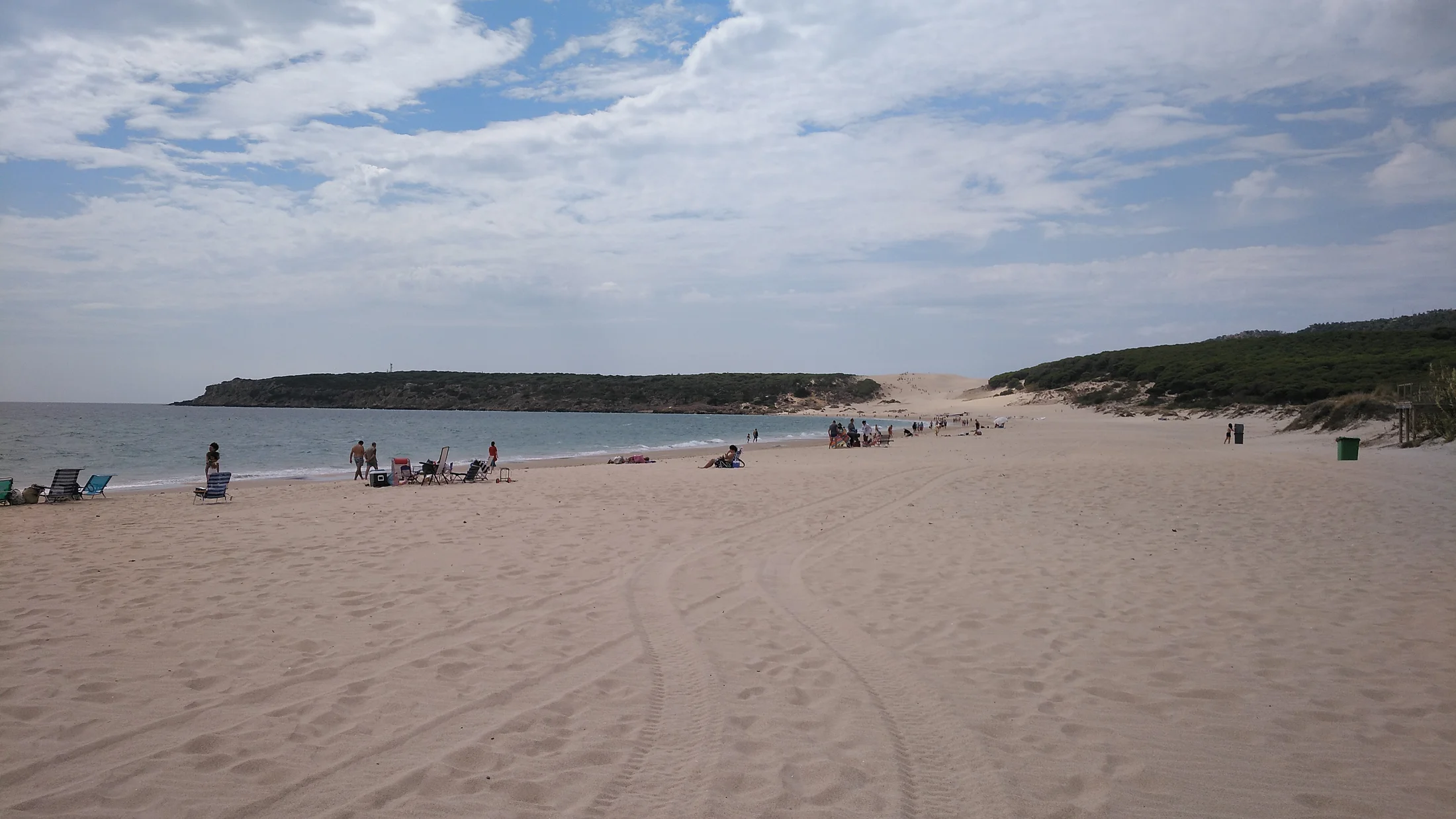
Bolonia (Cádiz): Kayak coves, surfable sandbars and ancient dunes
Bolonia pairs wild dunes and Roman ruins with playful beachbreaks and beautiful kayak lines along the Parque Natural del Estrecho coast. On calm mornings, short paddles reveal little caves and turquoise inlets; when swell nudges in, sandbars offer forgiving peaks. The dune’s ridge sighs underfoot while the bay glows aquamarine.
- Location: Bolonia, Tarifa municipality, Cádiz
- Indicative prices: Kayak guided 25–45 € p.p. (2–3 h); surf lessons 30–45 € (2 h); rentals similar to nearby towns; confirm locally or on Picuco.
- Best time: Kayak—late spring to autumn, early hours for light winds; Surf—autumn to spring for small-to-moderate swells.
- Ideal for: Families and beginners for kayak; intermediates for surf on clean days; nature lovers keen on culture and landscapes.
- What to do: Kayak along the cliffs toward Punta Camarinal on suitable seas; surf mellow peaks; visit Baelo Claudia ruins; hike the dune with leave-no-trace habits.
Conservation tips: Stay outside marked protected zones, avoid landing on fragile seagrass patches, and pack out all litter. Wind rises quickly here; choose short, guided kayak circuits if Levante is forecast.
-
El Rompido (Huelva): Estuary kayak and birdwatching in the marshes
Where the Río Piedras meets the Atlantic, El Rompido offers sheltered estuary paddling and access to the shifting sand spit called the “Flecha”. Calm channels and tidal creeks make quiet wildlife routes that suit all levels. A heron’s call carries across the flat water as oars drip in the sun.
- Location: Cartaya municipality, Huelva
- Indicative prices: Kayak guided 25–40 € p.p. (2–3 h); rentals 12–20 € (hour) or 25–35 € (half-day); confirm locally or via Picuco.
- Best time: Spring and autumn for migrations and mild weather; summer mornings for calm; avoid strong wind-against-tide.
- Ideal for: Families, beginners, photographers, and anyone new to paddling.
- What to do: Estuary loops to the Flecha de El Rompido; bird observation in the Marismas del Río Piedras Natural Site; strolls in the lighthouse village and afternoon swims on the spit.
Access notes: Launch from designated estuary ramps and avoid main boat channels. Tides matter—plan slack-water windows for effortless circuits and ask operators about wind shifts and return routes.
-
Isla Cristina / El Portil (Huelva): Atlantic surf and kite windows
Huelva’s sandy arc hides mellow surf and kite sessions that shine with the right forecast. Isla Cristina finds small-to-moderate beachbreaks, while El Portil/Punta Umbría offers kite-friendly stretches when thermal breezes build. Foam trails lace the bar as a seabreeze cools the dunes.
- Location: Western and central Huelva coast
- Indicative prices: Surf lessons 30–45 € (2 h); rentals 15–25 € (2 h). Kitesurf lessons 90–130 € (2–3 h); rentals 50–80 € day; confirm with operators or Picuco.
- Best time: Surf—autumn to spring for Atlantic swells; Kitesurf—late spring to early autumn with thermals and Poniente.
- Ideal for: Beginners and intermediates; families on lifeguarded stretches; advanced kiters on stronger wind days.
- What to do: Hunt small peaks at Isla Cristina and Playa Central; kitesurf broad beaches at El Portil/Punta Umbría in side-on winds; explore Odiel and Piedras marshes afterward.
For “spots surf Huelva,” choose days with clean W/NW swell and light winds for the best banks. Respect swim zones and kite corridors, especially in July–August, and ask schools for exact launch points.
-
Matalascañas (Huelva): Family surf and Doñana shoreline by kayak
Next to Doñana National Park, Matalascañas offers expansive sands, moderate shorebreak and easy logistics for families and first-timers. On fair-weather mornings, kayaks trace the park’s shoreline with required permissions through authorized operators. The shore breathes in slow, sandy sighs as gulls wheel over the boardwalks.
- Location: Almonte municipality, Huelva
- Indicative prices: Surf lessons 30–45 € (2 h); rentals 15–25 € (2 h). Kayak guided 25–45 € p.p. (2–3 h); confirm locally or with Picuco.
- Best time: Spring and early autumn for pleasant water and lighter winds; summer mornings for calm; winter for occasional clean surf pulses.
- Ideal for: Families, beginners, school groups; intermediate surfers on small-to-moderate days.
- What to do: Soft-sand surf sessions near central access points; guided kayak along Doñana’s outer edge with permits; sunset walks to the leaning Torre de la Higuera.
Safety and access: Check flag systems and avoid strong shorebreak days with small children. For kayak near the park boundary, use guided services familiar with restrictions and seasonal closures protecting wildlife.
-
Cabo de Gata (Almería): Kayak, snorkel and sea caves in volcanic coves
Cabo de Gata’s volcanic cliffs cradle clear, protected coves made for low-impact exploration. Calm mornings unlock kayak Cabo de Gata routes linking arches, caves and snorkel stops over meadows of seagrass. The water shines cobalt, then emerald, as clouds pass the sun.
- Location: Parque Natural Cabo de Gata–Níjar, Almería (San José, La Fabriquilla, Las Negras, Agua Amarga hubs)
- Indicative prices: Kayak guided 25–45 € p.p. (2–3 h); rentals 15–25 € (hour) or 30–45 € (half-day); snorkel add-ons 10–15 €; confirm locally or via Picuco.
- Best time: May–October for stable seas; early/late hours to dodge wind; shoulder seasons for quiet coves.
- Ideal for: All levels; families; photographers; mixed groups pairing paddles with swims.
- What to do: Classic lines include La Fabriquilla to the lighthouse and Arrecife de las Sirenas, San José to Cala Higuera, Las Negras to Cala San Pedro (if seas are calm). Snorkel at Los Genoveses, El Playazo and Cala del Plomo.
Logistics: Launch from signed beach ramps; avoid marine reserve no-entry zones; choose sit-on-top kayaks with buoyancy aids. Bring water, sun protection and reef-friendly sunscreen to protect underwater life.
-
Playa de los Muertos / Carboneras (Almería): Wild-coast surf for the patient
This striking pebble-sand beach near Carboneras draws advanced surfers on select swells. The steep shore and reflective bottom can pack a punch with shorebreak and strong pull, demanding experience and timing. Wind scatters spindrift as wedges rebound off the stones.
- Location: Near Carboneras, Almería
- Indicative prices: Surf guiding/advanced coaching 60–120 € (2–3 h); board rentals 15–25 € (2 h) in nearby towns; confirm locally or with Picuco.
- Best time: Winter to spring for E/SE swell windows; shoulder seasons for fewer crowds and cleaner winds.
- Ideal for: Advanced surfers seeking less crowded, powerful beachbreak; not recommended for beginners or small children in the shorebreak.
- What to do: Time entries carefully; carry minimal kit on the steep path; base in Carboneras for accommodations and food; pair with calmer paddle days elsewhere in Cabo de Gata.
Safety: No shade or services on the beach; bring water, sturdy footwear for the descent and avoid heavy-shorebreak days if uncertain. Always surf with a partner and evaluate before committing.
Map and Access: Getting to the Water, Smart and Simple
Your trip flows when you know where to park, launch and ride. The A-7 (Mediterranean) and N-340/A-48 (Cádiz coast) are the main arteries; Tarifa sits along the N-340, El Palmar/Conil on the A-48 spurs, Huelva’s coast via the A-49 and A-5051/5053, and Cabo de Gata’s hubs off the A-7 near San José, La Fabriquilla, Las Negras and Agua Amarga. Heat shimmers over the asphalt as the sea line winks ahead.
- Public transport: Regional buses serve Tarifa, Conil and Huelva towns; from Almería city, buses reach San José and Las Negras in season. For boards, confirm baggage rules in advance.
- Parking: Seasonal parking lots by main beach access points (El Palmar, Conil, Bolonia, Tarifa, Matalascañas); in Cabo de Gata, some summer controls limit access—arrive early.
- Launch points: Kite corridors are signed in Tarifa and Huelva beaches; kayak ramps in El Rompido estuary and Cabo de Gata’s village beaches; surf zones mark swim-only areas in summer—stay outside them.
- Ferries and extras: From Algeciras/Tarifa, ferries cross the Strait (not activity-related but useful for longer trips). For navigation, build a Google Map with layers for surf, kite and kayak; pin car parks, launch corridors and lifeguard posts. For precision, add tide apps and forecast tools to confirm daily conditions.
Choosing Between Surf, Kitesurf and Kayak on the Andalusian Coast
Start with your goal: learning a new skill, chasing wind-driven speed or gliding quiet coves with family. Then check the daily trio—wind, waves and tide—to match your plan with the safest, richest session. The air smells faintly of pine resin as flags snap and settle in the breeze.
Step-by-step:
- Read the wind. If steady 15–25 knots side-onshore is forecast, kitesurf is ideal; under 10 knots favors kayak; over 25 knots suits advanced kiters only.
- Check swell/period. Clean, shoulder-high waves with gentle banks make classic surf sessions; heavy shorebreak or big closeouts suggest watching or switching sports.
- Note tide and currents. Mid-tide often balances paddle entries; surf sandbars vary by tide; estuaries demand slack water for beginners.
- Consider your level and group. Newcomers pick lessons; families choose lifeguarded beaches; advanced riders hunt windows at Tarifa or Los Muertos.
- Factor safety margins. Short sessions, visible landmarks and bail-out beaches keep stress low.
- Certifications and schools: For kitesurf, look for IKO/VDWS-style certifications; for surf, ISA/federation coaching; for sea kayaking, ask about coastal rescue training and group ratios. Instructors with radios, safety boats (for kite in strong winds) and clear briefings are essential.
- Combining activities: On thermal-wind days, kayak or surf at sunrise, break at midday, then kite in the afternoon breezes. On calm days, choose longer kayak routes with snorkel stops. On strong Levante, drive 20–60 km to find lee shores.
Build your plan with the active tourism Andalusia coast mindset: stay flexible, respect lifeguard systems and rotate sports according to the day’s gifts. If uncertain, book a guide for the first session and learn the local rhythm before you go solo.
Practical Tips: Gear, Safety, Permits and Sustainability
Pack light but smart so you can switch sports when the forecast turns. A soft hiss of wind lifts the edge of your towel as you sort gear on the sand.
- Essential gear:
- Surf: Appropriate board (soft-top for learners), leash, wetsuit (3/2 mm spring–autumn, 4/3 mm midwinter in Cádiz/Huelva; lighter in Almería summer), wax.
- Kitesurf: Kite quiver suited to wind forecast, twin-tip or foil, pump, helmet, impact vest, safety leash.
- Kayak: Sit-on-top or touring kayak, buoyancy aid, paddle leash, dry bag, sun protection, water.
- Safety basics:
- Small first-aid kit; charged phone in waterproof case; whistle; for kayak, tow line and spare paddle for guided trips.
- Learn flag systems and swim-zone limits; keep clear of fishermen and bathers; never kite or surf in crowded swim-only areas.
- Buddy up, note exit points and agree a maximum time/distance.
- Permits and regulations:
- Cabo de Gata and Doñana include protected and seasonal no-go areas—check local boards or ask authorized operators before launching.
- Respect kite corridors and lifeguard directives in Tarifa and Huelva beaches, especially in July–August.
- Avoid stepping on seagrass; do not disturb nesting birds in dunes; use established paths and ramps.
- Sustainability in action:
- Travel with refillable bottles; choose reef-safe sunscreen; pack out all waste, including micro-trash.
- Support local cooperatives and family-run stays that reinvest in the community; stagger your sessions to quieter hours.
- Keep wildlife distances and skip feeding or chasing animals.
Local respect
Learn a few greetings, ask fishermen where not to launch and thank lifeguards—this goodwill opens doors and keeps shared waters safe.
Frequently Asked Questions
When is the best season for surf, kite and kayak?
Surf peaks October–April with Atlantic swells; kitesurf thrives April–October with Poniente/thermals and strong Levante windows; kayak shines May–October in calm mornings. A soft dawn glare paints the sea metallic.
Do I need to book schools or rentals in advance?
Yes, especially June–September and holiday weeks. Book 3–10 days ahead for prime slots and ask about weather rebooking policies.
What about insurance and certifications?
Choose operators with liability insurance and certified instructors (IKO/VDWS for kitesurf, ISA/federation for surf, ACA/BCU equivalents for sea kayak). Confirm rescue protocols and student–instructor ratios.
How do I transport boards and gear?
Reserve car racks with your rental and bring soft straps; on buses, confirm surfboard baggage rules; pack kites in compact bags and use padded board socks.
Are there special rules in Natural parks?
Yes. In Cabo de Gata and Doñana, some zones are seasonal no-entry; launch only at permitted points, avoid nesting dunes and follow posted signage.
Can families and beginners join safely?
Absolutely, on appropriate days and with guidance. Pick lifeguarded beaches, small surf, slack-tide estuaries and morning kayak tours.
How much should I budget per session?
Typical ranges: surf lessons 30–45 € (2 h), kite lessons 90–130 € (2–3 h), kayak tours 25–45 € p.p. (2–3 h), with rentals from 15–25 € (surf/kayak) and 50–80 € (kite/day). Always confirm current prices locally or on Picuco.
Book your experience — discover active tourism across Spain with providers verified by Picuco.
Conclusion
From Tarifa’s wind corridors to Cabo de Gata’s sea caves, Andalusia rewards flexible travelers who read the day and choose well. Evening light folds over dunes and coves as the sea exhales, slow and steady.
You now have nine dependable bases, clear seasons and realistic price ranges to shape a surf, kite and kayak itinerary across Cádiz, Huelva and Almería. Prioritize safety, respect local rules and choose certified instructors when learning or stepping up conditions. For current availability and to compare options in one place, explore experiences curated on Picuco and pair sessions with small, community-run stays. Pack curiosity, leave only footprints and let this coast teach you its rhythm—one session, one tide and one gentle wind shift at a time.