Why a hen or stag party in nature truly connects
A hen or stag party in nature changes the focus: less noise and more real connection between friends or families. Compared to the city, shared adventure, the landscape, and a pace that invites you to talk, laugh, and reminisce take precedence.
The basis is the same for mixed groups, adventure hen parties, or families with little ones: experiences lived together. In the mountains, on the coast, or by a peaceful river, conversation flows differently and the group aligns.
Planning an active weekend is easier if you divide the decisions into destination, accommodation, activities, and logistics. Compared to an urban weekend, costs are better shared and quality time is multiplied.
With a few key decisions—where, when, how to move, and what to do—you will have a plan that is both solid and flexible.
Emotional and practical advantages
A summit reached, a kayak descent, or a campfire become memories that are talked about for years. Nature strengthens group bonds without the need to organise anything special.
The smell of pine after the rain turns a simple walk into a scene that stays with you. And practically speaking, the countryside works in your favour: sleeping in a rural house reduces the cost per person and cooking together makes meals cheaper without losing quality.
For an adventure hen party, combining via ferrata in the morning and a rural spa in the afternoon balances adrenaline and relaxation. The flexibility is enormous: you can adapt the duration, intensity, and schedules to the ages and physical condition of the group.
If someone does not want to participate in an activity, the environment offers simple alternatives: a short walk, reading on the terrace, or a tasting of local products. This way, nobody feels pressured and the atmosphere improves. Large groups also gain in privacy and noise control compared to a trendy bar.
Active tourism providers in Spain work with clear safety standards and guide ratios, which makes coordinating without setbacks easy. Check the options on Picuco by region and activity to refine your search.
What you will find in this guide
Organising a party in the countryside can be decided in an afternoon if you know what to ask. This guide takes you from the idea to the booking with concrete steps.
First, you will learn how to choose a destination based on distance, landscape, and nearby services. You will also see how to fix the best time, how much time to dedicate, and how to move the group safely and without overspending.
Then comes accommodation: camping, rural houses, and glamping, with guidelines for booking as a group without surprises. Activities appear classified by land, water, air, and relaxation, with their typical duration, the necessary equipment, difficulty, and indicative prices.
Three ready-to-copy and adjust itineraries will solve your calendar: 1 day, a weekend, and 3–4 days. The guide closes with safety, permits, and sustainability: what first aid kit to carry, how to process authorisations, and how to apply Leave No Trace.
At the end, you have checklists and templates for budgets, luggage, and task distribution.
Picuco te puede ayudar
Does something here catch your eye?
Tell us.
Write to us on WhatsApp or email: we answer questions, find the best options and help you sort out the booking.
When to go and how to arrive without complications
The place and the date decide a large part of the plan. Before booking anything, check the travel time, accessibility, the season, and the group level.
In Spain, the climate and the range of activities change significantly depending on the region and the season. The average climatologies by province from AEMET help you choose dates with insight.
Also, think about how long you want to be away: a compact day, a weekend stag or hen party, or a 3–4 day getaway if someone is coming from far away. With the duration clear, the rest of the plan fits together better.
Transport deserves a moment of attention. Good transport reduces stress and costs, and leaves you arriving with energy for the first plan of the day.
Choosing the right location
Less than 2 hours of travel to the starting point: that is the first thing to get right. A short journey favours punctuality and reduces last-minute cancellations, and leaves more time for what you have gone to do.
Before deciding, check access, parking, and mobile coverage in the chosen area. Calculate the distance and the actual travel time during rush hour, not just what the navigator shows, and check the accessibility of the road: paved road, track, or the need for a 4x4.
Also, see what is nearby: a supermarket less than 15 minutes away, a pharmacy, and a health centre. With those details sorted, the plan handles unforeseen events better.
The group profile decides the rest. Take into account ages, physical fitness, and tolerance to heights and cold water before closing the destination.
Outdoor options are vast: marked trails, navigable reservoirs, adventure parks, and natural thermal baths.
On the coast, sheltered coves work for kayaking and paddleboarding in the early hours of the day. In forests and valleys, river plains have recreational areas and family routes.
Best time and recommended duration
Spring (Mar–May) and autumn (Sep–Nov) are the best seasons: mild temperatures and less crowds. In summer, it is advisable to get up early and look for shade and water; in winter, low-altitude routes and wellness activities work better.
The duration depends on what you want to celebrate. One day allows for a reception, a main activity of 2–4 h, lunch, social games, and a closing. A weekend, from Friday afternoon to Sunday midday, allows you to combine an intense activity with a gentle one. With 3–4 days, you can set up multi-adventure blocks, a recovery day, and a cultural or gastronomic excursion.
Each season calls for its own plan. In summer, schedule water activities at sunrise (kayaking, paddleboarding), reserve time for a siesta and shade, and avoid the middle hours. In spring and autumn, moderate hiking, introductory via ferrata, and sunset yoga fit well. In winter, choose sunny routes, thermal spas, tastings, and indoor workshops.
Book the main activity in advance, especially during long weekends and in high season, and leave the recovery day before the journey home.
Transport and logistics for groups
Moving a group requires precision: calculate departures, meeting points and margin for delays. Before choosing a vehicle, see how many of you there are and how much you are going to drive.
The options change depending on the group size and the distance: car sharing, 9-seater van, minibus with driver or train plus transfer.
- Car sharing: typical capacity of 3–4 per car, estimated cost of 10–25 € per person. It is flexible and cheap, but requires coordination and parking; it fits small groups and short distances.
- 9-seater van: typical capacity of 7–8 people, estimated cost of 12–30 € per person. A single vehicle, useful with bulky luggage, but requires a designated driver; it works well for medium-sized groups.
- Minibus with driver: typical capacity of 12–30 people, estimated cost of 20–45 € per person. You gain safety and easy parking, but you depend on schedules; for medium or large groups on journeys of 1–3 h.
- Train plus transfer: typical capacity of 8–20 people, estimated cost of 25–60 € per person. There is less traffic, but you have to solve the last mile; for routes with good rail connections.
Rent in advance during high season and compare prices with and without mileage included. Divide the luggage into soft bags and use a common boot for the activity equipment.
The estimated costs are van 80–150 €/day and minibus with driver 400–700 €/day, with tolls and fuel extra. Always divide by actual occupants.
If there is a long dinner or tiredness, hire a driver or transfer. The DGT recommends breaks every 2 h and alternating drivers on long trips.
Where to sleep: camping, rural houses and glamping
Accommodation sets the tone for the stag or hen party: more outdoor adventure, more socialising or more comfort. Choose according to budget, desired privacy and proximity to the activities.
Wild camping, where permitted, has a very low price and flexible capacity, but little privacy and no services. It fits a small and autonomous group looking for pure adventure.
Organised camping with pitches or bungalows costs between 8 and 20 € per person for a pitch and between 60 and 120 € per unit. It has medium privacy, with toilets, showers, a bar and a pool, and works well with a tight budget and a social atmosphere.
The rural hostel costs 18–30 € per person, with high capacity and medium-low privacy, shared kitchen and bunk beds. It is practical for large groups.
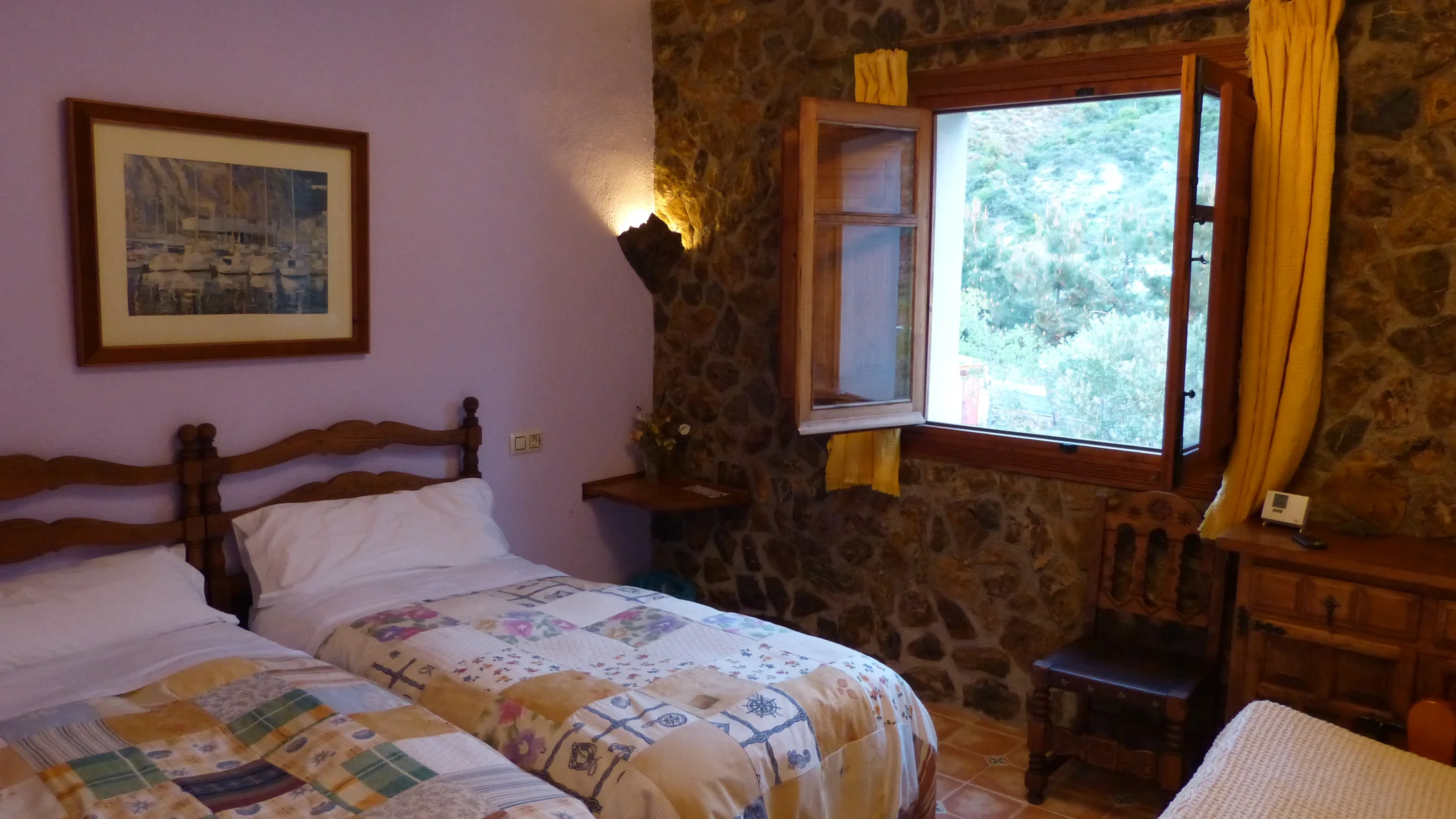
The rural house or full rental costs 20–45 € per person and provides high privacy, with a kitchen, living room and garden or barbecue. It serves to socialise in comfort and rest after the activity.
Glamping or cabins cost 80–150 € per unit, with high privacy, comfortable bed, bathroom and careful decoration. They fit a special celebration with comfort.
Price ranges depend on the season and destination, so book in advance.
Camping: wild and organised
Sleeping in a campsite brings the group closer to the environment and lowers the cost of the stag/hen party. You have three options: wild camping, only where regulations allow; pitches in a campground with services; and bungalows.
Pack your backpack with a tent suitable for the season, a sleeping mat, a sleeping bag with the appropriate temperature rating, a headlamp, a stove, and a cooking kit. Typical rules are night-time silence, respect for the pitches, and a ban on fires except in designated areas.
Prices range from 8–20 € p.p. for pitches and from 60–120 € per unit and night for bungalows. If you are a large group, coordinate a common space with an awning or canopy, distribute the tents by affinity, and set up a camp kitchen with shifts.
From the campsite itself, you can link easy activities: a sunrise walk, a paddle tennis tournament, and a mini-orienteering session with a compass. If you opt for wild camping, confirm permits with the town hall or the protected area and respect the capacity limits.
Rural houses and full rentals
A rural house gives you privacy, a kitchen, and spacious living rooms for long evenings. With the wood crackling in the fireplace, secrets come out naturally.
Before booking, check the actual capacity, the bed layout, the kitchenware, and the heating or air conditioning. Also, read the rules regarding noise and parties: they will save you from surprises upon arrival.
Check if there are real beds or sofa beds, and if sheets and towels are included. In the kitchen, check the size of the oven, the fridge, the freezer, and if the kitchenware is enough for the whole group.
The outdoors feature: a barbecue, a covered porch, and space for games. Additionally, find out about local regulations regarding silence hours, tourist taxes, and guest registration.
If you are going to chain multiple adventure activities together, prioritise rest: sufficient showers, ventilated bedrooms, and comfortable common areas. Divide the costs in a shared spreadsheet and agree on a common fund for meals and petrol.
Glamping and experiential accommodation
A bell tent with a real bed, a yurt, or a dome: glamping combines nature and comfort in the same night. It is the option when you are looking for careful aesthetics, a bit of a surprise, and comfort without giving up contact with the countryside.
Prices are around 80–150 € per unit and night for 2–4 people, depending on services and season. It is common to find full beds, a private bathroom or nearby modules, electricity, and heating or air conditioning. Breakfasts and decorative packs are available on request.
To personalise your stay, ask for garlands and dried flowers, a themed dinner, a projector for the group's photos, or a symbolic ritual at sunset. Some complexes add packages with nearby activities and a rural spa. Before booking, ask about group discounts and the policies for using common spaces.
Group bookings and accommodation logistics
Booking in advance gives you access to adjacent units and better prices. On an adventure stag or hen party, the accommodation sets the pace for the weekend: when you arrive, where you sleep and how much each person pays.
Before paying, get all the conditions agreed with the accommodation in writing. Check these lists and ask about anything missing:
- Dates, number of people and actual beds.
- Deposit, cancellation policy, check-in and check-out times, noise and visitor rules.
- Distribution of rooms or tents, with lists based on affinity and rest.
- Extras such as sheets and towels, firewood, final cleaning, use of the barbecue and parking.
Ask for a price for exclusivity of the accommodation and calculate the cost per person. Sometimes it is more worthwhile than several separate units.
To search, use terms such as nature stag or hen party, multi-adventure stag or hen party or adventure stag or hen party ideas alongside the desired region.
Activities that work for a nature stag or hen party
Choose one main activity as the core of the stag or hen party and leave the rest for those who want less intensity. This way the whole group has a clear plan and no one is left out.
Alternating challenges and breaks keeps the group united and happy. One morning of effort and a quiet afternoon work better than two days of maximum exertion.
Hire providers with official certification and civil liability and accident insurance. You gain safety and clear logistics: you know what time you set off, what equipment is available and who is responsible if something goes wrong.
Hiking and routes: from strolls to trekking
A well-chosen path cohesive the group without forcing it. The crunch of gravel under boots synchronises the march and the chat.
First of all, adjust the duration to the group's level and the heat: 1.5–3 h for a gentle stroll, 4–6 h for a medium route, or a two-stage trekking trip with an overnight stay. Look for marked itineraries (PR, GR or local) with a gradient suitable to those walking.
Basic equipment is footwear with a gripped sole, 1.5 l of water per person, a cap, a windbreaker and a light first-aid kit. For logistics, a circular route is better so you avoid shuttle cars; if it is linear, leave two cars at the final point.
The route is free unless a guide is hired: 120–200 € per day and guide for groups of 10–15 people. If you want to give the group an extra something, prepare a gourmet picnic with local products, a photo session at a viewpoint or a mini symbolic ceremony on a ridge.
With heat or rain, use a plan B: riverside routes, shady forests or visitor centres with interpretation.
Water: kayak, paddle and natural swims
Water also works for groups who have never rowed before. Just choose calm waters and head out early, before the wind has picked up.
The simplest modes are double kayak, stable paddle surf, hydropedals or a short guided route. It takes 1.5–3 h in a reservoir or a sheltered bay, at an introductory level.
Safety is included in the activity: approved life jacket, briefing, a standard guide ratio of 1
and a lifeguard in the marked areas. Bring a swimsuit, water shoes or flip-flops, sunscreen, a cap with a strap and a wetsuit if the water is cold.The price is around 20–45 € p.p. including equipment and guide, and it is advisable to book in advance. To cheer up the group, suggest friendly relays, a short "regatta" or a floating treasure hunt with clues.
If there is swell or a storm, change the plan: cave visit, walk along river boardwalks or a rural spa afternoon.
Air and vertical: zip line, climbing and via ferrata
Raising your heart rate safely is possible in adventure parks, outdoor climbing walls and introductory via ferratas. Always choose certified providers and ask about the guide ratio before booking.
The via ferrata is an itinerary equipped with steps and a lifeline; to start, look for K1–K2 level. You need to not have severe vertigo and have sufficient mobility. Ages depend on the activity: from 8–10 years old on easy circuits.
The hum of the cable on the zip line mixes with a shout of excitement and laughter upon landing.
It takes 2–4 h depending on the group and the activity. Safety equipment includes a helmet, harness and approved energy absorber, as well as a progression and rescue briefing; the standard guide ratio is 1
–8. Prices range from 35–65 € p.p. including equipment and guide, and adventure parks cost 18–35 € p.p.You can combine a morning of via ferrata with an afternoon on the river, or a ropes course with a picnic and a night spa. Check AEMET the day before: if there is a storm forecast, reschedule or move the activity to an indoor or low-exposure option.
Relaxation and wellbeing: yoga, forest bathing and natural spa
After a day of intense activity, the group will appreciate a block of calm. Combining adrenaline with slow living improves everyone's wellbeing, and the smell of damp earth in a forest clearing turns breathing into an anchor.
Sunrise yoga works well as a start: a 60–90 min session with an accredited instructor, mats and blankets, in a level and quiet space. Forest bathing (shinrin-yoku) is another option: a guided mindful walk of 1.5–2 h to reduce stress. For the spa or thermal baths, reserve 1.5–2 h and ask for shifts if you are a large group; it fits perfectly after an intense activity.
The night also adds up: themed dinners with slow-cooked food, local produce and a long table with conversation.
Indicative prices are 12–25 € p.p. for yoga or forest bathing and 20–40 € p.p. for the spa; it is advisable to confirm this with the operator. Add a simple guideline for hydration and post-activity stretching for the whole group.
Real itineraries for 1 day, weekends and 3–4 days
An adventure hen party in nature is enjoyed more when the day has a clear order. These templates are designed to be copied and adapted to your group, whether it is a 1-day outing, a weekend, or 3–4 days.
Leave margins of 15–20 minutes between agenda blocks. This way, the group won't be exhausted and there is breathing room for the unexpected. Additionally, appoint a timekeeper to ensure schedules are met.
Always add a plan B in case the weather changes. With the agenda finalised and an alternative ready, all that's left is to choose the template and start assigning tasks.
1-day itinerary: compact adventure
At 08:30, the group is already at the accommodation or the recreational area, with coffee in hand and equipment distributed. Half an hour later, the guide gives the safety briefing and checks that everyone has water and sunscreen.
At 09:15, the fun begins: 2.5 h of kayaking or paddleboarding in calm waters. At 12:00, it's time for a healthy picnic in the shade, with some free time for a quick swim. Afterwards, a short trip to the accommodation or a picnic area and a shared meal or local catering at 14:00.
The afternoon is more social. At 16:00, a light scavenger hunt with personalised challenges for the group. At 17:30, a closing with a toast, group photos, and the presentation of a "symbolic souvenir".
If the weather turns, the plan B is a 2 h forest route under dense trees plus a local cooking workshop or a tasting. As an indoor alternative, you have a climbing gym or a visitor centre.
To ensure the day goes perfectly, book the boat and the use of the recreational area if necessary. Move the group in a shared car or in a minibus with a driver if there is a toast later. Keep a list of allergies, emergency contacts, and a first-aid kit at hand.
Weekend: balance between action and rest
A weekend allows for a lot if you don't fill it all up. Set a pace with moments of action and others of rest, without rushing, and leave space between one thing and the next.
The barbecue at sunset serves as a transition between the day's adventure and the celebration. Reserve that hour calmly: it is the point where the group slows down and the party begins.
Day 1 (Friday)
On Friday, arrive without rushing: at 18:00, staggered arrivals, check-in, and room assignments begin. This way, each group enters at their own pace and no one is left waiting standing at the door.
At 20:00, it's time for a light mezze-style dinner, the presentation of the plan, and the assignment of roles: who manages the time, who takes the photos, and who handles the music. With tasks clear, Saturday starts without arguments.
The night closes at 22:00 with a bonfire, an icebreaker game, and a collaborative playlist. It is advisable that someone from the group confirms the fire permit and the accommodation's quiet hours in advance.
Day 2 (Saturday)
Saturday starts at 08:00 with a hearty breakfast, the briefing, and a short transfer to the activity starting point. At 09:00, it's time for the main event: 3–4 hours of K1–K2 via ferrata or an adventure park.
At 13:30, a picnic-style lunch in the shade or a return to the rural house. Afterwards, at 16:30, a nap or free time with 45 min of gentle yoga or a riverside walk.
The day concludes with a themed dinner at 20:30, local barbecue or homemade tacos. At 22:30, a screening of the day's photos and a toast to close the Saturday.
Day 3 (Sunday)
Sunday starts without rushing: at 09:30 it is time for a late breakfast, packing up, and a basic cleaning of the accommodation. This way, the group sets off with everything in order and without any last-minute rushes.
At 11:00 you have two options: a gentle 1.5 h walk or a natural swim. At 13:00 comes the wrap-up, the thanks, and the staggered departure for everyone.
For the weekend, bring technical footwear, a light thermal layer, a microfibre towel, and a 1 l bottle. Allow 20–30 min for transfers and avoid driving for more than 1 h between activities.
Extended getaway: multi-adventure at your own pace
Three or four days are enough to explore, rest, and add some local culture without rushing. With that margin, you can spread out the effort and leave space for long meals and tranquil afternoons.
A four-day plan that works: on day 1 you arrive, check in, take a gentle walk, and have dinner in the village. On day 3 you combine panoramic hiking with zip lining or a ropes course, and you finish with a special dinner. On day 4 you do a local cheese, bread, or pottery workshop, or visit the producers' market, and then head back.
Book 3–4 weeks in advance if you are travelling during mid or high season. For money, a common fund covers accommodation and food, and each activity is paid for directly. If the weather changes, swap days 2 and 3 and have an indoor plan ready.
Limit total driving to less than 3 h spread across the whole trip and avoid changing accommodation. This way, the group arrives rested for each activity and gains time for what really matters.
Safety, permits and sustainability
Before setting off, check the regulations of the autonomous community: camping and activities in protected spaces are governed by them. Inform yourself and process the permits that correspond to that community.
For mountain sports, having qualified guides (Sports Technicians) provides safety to the group. If an emergency occurs, dial 112 and share your mobile coordinates if you have signal.
Respecting the environment is part of the plan: legality and care for the environment sustain the activity. Book the permits and the guide in advance, and check the forecast before each day.
Safety and first aid
A prepared first aid kit and clear roles prevent a mishap from ruining the hen party. Before setting off, distribute tasks and check the equipment with the whole group.
The basic first aid kit includes a thermal blanket, nitrile gloves, sterile gauze, elastic bandages and adhesive tape. Add antiseptic (chlorhexidine), basic painkillers, antihistamines, plasters, sunscreen and aftersun. Complete it with wipes, saline solution, tweezers and sachets of salts/sugar.
Distribute roles before starting. A safety coordinator carries the first aid kit and checks the weather on AEMET. A person responsible for timing and communication goes with a fully charged mobile phone and a power bank. On routes, designate a group sweep to ensure no one is left behind.
Check the signal before setting off. In areas without signal, consider carrying a PMR radio or agreeing on basic signals. Fix a meeting point in case of dispersal and a maximum time without contact of 15 min.
Before starting, identify the nearest track or car park for an evacuation. In the event of an injury, stabilise, keep warm and call 112.
In water or air activities, cancel immediately if there is a thunderstorm or strong wind. In the water, always wear a life jacket and do not jump into pools without checking the depth. In aerial or vertical activities, wear a helmet from the base and clip onto the lifeline on a via ferrata. At altitude or in the heat, hydrate yourself, protect yourself from the sun and maintain a conversational pace during climbs.
Permits, insurance and local regulations
Before organising the activity, inform yourself about the necessary permits to avoid sanctions and ensure respectful coexistence with the territory.
The most common permits are three. Occupation of public space in picnic areas and recreational areas. Organised activities in protected spaces, such as National and Natural Parks. And drones subject to AESA regulations, with flights prohibited or restricted in protected areas and over crowds.
Regarding insurance, you need civil liability and accident insurance for technical activities. If you hire qualified guides (TD1/TD2/TD3), check that they have valid policies and request their licence number.
Every question has its window. For camping and events, ask at the town hall or local tourist office. For quotas, capacities and open trails, speak with the manager of the protected space. For weather warnings, consult AEMET and renew the check the day before and on the day itself.
Carry a digital and paper copy of the permits and policies. Respect the indicated capacities: dividing the group into sub-groups reduces impact and disturbance.
Sustainability and good practices
A responsible hen party leaves an emotional footprint, not an environmental one. Apply the Leave No Trace principles adapted to your group and inform them before setting off.
Everything that goes in must come out: bring separate bags for recycling and organic waste. Swap disposables for reusable tableware and water bottles.
Music should only be played in private spaces and nocturnal silence must be respected. In villages, lower the volume and park tidily.
On trails and protected areas, stay on the paths, without taking shortcuts or stepping on sensitive vegetation. Do not feed the wildlife and maintain a prudent distance from the young.
Buy from local producers and prioritise seasonal and local products. If you are looking for gifts, choose water bottles, microfibre towels, seeds or a donation to a local cause.
Before the trip, send the group simple and positive rules and designate one person to remind them during the trip.
Final tips, FAQs and next steps
Finalise the calendar before choosing the plan: key dates determine the logistics and the budget of the hen party. With them on the table, every subsequent decision goes faster.
Divide the tasks among the participants so that the organisation does not fall on a single person. The person looking for accommodation doesn't have to be the one handling the accounts.
Use checklists so that no detail escapes you: bookings, equipment, transport and schedules. Review them at every meeting and assign each point with a name and a date.
Practical tips to make everything flow
An adventure hen party is organised with a packing list, a finalised shopping list and a shared expense sheet. With that, the group can dedicate the weekend to what matters.
Luggage changes depending on the activity. For hiking, bring trainers or boots with gripped soles, technical socks, a windbreaker and a cap, plus a 20–30 l backpack, a headlamp, a 1–1.5 l water bottle and salty and sweet snacks. For water activities, a swimsuit, neoprene boots or secured flip-flops, a UV shirt, a quick-dry towel and a dry bag. For aerial or vertical activities, comfortable clothing, a hair tie or elastic and thin gloves; the technical equipment is provided by the supplier. And for relaxation, a mat, a sweatshirt, a light eye mask and a thermos with herbal tea.
If food is self-managed, sort out simple breakfasts (yogurt, fruit, bread, coffee), cold picnics and one "star" dinner. Centralise the shopping with a list and a fixed budget. With external service, choose local catering with a seasonal menu and ask about vegetarian or vegan options and allergies.
The budget lives in a common sheet: accommodation per person per night, transport (fuel and tolls), activities per person and a food fund. Add "paid" and "owes" columns with an automatic balance. To move the money, set up a common pot with Bizum or a shared expense app and settle up on the last day.
To coordinate, use Google Sheets for the budget, Doodle for dates and WhatsApp or Telegram for communication and short polls. Assign clear roles: logistics, cooking, music and games, and safety.
If you are looking for ideas, you have three plans that work: a gentle route with a gourmet picnic and zip lines at sunset; kayak at sunrise, a siesta and a themed dinner in glamping; or a walk with shinrin-yoku, spa, local tasting and a bonfire.
Do I need a permit to camp or have a picnic?
It depends on the autonomous community and the type of space. In protected areas, an authorisation is usually required or you must use the designated areas, and wild camping is highly restricted.
Before heading out, check with the town hall and the park manager. Carry a copy of the permit with you during the activity.
What is the average cost per person for a weekend?
With a rural house, one technical activity and shared meals, estimate between 120 and 220 € per person, depending on the season and the destination. A plan with glamping and a spa can rise to 180–320 € per person.
Ask each operator for updated prices and adjust the budget to the size and enthusiasm of your group.
Can minors or people with low fitness levels come?
Yes. You can include minors and people with low fitness levels if you choose introductory activities and short routes. Adventure parks and riverside walks work well in these cases.
Look for providers with equipment adapted to the group. When booking, advise them of the ages and physical conditions of each participant and ask for suitable guide ratios for safety.
What happens if the weather is bad?
With rain or strong wind, the hen party goes ahead if you have a plan B thought out in advance. Have routes under tree cover, cultural visits, a spa, or local workshops ready for the group.
Check the AEMET forecast the day before and also on the day itself. If the weather doesn't cooperate, speak with the provider to reschedule or change the activity.
Above all, prioritise safety and flexibility in the schedule: moving an activity by one hour costs less than forcing the plan in bad weather.
What technical equipment do I need for a via ferrata?
The provider provides a helmet, harness, and approved energy absorber. You bring comfortable clothing, footwear with good soles, and thin gloves.
If it is your first via ferrata, choose K1–K2 levels. Before booking, confirm the guide ratio and the minimum age of the group.
How do I organise transport so that no one is left out?
Start with a form: ask each participant for their departure city and their preferred times. With the answers in hand, choose the method that fits best: carpooling, van, or minibus.
Then, set a single meeting point and a time with a 15-minute margin. Assign one person in charge for each vehicle, so that no one is left waiting without knowing who to notify.
Book your experience — discover active tourism activities in Spain with providers verified by Picuco.
Conclusion and next steps
A hen party in nature unites the group and balances excitement and calm. With a clear itinerary, the work is shared and no one arrives exhausted on the day of departure.
The order that works is this: choose the destination and dates, finalise accommodation, book activities with verified providers, confirm permits, and distribute tasks with the templates. Afterwards, gather a common fund, share the packing checklist, and define a plan B for rain or a last-minute change.
With everything organised, all that remains is to arrive and enjoy at your own pace.