Why Choose Active Days in Menorca, Ibiza and Formentera
The islands at your pace
You are here for the sea and the coast, and active tourism Menorca sets the tone: paddle, walk, then slip a mask on and float alongside seagrass meadows. These three islands share clear water and rocky headlands, yet each offers a different rhythm—Menorca’s long GR-223 coastal path, Ibiza’s dramatic cliffs and sea caves, and Formentera’s sandbanks and calm channels. The Balearic mix of lime-stone coves, pine forests and the protected Posidonia oceanica makes hiking, kayaking and snorkeling both thrilling and low-impact when done right.
Morning light hits white limestone like a slow spark across turquoise water. For hikers, the GR-223 Camí de Cavalls rings Menorca for 185 km, signposted and graded by stages maintained in collaboration with local councils. Kayakers find sheltered starts inside bays like Fornells or Cala Conta before edging out to arches and grottoes. Snorkelers drift above Posidonia, the living engine that cleans water and sands; the Balearic decree on Posidonia protection (Decret 25/2018, Govern de les Illes Balears) bans anchoring on seagrass and promotes buoys for boats. Choosing these activities supports guides, small rentals and conservation work tied to community livelihoods.
You will find here six field-tested ideas that balance adventure and simplicity. Bring respect for the sea, heed the wind, and the islands will open up calmly and generously.
What we value before we recommend an activity
Selecting each proposal, we looked for scenery, access and safety you can count on. We filtered by:
- Level and duration: beginner-friendly options (2–4 hours) and fuller days (5–8 hours), with clear grades.
- Seasonality and wind: spring and autumn for stable conditions; early/late summer slots to avoid heat and crowds.
- Access and logistics: clear start points, parking or public transport, and easy returns or circulars.
- Environmental impact: no anchoring on Posidonia, established paths, and operators that limit group sizes.
- Cost transparency: price ranges with gear included, and advice to confirm with the operator or check Picuco.
In each entry you’ll see:
- Location and start point; duration; typical price range; best time; level; and who it suits.
- What to do and not miss (caves, headlands, Balearic coves).
- Practical tips (water, shade, footwear), plus a note on permits or restrictions—especially for Formentera snorkeling and coastal routes Menorca.
One breeze-lifted wave can be your cue to slow down and scan the forecast before you go.
Picuco te puede ayudar
Does something here catch your eye?
Tell us.
Write to us on WhatsApp or email: we answer questions, find the best options and help you sort out the booking.
Top Experiences on the Water and Coastal Trails
Before diving into details, here is a quick overview to help you compare at a glance.
| Experience | Start area | Duration | Level | Price (guide) |
|---|---|---|---|---|
| Menorca — Kayak & snorkel north coast | Fornells | 3–7 h | Beginner–intermediate | 45–95 € p.p. |
| Menorca — Hike Camí de Cavalls coast | Cala Pregonda / Punta Prima | 3–6 h | Easy–moderate | Free (self-guided) |
| Ibiza — Kayak caves & snorkel | Cala Conta / Cala d’Hort | 2.5–4 h | Beginner–intermediate | 45–75 € p.p. |
| Ibiza — Coastal viewpoints hikes | Es Vedrà / Sa Talaiassa | 1.5–4 h | Easy–moderate | Free (self-guided) |
| Formentera — Snorkel Ses Illetes & Espalmador | La Savina access | 2–5 h | All levels | 15–25 € boat + gear 10–20 € |
| Formentera — Bike + kayak coves | La Savina / Sant Francesc | 4–6 h | Moderate | Bike 10–18 €; Kayak 35–70 € |
Prices are indicative; confirm with the operator or consult options on Picuco for updated inclusions.
1.Menorca — Kayak and snorkel on the North coast (fornells, caves and coves)
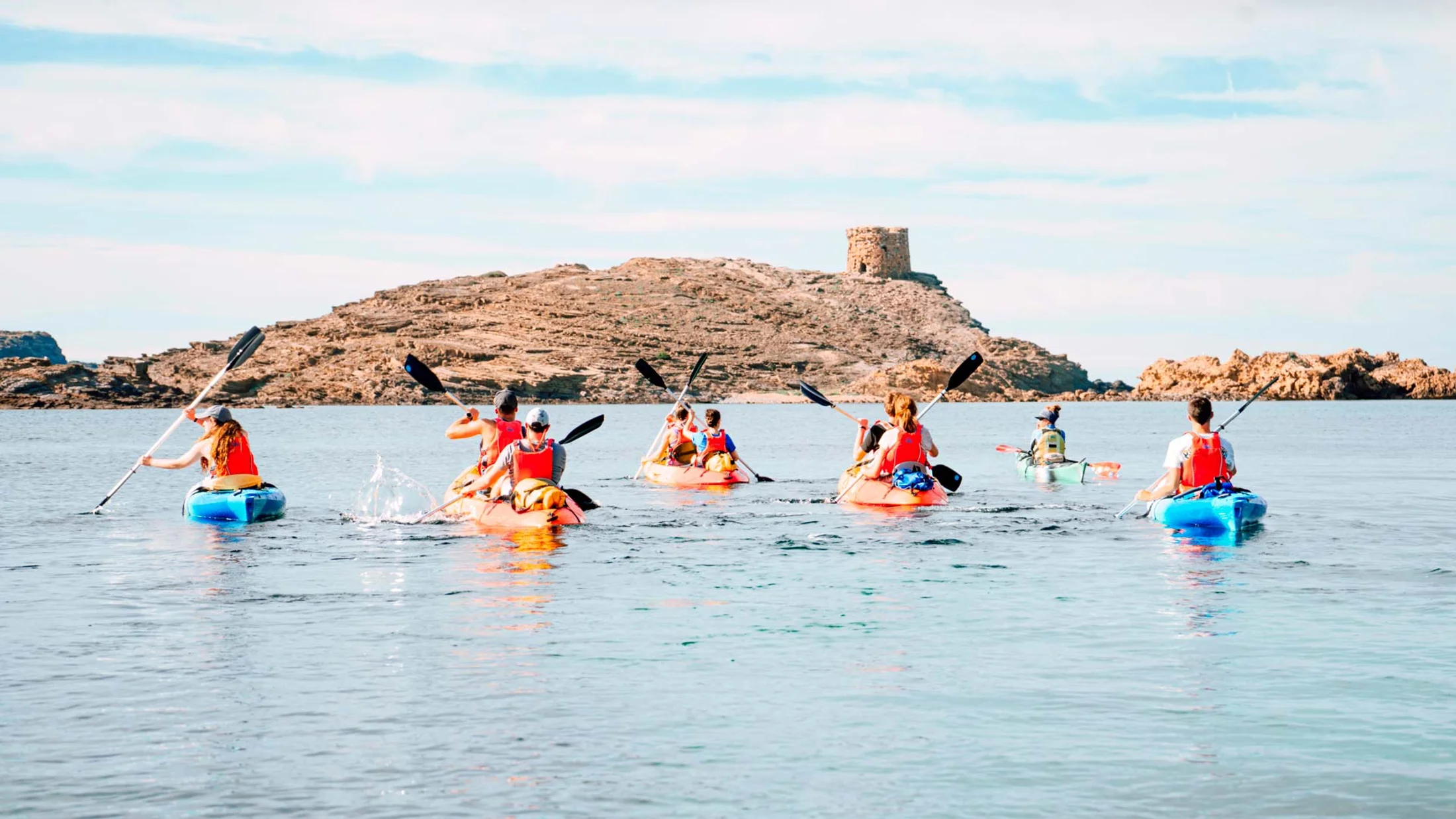
Salt hangs in the air as the Tramuntana wind wrinkles Fornells’ broad, protected bay. This Menorca kayak day is an elegant way to stitch caves, cliffs and Balearic coves into one quiet line on the water, with fantastic stops for snorkeling over reefs and Posidonia. Launch from Fornells harbor or Cala Tirant; full-day routes reach Cape Cavalleria and Cala Pregonda’s ochre sands, while half-day paddles explore sheltered inlets and grottoes along Illa d’en Porros.
- Location: Fornells, north Menorca.
- Start points: Fornells harbor, Cala Tirant.
- Duration: Half-day 3–4 h; full-day 6–7 h.
- Level: Beginner–intermediate (basic paddle fitness).
- Best time: May–June and September–October; mornings in July–August.
- Price range: 45–65 € p.p. (half-day guided); 70–95 € p.p. (full-day). Confirm latest rates with the operator or check Picuco.
- Ideal for: Couples and families with teens; small groups.
- Equipment: Sit-on-top kayak, PFD, snorkel set, water shoes, sun protection.
Expect red-rock coves near Cala Pregonda, low sea arches near Cavalleria, and turquoise pockets behind small reefs. On calmer days, guides lead into accessible caves with skylights and clear exits; you’ll surface to a warm drip and a blue echo. Snorkeling is best where rock meets sand—look for salema, wrasse and occasional octopus.
- Logistics:
- Operators run daily departures in season; small groups keep it safer and quieter.
- Bring 1.5–2 L water per person and a dry bag; wear a long-sleeve UPF top.
- If Tramuntana (north wind) is strong, some tours switch to south-coast alternatives.
Safety and conservation
Check wind forecasts (AEMET or similar) the evening before. Avoid entering caves with swell; never anchor or tread on Posidonia meadows (protected under Decret 25/2018). Pack out all trash.
2.Menorca — Coastal hiking on the Camí de Cavalls (essential seaside stages)
Pine shade dapples the sand while the GR-223 waymarks guide you from cove to cove without hurry. The Camí de Cavalls loops Menorca for 185 km, but you can taste its best coastal routes Menorca in half a day by choosing dramatic north or white-sand south. North between Cala Pregonda and Arenal d’en Castell you’ll cross copper-red dunes and lunar rock; south between Punta Prima and Binibeca you’ll skirt low cliffs, fishermen’s huts and swim stops.
- Iconic sections:
- North: Cala Pregonda → Arenal d’en Castell (10–12 km; 4–5 h; moderate; rocky paths, some exposure).
- South: Punta Prima → Binibeca (7–9 km; 3–4 h; easy–moderate; low cliffs, frequent access points).
- Best time: March–June, late September–November; early morning in summer.
- Level: Easy–moderate; sturdy shoes needed.
- Ideal for: Hikers who like swims and photo stops; families with older kids.
- Access:
- Bus/taxi links to trailheads; parking at main coves.
- Return options: out-and-back, local bus, or pre-arranged pick-up.
Walkers find stone walls and old watchtowers that locals have kept standing through careful maintenance and recent restorations. One short, breath-cooling swim can reset the legs before the next headland. Carry 1.5–2 L water, hat, and a small first-aid kit; in summer, plan shaded breaks and swim stops.
- Planning tips:
- Download official stage maps; follow red-white
GRblazes and wooden posts. - Avoid muddy sections after heavy rain on clay soils in the north.
- Respect farm gates; leave them as you found them.
- Download official stage maps; follow red-white
3.Ibiza — Kayak through sea caves and snorkel in clear water
Inside the blue hush of a grotto, your paddle drip sounds like a metronome on stone. Ibiza kayak caves are a close-up lesson in geology, with honeycombed cliffs and arches best reached from the water. From Cala Conta, tours zigzag among islets and low caves with sandy floors; from Cala d’Hort, on calmer days, you’ll trace the coast with views towards the limestone mass of Es Vedrà, keeping a respectful distance in the marine protected area.
- Start points: Cala Conta (west), Cala d’Hort (southwest), Ses Salines (south).
- Duration: 2.5–4 h.
- Level: Beginner–intermediate; basic paddle fitness and comfort in water.
- Price range: 45–75 € p.p. guided with gear; confirm with the operator or consult Picuco.
- Best time: May–June and September–October; mornings in summer to avoid wind and boat traffic.
- Ideal for: Couples, groups of friends, confident teens.
- Highlights:
- Low-ceiling caves and sea arches near Cala Conta’s islets.
- Snorkel faces with sponges and small grottos; sandy drops for easy entry/exit.
- Sunset paddles in calm weather (book early in high season).
Wearing a mask reveals the quiet industry of reef fish moving among boulders and Posidonia fringes. Guides typically carry safety gear, lights for caves, and spare snorkel sets; small group sizes mean more time exploring.
- Conservation and safety:
- Do not disturb resting birds or haul out on small islets signed as protected.
- Skip caves if swell rebounds at the entrance; wait and reassess.
- Keep 50–100 m from cliff jumpers and boat traffic near popular coves.
4.Ibiza — Coastal viewpoints and hikes to Es Vedrà and Sa Talaiassa
The evening sky lilacs around the silhouette of Es Vedrà as the sea turns to glass. Ibiza hiking rewards short effort with big horizons, from the famed Es Vedrà lookout to the island’s highest point, Sa Talaiassa. Both can be fit into half a day with time for a swim at nearby coves.
- Es Vedrà viewpoint (Torre des Savinar):
- Distance/time: 3–4 km out-and-back; 1.5–2 h; easy–moderate (rocky, some steep steps).
- Start: Near
38.887°N, 1.228°E(parking areas are limited; arrive early). - Best time: Golden hour or early morning for softer light and cooler temps.
- Combine with: Cala d’Hort beach for a swim or snorkel.
- Sa Talaiassa (475 m, highest on Ibiza):
- Distance/time: 5–7 km circulars; 2–3 h; moderate (steady incline).
- Start options: Sant Josep area (
38.921°N, 1.293°E). - Views: 360° over pine ridges, coast and islets; often breezy at the summit.
Bring grippy shoes, 1–1.5 L water and a wind layer for Sa Talaiassa’s top. Photographers should pack a polarizing filter to cut glare and schedule 30 minutes on site as light evolves. In summer, finish hikes by 10:00 or start after 18:00; shade is sparse on exposed ridges.
- Safety notes:
- Watch footing on dusty limestone; avoid cliff edges for photos.
- Check local fire-risk advisories; respect closures in high-risk periods.
- Park only in designated areas to avoid blocking emergency access.
5.Formentera — Snorkeling at Ses Illetes and a boat hop to Espalmador
Sand feels like sifted flour underfoot as shoals flash silver over pale blue. Formentera snorkeling shines at Ses Illetes, a sandbar-laced beach within the Parc Natural de Ses Salines d’Eivissa i Formentera, and on calm days across the channel at uninhabited Espalmador. You can arrive by bike or bus to the Ses Illetes area and take a licensed boat shuttle from La Savina to Espalmador when operating.
- Location: North Formentera; access via La Savina and Ses Illetes.
- Duration: 2–5 h in the water with beach breaks.
- Level: All levels; easy entries from sandy shelves.
- Price: Boat shuttle La Savina–Espalmador 15–25 € round-trip; snorkel gear rental 10–20 €; confirm with the operator or check Picuco.
- Best time: May–June and September–October for visibility and space; mornings in summer.
- Highlights:
- Sandbanks and blue channels that act like natural pools.
- Posidonia-fringed rocks with bream, damselfish and occasional barracuda.
- Gentle drifts along the leeward side when wind aligns with the islands.
The mud baths on Espalmador are prohibited by environmental regulations; enjoy the beach and leave wildlife undisturbed. Respect the Posidonia protection rules: boats must use mooring buoys or anchor on sand away from seagrass, as enforced throughout the Parc Natural.
- Practical tips:
- Bring your own mask and snorkel for best fit; add a simple rash guard for sun.
- Check shuttle schedules at La Savina and be mindful of last return times.
- Choose low-wind days (≤ Beaufort 3) for clearer water and safer swims.
6.Formentera — A bike + kayak day to discover quiet coves
Warm pine scent rides the breeze as your tires hum over packed tracks toward a calm launch. This combined day layers simple logistics—bike rental plus a few hours on the water—to reach pocket coves and swim in clear light. Start at La Savina or Sant Francesc, ride dedicated green routes to beaches with kayak rentals or guided departures, then paddle to nearby coves for a snorkel break.
- Start: La Savina or Sant Francesc Xavier.
- Duration: 4–6 h total (cycling 1.5–2.5 h; kayaking 2–3 h).
- Level: Moderate; comfortable cycling and basic paddling.
- Price: Bike 10–18 € day rental; kayak tour 35–70 € p.p.; confirm with the operator or check Picuco.
- Best time: May–June and September–October; mornings in July–August.
- Suggested plan:
- Cycle La Savina → Es Pujols → Cala en Baster (bluff views, entry points).
- Or La Savina → Ses Salines tracks → Es Caló (good for short paddles).
- Book a 2–3 h kayak slot with time to swim and snack between coves.
Carry water and a small cable lock for the bike when you’re on the water. Some operators offer transfers for kayaks to quieter entry points; ask about group size, route options and snorkel stops. Protect Balearic coves by using existing bike racks/rails and avoiding fragile dune plants—stay on marked paths and boardwalks.
- Gear checklist:
- Lightweight daypack, dry bag, reef-safe sunscreen, hat and sunglasses with retainer.
- Closed-toe water shoes for rocky entries; compact towel.
- Paper map or offline map for bicycle tracks plus a simple wind check before paddling.
Map: Where to Start and How to Read Distances
Use the map to anchor your planning: pins mark start points, indicative coordinates, and color-coded difficulty (green easy, blue moderate). For the Menorca kayak and Fornells routes, look for the harbor pin around 40.058°N, 4.135°E; the Camí de Cavalls coastal stages show trailheads at Cala Pregonda and Arenal d’en Castell. In Ibiza, Cala Conta (38.962°N, 1.227°E) and Cala d’Hort launch points are flagged, along with the Es Vedrà viewpoint access near Torre des Savinar. For Formentera, Ses Illetes beach access and the La Savina boat dock to Espalmador (38.735°N, 1.418°E) are highlighted.
Sea distances can deceive; a 2 km coastline paddle with caves may take longer than a straight 4 km crossing due to exploring time and swell. On foot, plan 3–4 km/h on coastal paths, slower on rocky north Menorca sections. Light on limestone can blind you at noon—read trail lines in early/late light when scouting.
- Parking and services:
- Fornells and Cala Conta: parking near the beach; arrive early in summer.
- Ses Illetes: regulated access; consider shuttle/bike to avoid caps.
- Sa Talaiassa: limited roadside parking; do not block driveways or fire lanes.
Combine the map with offline topographic apps for GR-223 segments and with marine charts for kayaking; operators often share GPS traces, while park websites publish access advisories. If you like to cross-check, compare forecast wind arrows with the coastline’s orientation to anticipate where you’ll find lee and chop.
Choose the Right Activity by Season and Level
A little planning turns a good day into a great one. Start with the season, then match your fitness and comfort with wind and heat.
-
By season:
- Spring (March–June): Best overall for hiking and paddling—mild temps, wildflowers, clear water. North winds (Tramuntana) can freshen in Menorca; pick south shores on breezy days.
- Summer (July–August): Go early (on the water by 09:00, hiking by 07:00) or late. Choose sheltered bays for kayaking and short coastal walks with swim stops. Book in advance; demand peaks.
- Autumn (September–October): Warm sea, gentler crowds. Occasional easterlies (Levante) can roughen exposed east coasts; shift to western coves.
-
By experience and group:
- Families with kids: Choose guided half-day paddles in sheltered bays, short out-and-back walks with shade and beach play, and easy Formentera snorkeling in sand-bottomed coves.
- Couples: Sunset paddles at Cala Conta, Camí de Cavalls picnic hikes, and early swims at Ses Illetes when the sandbars are quiet.
- Solo travelers and groups: Book group kayak/snorkel departures for safety and company; inform someone of your hiking plan.
-
Reading wind and waves in plain language:
- Beaufort 2–3 (light breeze) is comfortable for beginners; whitecaps (Beaufort 4+) make caves unsafe and paddling tiring.
- Check local forecasts the evening before and morning of the activity; align your route with leeward shores (downwind is not the same as sheltered—look for headlands that block fetch).
- If swell exceeds 0.5–0.8 m at cave entrances, skip them; choose open coves.
-
Gear and clothing essentials:
- Water: 1.5–2 L per person on foot; similar on the water plus electrolytes in summer.
- Footwear: Trail shoes for
GR-223; water shoes for rocky entries. - Sun: UPF long-sleeve, hat, sunglasses with strap, reef-safe sunscreen.
- Navigation: Offline maps; charged phone in a waterproof pouch; whistle.
-
Adapt when conditions shift:
- Swap a cave-focused paddle for a bay circuit if wind rises.
- Shorten the hiking loop; take shaded connectors where available.
- Move snorkeling to sandy leeward sides for visibility.
-
Reservations:
- In July–August, book 5–7 days ahead for Ibiza kayak caves and Formentera boat shuttles.
- For spring/autumn weekends, a 48–72 h lead time secures preferred slots.
- Always reconfirm departure times the day before; operators may adjust to conditions.
When the pines start sighing and the flags stiffen, you’ll know to pivot to a sheltered plan rather than force the original idea.
Frequently Asked Questions
Do I need permits for kayaking or snorkeling in protected areas?
No personal permit is usually required for day kayaking or snorkeling, but protected zones have rules. In the Parc Natural de Ses Salines (Ibiza–Formentera) and across Menorca, anchoring on Posidonia is forbidden under the Balearic Posidonia Decree (Decret 25/2018); boats must use mooring buoys or anchor on sand. Some beaches regulate access and parking in high season; follow signage and ranger instructions.
Are there restrictions on visiting Espalmador?
Yes. Espalmador is uninhabited and protected; commercial access runs via licensed shuttles from La Savina when conditions allow. Mud baths are prohibited due to environmental impact. Land only at designated points, avoid dunes, and carry all waste out. Always check last boat times; there are no services on the island.
How do I book with local operators responsibly?
Choose providers that limit group size, include safety gear, and adjust routes to conditions. Many run daily departures in season from Fornells, Cala Conta, Cala d’Hort, and Formentera’s main beaches. Compare what’s included (guide, kayak, snorkel set, insurance), confirm price ranges, and read cancellation policies; you can also browse curated options on Picuco to verify standards.
What are the basic safety rules for open water and caves?
Wear a PFD when kayaking, stay together, and keep a clear line to the exit in caves. Skip grottoes if swell rebounds at the mouth; a calm surface inside can be misleading. Snorkel with a buddy, use a float in areas with boat traffic, and avoid vertical cliffs with cliff jumpers. For hikes, mind loose limestone, sun exposure, and cliffs.
What insurance do I need?
Operators typically carry liability cover for guided trips, but it’s wise to have personal travel insurance that includes outdoor activities like kayaking and hiking. Check coverage limits for medical care and evacuation, and clarify whether rented gear is covered for damage.
Who should I contact in an emergency?
Dial 112 anywhere in the Balearics for emergencies; maritime rescue monitors VHF Channel 16. Share your plan with someone ashore, carry a charged phone in a waterproof pouch, and note the nearest beach access for evacuation. On popular beaches, lifeguard hours vary seasonally—ask on-site for the day’s schedule.
How do I minimize environmental impact?
Do not anchor or stand on Posidonia; enter the sea over sand or rock. Pack out all trash, use reef-safe sunscreen, and do not feed fish or collect shells. Stay on marked paths on the GR-223, respect private land and farm gates, and park only in designated areas to protect dunes and fire access.
What are typical cancellation and weather policies?
Operators often allow free changes 24–48 hours before departure for weather reasons and will propose alternative routes or times when wind shifts. If conditions are unsafe (e.g., high swell, strong winds), tours may be cancelled with a refund or rebooking; read terms before paying. Always reconfirm by message or phone the day prior.
Book your experience — discover active tourism in Spain with verified providers on Picuco.
Conclusion
These six experiences highlight why Menorca, Ibiza and Formentera are perfect for days that flow between trail, kayak and mask. You get line-of-sight beauty—coves, caves, headlands—and you also support communities who care for footpaths, dry-stone walls and the Posidonia meadows that keep waters clear. A single rule ties it together: let conditions and conservation lead your choices, and the islands respond with calm, safe adventures.
Plan with the season, choose leeward shores, and keep days flexible; you’ll walk farther, paddle lighter and see more underwater life. If you prefer extra assurance, pick small-group guided outings that adapt to wind and crowds while sharing local knowledge you’d never get alone. When you’re ready to go from reading to doing, explore curated activities with responsible operators, compare departure points against your itinerary, and secure your slots ahead of time for spring and summer peaks.