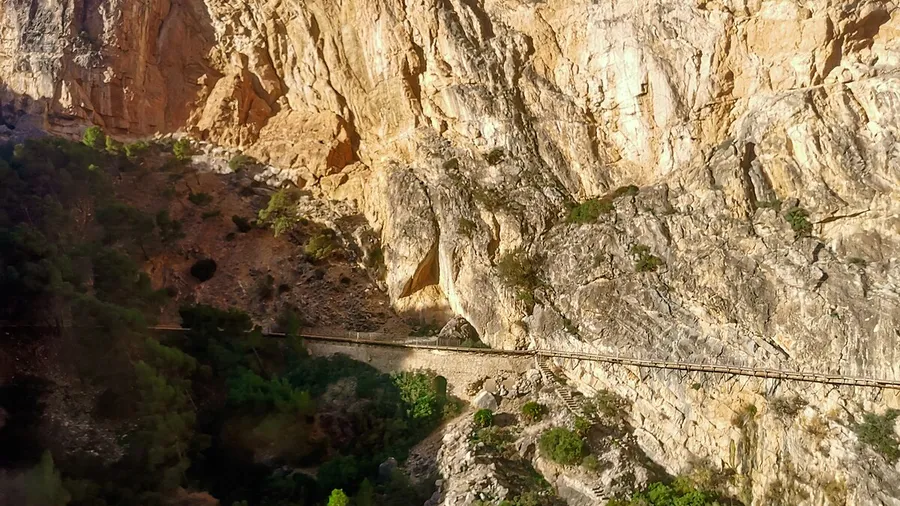
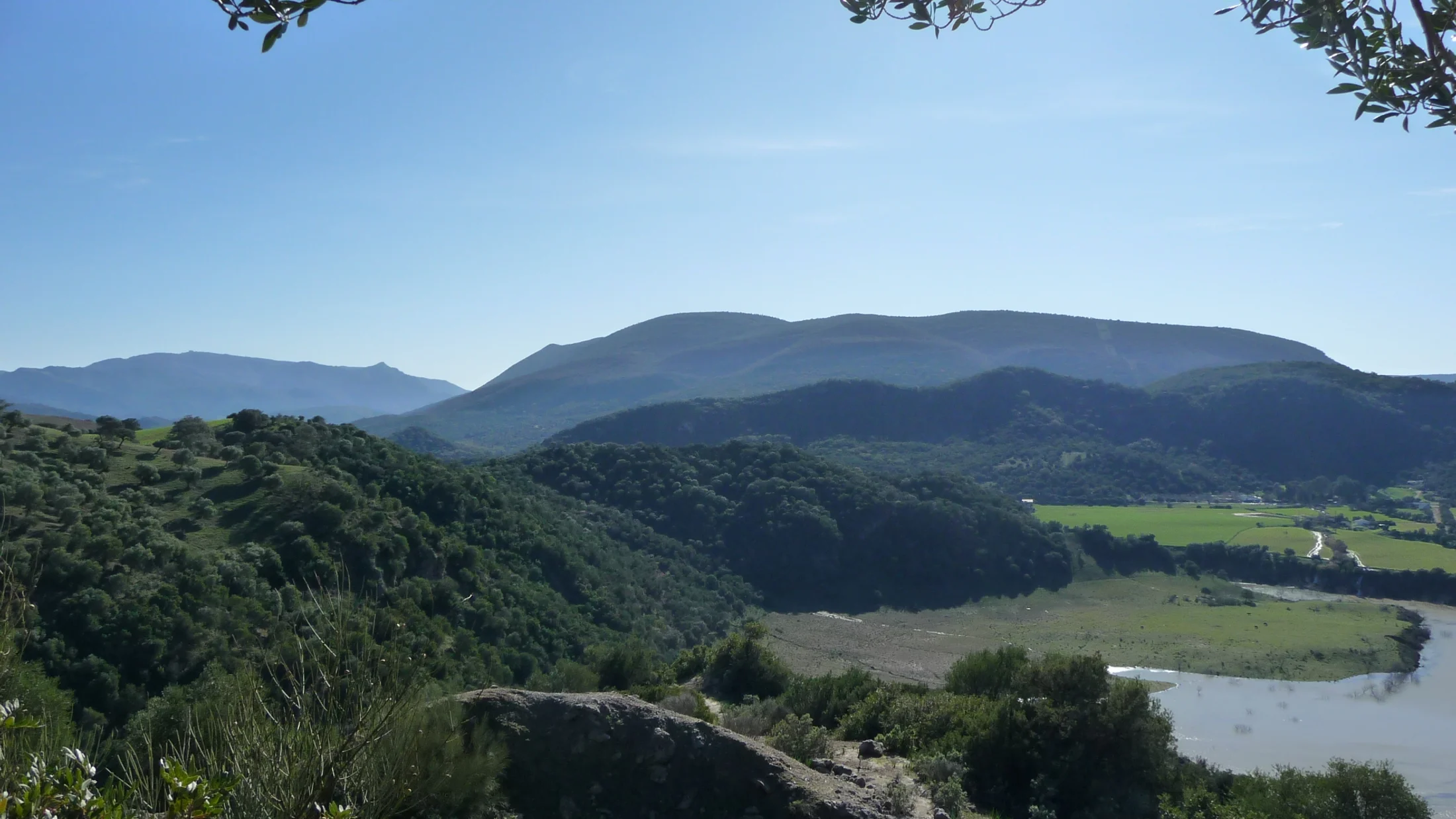
The Sierra de las Cabras rises north of Antequera in Málaga province, forming part of the Cordillera Antequerana, a limestone arc stretching roughly 50 kilometres east to west between the Puerto de los Alazores and the Gaitanes Gorge. Its main summit, Pico Cabras (also known as Cerro del Tajo Prieto), reaches 1,283 metres and from the top the view spans the Vega de Antequera, El Torcal to the south and the first ranges of the Córdoba Subbética to the northeast. The geology is Jurassic dolomitic limestone, with karren fields, dolines and vertical walls where raptors nest.
The hiking routes have a demanding profile. The most complete circular, at 17.7 kilometres, starts from the A-7075 road near Villanueva de la Concepción, climbs along goat tracks through gorse and thistle, crosses several livestock gates and requires scrambling on certain rock sections. Cumulative elevation gain is around 430 metres, with a minimum altitude of 908 metres and the maximum at Pico Cabras. A shorter option (10 km) ascends directly to the peak from Cortijo de la Alhajuela and returns the same way. There is no official waymarking on most of the route: a GPS track or prior knowledge of the terrain is needed.
The range's fauna includes griffon vulture, golden eagle, peregrine falcon and rufous-tailed rock thrush among the raptors and cliff-dwelling birds. Iberian ibex occupies the most inaccessible crags and is regularly seen in the early morning. Lower areas are home to wild boar, fox and badger. Vegetation combines juniper stands, low-profile holm oak, Portuguese oak and mixed formations with maples on shaded slopes. Sun-facing hillsides are dominated by esparto, gorse and rosemary, and rupiculous plants adapted to drought and wind grow in the cracks of the limestone. In March and April, rosemary blooms on the lower slopes and its sweet scent mixes with the dry air drifting up from the Vega.
The range has no official protection status or visitor centre. The most common access is from Villanueva de la Concepción, a town of around 3,200 people halfway between Antequera and the Puerto de las Pedrizas pass. Antequera, 15 kilometres away, serves as a logistical base with hotels, restaurants and direct AVE high-speed rail connections to Madrid (2 h 30 min) and Málaga (30 min). El Torcal de Antequera, 8 kilometres to the southwest, complements a visit with its karst landscape at lower altitude.
Sierra de las Cabras shares the same Jurassic geological base as El Torcal de Antequera, but the surface landscape differs: erosion here has not produced El Torcal's whimsical shapes but rather vertical walls and sharp ridges cutting the skyline. Marine fossils embedded in the limestone are a reminder that this entire relief was seabed 150 million years ago. Local shepherds still use the same goat paths connecting farmsteads to the high pastures.
Sierra de las Cabras is territory for technical, lightly trodden hiking. There are no water sources on the route, the sun is fierce in summer and navigation demands attention. That rugged character is precisely what draws those who want to walk without meeting other groups, in a setting where limestone and raptors set the pace for the day.