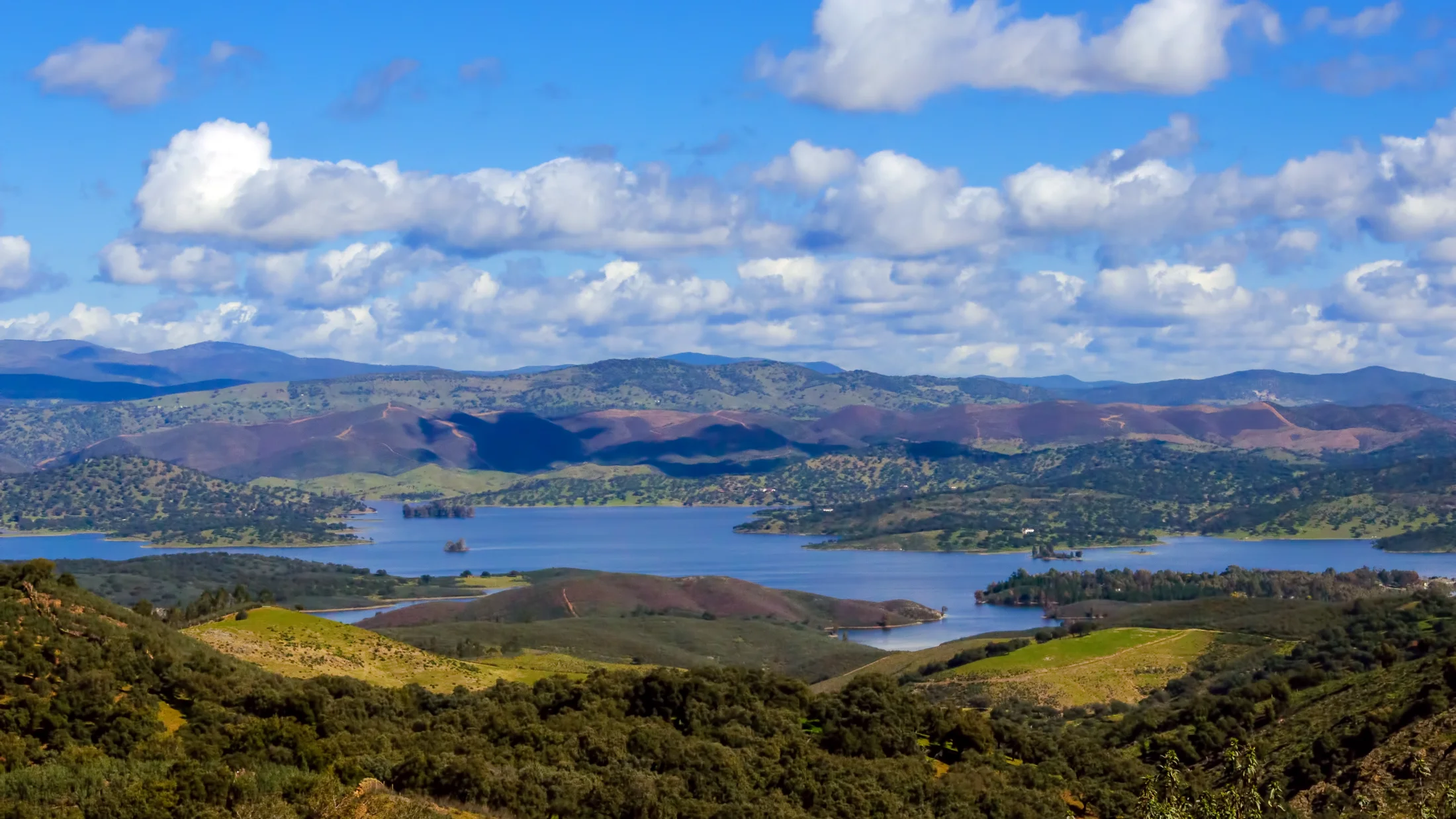
Natural Park of Sierra de Aracena and Picos de Aroche
The essentials of Natural Park of Sierra de Aracena and Picos de Aroche
- • Holm-oak and cork-oak dehesas with Iberian pigs during the October-February montanera
- • Jabugo, world-famous designation of origin for acorn-fed Iberian ham
- • Gruta de las Maravillas with 2,130 metres of galleries and underground lakes in Aracena
- • Over 4,000 hectares of chestnut groves with a centuries-old autumn harvest tradition
- • Network of 30+ whitewashed villages linked by 800 km of waymarked trails
Description
Practical information for Natural Park of Sierra de Aracena and Picos de Aroche
Everything you need to know for your visit to Natural Park of Sierra de Aracena and Picos de Aroche
How to get there
How to get there
From Seville (90 km), take the A-66 north towards Zafra and turn off on the N-433 to Aracena. From Huelva city (110 km), follow the A-49 and N-435 via Valverde del Camino. Daily Damas buses run from Seville to Aracena (1h 30min). Free parking in most villages.
Area Information
Natural Park Office and Cabildo Viejo Interpretation Centre in Aracena. Wide range of rural accommodation, hotels and restaurants in Aracena, Cortegana and Almonaster. Gruta de las Maravillas with daily guided visits. GR-48 as the main trail backbone.
Geography
Western Sierra Morena. Elevations from 300 to 1,085 m (San Cristóbal). Palaeozoic slate and quartzite substrate with local Cambrian limestone. Broad valleys, holm-oak and cork-oak dehesas, chestnut groves on shaded slopes.
Flora & Fauna
Holm-oak (Quercus ilex) and cork-oak (Quercus suber) dehesa, 4,000 ha chestnut groves (Castanea sativa). Fauna: black stork, black vulture, Iberian lynx (border zone), Egyptian mongoose, otter, red deer, Iberian pig during montanera.
Accommodations in Natural Park of Sierra de Aracena and Picos de Aroche
Best accommodation options in Natural Park of Sierra de Aracena and Picos de Aroche
Frequently asked questions about Natural Park of Sierra de Aracena and Picos de Aroche
Get answers about Natural Park of Sierra de Aracena and Picos de Aroche
When is the best time to see the Iberian pig montanera?
The montanera runs from October to February, when Iberian pigs feed on acorns in the dehesa. November and December are the best months: pigs roam freely beneath holm oaks and cork oaks, and the more accessible estates let you watch from public paths. Respect fences and avoid disturbing the animals.
Can you visit the Gruta de las Maravillas without a booking?
You can, but booking is strongly recommended at weekends, bank holidays and public holidays, as each tour has a limited capacity. Guided visits last about 45 minutes and cover 1,200 metres of galleries with underground lakes. The interior temperature stays at around 16 °C, so a light layer is advisable even in summer. Tickets are available at the ticket office or online.
How many days do you need to explore the sierra?
A minimum of three days lets you visit Aracena (cave, castle), walk a hiking stage between villages and enjoy local gastronomy at a leisurely pace. With five days you can complete a circuit taking in Alájar, Linares de la Sierra, Fuenteheridos, Cortegana and Almonaster la Real, alternating 10-15 km walks with cultural visits and tastings of Iberian ham and sierra produce.
Are there easy hiking routes for families?
Yes, the route between Alájar and Linares de la Sierra (8 km, gentle gradient) suits families with children from about age 6-7 and runs through shaded dehesa. The Rivera de Aracena trail (4 km, circular) follows the stream on flat stretches ideal for younger walkers. Generally, the inter-village stages let you choose short distances and stop for lunch in any settlement along the way.
What typical local food products can you buy?
Jabugo acorn-fed Iberian ham is the star product, available in specialist shops in Aracena and Jabugo. Chestnuts and chestnut derivatives (jams, liqueurs, flour) are autumn staples. Wild mushrooms, goat's cheese, artisan cured meats, holm-oak honey and local spirits also stand out. Saturday markets in Aracena bring together local producers.