The essentials of Lake Banyoles

  • • 107 hectares of karst-fed water reaching 62 m maximum depth
  • • Hosted the rowing events of the 1992 Barcelona Olympic Games
  • • Flat 6.5 km perimeter path suitable for walking and cycling
  • • Over 100 bird species with a protected nesting area on the southern shore
  • • Neanderthal Banyoles mandible at the Museu Arqueològic Comarcal

Description

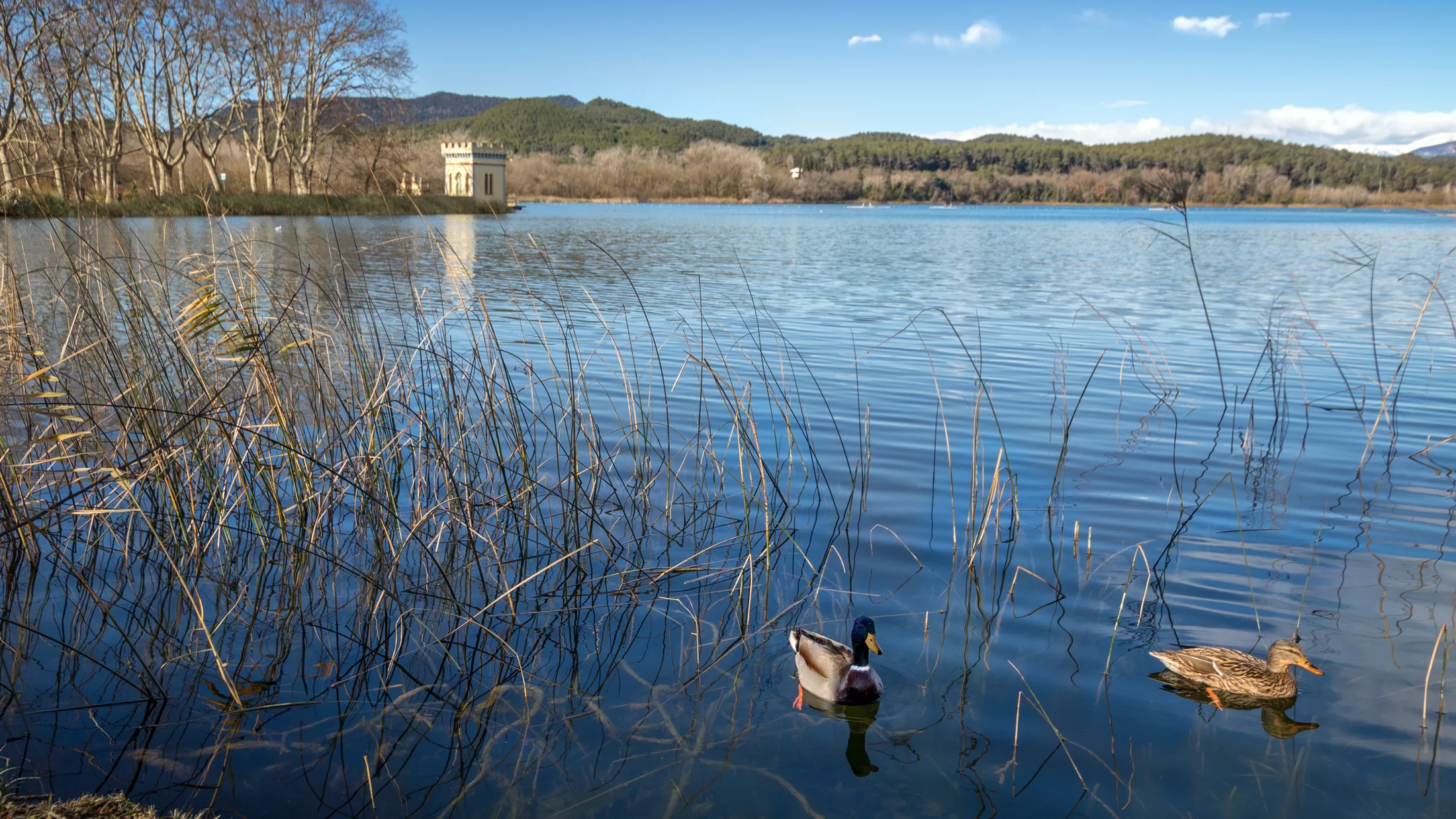
Lake Banyoles is the largest natural lake in Catalonia: 107 hectares of water fed by underground springs in a tectonic-karst basin formed roughly 250,000 years ago. It measures approximately 2,100 metres long by 750 metres wide and reaches a maximum depth of 62 metres, though the average is around 15 metres. The water surface, ringed by cypress and plane trees, stays calm for most of the day. At dawn, as low-lying mist lifts, the lake reflects the soft contours of the Pla de l'Estany hills with a clarity that explains its reputation as a contemplative landscape.

In 1992, the lake hosted the rowing events of the Barcelona Olympic Games. The facilities built for the competition remain in use, and the lake continues to stage national and international regattas. In 2004 it hosted the World Rowing Championships. Outside the race calendar, the waters are open for canoeing, kayaking and swimming in designated areas. The perimeter walkway, roughly 6.5 kilometres, is flat and suitable for walking or cycling, lined with benches and shaded by plane trees.

Biodiversity around the lake and its surrounding wetlands includes more than 100 bird species, among them night heron, great crested grebe, great cormorant and grey heron. Reed beds along the southern shore are a protected nesting area. Aquatic vegetation includes water lilies and bulrushes forming a green belt visible from the perimeter path. Beneath the surface, the lake holds carp, eels and several cyprinid species, alongside a red-eared slider colony that authorities are working to control.

The town of Banyoles, population around 20,000, sits on the lake's western edge. Its old quarter preserves the Monastery of Sant Esteve, founded in the ninth century, and a weekly Wednesday market that fills the Plaça Major with stalls selling local produce. The Museu Arqueològic Comarcal houses the Banyoles mandible, a Neanderthal fossil found in 1887 at the Mas Grauet quarry and one of the oldest human remains on the Iberian Peninsula. Local cuisine centres on garden produce, freshwater fish dishes and charcuterie from inland Girona.

The lake is fed by underground springs connected to the karst system of the Serralada Transversal, keeping water temperature relatively stable year-round. This particular hydrogeology creates variable transparency that shifts with the season and rainfall patterns. The pesqueres—small stone shoreline shelters historically used by fishermen—dot the perimeter and are now a protected heritage feature of the landscape.

From Barcelona, Banyoles lies 120 km via the AP-7 and C-66 (approximately 90 minutes by car). From Girona, the distance drops to 18 km. The lake serves as a gathering point for local families and as a weekend destination for visitors from Barcelona and Girona seeking calm water, clean air and an uncrowded setting. On spring and autumn weekends the path fills with cyclists and runners, while in summer the bathing area on the southern shore draws swimmers from first light.
Practical information

Everything you need to know for your visit to Lake Banyoles

How to get there
From Barcelona, take the AP-7 to Girona then the C-66 to Banyoles (120 km, 1 h 30 min). From Girona it is 18 km on the C-66 (20 min). Direct buses run from Girona station. Take the Renfe train to Girona and connect by bus. The lake is a 5-minute walk from the town centre.
Area Information
Banyoles (pop. 20,000) has an old quarter with the Monastery of Sant Esteve (9th c.), a weekly Wednesday market and the Museu Arqueològic Comarcal housing the Neanderthal mandible. Local restaurants, accommodation and kayak or boat hire along the lakeshore.
Geography
A tectonic-karst basin in the Pla de l'Estany comarca (Girona), formed 250,000 years ago. The lake measures 2,100 x 750 m and reaches 62 m depth. It is fed by underground springs from the karst system of the Serralada Transversal.
Flora & Fauna
Over 100 bird species: night heron, great crested grebe, great cormorant and grey heron. Protected reed beds on the southern shore. Aquatic vegetation of water lilies and bulrushes. Underwater: carp, eels and cyprinids. Cypress and plane trees line the perimeter path.

Things to do

Find the best plans and things to do in Lake Banyoles

20

Accommodations

Best accommodation options in Lake Banyoles

Loading accommodation options...

Frequently Asked Questions

Get answers about Lake Banyoles

Yes, in summer there is a designated swimming area on the southern shore. Access is free and lifeguards are on duty during July and August. Outside the bathing season the water remains accessible but unguarded. Water temperature ranges from 14 °C in winter to 24 °C in midsummer.
Lake Banyoles hosted the rowing and canoeing events of the 1992 Barcelona Olympic Games. The sports facilities were built for the occasion and remain active today: the lake stages national and international regattas, and in 2004 it hosted the World Rowing Championships.
Yes. The 6.5-kilometre perimeter path is flat, paved for most of its length and suitable for pushchairs, wheelchairs and bicycles. Benches and shaded areas beneath plane trees line the entire route. It is one of the most accessible walks in the Pla de l'Estany comarca.
The star exhibit is the Banyoles mandible, a Neanderthal fossil found in 1887 at the Mas Grauet quarry. It is one of the oldest human remains on the Iberian Peninsula. The museum also displays archaeological material from the comarca spanning the Palaeolithic to the medieval period, and hosts temporary exhibitions.
Yes. Companies along the lakeshore hire out kayaks, canoes and rowing boats. Stand-up paddle boarding is popular during calm conditions. The Olympic rowing facilities remain available for clubs and sports schools. Open-water swimming is possible in the designated area during the summer months.