The essentials of Aiako Harria Natural Park

  • • Only Palaeozoic granite outcrop on the Basque Cantabrian coast
  • • Arditurri mines with 800 m of visitable Roman-era galleries
  • • Habitat for European mink and Atlantic salmon in its rivers
  • • Up to 2,800 mm annual rainfall sustaining oak and beech forests
  • • 20 km from San Sebastián with traditional cider houses in Oiartzun

Description

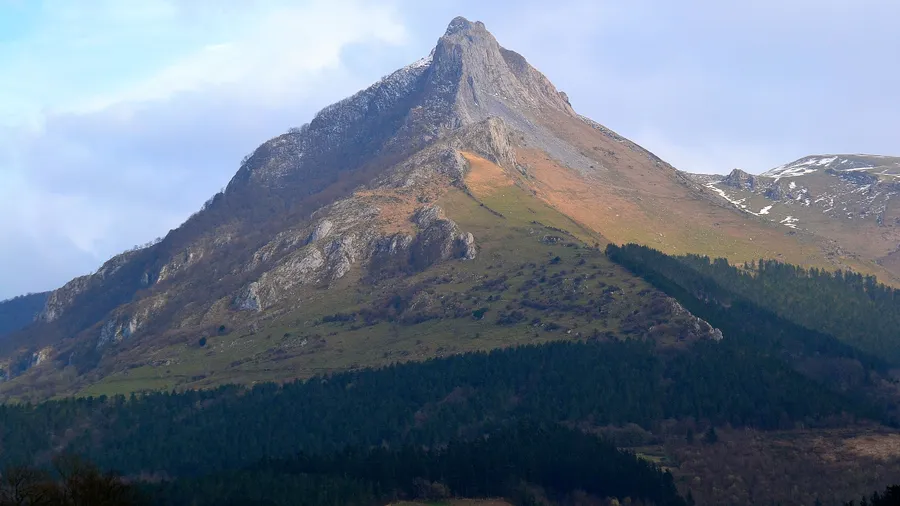
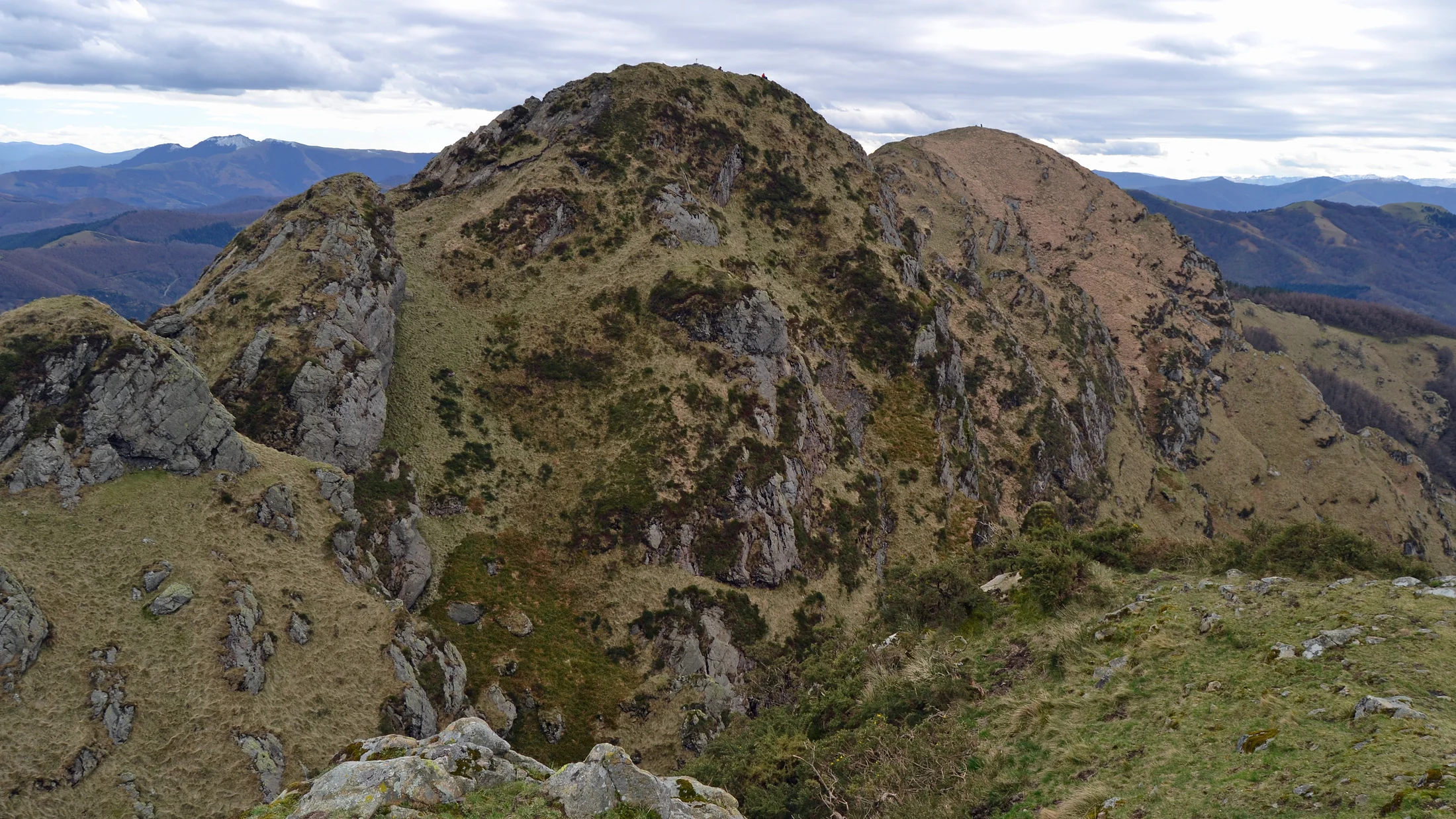
Aiako Harria Natural Park covers 6,913 hectares at the eastern tip of Gipuzkoa, between the rivers Bidasoa and Urumea. It contains the only Palaeozoic granite outcrop along the entire Basque Cantabrian coast, a geological distinction that sets it apart from any other protected area in the region. Three main peaks—Irumugarrieta (834 m), Txurrumurru (821 m) and Erroibide (837 m)—rise as dark granite masses above a dense mantle of Atlantic forest. From a distance, their jagged profile is unmistakable against the grey-green Cantabrian sky.

Annual rainfall exceeds 2,200 mm in the lower areas and can reach 2,800 mm on the summits, making Aiako Harria one of the wettest spots in the Basque Country. That persistent rain feeds a network of streams and brooks flowing from the peaks towards the Oiartzun and Urumea rivers, sustaining pedunculate oak woodland, acidophilic beech forest and alder-lined riparian corridors in good condition. Beneath the canopy, ferns and mosses carpet the ground in an unbroken green layer punctuated only by lichen-covered granite blocks. The smell of damp earth and decomposing leaf litter accompanies every walk through the forest interior.

The fauna is Eurosiberian in character, with over 147 recorded vertebrate species. Roe deer and wild boar are the most frequent mammals, while the European mink—one of Europe's most endangered species—and Atlantic salmon inhabit the park's watercourses, giving these rivers first-order conservation value. Notable birds include griffon vulture, peregrine falcon nesting on the granite cliffs, and middle spotted woodpecker, an indicator of mature forest with old-growth trees. Streams descending from the peaks support native brown trout and white-clawed crayfish populations.

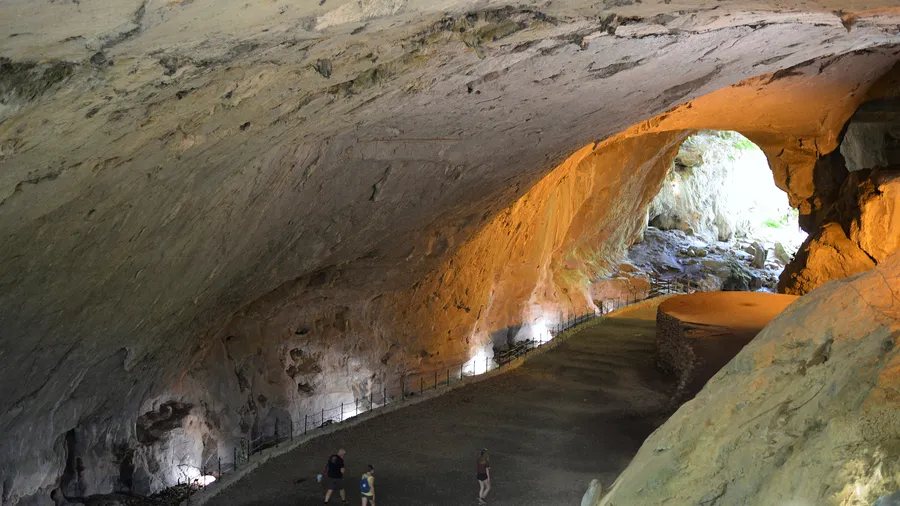
The territory is shared among five municipalities: Oiartzun (44.7%), Errenteria (25.1%), Irun (18.2%), Hernani (9%) and Donostia-San Sebastián (3%). The Arditurri mines, worked since Roman times for silver, lead and fluorite, are now open to visitors along more than 800 metres of lit galleries with interpretive panels covering 2,000 years of extraction. Nineteenth-century mining infrastructure blends into the woodland landscape, creating a contrast between industrial heritage and natural recovery.

From the three summits on clear days, the Cantabrian coast is visible to the north—including Txingudi Bay and the Bidasoa estuary—while the first Pyrenean foothills appear to the south. The trail network includes circular routes of varying difficulty: easy valley-floor walks for families, moderate ascents to intermediate viewpoints, and ridge traverses for experienced hill-walkers. The park was declared in 1995 by the Basque Government (Decree 241/1995), protecting this singular granite enclave and its associated Atlantic forests.

Proximity to San Sebastián—just 20 kilometres from the city centre—makes it possible to combine a morning in the mountains with the gastronomic and cultural offer of the Gipuzkoan capital. Oiartzun, the municipality with the largest share of parkland, has traditional cider houses where the cider season (January–April) draws visitors from across the province. The closeness of the French border also links Aiako Harria to the French Basque Country, enabling cross-border excursions through shared landscape.
Practical information

Everything you need to know for your visit to Aiako Harria Natural Park

How to get there
From San Sebastián, take the AP-8 motorway towards Irún and exit for Oiartzun on the GI-2134. The drive takes around 25 minutes. The Oiartzun interpretation centre is the main access point. The park is also reachable from Errenteria and Irún via local roads. Lurraldebus inter-urban buses connect San Sebastián with Oiartzun.
Area Information
Five municipalities share the park: Oiartzun, Errenteria, Irun, Hernani and Donostia-San Sebastián. Oiartzun holds the largest share and offers traditional cider houses, Basque cuisine restaurants and rural accommodation. The Arditurri mines are the main cultural attraction in the area.
Geography
A 6,913-hectare Palaeozoic granite massif between the Bidasoa and Urumea rivers, with three main summits above 800 m. The terrain combines bare granite ridges with deep valleys cloaked in Atlantic forest. It is the only igneous outcrop on the Basque Cantabrian coast.
Flora & Fauna
Pedunculate oak woodland, acidophilic beech forest and alder-lined riparian corridors dominate. Over 147 vertebrate species including European mink, Atlantic salmon, roe deer, griffon vulture, peregrine falcon and middle spotted woodpecker. Native brown trout and crayfish in the streams.

Things to do

Find the best plans and things to do in Aiako Harria Natural Park

20

Accommodations

Best accommodation options in Aiako Harria Natural Park

Loading accommodation options...

Frequently Asked Questions

Get answers about Aiako Harria Natural Park

It is the only Palaeozoic granite outcrop along the entire Basque Cantabrian coast. While the rest of the Basque mountains are limestone or sandstone, the three peaks of Aiako Harria rise as igneous rock formed over 250 million years ago. This geological singularity determines the soil acidity and, consequently, the park's distinctive vegetation.
Yes. The Arditurri mines offer guided tours through more than 800 metres of lit galleries, covering 2,000 years of extraction from Roman times to the twentieth century. Advance booking is required. Tours last approximately one hour and are available in several languages, including Basque and Spanish.
There are routes for all levels. Valley-floor walks are flat and suitable for families with children. Ascents to the intermediate viewpoints are moderate with 300–400 metres of elevation gain. Ridge traverses to the three peaks are for experienced hill-walkers and require technical footwear and waterproof clothing.
Yes, it is one of the wettest spots in the Basque Country. Annual rainfall ranges from 2,200 mm in the lower areas to 2,800 mm on the summits. Rain can fall in any season, so always bring a waterproof jacket and spare clothing. May to October is somewhat drier but not rain-free.
The park is just 20 km from central San Sebastián. A common plan is to spend the morning hiking or visiting the Arditurri mines and the afternoon in the city. Oiartzun, at the park entrance, has traditional cider houses for lunch during cider season (January–April) and Basque cuisine restaurants the rest of the year.