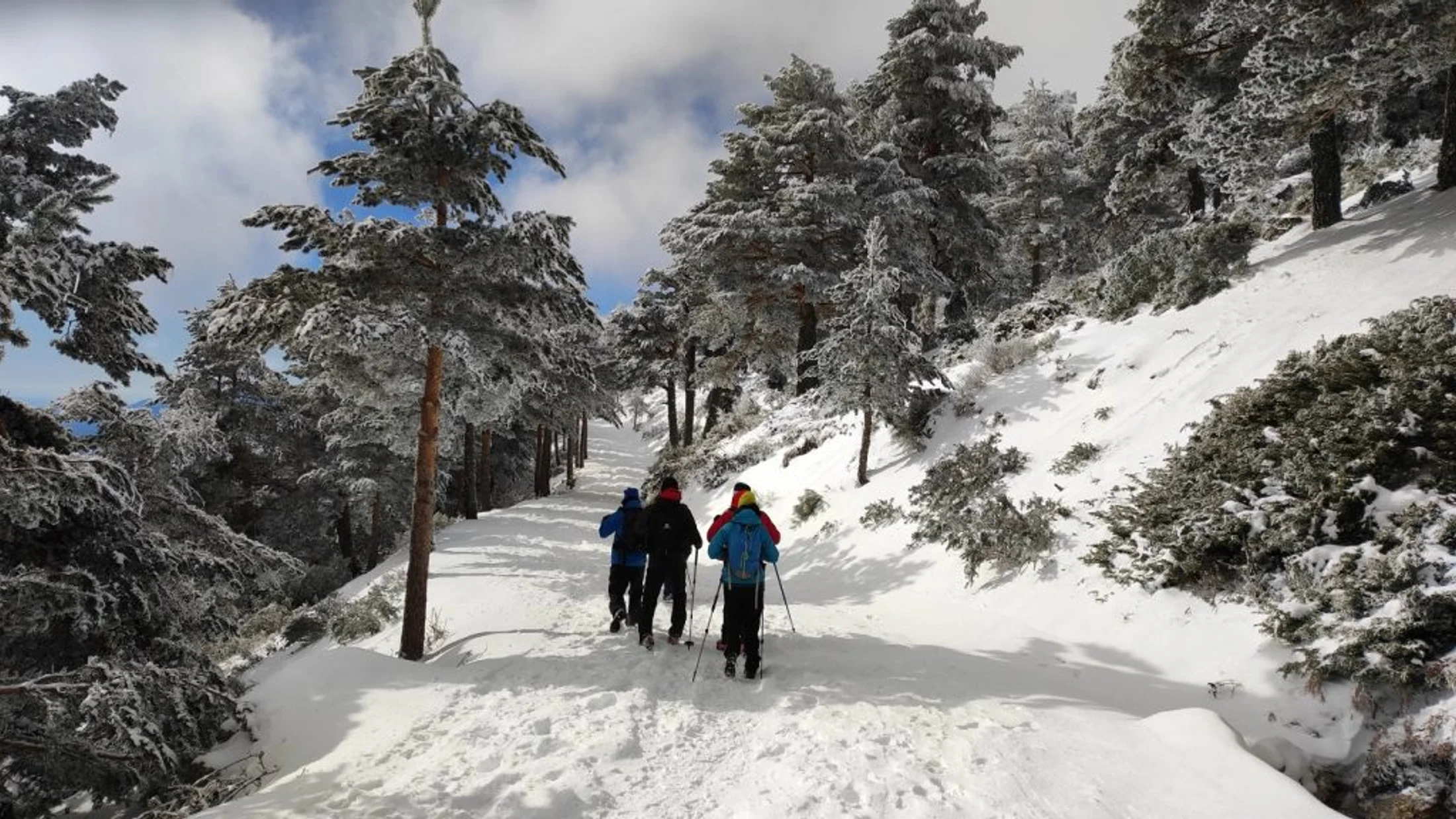
Why winter hiking is addictive
In winter, Spain is explored with clean light, fewer people and landscapes that truly change: from the frozen beech forests of the north to the golden lava of the Canary Islands. The white steam of your breath mixes with a low sun that ignites the peaks.
The 10 routes in this selection respond to five criteria: safety and accessibility in winter, landscape interest, geographical and climatic variety, nearby services and transport, and suitability for different levels. Each proposal comes with a practical sheet with location, times, altitude gain and access, as well as local recommendations and safety warnings.
The article is organised into a numbered list of 10 autonomous mini-guides. This is followed by a map with key locations, a block of essential tips and a frequently asked questions section.
Before heading out, consult official resources such as AEMET (meteorological and snow reports), DGT (roads) and the parks' websites. Always carry a map, common sense and a plan B in case the weather changes.
A quick glossary to help you navigate the sheets: crampons are metal spikes that attach to your boot for ice, snowshoes distribute your weight over soft snow and cornices are snow overhangs that can collapse.
Picuco te puede ayudar
Does something here catch your eye?
Tell us.
Write to us on WhatsApp or email: we answer questions, find the best options and help you sort out the booking.
How to read these routes and choose well
Each route comes with a brief description and a sheet that you can read in one minute. The sheet brings together location, access and transport, approximate price if there is any (cable cars or regulated car parks), the best winter window, the recommended level, a suggested itinerary and safety warnings.
With those sheets, you can quickly filter according to what you are looking for: safe snow, panoramas without complex techniques or mild weather alternatives. A cold pine scent usually warns you that you are ascending towards open summits.
Levels are measured like this:
- Easy: marked paths, 2 to 4 h and less than 400 m of accumulated altitude gain.
- Moderate: 4 to 6 h and between 400 and 800 m, with possible ice; requires basic experience and winter equipment if there is snow.
- Demanding: more than 6 h or more than 800 m, clear winter terrain (snow or ice), orientation and specific equipment.
If you are a beginner in snow, choose easy and low routes, or the temperate coast. With basic experience, aim for moderate ones with microspikes or snowshoes depending on how the snow is.
Consult AEMET and the snow reports before heading out. If there is a blizzard, ice sheets or an avalanche warning, change your plan.
Adjust your schedules to the short days: think about 3/4 of the day to go up and 1/4 to go down, and carry a headtorch with batteries.
Ten routes for when the temperature drops
1. Ordesa – Cola de Caballo (Ordesa y Monte Perdido National Park)
In winter, ice remains on the waterfalls of the Ordesa valley and snow covers the Soaso terraces. The murmur of the Arazas thickens as if the cold were muffling every sound.
It is 17 km round trip, with 6-7 h on dry land and a vertical gain of +500/600 m.
The difficulty is moderate in summer and moderate-demanding with ice. In winter, avoid the Senda de los Cazadores due to its exposure and the ice.
There is ice on walkways and in shaded areas. Bring light crampons or microspikes and poles with baskets, and watch out for ice sheets on the Soaso terraces and on the return journey with limited light. If the weather forecast is harsh, short walks to the waterfalls are a good alternative.
You arrive via the A-135 to the Pradera de Ordesa (Torla, Huesca). In winter, parking is usually open if the road is clear, so check with the DGT and the Ordesa National Park.
During periods of high influx (Holy Week, from 20 June to 15 September and weekends and holidays until 1 November) car access to the Pradera is restricted: you must use the shuttle bus from the Torla-Ordesa Visitor Centre car park (www.ordesabus.com). The road between Torla-Ordesa and the Puente de los Navarros is always open to vehicles. There are no tolls, although there may be access regulation at bridges.
2. Ruta del Cares (Picos de Europa)
The Ruta del Cares is a path carved into rock that runs through the Cares Gorge between Puente Poncebos (Asturias) and Caín (León). In winter, with cold and stable days, the walls remain clear and the light enters obliquely over the gorge.
The full round trip is 24 km, with a vertical gain of about 285-300 m (Poncebos 215 m, Caín 500 m). The difficulty is moderate: you must pay attention to ice and wind. Look for a winter anticyclone with clear skies and avoid thaws and storms.
If you want a more accessible section, walk from Poncebos to the puente de los Rebecos or the Canal de Culiembro and return by the same way. The route is suitable for people over 12 years old and for people who do not suffer from vertigo.
There may be ice in shaded areas and on walkways, so bring rigid-soled boots, microspikes and windbreaker layers. Days are short in winter: start early and allow for a margin. A short and sunny variant is to walk from Caín towards the dam and return before the shadow.
There are no fees or permits. Transport is very limited in winter; it is best to go with two cars or hire a local taxi.
3.Puerto de Navacerrada – Bola del Mundo (Sierra de Guadarrama)
Puerto de Navacerrada is just a step away from Madrid and its wide ridge up to Bola del Mundo is a winter hiking classic when the thermometer drops. The route is located in the Sierra de Guadarrama National Park.
From the summit, you can see Peñalara, La Maliciosa and the snowy plateau, and the air smells of firewood from the bars at the pass. The itinerary climbs from the pass via the Guarramillas ridge up to Bola del Mundo (2,265 m), with a possible extension towards Cuerda Larga if conditions are exceptional.
It is 7-9 km round trip, taking 2.5-3 h and 3-4 h with snow, and an elevation gain of +400/500 m. The difficulty is moderate in winter and easy without ice.
With hard snow, crampons or microspikes are necessary, and poles help on the descents. Strong wind is common, so it is advisable to avoid days with gusts and fog. The best window arrives after snowfalls have stabilised and with an anticyclone; if the pass is closed, you have walks through the Valle de la Fuenfría.
You arrive via the M-601 road, with limited parking and controls during snowfalls. You can also go by train from Chamartín to Cercedilla (C-8B) and then the C9 line to Puerto de Navacerrada, or by interurban buses from Moncloa to Navacerrada/Cotos (consult CRTM).
4.Laguna Grande de Gredos (Sierra de Gredos)
Laguna Grande is climbed from the Plataforma de Gredos amidst granite, ice and silence. In winter, the route is high mountain terrain and demands respect and planning.
The classic itinerary goes from the Plataforma to Laguna Grande de Gredos. The return is made via the same way. It is 12-14 km round trip, with 4.5-5.5 h of walking and 5.5-7 h if there is snow. The difficulty is moderate-demanding in winter.
Arrive by car via the AV-931 to the Plataforma, which has regulated capacity; you can also access it from Navacepeda de Tormes. The access fee is 3€ for cars, 5€ for motorhomes and 12€ for buses. The access hours are from October to June from 8:00 to 15:00, and from July to September from 7:30 to 19:30.
The Laguna Grande refuge, formerly Elola, is at 1,950 m above sea level in the Circo de Gredos, near the lagoon; it is advisable to confirm its opening in winter. Watch out for the risk of ice slabs in Los Barrerones and for blizzards. Avalanches can form in loaded slopes within the cirque after storms.
Bring crampons, an ice axe if there are icy slopes and snowshoes after recent snowfalls. Add a GPS or map and compass in case of a whiteout, the fog that erases the relief. The best stable windows arrive from January to March.
In the area, you can learn about livestock culture and stay in rural houses in Hoyos del Espino.
5. Hoya de la Mora – Virgen de las Nieves (Sierra Nevada)
Hoya de la Mora is at 2,500 m, in Monachil (Granada), and serves as a way to start walking at altitude without complications.
The snow crunches like icing sugar under your snowshoes. The difficulty is easy-moderate depending on the ice you encounter.
You arrive by car via the A-395 from Granada. During the season, there are buses to Pradollano and shuttles. The bus from Granada to La Hoya de la Mora leaves at 09:00 and arrives at 09:50; the return from La Hoya de la Mora is at 17:00, and from Pradollano at 17:15. Buy your tickets at the machines in the Granada Bus Station or in advance at movelia.es, with a maximum of two weeks' notice.
The sun warms you, but wind and ice are frequent. Bring high-category sunglasses, sunscreen, a windbreaker and microspikes or snowshoes depending on the state of the snow. Avoid entering ski slopes and the cornices of the ridges.
6. Fuente Dé – Mirador del Cable (Picos de Europa)
Up high, short paths lead to viewpoints if the ice allows.
The Fuente Dé glacial cirque is populated with beech forests and is where the Deva river is born. The base is at 1,094 m and El Cable at 1,823 m.
A return ticket costs 30 € for an adult; it is advisable to confirm at the ticket office. The difficulty is easy near the stations and moderate if you move away with snow or ice.
The recommended itinerary is to go up by cable car, visit the marked viewpoints avoiding edges with cornices and, if the weather report is favourable, walk towards the Puertos de Áliva via the PR-PNPE 24 on its initial section. The alternative on foot is the ascent via path to Collado de la Canalona, only for mountaineers with equipment and winter experience.
Bring poles, microspikes and allow plenty of time: there is polished ice on walkways and in shaded areas, and strong wind on the ridge of El Cable. The best window is during anticyclonic days, especially at the end of winter.
You arrive via the CA-185 from Potes, with ample parking; the starting point is the parking lot located at the exit of Potes. There are regional buses to Potes and taxis to Fuente Dé in winter, so check the schedules. You can complement your day with a visit to Potes and its market.
7. Laguna Negra de Urbión (Soria)
Laguna Negra de Urbión is an eight-metre-deep glacial lagoon nestled in a cirque, between Vinuesa and Duruelo de la Sierra. In winter, the path from the lower car park becomes a snowy stroll, easy to walk and very photogenic.
The route has an easy-moderate difficulty with snow. You leave the lower car park via the winter track and follow the marked path to the lagoon and the viewpoints; you return via the same way.
Arrive by car via the SO-830 to the lower car park, because the track to the upper car park is usually closed in winter. In high season (summer, Holy Week and long weekends) car access is restricted: leave your car in the Paso de la Serrá car park (paid) and use the shuttle bus or go on foot.
Never walk on the frozen lagoon: the ice can be thin and collapse. There is ice on steps and walkways, so microspikes and poles help a lot. Bring suitable clothing and footwear for snow and ice.
Respect the pine forests and local livestock, and buy in Vinuesa: there, winter is long and responsible tourism helps. At sunset, the smell of damp firewood rises from the village chimneys.
8. Teide – Roques de García (Tenerife)
At 2,100 m, in the Teide National Park, a circular path surrounds the Roques de García amidst volcanic rock and mild winter temperatures. The route passes by the Mirador de La Catedral and the Llano de Ucanca.
It is a 3.5-4.5 km circular route, with 1.5-2 h of walking and a difference in altitude of ±175 m. The difficulty is easy, with some rocky sections.
You arrive via the TF-21, from La Orotava or Vilaflor, or via the TF-38, from Chío. The parking is at the Mirador de La Ruleta, opposite the Parador. Bus lines 342 and 348 reach the National Park, but the guaguas are limited, so it is advisable to bring your own car or a rental.
The return ticket costs €42.00 for non-resident adults, €21.00 for non-resident minors and €10.50 for resident adults.
Early in the morning there may be occasional frosts and the radiation is high: bring light clothing, a cap and water. The best window is throughout the winter, except for summit storms. Respect the lava flows and the endemic flora of the park.
9. Paths of Cabo de Gata (Almería)
In Cabo de Gata, you walk in winter without snow, between volcanic coastlines and mild temperatures. The paths of the Cabo de Gata-Níjar Natural Park, in Almería, are bright and suitable for families.
You can choose between the San José–Genoveses–Mónsul route or the paths through Cerro del Fraile and Vela Blanca. The first lasts approximately 5 and a half hours, with 485 m of accumulated altitude due to the climbs to exit the coves. The difficulty is easy-moderate.
Arrive via the AL-3108 to San José; there are car parks at the beaches. In July and August, vehicle access to the beaches is regulated with a quota: you must arrive by shuttle bus or on foot from Pozo de los Frailes.
In winter, it is advisable to set out at sunrise to make the most of the daylight hours; spring and autumn allow you to walk all day. The cliff paths have loose rock: avoid the edges and days with strong east winds, and carry sun protection and water even in winter. Supporting open businesses in the low season helps to keep these villages alive.
10. Alpujarras – Poqueira Valley (Granada)
Three white villages and Moorish acequias: that is the Poqueira Valley in winter.
The itinerary links the villages via traditional paths, with detours to viewpoints and acequias, and allows for a partial climb towards the Tajo del Ángel if the weather cooperates.
It features 8-12 km in a circle and 3-4.5 h of walking, with 726 m of accumulated altitude.
In the shaded areas, you will find mud and ice. Bring boots with good tread and walking poles. Between January and February, the days are short: wake up early and eat on the route.
Try the garlic soups and buy handicrafts: your visit supports workshops and winter accommodation. There are buses from Granada (approx. €6-10; confirm schedules).
Location map
The interactive map brings together the 10 route markers, each with its name, a brief summary and an internal link to its article page. This way you can see at a glance which options you have nearby before deciding on your getaway.
Activate the layers by weather type (reliable snow, temperate coast, high mountain) and by approximate altitude to keep only the routes that match the forecast for those days. You can also trace the access routes via main roads and see the approach lines from nearby cities, along with their logistical notes.
The coordinates and starting references match the access points and car parks in each file, which is useful if you want to combine two routes in the same getaway. To integrate it into the page, use an iframe with your own map or link an external map with the saved points.
Essential tips for winter
In winter, the weather report rules more than the map. Check the AEMET report (meteogram and snow bulletin) and the DGT road status the day before and on the day itself. If there is a warning for strong winds, avalanches or freezing rain, change valleys or choose the coast.
Your equipment changes depending on the terrain you step on. For ice on a path, microspikes are enough; on icy slopes, you need full crampons and an ice axe. If there is deep soft snow, put on snowshoes, and carry poles with snow baskets and gaiters when snow patches remain. On your feet, waterproof mid or high-cut boots and technical socks.
Dress in layers: thermal, lining and windbreaker or waterproof, with gloves, a hat and a neck gaiter. For your eyes and skin, category 3-4 sunglasses and SPF 50 cream.
With scarce light, set off early and set a non-negotiable return time. Carry a headlamp and spare batteries, draw up a shorter plan B and let someone know your itinerary. Confirm the opening of mountain refuges and bars beforehand: in winter some close during the week. In your backpack, a flask with a hot drink and energy-rich food; stay hydrated even if you are not thirsty.
Read the terrain. Wind slabs look like hard, shiny snow on leeward slopes, and cornices appear on edges over voids: do not approach them. After heavy snowfall or rapid thaws, avoid 30-45° slopes and ravine bottoms due to avalanche risk. If in doubt, turn back: the summit will still be there another day.
Frequently asked questions
Do I need special equipment to walk in snow?
Yes, specific equipment is required depending on the type of snow and ice you encounter. On frozen terrain, use microspikes. On slopes with hard ice, crampons and an ice axe (a tool to stop a fall). With deep soft snow, snowshoes.
Add poles with snow baskets, high-protection sunglasses and thermal layers. Confirm the report on AEMET before heading out. If it is your first time, consider going with a qualified guide.
How do I choose between snow and coast routes in winter?
Before heading out, check the forecast and think about your actual experience. With those two pieces of data, the choice between snow and the coast becomes clear quickly.
If you want to start out, the temperate coast is the friendliest option. In Cabo de Gata, the most south-eastern point of the Iberian Peninsula, annual averages are between 18 and 20 °C, with summers of 26 °C and winters of 12 °C.
If you already know how to use crampons and navigate, aim for Gredos, an area classified as high mountain. There, the snow is constant from December to April in areas such as Laguna Grande or Cinco Lagunas, and the Almanzor peak (2592 m) marks the highest point. In winter in Gredos, the use of crampons, ice axe and poles is necessary.
Always adjust your plan to the wind: gusts of 60-80 km/h on summits are a reason to change your route.
Can I bring my dog on these routes?
It depends on the route. In national parks such as Ordesa, Teide or Picos de Europa, dogs usually must be on a lead and face restrictions in certain areas. Before heading out, check the regulations of the corresponding protected area.
In winter, avoid sheet ice, which damages a dog's pads, and bring water: they also get dehydrated at altitude.
Are there permits or fees in winter?
These routes do not require permits, except for access to the summit of Teide via the Telesforo Bravo path, which has quotas and frequent closures. It is the only way to reach the summit: a round trip from La Rambleta (3,550 m) to Pico del Teide (3,715 m). At the start of the path, you can arrive on foot from the base or by Teleférico.
Access is organised in two slots: from 06:00 to 09:00 to see the sunrise and from 18:00 to 22:00 to see the sunset. Within the path, it is forbidden to stray from the track, go around the crater or enter it, because it is a Reserve Zone.
In Laguna Negra, there is public transport from the Paso de la Serrá car park to the Laguna Negra one from Saturdays in July and every day in August.
It is advisable to consult the official websites of each park or town hall to confirm fees and schedules.
How do I reduce the risk of avalanches?
After heavy snowfall or a strong wind episode, avoid slopes of 30–45°. Before heading out, consult the AEMET snow report and adjust your plan according to what it says.
The terrain gives warnings: “whumpf” collapses, fissures and accumulations on the lee side are signs that the snow can move. If you see them, change your route.
Carrying a transceiver, shovel and probe only makes sense if you know how to use them and you are moving through avalanche terrain. For these routes, choose safe itineraries or hire a guide.
Training helps more than any equipment: Montaña Segura (Aragón) and mountain federations offer snow science and rescue courses.
Book your experience — discover active tourism activities in Spain with providers verified by Picuco.
Conclusion
Winter divides routes into two: snow in Ordesa, Gredos or Sierra Nevada, and more temperate temperatures in Teide or Cabo de Gata. Choose according to what you are looking for and according to what the forecast indicates.
In each route sheet, you have times, access and warnings, and the map helps you combine routes according to the weather and available days. If you want to go further, add rural accommodation or count on local guides to learn winter safety.
Save the article as a reference for the next window of good weather.