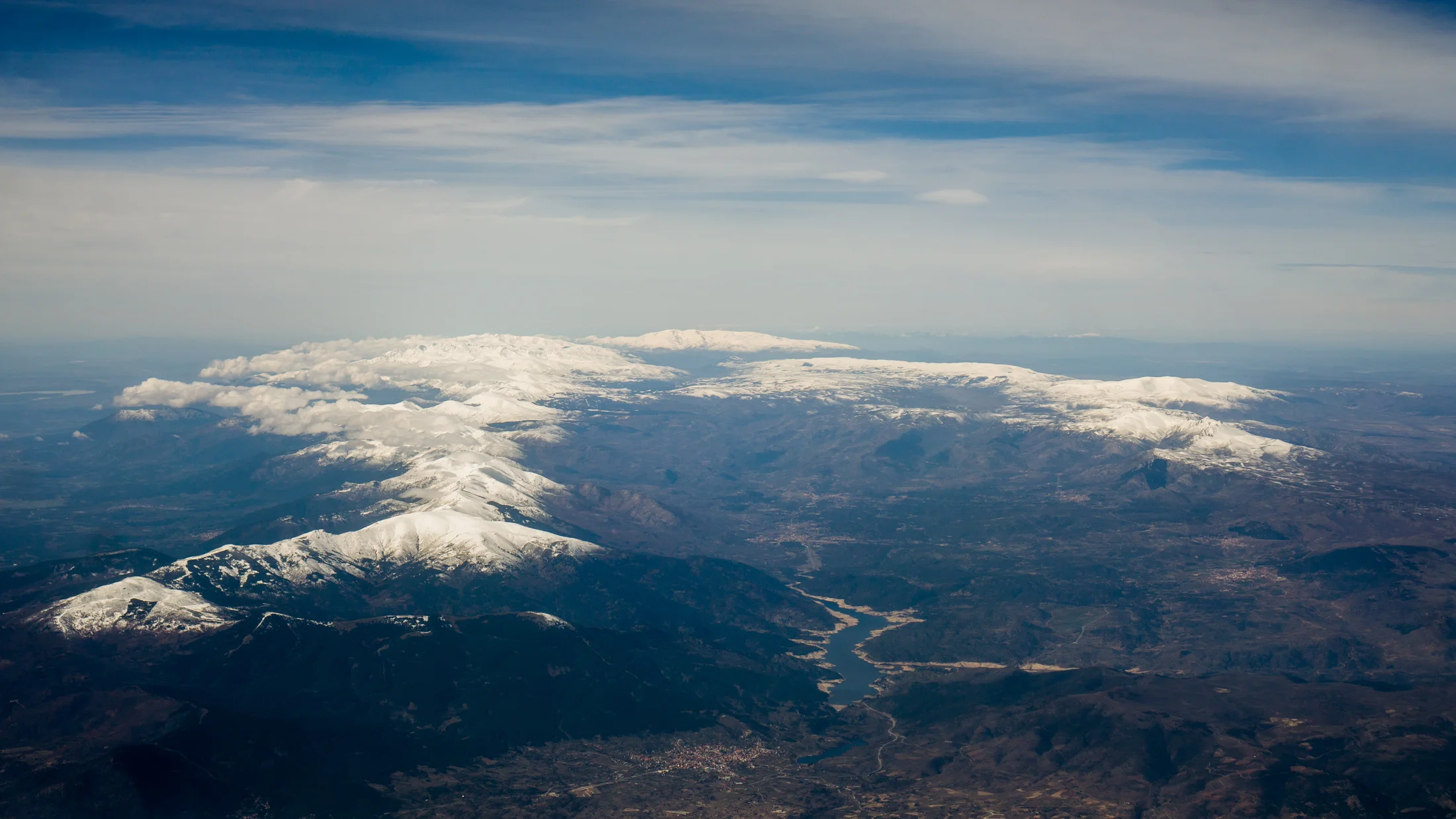
Why Gredos is perfect for your next 48-hour getaway
The Sierra de Gredos is less than three hours from Madrid and is a granitic mountain range. It is a mountain weekend destination that can be enjoyed in two well-utilised days.
In 48 hours, you have time to hike to the Laguna Grande de Gredos, swim in pools shaded by alders, and dine on kid goat while looking at the peaks. The most well-known landscapes, the Circo de Gredos, the Laguna Grande, and Los Galayos, are found on accessible routes. And there are plans for all levels: from short walks to demanding ascents and high-mountain photography.
The Parque Regional de la Sierra de Gredos protects more than 86,000 hectares and its summit is the Almanzor, at 2,592 m. In a small space, glacial lagoons, flowering mountain pines, and granite walls coexist, and the Almanzor is a natural habitat for the Spanish ibex.
It is reached via clear roads, there are regional buses, and the bases have varied accommodation. Inside the park, you will find marked trails, refuges, and clear regulations.
If your goal is the summit, the classic route to the Almanzor measures 19.83 km, with +1298 m of elevation gain and a duration of 6-7 h. In the gullies, you must wear a helmet due to rockfall; in winter or early spring, crampons and an ice axe are necessary. Mobile coverage is unstable or non-existent in much of the Circo de Gredos and water sources are very limited: the last reliable supply point is the Laguna Grande.
The landscape and why it makes you fall in love at first step
Gredos is a granite mountain range with glacial cirques, cold lagoons, and gorges that carve valleys on both sides of the massif. The north is cool and higher; the south, temperate, green, and with luminous pools.
The Laguna Grande de Gredos, in the Circo, is one of the most well-known hiking routes in the range due to its beauty and accessibility. It occupies a glacial overdeepening basin and is reached via the short-distance path PR-AV 17, with a one-way trip of between 2 and 3 hours. The starting point is the Plataforma de Gredos (1750 m above sea level).
Between May and June, the mountain pine turns the slopes gold, and in the villages on the southern face, there are patches of oak groves, chestnut trees, and orchards. Early in the morning, late ice crackles in the shade.
The range is not just for experts: there are 1-2 hour walks, classic half-day treks, and technical ridges for those seeking rock. Los Galayos, with its sharp needles, concentrates classic climbing, and the Puerto del Pico preserves a well-maintained section of a roadway. The network of rural paths naturally connects the excursion and the table.
To start, head up to the Plataforma de Gredos and walk towards the lagoon with mountain footwear and water. Book a full day if you want to add a gorge or a meal in a village in the south.
How to make the most of this guide on your getaway
When to go, how to get there, where to sleep and what to see without wasting time: this guide gathers the essentials for a getaway to Gredos. It is designed so you can decide quickly and dedicate your time to the mountain.
Inside you will find the route to Laguna Grande, walks through gorges, options in Los Galayos, the villages of the Sierra de Gredos and an adaptable 48-hour plan. If you are travelling with children, there are short proposals and pools with easy access. If you are a hiker, you have elevation gains, times and necessary equipment. And if you prefer a slow pace, look for the viewpoints and the markets.
The guide is short and direct, with safety and sustainability notes to enjoy the place and leave it better than you found it.
Picuco te puede ayudar
Does something here catch your eye?
Tell us.
Write to us on WhatsApp or email: we answer questions, find the best options and help you sort out the booking.
The essentials for planning: when to go and how to get there
The Sierra de Gredos is spread across Ávila, Cáceres, Madrid and Salamanca, with its protected heart in Ávila. The north and south faces seem like two different mountain ranges in terms of climate and vegetation, so you can adjust your plan to the month and the group. The north is colder and suitable for long treks; the south is warmer and more conducive to pools and terraces.
From Madrid there are two clear entrances by car: the A-6 with the N-110 for the north (Plataforma and Hoyos) and the A-5 with the N-502 for the south (Arenas and Candeleda). By public transport, combine the train to Ávila or Talavera with regional buses to the rural bases. Check updated schedules before leaving, because they vary by season.
Bring small change for tolls or parking fees and prepare a plan B in case the mountain weather report takes a turn.
Where Gredos is and how the massif is divided
The Sierra de Gredos Regional Park is entirely in the province of Ávila, in Castilla y León. The massif is divided into two faces that function almost like two different destinations.
Its bases are Hoyos del Espino and Navarredonda de Gredos.
Here the bases are Arenas de San Pedro, Mombeltrán and Candeleda.
For a balanced weekend, combine one day of high mountain in the north face and another of gorges or rock in the south face. The light changes with the orientation: north is blue and crisp; south is golden with a warm valley breeze.
Best time: climate and seasons according to what you want to do
Gredos changes its face with each season, and each one asks you for a different plan. Choose according to what you want to do and prepare for whatever is necessary.
From April to June, the piorno is in bloom and water flows are high: a good time for medium routes and photography. Watch out for late snow patches at altitude and cold water crossings.
In July and August, mornings are good for the lagoons and afternoons for shaded pools. There is more influx and heat in the southern zone, so get up early to avoid convective storms and bring sun protection.
From September to November you have oak and chestnut colours, mild temperatures and clear skies. It is the time for long walks and visiting villages.
From December to March it snows frequently above 1,800-2,000 m. The route to Laguna Grande is possible with appropriate equipment (crampons and ice axe if there is ice) and experience; consult the snow report and the opening of refuges before leaving.
In high season (long weekends, July-August) book accommodation in advance and arrive early at key car parks such as La Plataforma. Outside of season, refuges and services reduce their hours: confirm this before leaving.
How to get there from Madrid and other cities
From Madrid, the northern face of Gredos is 2 h 15–2 h 45 away by car. Take the A-6 to Villacastín, continue via the AP-6/N-110 towards Navacepeda and divert via the AV-941 to Hoyos to climb to the Plataforma.
For Candeleda, it is 1 h 50–2 h 30 from Madrid.
By public transport, the southern face can be reached by train to Talavera de la Reina and bus to Arenas de San Pedro or Mombeltrán. There are direct buses from Madrid (Estación Sur)–Arenas taking about 2 h 15 min; it is advisable to check schedules and seasons. You reach Candeleda by bus from Arenas or Talavera.
The air is crisp at that hour, but you will appreciate the silence.
Staying near your objective reduces travel: north for the Laguna, south for pools and Los Galayos. On high-traffic weekends, consider parking in the village and using a rural taxi to the start of the route.
Approximate times by car:
- Madrid–northern base: 2 h 15–2 h 45; Madrid–Arenas: 1 h 50–2 h 30; Madrid–Candeleda: 1 h 50–2 h 30.
Times are approximate and depend on traffic and stops; confirm before leaving.
Where to sleep and how to organise two days in Gredos
Sleeping near your daily objective saves kilometres and stress. In Gredos, you have rural houses with fireplaces, simple hostels, mountain hotels, wooded campsites and altitude refuges. Choose your base according to the route you want to do the next day, and not the other way around.
Shops and petrol stations are concentrated in medium-sized villages; outside of them, the rural schedule rules. Many shops close at midday and on Sundays, so plan your shopping for Saturday morning.
To refuel, there is a petrol station with a shop and all types of fuel in Navarredonda de Gredos, 4 km from Hoyos del Espino, on the Carretera de la Venta del Obispo s/n. Refuel before climbing to the lagoon or entering the gorges.
Accommodation by type and how to choose a base
Sleeping in Gredos changes depending on what you want to do the next day: your base decides how long it takes you to reach the trail. Choose accommodation by type of trip and by the route you have in mind.
Rural houses work well for families and groups: they have a kitchen and space. In the southern area, Mombeltrán or Candeleda offer milder temperatures and quick access to pools.
Hostels and rural hotels provide a flexible option for couples or short getaways, usually in town centres with restaurants nearby. High season runs from 15 June to 15 September.
Mountain refuges are suitable for a long route, with prior reservation. Bring a sleeping bag liner to sleep in the common dormitory and confirm your reservation between 48 and 72 hours before arrival.
To choose a base, look at the route first. Check updated prices on official websites or on Picuco.
Refuges, campsites and overnight regulations
The Elola Refuge, next to the Laguna Grande at about 1,940 m, is the classic of Gredos for winter treks and ascents. It operates with prior reservation and limited spaces, and its services are the basic high-mountain ones: check the opening calendar and the conditions before heading up.
You leave from the Plataforma de Gredos and the approach takes 2 hours and 30 minutes. In snow season, the refuge requires technical equipment and experience; the silence at the frozen dawn is absolute.
In the Parque Regional de la Sierra de Gredos, wild camping is prohibited. Overnight stays are permitted above 2,000 m, with restrictions in the Circo de Gredos and near the Laguna Grande.
Fire is only permitted in designated areas, and in summer, with high risk, it is prohibited: bonfires are limited to prepared places and to the dates of express prohibition. Carry your rubbish back with you and do not cut branches, pull up plants, or chase animals. Dogs must be kept on a lead in areas with livestock or sensitive fauna.
You cannot travel with motor vehicles outside of the tracks intended for them, and access to certain reserve areas is restricted due to their natural characteristics. For confirmation and special permits, consult the regulations of the Junta de Castilla y León and the local town halls.
Bookings and moving around without complications
If everything is full in Navarredonda, look in El Barco.
Another option is to split your stay: one night in the north and another in the south. This way you reduce road times and gain hours of hiking.
To reach the start of the routes, there are rural taxis that go up to Nogal del Barranco or to the Plataforma. Ask your accommodation about them.
If you go by car, arrive early at the Plataforma. In Los Galayos, the Nogal del Barranco car park is limited. Sometimes a warm-up walk saves you from searching for parking and gets you into the rhythm.
In the popular pools, respect the signage and do not block agricultural access.
The routes and activities that never fail on a weekend
Gredos fits into two days if you choose well: one classic route, one gorge for swimming or a rock challenge, and a short time in the village. There is room for photos, a sandwich with a view, and a siesta in the shade.
The route is an 8.71 km round trip with 468 m of positive elevation gain, easy difficulty, about 3 hours and 44 minutes.
The pools and gorges of the sierra have clear water and a well-kept environment, and are a good option for a summer afternoon. If you are looking for a mountain challenge, Los Galayos offers wide views and classic climbing.
Complete the weekend with alternative activities: birds, cycling, culture, and photography. Book your accommodation in Hoyos del Espino and head out early to Laguna Grande to park at the Plataforma.
1. Laguna Grande and Circo de Gredos: the classic that makes you fall in love
Laguna Grande opens up at 1,940 m in a rock cirque sculpted by ancient glaciers, with Pico Almanzor (2,592 m) watching from above. It is the classic route of the Sierra de Gredos and the first stop for a weekend in the area.
The route is 12–14 km round trip, with +600 m of accumulated elevation gain, and takes 4–5 h at a relaxed pace with stops.
The itinerary starts gently: from la Plataforma to Prado de las Pozas via a comfortable path through broom. Afterwards, you climb to Los Barrerones (~2,200 m), with views of the cirque, and descend to the lagoon via the scree, with Refugio Elola at the edge. You return via the same path.
The difficulty is medium due to the elevation gain and the final scree. In summer, the stony terrain makes it moderate; with snow or ice, it increases significantly, so it is only advisable to do it with proper equipment and experience.
For photos, look for early morning at the Los Barrerones viewpoint or the last hour, with the reflections in the water. Bring hiking boots, poles, 1.5–2 l of water, a windbreaker or fleece, a cap and sun protection; in winter, crampons and an ice axe if there is ice.
Dogs accustomed to long routes and stony terrain can come, always under control. On the shore, do not leave any remains, do not move stones and keep your distance from the ibex.
2. Gargantas and pools: easy walks and natural pools
The south of Gredos and the surrounding valleys gather pools of clear water and shade, good for families or for after a morning in the mountains. On the shore, it smells of wild mint.
The Garganta de Gredos is born in the Laguna Grande de Gredos, at about 1,940 m above sea level. Its accessible sections have local walkways and riverside paths with photo stops. The Garganta de Arbillas has crystalline pools surrounded by an extensive pine forest on the southern slope of the sierra, with marked swimming areas and a riverside path. Avoid jumping and respect the flow.
The Garganta de Chilla adds pools in the middle sections and the visit to the Santuario de Chilla, which is the starting point of the route: culture and swimming in the same walk. Walk it only if the flow allows for safe passage.
On these routes, you see stone bridges, rehabilitated mills, cultivation terraces and riverside birds such as the dipper and the grey wagtail. Spring and early summer bring high flows and colder water; in summer, the pools are at their best, but there are more people, so look for early hours or sunset.
Swim only in permitted areas, without soap and without leaving waste. Bring water shoes for irregular bottoms and wait if the water runs murky after a storm.
The Garganta de Arbillas is in Poyales del Hoyo, between Arenas de San Pedro and Candeleda.
3. Mountain and rock: Los Galayos and more challenging excursions
The Galayos, granite needles, rise above Guisando, and reaching their base is already a demanding excursion. The car climbs via an asphalt track from Guisando to .
The itinerary to the foot of the needles is 10–12 km round trip and +900–1,000 m of elevation gain, in 4–6 h depending on your pace. The path climbs in a sustained zigzag up to the Refugio Victory (~1,950 m), with views of the Torreón. The difficulty is medium-high due to the slope and the stony terrain.
Classic climbing requires skill, equipment and, if you do not know the area, a qualified guide: routes of several pitches in granite, with self-protection and some with minimal equipment. Bring a helmet, harness, double rope, a set of nuts and friends, and orientation; experience is necessary. Look for stable weather, leave early and manage your descents well; if it is your first time, consider hiring a certified guide.
If you did Laguna Grande on day 1, get up early on day 2 for Nogal del Barranco, climb to Refugio Victory and decide between the foot of the needles for the views or, with a guide and time, a short route. Another option is to combine the partial climb with pools in the afternoon in Arbillas, where there are waterfalls, pools and natural slides, and the Charco de la Tinaja downstream from the waterfall. Arbillas is reached via the AV924 towards Arenas de San Pedro, 3 km after passing Poyales del Hoyo, at the bridge over the Arbillas river.
4. Alternatives that add value: birds, photography, cycling and culture
The Spanish ibex (Capra pyrenaica victoriae) is a symbol of Gredos. The golden eagle and the griffon vulture are best spotted on open slopes at sunrise. Bring 8x32 binoculars and discreet clothing: the silence of the early hours favours close encounters.
In autumn, the chestnut groves of Candeleda and Mombeltrán are a good setting for landscape photography. Bring a wide-angle lens for the scenery and a short telephoto for the wildlife.
On a road bike, the Puerto del Pico (1,395 m) has wide views and a well-preserved section of a roadway. In MTB, avoid sensitive paths and respect the closure of private estates.
Near Arenas, the Cuevas del Águila offer a 1,000 m underground route via a paved path with stairs to overcome elevation changes; it is advisable to check the opening times. The villages preserve stone architecture, fountains, hermitages and weekly markets.
If you are looking for a walking route, in Candeleda there is a circular route of 12.35 km with 497 m of positive elevation gain, of easy/moderate difficulty due to elevation and distance, without technical difficulty. It takes about 3 hours of movement (3h 30m in total), via marked paths and tracks, through pine forests, oak groves and a chestnut grove, and the start is on the street Camino del Llanazo.
Combine these alternatives at sunset or as a plan B if the mountain weather forecast worsens.
Charming villages to choose a base or stop mid-afternoon
The villages of the Sierra de Gredos have services, their own character and beautiful corners. They serve equally well for sleeping and heading out early to the lagoon or for taking a break between routes and pools.
In the mid-afternoon, the smoke from chimneys and the murmur of the squares mark the local pulse. Choose one with accommodation and shops if you want it as a base; if you are only passing through, look for a square with a bar and parking nearby.
1.Hoyos del Espino: northern gate and base for Laguna Grande
Hoyos del Espino is the most practical base for climbing to the Gredos Plateau: about 30 min via the AV-931. The village is at the headwaters of the Tormes, at an altitude of 1,440 metres.
Access to Gredos is via the plateau, passing through Puente del Duque, which has a recreational area. In the village, there is a natural pool for after your route.
Before walking, stop by the Nature Interpretation Centre: it explains the geology, fauna, and the park's regulations. The old town preserves granitic stone and fountains, with views of the massif, and hiking routes of low and medium difficulty start from the Tormes surroundings.
To eat, there are rotisseries and taverns with grilled meats, mashed potatoes, and traditional soups. It is advisable to book on weekends.
The plan that works best: arrive the afternoon before your route to Laguna Grande, get information at the centre, have an early dinner, and wake up early. The night air smells of resin and the sky becomes filled with stars.
If the Plateau car park is full, wait your turn without blocking traffic and avoid ditches and livestock crossings. Hoyos del Espino is 70 km from Ávila, 127 km from Salamanca, and 177 km from Madrid.
2.Arenas de San Pedro: history, services and nearby pools
Arenas de San Pedro brings together all the services of the Tiétar valley and opens the door to gorges such as Arbillas. It is the head of the region and a comfortable base if you travel by public transport.
Bars and restaurants with a set menu serve kid, migas, and local cured meats; in summer, the murmur of the river accompanies your post-meal conversation.
The natural pools of El Arenal and the riverside walks allow you to combine mornings of walking with afternoons of swimming. The main pool features showers, small ladders, and a diving board. Eating, playing, or entering with dogs is not permitted on the grass meadow.
Use the village as a base if you are planning Los Galayos and the pools. Parking is easy at several points in the old town, but in August it is advisable to arrive early at the pools. There are two entrances with parking for 40-50 cars: one via Odispio Ceavientos street, from the village, and another via the Av-p-711 road.
3.Mombeltrán: balconies of the Tiétar and paths with a mountain flavour
It dominates the skyline. It is a short and comfortable stop during a weekend in Gredos.
The Plaza Mayor with its arcades, the Castillo de los Duques de Alburquerque, and the San Andrés hospital gather the main sights in a short time. Around them, local paths lead to viewpoints and...
To eat, there are snack bars around the square and taverns with meats and hearty dishes. As evening falls, the sun tints the stone facades with copper.
Mombeltrán is perfect for a quiet afternoon after climbing Los Galayos or for sleeping while seeking a balance between Guisando and the pools. If you go by car, combine your visit with photographic stops on the N-502 towards Puerto del Pico.
4.Candeleda: mild climate, market and natural pools
Candeleda is one of the mildest enclaves in the valley, with orchards, chestnut trees and open views. From the village, you can reach the Garganta de Chilla and its pools of transparent waters.
The viewpoints in Candeleda offer views of the Almanzor. 6 km from the village is the Santuario de la Virgen de Chilla, patron saint of Candeleda: its festivals are of National Tourist Interest and are celebrated on the second and third weekend of September.
Candeleda fits perfectly after a strenuous mountain day: a morning of trekking, an afternoon of pools and a stroll. In late summer, it smells of toasted chestnut and ripe fig trees.
On the table, there is goat cheese, paprika, honey, oil, kid goat, cherries and figs. To eat, look for terraces with traditional cuisine and local produce, and ask for the cheese and zero-kilometre meats.
During the season, get up early to park near the pools.
5.Navarredonda de Gredos: calm, pines and good rest
Navarredonda de Gredos is a mountain base for routes on the north face of the massif. The paths among wild pines, the viewpoints over the massif and the banks of the Tormes set the rhythm of the day.
At sunrise you can observe wildlife, and in May-June the nearby slopes are covered in a sea of yellow broom. The night smells of firewood and cold earth.
The restaurants serve seasonal cuisine, sopa castellana and grilled meats. It is a good place for families and for those seeking silence and dark skies: it is worth sleeping here if the plan is the Plataforma.
Book in advance during the broom flowering season, from mid-May to June.
6.El Barco de Ávila: Northern gateway with services and famous beans
It has all the services and works well as the first stop of the weekend.
The local fame comes from the Judías del Barco, a legume from the region that you can buy in shops and at the market. During the season, bean and mushroom stews are the best way to try them.
For a stroll, the Castillo de Valdecorneja belongs to the Casa de Alba and is used for cultural events. Nearby are the Romanesque bridge over the Tormes, rebuilt in the 12th century, and the old town with its arcades. You can also see the Puerta del Ahorcado, a Roman construction rebuilt in the 16th century. The river flows cool even in summer.
If you enter via the N-110, use it as your first stop, buy supplies for two days and head up to sleep in Navarredonda. If you have an extra hour, take a riverside stroll and take photos at the bridge at sunset.
The BELLAVISTA S.L. petrol station is open from Monday to Sunday from 07:00 to 23:00.
Round itinerary for 48 hours
Two days are enough to climb to a lagoon, descend to a gorge and eat in a village in Gredos. The plan is complete: altitude, water and village, with time margins in case the weather changes.
It is advisable to have an early breakfast, carry a light backpack and have simple meals in the sun. This leaves you room to stop wherever you feel like it without arriving just in time for the next stage.
Day 1: early arrival, Laguna Grande and an afternoon in the village
Bring cash in case there's a fee and check your kit, water and the forecast before heading up.
The climb to Los Barrerones reaches around 2,200 m, with views over the cirque. From there you descend to Laguna Grande, of glacial origin, shaped by Würm ice masses and with more than 350 m of drop relative to the peaks that surround it. Beside it is the José Antonio Elola refuge. Eat by the water, respecting the distance to the shore and to the wildlife.
The return is by the same path and poles help on the scree. In the afternoon it's time to rest and take a gentle stroll through Hoyos del Espino or Navarredonda, with a visit to the Nature Interpretation Centre of Hoyos del Espino. For dinner, soups, patatas revolconas and grilled meat; at the weekend it's worth booking. Sleep in Hoyos del Espino or Navarredonda to minimise driving.
If you're travelling with small children, walk to the Los Barrerones viewpoint and back, avoiding the scree towards the lagoon.
Day 2: pools with the family or a challenge at Los Galayos
The second day is decided at breakfast: quiet pools with the kids or 1048 m of ascent to Los Galayos. Both options fit into a morning and get you home before eleven at night.
Option A, with the family. Between 09:00 and 10:00 you travel to Arenas de San Pedro or Mombeltrán along the N-502. From 10:30 to 13:00 it's time for the walk in Chilla (Candeleda), with an ascent along tracks and paths through estates, oak woods and mid-mountain areas; access starts from Candeleda or from near the Puerto bridge. Chilla has a landscape of a deep gorge and mountain, with the granite characteristic of the Sierra de Gredos and less focus on bathing than other gorges.
At 13:30 you eat in the village: migas, local tomato salad and homemade dessert. The day closes with a stroll through Arenas or Candeleda with local produce shopping between 19:00 and 20:00, and the drive home from 20:00 to 22:30.
Option B, the challenge. You set off at 07:30 towards Nogal del Barranco (Guisando). There are two ascents: the one on the right is more technical, direct and exposed; the one on the left is more marked, with a zigzag bend and a final scrambling section up to the refuge.
From 11:00 to 13:00 you go around the base of the needles without climbing or, with a guide and equipment, a short classic route if the report is stable. You descend calmly and have a late lunch in Mombeltrán between 13:30 and 15:00. From 16:30 to 18:30 you have a short walk to nearby pools or valley viewpoints, a final coffee and the road, and from 18:30 to 21:30 the drive home.
If the weather changes. When wind and fog hurry you along, swap the high mountain for the Cuevas del Águila, a visitable cave in the Tiétar valley, at about 507 m of altitude and of low difficulty, and add a cultural visit in Arenas or El Barco. If an afternoon storm is forecast, bring the water activities forward to first thing and save the afternoon for the village.
Variants and extensions according to interests
With one more day, the mountain range changes scale. Add Cinco Lagunas, glacial lagoons at the head of the Garganta del Pinar, between 2073 and 2103 m above sea level. It is a route only for those with experience and stable weather.
You can dedicate that same extra day to the complete tour of the villages, with the Puerto del Pico and its causeway, which is in a good state of conservation. If you feel like it, have traditional beans for dinner in El Barco.
For photography and birds, the plan is birdwatching for raptors on the cliffs.
Final tips, common doubts and closing
Going light helps, but carrying complete equipment allows you to enjoy the mountain safely. Check the forecast before leaving and adjust your backpack to what you are going to walk.
Respect the rules of the environment and learn to turn back in time. That way, the mountain remains enjoyable for everyone who comes after.
The smell of earth after the storm reminds you that the visitor is a guest in a living territory. Return home with what you brought and leave the trail as you found it.
Equipment, safety and permits: the essentials
In Gredos, your backpack changes with the season, and the difference is noticeable at the summit. All year round, carry boots with deep soles, poles, a map or offline track, 1.5–2 l of water, food, a windbreaker, a cap and sun protection.
In spring and autumn, add a light thermal layer and a raincoat. In winter and in high mountains, crampons, ice axe, helmet if there is ice or snow patches, blizzard goggles, gloves and a thermal blanket.
Before leaving, consult the weather and avalanche reports. Get up early, pace your effort and set a return time.
If there is an accident, protect, alert and assist if possible: mark your position and call 112. Carry extra battery, because the echo in the valley does not replace signal coverage.
Take care of the environment: do not move stones in the lagoons or make mounds, and always take your rubbish back with you. With livestock and fauna, keep dogs leashed and fences closed after your passage.
Wild camping is prohibited in the park. Bivouacking is permitted above 2,000 m, from dusk to dawn and far from the shores; consult the official regulations for updates.
Access to the Plataforma de Gredos is regulated with a ticket from kilometre 7: 3 € for cars and motorcycles, 5 € for motorhomes and vans and 12 € for buses. In summer (July, August and the first week of September) it is open from 8:00 to 20:00 every day; the rest of the year, weekends, holidays and long weekends from 9:00 to 18:00.
The car park has about 150 spaces and the trekking route to the Circo is about 14 km round trip from there. Ask at accommodations about rural taxis and the real state of tracks and car parks: they tread the ground daily.
Can you park without any problems at the Plataforma de Gredos?
The car park at the Plataforma de Gredos has limited capacity and, in high season, there may be control and a fee. If you go on a weekend or during a long weekend, count on it before leaving.
This way you save yourself driving around the area when the parking lot is already full.
Do not block access or park in ditches. Leave the way clear for the rest of the vehicles and for the local services.
Is the route to Laguna Grande suitable for children?
Yes, it is suitable for children used to walking. If they are tired, avoid the final scree slope and stick to the rest of the path.
A family alternative is to reach the Los Barrerones viewpoint and return: you get the views and save yourself the most technical section.
Is technical equipment needed for Los Galayos?
Climbing up to Refugio Victory is demanding and stony. Wear footwear with good grip and allow plenty of time.
Climbing the needles of Los Galayos is something else: it is classic climbing. If you do not know the area, hire a qualified climbing guide.
Where can I swim safely in the gorges?
Only swim in the designated and signposted areas of the gorges. Avoid jumping and currents after a storm, when the water flows with more force.
Wear water shoes and respect the signs and temporary closures you find in the riverbed.
The Alardos gorge, the most voluminous in La Vera, is 2 km from Madrigal de la Vera, via the EX-203 road towards Ávila.
Is camping allowed in the Park?
Wild camping is prohibited in the Park. Check the updated regulations from the Junta de Castilla y León before planning it.
Campfires are only permitted in prepared areas and there are dates of express prohibition. You also cannot cut branches, pull up plants, chase animals, or carve names. Motorised vehicles cannot drive off the tracks intended for them.
Access to reserve zones is restricted due to their natural characteristics. Do not leave the path, to avoid erosion, and keep domestic animals under control.
What is the best time for a Sierra de Gredos weekend?
Spring and autumn are the best seasons for walking in Gredos, with mild temperatures and clear skies. On those dates, the routes to the lagoons and the gorges can be enjoyed without the summer heat.
In summer, it is advisable to get up early to climb to the lagoons and reserve the afternoons for the pools. In winter, the snow and ice make the sierra recommendable only with experience and suitable equipment.
Book your experience — discover active tourism activities in Spain with providers verified by Picuco.
Conclusion and call to action
In Gredos, there is a glacier lagoon that you reach on foot, gorges of crystal-clear water, and villages with bells and markets. All that, in two days.
The guide helps you organise that getaway without rushing: when to go, how to get there, where to sleep, and what to see. Bring suitable equipment and respect the regulations of the environment.
Talk to the local people: they are the ones who keep the paths, pastures, and traditions alive. Book your accommodation in advance and download the maps before setting off.