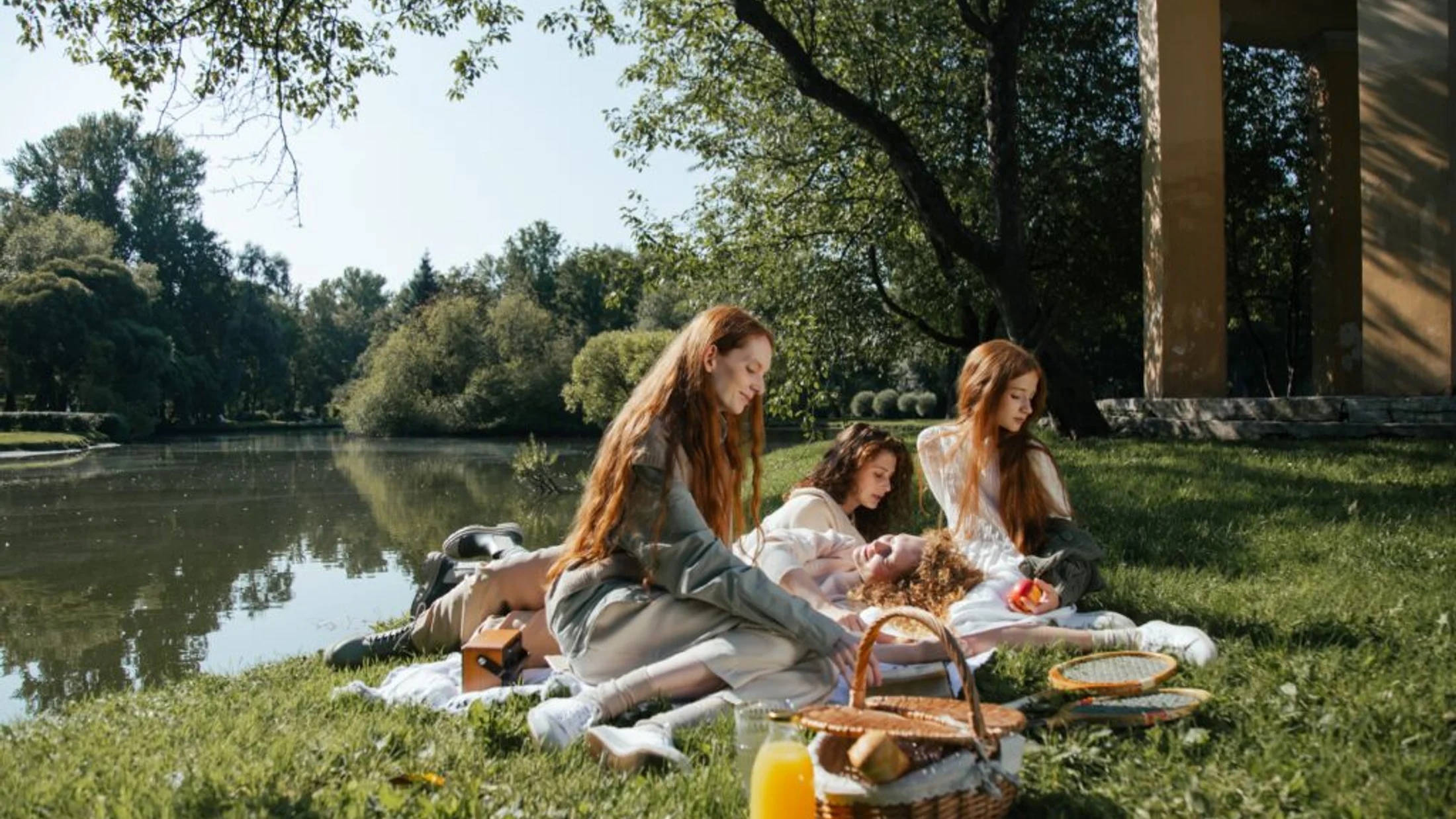
Why a picnic in the countryside today feels better than ever
A blanket on a meadow, a river nearby and your phone in your pocket: that is how a plan begins that already moves thousands of people in Spain every weekend and every long weekend. Rivers, meadows and viewpoints near cities are filled with families and friends looking for time without screens, landscapes without rushes and an outdoor meal.
More and more travellers are combining easy hiking with an outdoor meal. You walk in company and a normal meal becomes a memory.
There are hiking routes with views, ideas for families with children and options for couples looking for sunsets without crowds.
Before choosing, think about who you are going with. With children, it is advisable to prioritise short routes, with shade and areas with nearby toilets. If you are looking for photos and light, opt for routes with views to eat at sunrise or sunset. If the hike motivates you, choose moderate itineraries with a panoramic spot to eat without overcrowding.
In each route, duration, difficulty, where to set up the picnic and nearby services (fountains, tables, car parks) are detailed, as well as variants and basic safety. Respect the environment and those who look after it: shepherds, farmers, park rangers and neighbours who maintain paths and traditions.
Picuco te puede ayudar
Does something here catch your eye?
Tell us.
Write to us on WhatsApp or email: we answer questions, find the best options and help you sort out the booking.
When to go and how to get there without complications
Spring (March-June) and autumn (September-November) offer mild temperatures in the interior and in the mountains. Summer works best on the coast or in high mountains, and winter calls for sunny valleys and short routes.
Arrive early to avoid the heat and crowds. If you are looking for golden colours, the final stretch of the afternoon is your best option.
In summer, get up early; in winter, go out only with foresight and simple routes. An outing between 09:00 and 11:00 leaves you with soft light and fewer people.
In summer, stay in wide coves with shade or a parasol, and avoid midday in areas without shade. In rivers and inland wetlands, spring rules; in summer, look for swimming in permitted areas, and in autumn, you will have colours and calm. Protect your food from the heat.
Public transport works in destinations with buses or trains to base towns: Arenas de Cabrales for the Cares, Tossa de Mar for the Camí de Ronda and Valencia for the Albufera with EMT. Confirm outbound and return schedules, especially on weekends.
The Lakes of Covadonga are visited by bus from Cangas de Onís during Holy Week, summer, and long weekends; on regulated dates, the road is closed to private traffic 24 hours a day. In La Pedriza (Guadarrama), there is access control to the Cantocochino and Canto Cochino car parks, with limited spaces: book or arrive early. In the Hoces del Duratón, use the marked car parks of San Frutos and Villaseca and respect the parking limits.
Cabo de Gata has regulated access for motor vehicles from 21 June to 22 September, from 09:00 to 19:00. From 1 July to 15 September, it is extended from 08:00 to 20:00, with temporary closures from 11:00 to 14:00 and from 16:30 to 18:30, and the maximum speed is 20 km/h. In summer, there are occasional closures to Genoveses and Mónsul with shuttles from San José, and from the beginning of July, a shuttle bus runs from Carboneras.
The fee is €6 per motor vehicle for the maintenance of the site. At Playa de los Muertos, the car park operates from 1 July to 30 September (09:00 to 21:00) for €3 mopeds, €4 motorcycles, €6 cars, €10 vans, motorhomes, buses and trucks, and €6 for other vehicles. The shuttle from San José has a 50% discount at the San José car park (up to €7.50/day) from 11 July to 6 September.
Fire is strictly prohibited in natural spaces and almost the entire summer season: do not use camping stoves in high-risk areas. Regarding waste, apply "what goes up, comes down": carry a bag for rubbish and organic waste. Keep your distance from nests and colonies, such as the vultures in Duratón and the waterbirds in the Albufera. Dogs must be on a lead in natural parks, and it is advisable to check the signage at each entrance. Drones are generally prohibited without authorisation.
To plan, consult the forecast by municipality from AEMET, the official websites of the parks, and the tourist offices and visitor centres for maps and daily warnings.
Important
In high season, verify the status of access points the day before. A warning for extreme heat, strong winds or fire risk may close trails or limit stays in exposed areas.
Where to sleep near the routes
Sleeping right at the start of the route allows you to arrive early, avoid traffic, and stretch out the plan without rushing. There are plenty of options to choose from: family-run rural houses, small hotels in base towns, campsites with shade and a pool, mountain refuges, and glamping.
If the picnic is for one day, look for accommodation less than 30-40 minutes from the starting point. Prioritise flexible check-in or luggage storage to leave backpacks and cool boxes, and check that there is a kitchen or fridge access to prepare food and keep things cold.
For a weekend, rural houses and agrotourism will bring you closer to local producers of cheese, bread, and fruit. For children, campsites and bungalows work well due to their spacious areas and playgrounds, while refuges or hostels provide a hiker atmosphere and easy early starts.
Look out for three services: a kitchen or common area, a freezer for your ice packs, and outdoor tables. Check that there is a shop nearby or a weekly market and ask the host about the opening hours. If you are bringing a portable cooler and utensils, consider secure parking.
Many towns hold weekly markets where you can buy bread, fruit, cured meats, and local sweets. Book in advance during bank holidays and summer, especially on the coast and in popular parks.
The 10 routes with the best spots for your picnic
Picos de Europa: Lagos de Covadonga and alpine meadow
The Lagos de Covadonga can be walked in 1.5-2.5 h, with easy difficulty, and is great for families and couples.
Avoid waterlogged areas and the edges of the water.
There are toilets at the main car parks, Buferrera and Enol, and it is advisable to carry extra water in summer. Watch out for sudden fog and pack a light jacket even if it is summer. Do not feed the livestock or the wildlife and close the gates as you pass.
In high season, you go up by bus from Cangas de Onís, with mandatory advance booking to secure seats. The rest of the year, outside of restricted days, private vehicles can access without issue and park in designated areas.
It is one of the best spots on the list for a picnic because of the landscape, the calm away from the car park, and comfortable meadows for sitting.
Cares Route: divine gorge and safe viewpoints
The Senda del Cares runs through a 12 km gorge between Poncebos (Asturias) and Caín (León), carved into the rock and almost flat in its central section, although it requires constant attention. It is known as the "Divine Gorge". The echo of the river at the bottom of the canyon sounds like a constant whisper.
For a picnic, do an out-and-back section from Poncebos to Puente Bolín or further, depending on your strength. Avoid the full itinerary if you are going with small children. The difficulty is moderate due to exposure and length.
There are no areas specifically designated for eating along the entire route; there are only restaurants in Caín and Poncebos. Choose spots away from the edge, flat, and without rockfalls. There is no safe water on the route.
Avoid strong winds, ice, and rain, and do not sit on the edges. Bring a headlamp if you are out late in the carved tunnels. Start early to avoid crowds.
If you do the full route, plan your return transport: a local taxi or a car at both ends. Caín is a picturesque Leonese village, with parking on the edges of the AS-264 road. Combining a picnic and hiking here is perfect: you walk in partial shade, peek out from viewpoints, and eat with limestone walls as a backdrop.
Coastal Path on the Costa Brava: cliffs and postcard coves
The GR-92 on the Costa Brava links coves and cliffs with sections of stairs and coastal paths. It is one of the most photogenic routes for picnics in the Mediterranean and does not require great technique.
The recommended section goes from Tossa de Mar to Cala Pola: 4-6 km round trip, with short climbs and open views. Estimate 2-3 h in total and an easy-moderate difficulty due to the stairs.
The best spot for a picnic is the viewpoint before Cala Pola, with rock benches and occasional shade from pines. If you go down to the cove, look for shade at the back, away from the tide line and respecting the dunes.
The path starts from Platja Gran de Tossa towards the north, passes through Cala Bona and Cala Pola and reaches Cala Giverola, with no road access. You can return on foot or by boat during the summer. In Tossa de Mar, there are paid parking lots.
Do not approach the edges and be careful with the polished rocks. In summer, get up early or choose the afternoon and bring a light parasol; from September to November and from March to June, you avoid the heat.
Hoces del Río Duratón: canyons, griffon vultures and meadows by the river
The Duratón canyon opens in Segovia among paths, viewpoints and low meadows next to the water. The Parque Natural de las Hoces del Río Duratón holds one of the largest breeding colonies of griffon vultures in Europe.
The hermitage has signage and information panels, and its chapel is usually closed to the public.
For your picnic, look for meadows away from the edge of the canyon and areas with shade. Bring enough water, because there are no reliable fountains on the route. The wind brings the scent of thyme and the deep croak of the vultures marks the sky.
Go during the week if you want to avoid the crowds of the weekends. Keep your distance from the cliffs, do not invade boundaries or breeding colonies and avoid noise: use binoculars instead of drones. Park only in designated areas. Nesting restrictions may close viewpoints, and water activities require a permit and are done in sections, so find out beforehand.
La Pedriza in Guadarrama: rocky outcrops and grassy clearings
La Pedriza, in the Sierra de Guadarrama National Park (Madrid), is a labyrinth of granite blocks with meadows between rocks and the banks of the Manzanares. We suggest a simple circular route from Canto Cochino towards Charca Verde without going down to the water, and look for grassy clearings among the scree slopes. The granite warms up in the sun and the scent of rockrose accompanies you at every step.
-
Best spot for a picnic:
- Meadow clearings away from the main riverbank; avoid stepping on fragile vegetation.
- Rock platforms with flat and stable surfaces, with a mat.
-
Duration and difficulty: 3-4 h; moderate due to irregular terrain.
-
Safety and rules:
- Access with capacity limits in parking lots; arrive early or use the bus to Manzanares el Real.
- Swimming is prohibited in most of the riverbed; no fires or stoves.
-
Variants:
- Path to the “Cueva de la Mora” or “Cancho de los Muertos” with views.
Integrating a picnic in the countryside here is natural: rocks as tables, wide skies and paths with mountain history.
Lagunas de Ruidera: inland beaches and poplar shade
Between Ciudad Real and Albacete, the Parque Natural de las Lagunas de Ruidera brings together translucent lagoons and short walks between Laguna del Rey, La Colgada, and San Pedro.
The tufa, calcium carbonate formations that surround the lagoons, form small waterfalls that refresh the atmosphere. To eat, look for the inland beaches marked with poplar or tamarisk shade, or the official picnic areas near the car parks.
There are car parks at the main lagoons, seasonal beach bars, and kayak rentals during the season: 2 h for 20 € for those over 12 years old and 10 € for those under 12 years old.
Only swim in the permitted areas and watch out for slippery ground. Respect the barriers and the vegetation margins, and do not invade the islands. If you want more calm, walk between Laguna Lengua and La Redondilla, or row peacefully through La Colgada when the wind allows.
Albufera de Valencia: rice fields and sunsets from El Palmar
In the Albufera de Valencia, the best time arrives at sunset, from the piers or at the marked viewpoints.
For a picnic, use the designated areas near the piers without blocking the passage of boats, or the benches on the elevated walkways. Avoid the fragile banks. The walk takes 1-2 h, and it is easy and flat.
It is a protected area: do not leave litter and do not feed the birds. At sunset there are mosquitoes, so bring repellent.
You can combine a boat trip at dusk with a prior picnic, or take a short bike ride along marked paths if you travel as a family.
Getting there is simple. EMT line 25 takes just over 30 minutes from the centre of Valencia and stops at "Albufera – El Palmar"; line 32 drops you off at "Albufera – El Saler", a 10-minute walk from the lake. Line 25 runs every 20-30 min in high season and every 45-60 min in winter, and you are allowed to board the EMT Valencia bus with a bicycle.
By bike, a 15 km continuous and well-signposted track connects Valencia with El Saler, and from Plaza de la Reina to El Palmar it is 18 km (approx. 1.5 h at a medium pace). If you go by car, there are interceptor car parks on the carretera de la Safor, in the El Palmar area.
Sierra de Grazalema: karst, Portuguese oak and white farmhouses
Between Cádiz and Málaga, the Sierra de Grazalema is a protected natural area with Portuguese oak forests. Its short routes have wide pastures and scattered shade, exactly what you are looking for for a picnic.
The best place to eat is near the marked farmhouses, asking for permission if you are in a private area. The air carries the scent of damp earth and cheese curing in the villages.
The springs are seasonal, so it is advisable to get information at the visitor centre in El Bosque or Grazalema. The one in El Bosque has a permanent exhibition on the landscapes and relief of the sierra and a room with an audiovisual projection about the Sierra de Grazalema Natural Park. At its reception, there is information about trails and places of interest, as well as a shop for crafts, gastronomy and guides.
Authorisations for trails in protected spaces are managed via an app, not at the visitor centre, and must be requested at least 2 months in advance. The El Pinsapar trail is subject to administrative authorisation; for the Arroyo de Bocaleones trail, the authorisation is requested by email from the Sierra de Grazalema Natural Park offices.
Respect the livestock and the stone walls, and keep your dogs on a lead. If you want to extend the day, climb gently to the viewpoints of Puerto del Boyar and return via an alternative path, or link sections of the GR-7 with white villages.
Cabo de Gata: volcanic coves and desert light
Cabo de Gata-Níjar, in Almería, combines volcanic flows, fine sand coves and a dry, clean light. It is a good picnic destination in arid landscapes due to its simplicity, the turquoise water and the silence if you choose the right time.
The short hike to Cala de Enmedio starts from Agua Amarga: 5 km along a path, with fossilised dunes around and crystal clear waters. Access is on foot or by boat, and the beach is nudist. The difficulty is easy, with some sections of sand or rock.
If you are looking for an alternative, go to Genoveses and Mónsul outside of peak hours, or walk the section between both via the coastal path. For your picnic, choose wide coves and spread your blanket on the upper part, far from the tide line and the dunes. At natural viewpoints, the rock flats work well with a portable shade.
The beaches are pristine: there are no beach bars or services, except for the urban beach of San José, which has all the services. Carry 2-3 litres of water per person on hot days and avoid midday in July-August; use a parasol anchored with bags.
It is advisable to get up early or use the shuttle buses from San José. There are vehicle access restrictions from 21 June to 22 September, and the bus operates from 10:30h to 20:00h with a frequency of 60 minutes. Parking at the beaches is regulated: 5€ per day in high season.
Montserrat: viewpoints and stone tables with iconic views
Montserrat raises its conglomerate needles 720 metres above sea level, less than an hour from Barcelona. The monastery and the marked viewpoints are scattered across the mountain, and the distant tolling of bells and the scent of resin accompany the calm of the place.
To eat, you have stone tables and clearings near the marked viewpoints, always far from the edge. Next to the monastery, there are recreational areas with benches and some shade.
The Creu de Sant Miquel viewpoint is the most frequented due to its views and its proximity to the monastery. Take the Sant Joan funicular, which connects the outer part of the Montserrat Monastery with the San Juan hermitage, and walk to viewpoints such as Sant Jeroni.
The route to the summit of Sant Jeroni passes several hermitages and shows the Pyrenees all the way to the Mediterranean.
Arrive by rack railway, by funicular, or by the Aeri de Montserrat cable car from a few kilometres before the monastery; there are regulated car parks. There are bars and shops, and it gets crowded on the weekend, so choose the early hours. Do not approach the edges: the gravel ground can be slippery.
What else to do besides picnicking
Choose gentle activities that are compatible with lunchtime and the landscape in front of you. This way, you expand the plan without complicating the logistics.
In the Hoces del Duratón, you can see griffon vultures and Egyptian vultures: bring binoculars and speak softly. In the Albufera, you can observe great herons and ducks. In Picos de Europa, you can observe the fauna and flora of this protected area.
The Camí de Ronda has stairs and balconies overlooking the sea, with lateral afternoon light for photos. In the lakes of Covadonga, within the Picos de Europa National Park, reflections appear early, before the breeze rises.
In the Lagunas de Ruidera, use the marked bathing areas and bring water shoes and a compact towel. In the Guadarrama, bathing in protected riverbeds is not permitted: to cool off, use a damp towel. In Grazalema, the pinsapar is the most characteristic vegetation formation of the park, a dense and shady forest accompanied by holm oaks and Portuguese oaks.
With children, treasure hunts with a map and natural milestones (a leaf, a round rock, a feather) work well, as do stories by the water with an illustrated book about birds or trees, and a mini photo rally with prompts such as "three shades of green" or "a shadow with a strange shape". To snack on culture, there are ecomuseums or visitor centres in Ruidera and Grazalema, and base towns with bakeries, cheese shops, and weekly markets.
There are combinations that work well: a short walk, a picnic and a nap or reading in the shade; a viewpoint at sunset with a hot flask and a light blanket; or a small boat in the Albufera after an early lunch. Depending on the heat and exposure, if there is little shade, move the plan to the morning or the afternoon, and on windy days, look for canyons or sheltered valleys.
Give a quiet thanks to those who maintain paths, clean fountains, and cultivate rice or pastures: enjoyment relies on their work.
Tips for an epic and zero-waste picnic
Preparing well is half the success; the other half is behaving with respect. Light backpack, fresh food, and leave the surroundings cleaner than when you arrived.
The basis is a waterproof blanket or mat, with a thin sleeping pad if the terrain is rocky, a soft cooler with ice packs, and a towel to shade the food. Calculate a minimum of 1.5-2 l of water per person; with heat, 2-3 l. Bring sunscreen, a cap and sunglasses, and a light jacket even in summer in the mountains.
A basic first aid kit with plasters, disinfectant, pain relief, bandages and tweezers solves the small things; add insect repellent, especially in wetlands. For waste, bring a double bag for organic matter and another small one to pick up other people's remains if you see them. Add a small pocket knife, cloth napkins, reusable cutlery, an opener and a headlamp if there is a chance of sunset.
Packaging also counts: reusable and airtight containers, wax wraps instead of film, and no heavy cans or glass on rocky terrain; prioritise steel and BPA-free plastics. A thermos with your coffee or tea kit reduces single-use packaging.
Choose easy-to-preserve foods: cured cheeses, cured meats, rustic bread, dried fruits, hard fruit like apples or pears and crudités. In the heat, avoid mayonnaise and raw fish; keep dairy and deli meats next to the ice packs and consume the most sensitive items first.
In the countryside, no fires or stoves in high-risk areas, no cigarette butts or ashes, and no loud music. Stay on the paths and do not step on wet meadows or dunes. With dogs, use a short leash and bags, and be extremely careful in areas with livestock.
For families, short routes with shade and water nearby work well, with games, rest times and shared, easy food: sandwiches, pre-washed fruit and dried fruits. For hikers, ultra-light food like omelettes, pickles, sourdough bread and homemade oat bars; hydrate with salts if it is hot and test your footwear and backpack weight the day before.
Choose a comfortable and safe spot, with views but without exposure, and organise the blanket by zones: food, objects and play or nap time. Before you leave, do a final sweep for crumbs, papers and micro-litter and leave the place better than you found it.
Frequently asked questions
Before heading out for a picnic in the countryside, it is worth resolving the most common doubts. Here are the answers to the questions that are most repeated when preparing the day.
Do I need permits to have a picnic in natural parks?
Eating in the public use areas of a natural park usually does not require a permit. Bring your food, find a table or a cleared space and enjoy without paperwork.
Permits are required when you want to light a fire or use stoves, fly a drone or do water activities in regulated stretches, such as the Hoces del Duratón or some lagoons of Ruidera. In those cases, ask for authorisation in advance.
Before setting off, check the signage at the entrances and the official website of the specific park. The rules for each space and the necessary procedures are indicated there.
Which foods work best for a picnic in the heat?
In the heat, choose products that are easy to preserve: bread, cured cheeses, cured meats, pickles, dried fruits and hardy fruit. Avoid mayonnaise and dairy-based sauces, which do not hold up well to the temperature.
Bring a soft cooler with ice packs and consume the most heat-sensitive items first. This way, the rest of the food stays in good condition until the end of the day.
How to act if there is a fire risk warning?
If there is a fire risk warning, cancel the outing or change your destination to one with lower risk, such as the coast or wetlands, and avoid areas with dry scrubland. Book in advance: during those dates, alternative plans fill up.
During the excursion, do not use stoves, do not smoke and keep the car off the dry grass. If you see smoke, move away to open areas and call 112 stating your location.
Can I bring my dog?
Yes, in most natural parks you can bring your dog on a lead, as long as you respect the wildlife and livestock. Before setting off, check the local signs in the area.
Avoid the hottest hours and bring extra water and bags to pick up excrement. In protected beaches and coves, there may be seasonal restrictions on access with a dog.
When is the best time for a picnic with a view?
In the morning, between 9:00 and 11:00, there is soft light and fewer people. In the afternoon, the last 2 hours of light are the best for watching the sunset.
Before choosing the time, calculate the return time with safe light. In summer, avoid midday except in areas with shade and a breeze.
Are there toilets and water on the routes?
It depends on the destination. In the base hubs, there are usually toilets and fountains, but in the middle of a route, you rarely find them. Therefore, it is advisable to carry enough water from the start of the route.
Before setting off, look at the map and plan stops in recreational areas or car parks with services. This way, you can take care of your toilet and water needs without deviating.
Book your experience — discover active tourism activities in Spain with providers verified by Picuco.
Conclusion
Choosing the right route and the spot where you spread the blanket makes all the difference.
Adjust the plan to the group: families with shade and water nearby, couples on balconies at sunset, hikers in open panoramas. Go out during the best hours, respect local rules and bring water and bags for waste. For eating, choose simple foods to preserve.
Add small activities that leave memories: some binoculars, a field notebook or a shared photo. Take care of the environment with your behaviour and you will appreciate the work of those who maintain these landscapes.
Save this selection and share your experience to continue discovering new routes and tips.