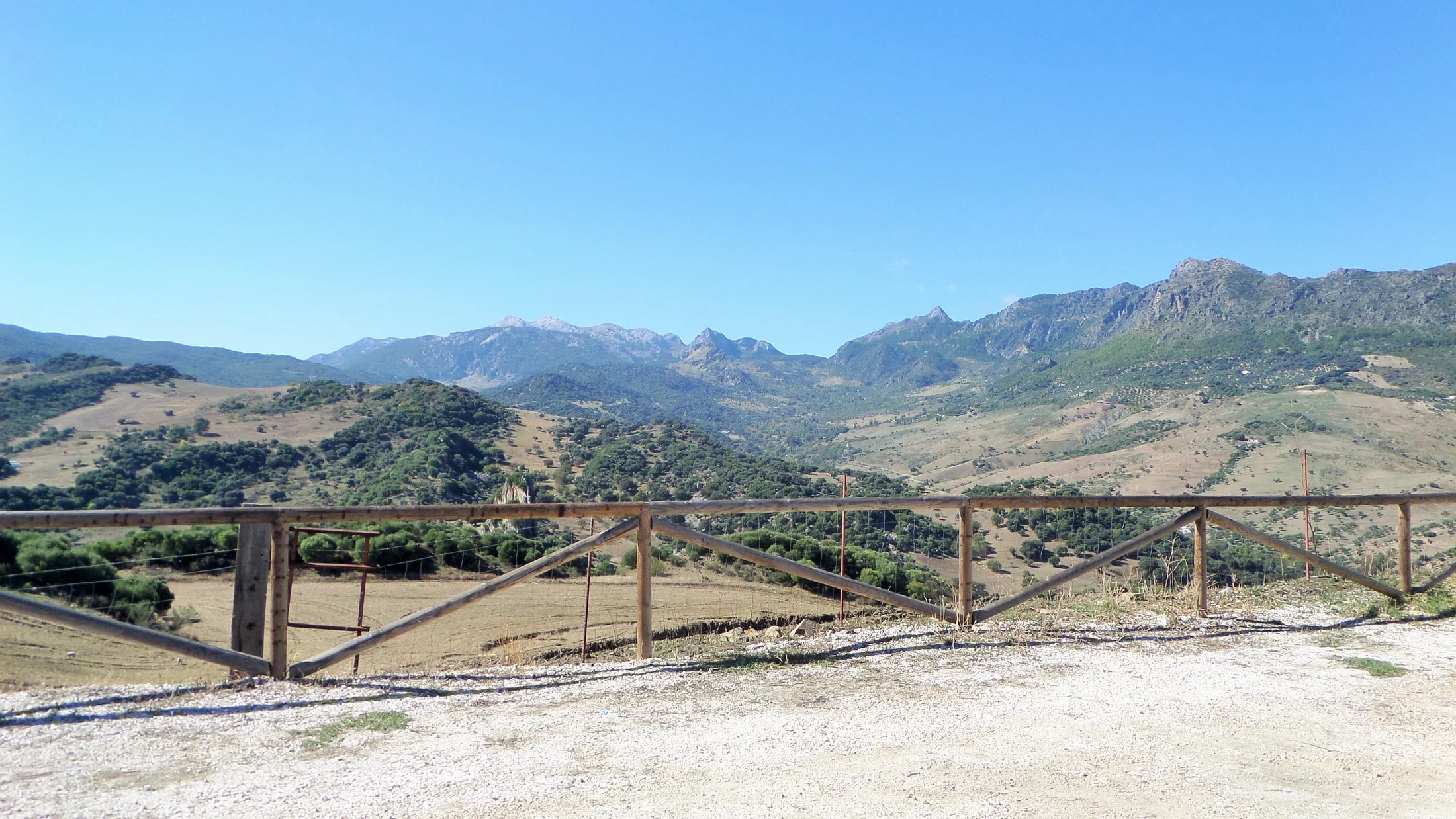
A weekend between Grazalema and Ronda: nature and heritage
Combining Grazalema and Ronda in a single weekend blends mountains and heritage on the border between Cádiz and Málaga. The Sierra de Grazalema Natural Park preserves the Spanish fir, and Ronda overlooks its monumental Tajo.
The getaway is organised with an afternoon arrival in Grazalema, a rural night with good food, and the following day dedicated to Ronda. On the way, you can add a canyoning descent in limestone gorges or a short route towards a viewpoint. The air smells of damp rockrose at dawn and whitewashed lime at dusk.
Road routes pass through the A-372, the A-374 and the A-367, and there are also train and bus options via Ronda. The A-372 connects Arcos de la Frontera with the A-374 towards Ronda and ascends from 300 m to over 1,100 m at Puerto del Boyar. The A-367 connects Ronda with the A-357 road and passes through Cuevas del Becerro, Cañete la Real and Teba.
It is advisable to choose your dates based on the hiking and water activities you want to do.
Grazalema and Ronda in a few words
Grazalema and Ronda fit into a weekend, and in that time you see two sides of the same mountain range. Grazalema is in the Sierra de Grazalema (Cádiz), a protected natural space declared a Natural Park in 1985 and famous for its Spanish fir, a forest of tall local firs.
The Sierra de Grazalema Natural Park extends between the province of Cádiz and the Serranía de Ronda, with an area of 53,411 ha and various mountain ranges such as Zafalgar, Pinar, Endrinal and Caíllo. Ronda is set in the Malagueña mountains and its Puente Nuevo spans a gorge of more than 90 metres over the Guadalevín.
The contrast is sharp: dense nature and trails in the mountains versus historical heritage and mountain urban life in Ronda. The afternoon light ignites the white facades and leaves the Tajo in blue shadow.
In a single weekend, you combine white villages like Zahara de la Sierra or Setenil de las Bodegas with the must-sees of Ronda and the Spanish fir of Grazalema. Canyoning takes advantage of the area's limestone in regulated gorges, with seasons marked by water flow and weather. If you travel as a family, there are short walks, accessible viewpoints and museums that fit in effortlessly.
Reasons to go for a weekend
Grazalema and Ronda fit into two days without rushing. You arrive from Seville, Málaga or Cádiz via well-maintained roads, and you are already in the mountains.
Nature rules: the Spanish fir of Grazalema and its viewpoints are the main reason to go up. If you like to keep moving, there is canyoning, hiking and panoramic routes to choose from according to your level.
Ronda and the white villages provide the heritage and the atmosphere, with local crafts being a mandatory stop in every square. And the mountain Gastronomy relies on payoya goat cheeses, grilled meats and honey.
A weekend between Grazalema and Ronda fits in without haste: the smell of warm bread in the squares first thing in the morning sets the tempo. Book accommodation in Grazalema or Ronda and leave the car for short trips between villages.
When to go and essential weather
Spring and autumn are the best seasons in Grazalema: usual maximums of 15–25 ºC and green mountains. They are the ideal months for hiking and for visiting the Spanish fir forest with permits.
Winter is rainy and feeds gorges and reservoirs, so it is advisable to bring a waterproof layer. The resin from the pines perfumes the hillsides when the sun warms up after the rain.
For canyoning, you must check flow rates and regulations: there are closure periods or quotas in sensitive areas such as Garganta Verde, and operations are not carried out during floods. In summer, it is advisable to start early and choose shady routes; some sensitive paths may be restricted due to the risk of fires.
Puerto del Boyar, at 1103 m above sea level, is crossed via the A-372 road which connects Grazalema and El Bosque and separates the sierras of El Pinar and El Endrinal.
Bring hiking boots with an adhesive sole, a lightweight raincoat, a cap, sun protection, and at least 1–1.5 l of water per person for short routes.
Picuco te puede ayudar
Does something here catch your eye?
Tell us.
Write to us on WhatsApp or email: we answer questions, find the best options and help you sort out the booking.
How to arrive and move around without wasting time
Choosing your base and schedules well is the key to moving between Grazalema and Ronda. Once that is sorted, the weekend is much better enjoyed.
A car gives you freedom to link villages and viewpoints. The hum of tyres on the limestone in gentle curves announces mountain passes and wide views.
Public transport is viable by combining the train to Ronda and the bus to Grazalema. Check the schedules before leaving and calculate the time for each journey.
By car: routes, roads and parking
a Grazalema). Mountain roads with wide curves dominate the last 30–40 km: plan arrivals with daylight.
Parking in Grazalema is easier at the entrances to the village and in designated areas next to the A-372; on weekends, arrive early. In Ronda, look for public car parks near the historic centre (areas close to Puente Nuevo and the Plaza de Toros), or park on outer avenues and enter on foot to avoid traffic jams. The smell of firewood in chimneys accompanies the final ramps up to the village on cold afternoons.
| Origin | Main route | Time to Grazalema | Time to Ronda |
|---|
Tip: check the road conditions on the DGT if it rains heavily, and avoid driving at night due to wildlife and occasional fog. Bring cash for small car parks that do not accept cards.
Train and bus: public transport options
Ronda has a train station on the Bobadilla–Algeciras line, between Setenil and Arriate. Medium Distance trains depart from Málaga–María Zambrano and arrive in Ronda in approximately 1 h 50–2 h. The rattling of the train keeps pace with the succession of holm oaks under the window.
It is advisable to book in advance during holidays and long weekends.
Bus frequency varies according to the season and day of the week, and there may be fewer services on weekends. If you are travelling with a large backpack and equipment, ask about luggage storage. For the return journey, confirm the last service of the day so as not to depend on late taxis.
Getting around locally: taxis, transfers and trails between villages
Inside the natural park, 12–20 km by road can take you 30–40 minutes of winding turns. Calculate your times with a margin before linking villages in a single day.
For linear routes such as the Pinsapar (Grazalema–Benamahoma), the most comfortable option is a local taxi or a transfer to save yourself the return journey by road. Book the day before.
If you prefer to pedal, there is bicycle and e-bike hire in the area, although the elevation gain is noticeable.
In summer, head out at sunrise.
If you are going canyoning, coordinate the meeting point and the end of the activity with the company, and plan how to get back to the car. Many offer pick-up or a shuttle service.
Where to sleep in Grazalema and Ronda according to your plan
The base you choose changes the rhythm of your weekend. If you sleep in Grazalema, the pinsapar and the trails are close by and you can start walking early.
Ronda leaves you within walking distance of heritage sites and restaurants, with your evening sorted without a car. Decide based on what you want to do on Saturday morning: a trail or the historic centre.
Grazalema: rural houses and charming options
The village offers rural houses, small B&Bs and hostels with stone walls and views of the cliffs.
Staying here facilitates early outings to the pinsapar and routes such as Puerto del Boyar or Garganta Verde. Additionally, you can have dinner without taking the car. Many accommodations have fireplaces and sunny terraces, useful for drying boots after a downpour.
The advantages are clear: proximity to the trails, a tranquil atmosphere and close personal service. It is a good base for active couples, families who wake up early and groups looking for the mountains.
If you need a garage or space for equipment such as ropes and wetsuits, ask before booking. During bank holidays, demand rises due to the pinsapar permits, so book with weeks of margin.
Ronda: hotels with views and paradores by the Tajo
Ronda has hotels in the historic centre, accommodation with balconies overlooking the Tajo and a parador with a privileged location. Sleeping here fits if you are looking for comfort, a variety of restaurants and evening strolls, and it leaves Grazalema just a stone's throw away for the next day.
Public car parks are near the historic centre, in areas close to the Puente Nuevo and the Plaza de Toros. You will find boutique hotels, paradores and central apartments. At night, the lights of the Puente Nuevo reflected in the abyss create the city's postcard image.
Rooms with views of the Tajo increase in price: confirm the final price and the cancellation policy before booking. If you are travelling by car, ask about parking.
From Seville, using Media Distancia or Avant, you must change trains in Dos Hermanas or Bobadilla.
Booking tips and choosing areas
Where you sleep each night decides how much time you spend behind the wheel. If you are going canyoning early, book the first night in Grazalema to save on travel. If you are looking for dinner and a lively evening stroll, book in Ronda for Saturday night.
To balance location and price, sleeping in nearby villages such as Zahara de la Sierra or Benaocaz can lower the cost and maintain proximity to the routes.
Book 2–6 weeks in advance in spring and autumn, and with more margin during bank holidays and Holy Week. Choose a flexible cancellation policy if your plan depends on the weather: rain in the mountains can force you to reconfigure your plan.
Weekend itinerary: the essentials without rushing
A weekend in Grazalema and Ronda is best enjoyed with fewer places and more time in each one. The plan prioritises quality time on trails and heritage, leaving breathing room between one stop and the next.
Adjust the schedules according to your base and the weather. If it rains, swap the ravines for viewpoints and museums: the day still makes sense.
The morning mist clears quickly over the slopes when the sun appears. Wake up a little earlier and you will have the first hours to walk with soft light and fewer people on the trail.
Day 1: arrival, afternoon in Grazalema and local dinner
Arrive in Grazalema at midday, leave your luggage and eat early. Between 12:00 and 15:00 you can have picadillo soup, Iberian meats or Payoyo cheese from Villaluenga del Rosario, made with goat's milk, sheep's milk or a mix of both.
It is a short and flat walk, ideal for digesting your meal.
From 17:00 to 19:30 you can take a short trip to the Grazalema pinsapo forest. Without a permit, you can only walk through the access points and starting viewpoints; the full Sendero del Pinsapar requires authorisation and time.
At 21:00, dine in the village: deer stews, asparagus scrambles and homemade desserts. The stone of the facades still emits the heat of the day when you return to your accommodation.
If your priority is the pinsapo forest, arrange the permit for the following morning and hire a taxi for the return if you take the linear route towards Benamahoma.
Day 2: morning in Ronda, panoramic afternoon and return
At 08:30 you leave Grazalema for Ronda: about 34 minutes (31.7 km) by car. Park in a central car park and start walking.
Between 09:30 and 12:00 you have the essentials: the Puente Nuevo and the Aldehuelas viewpoints, the Plaza de Toros and a stroll through the old town. If you are travelling with children, the Museo Lara or the Arab Baths add interest. The Puente Nuevo was built between 1751-1793 and is 98 metres in altitude; its name refers to the architect José Martín de Aldehuela, who finished the construction. Keep in mind that the Aldehuela viewpoint may be closed at night.
Access is on foot, descending through the tajo, about 10-15 minutes from the Puente Nuevo, and the path passes by the ruins of old flour mills destroyed by the 1984 earthquake and the floods of the river.
At 14:00, eat with a view or in the central taverns: porra antequerana, oxtail or serrano migas. From 16:00 to 17:30, the last viewpoints and shopping for leather and ceramic crafts remain; afterwards, return according to your destination.
If you are coming from Grazalema after a morning route, adjust the plan: enter Ronda around 13:00, eat first and visit the Tajo in the afternoon. Ronda is a municipality in the province of Málaga (Serranía de Ronda region) and Grazalema is in the province of Cádiz.
Alternatives and extensions: canyoning, long routes or an extra night
If canyoning doesn't happen, the weekend is still on: swap the wetsuit for boots and viewpoints. Grazalema and Ronda allow room to extend the plan without repeating paths.
For a long route, combine the Garganta Verde (with a permit) and Zahara de la Sierra on the same day if you wake up early. Another option is to dedicate an entire day to the linear Sendero del Pinsapar with a transfer. In high season, book permits and guides in advance.
If the water flow does not allow for canyoning, have a hiking and viewpoints plan B. The golden light of the sunset over Zahara compensates for any change of plan.
Key activities: white villages, canyoning and pinsapos
A weekend in Grazalema and Ronda is organised around three plans: the white villages, canyoning and the pinsapar. The first two are well known; the third is what surprises those arriving for the first time the most.
Wandering through the white villages of Andalusia takes you from street to street between whitewashed facades. In every village, the scent of bakery and thyme accompanies you.
Canyoning in Grazalema requires suitable equipment and, if it is your first time, someone who knows the descents. The pinsapar is best visited with time and footwear with good grip, because the terrain is damp and shaded.
Dedicate one day to each axis if you want to do them calmly. Book the canyoning in advance and leave the pinsapar for the morning, when there are fewer people on the paths.
1. White villages of the sierra: what to see and how to plan
Grazalema is the starting point, a village in the Sierra de Grazalema (Cádiz).
Zahara de la Sierra is in the sierra de Grazalema, on the shores of the Zahara-El Gastor reservoir, and forms part of the Ruta de los Pueblos Blancos. Setenil de las Bodegas has an urban layout declared a historical ensemble and embedded in the gorge of the Guadalporcun river. At sunset, the whitewashed walls reflect a warm light that invites you to stay.
To reach Setenil by train, you have the Bobadilla-Algeciras line, via the Setenil station. Combine 1–2 villages on the afternoon of day 1 and leave an extra one for after the day 2 route, if you do not enter Ronda very late.
Calculate realistic distances: although there may be 10–20 km between villages, the winding roads and stops at viewpoints add time. On weekends, park at the entrance, wear comfortable footwear and bring water, and buy local (payoyo cheese, honey, cured meats) to support the producers.
2. Canyoning in Grazalema: levels, guides and safety
In Grazalema, you descend through limestone riverbeds with rappelling, scrambling and some sections swimming in a wetsuit. The descents are done with a guide and equipment included (wetsuit, helmet, harness), and to participate you must know how to swim and move easily through irregular terrain.
Safety starts by choosing companies with qualified guides, insurance and approved equipment. Follow the instructions and respect closures due to water flow or nesting. Some descents in sensitive areas require authorisation from the Junta de Andalucía, with places limited per day and according to the modality; the company manages this.
Requirements change depending on the route and the water: admission is from 12–14 years old, and it is advisable to consult weight and altitude limits in advance. Access with pets is not permitted. The area hosts one of the largest colonies of griffon vultures in Europe.
To fit it in, block out the morning (8:30–13:30) and have lunch in a nearby village. Bring a change of dry clothes and a towel, and book in advance. If the river is running high or is closed, change the plan for hiking or viewpoints.
3. Pinsapar de Grazalema: what it is, routes and conservation
The Pinsapar de Grazalema is a forest of Abies pinsapo, a relic fir of Tertiary origins and sibling to the pinsapo of the Sierra de las Nieves. Within it live wild goats, foxes and birds of prey, and amidst the green gloom, the resinous aroma envelops you like in a vegetal cathedral.
The Sendero del Pinsapar is linear and requires mandatory permission. If you do not have it, there are out-and-back variants to the initial viewpoints, without entering the restricted zone. The complete linear route takes 4–6 hours depending on your pace and logistics, with a notable accumulated elevation gain/loss on the descent towards Benamahoma.
The trail starts in Benamahoma and passes by the Nacimiento de Benamahoma, a campsite and the Majaceite river up to Grazalema. The Junta de Andalucía regulates access with daily quotas: respect the paths, do not pick flora and avoid noise. Pets are also not allowed, as it is a reserve area.
From 1 June to 15 October, access is only permitted with guides from authorised companies, due to the fire season. The best time is from autumn to spring, avoiding the intense heat.
Request permission at the Park Office in El Bosque. For the linear route, coordinate a taxi or a transfer in Benamahoma. From Grazalema, take the A-372 towards Benamahoma and turn right onto the CA-9104 towards the Puerto de las Palomas: the access is 1 km to the left of the road.
Hiking routes and essential viewpoints
A weekend allows for only a few paths, so it is worth choosing well: three routes summarise the sierra. The crunch of gravel under your boots marks the pace between holm oaks and Portuguese oaks.
Garganta Verde, in Zahara de la Sierra (Sierra de Cádiz, province of Cádiz), is another. With three paths like this, the plan organises itself: choose the dates, book whatever is necessary and leave the rest for your next visit.
1. Pinsapar route: classic trail to see the pinsapos
The pinsapos are endemic firs that only remain in the sierra of Grazalema, the Sierra de las Nieves, the Sierra Bermeja and North Africa.
It is a regulated route and you must reserve permission. From 1 June to 15 October, access is only permitted with guides from authorised companies, and animals are not allowed.
The route is linear, 10–12 km depending on the starting and ending point, and is completed in 4–6 h. In the Grazalema–Benamahoma direction, you accumulate 350 m positive and 1000 m negative, with a steep descent if you finish in Benamahoma. El Torreón (1654 m), the highest point in the province of Cádiz, forms part of the route's surroundings.
Bring walking poles for the descent, a windbreaker and sufficient water. The fresh humidity can be felt on your skin even on mild days.
The route begins at Las Canteras/Los Areneros, near km 1 of the CA-9104 between Grazalema and Zahara; Puerto de las Cumbres is an intermediate point of the route. For the return from Benamahoma without walking back up, the practical option is to use a taxi.
If it is your priority, schedule it for Saturday morning and leave Ronda for Sunday. Avoid afternoons if you do not manage your timing or the weather well.
2.Garganta Verde: gorge, viewpoints and cave
The Bocaleones stream has carved out a canyon where one of the largest colonies of griffon vultures in Europe lives.
You reach the upper viewpoint in 1 h 40 min (one way), without entering the canyon: it is the simplest option. From above, you can see the canyon walls, rupicolous flora and griffon vultures flying overhead.
The descent to the bottom takes 2–3 h, and more time if you explore. With a guide and equipment, the sporting descent takes several hours. The difficulty is medium–high due to the steep slope and loose terrain, and it is not recommended in mud or rain.
Access is limited by daily quotas and requires prior administrative authorisation, with different modalities and calendars depending on the activity. You cannot enter with pets.
It is worth getting up early to avoid the heat and traffic; grip footwear and walking poles help on the descent. The viewpoint fits well before or after visiting Zahara de la Sierra; if you do the full descent with a guide, dedicate the entire morning.
3.Puerto del Boyar viewpoint and panoramic walk
At 1103 m above sea level, the Puerto del Boyar separates the Pinar and Endrinal mountains and opens the view to the Corredor del Boyar. It is a short and well-situated stop on the road between Grazalema and El Bosque.
From the viewpoint, you can see the Salto del Cabrero, the Castillo de Aznalmara, the Sierra de Albarracín, the Higuerón de Tavizna and the Sierra de la Silla. The panorama is wide, with peaks such as San Cristóbal and the profile of Grazalema in the background.
To stretch your legs, you have a nearby interpretive path and small incursions through ridges and slopes of 30–60 min, suitable for families with caution. Go at sunrise or sunset if you are looking for grazing light and good photos; after the rains, low clouds add drama.
Arrive via the A-372 between El Bosque and Grazalema. It fits well as a stop on your route or as a quick complement after lunch.
Practical tips, frequently asked questions and conclusion
A weekend between Grazalema and Ronda turns out perfectly with two simple gestures: checking the forecast and respecting the environment. The weather changes quickly in the mountains and canyoning depends on the water flow, so check the report the day before and adjust your plan.
Book water activities and accommodation in advance, especially in high season. In the mountains, follow the marked paths, do not leave waste and do not take anything from the Spanish fir forests.
With the forecast consulted and the natural environment respected, the trip is enjoyed much more. Dedicate Saturday to Grazalema and Sunday to Ronda, and leave margin to stop at the viewpoints along the way.
Practical tips: permits, safety and equipment
The Pinsapar de Grazalema and the Garganta Verde have quotas and access control. Arrange the prior permit from the Junta de Andalucía, with limited spots per day depending on the modality.
Before setting off, confirm seasonal closures due to fire risk, nesting, or weather conditions. For canyoning in Grazalema, hire qualified guides, check the AEMET report and respect cancellations due to water flow.
When hiking, let someone know your route, carry an offline map and extra battery, and do not stray from the marked paths. Basic equipment includes mountain footwear with an adhesive sole, a raincoat, a light layer, a cap, sunglasses, a first aid kit and a headtorch.
Carry water (1–2 l per person) and energy snacks; in summer, add salts or nuts. For canyons, you need a swimsuit, a towel and a change of dry clothes; the rest of the material is provided by the company.
Coordinate taxis or transfers for linear routes like the Pinsapar and check bus schedules if you are not driving. Carry cash for car parks and small shops.
Do I need a car?
With a car, you gain flexibility to link villages and viewpoints. Without a car, combine the train to Ronda and the bus to Grazalema, and use taxis for linear routes.
Are there canyoning companies?
Specialised companies operate with qualified guides and insurance. Confirm water flows and permits before booking.
Is it suitable for children?
Yes, by choosing plans: viewpoints, villages, museums in Ronda and short walks. For canyoning and demanding routes, respect the minimum age and physical condition.
When is the best time?
Spring and autumn, due to the mild climate and green mountainside. In winter it rains a lot and in summer it is hot and there may be restrictions due to fires.
Is a permit needed for the pinsapar?
Yes, except for the first sections outside the restricted zone. Arrange it in advance and carry your ID.
Can I visit Ronda and the pinsapar on the same day?
It is possible, but get up early and allow 4–6 h for the pinsapar plus transfers. You might prefer to split it into two days.
Book your experience — discover active tourism activities in Spain with providers verified by Picuco.
Conclusion and next steps
Grazalema and Ronda fit into a weekend: one afternoon of white villages and viewpoints, one morning of pinsapar or canyon and a few hours at the Tajo de Ronda. With that distribution, you will have time to eat without rushing and return home having truly seen the mountains.
Arriving and moving around is simple via the A-372 and A-374 roads, or by train to Ronda if you plan ahead. Before going, book the permits for the pinsapar and the Garganta Verde. If you are not driving, confirm the Renfe and bus schedules.
Choose your base according to the plan you intend to follow: Ronda if you want the Tajo and the train close at hand, a village in the mountains if you are looking for routes right from your doorstep. To keep exploring the mountains, save this guide and share it.