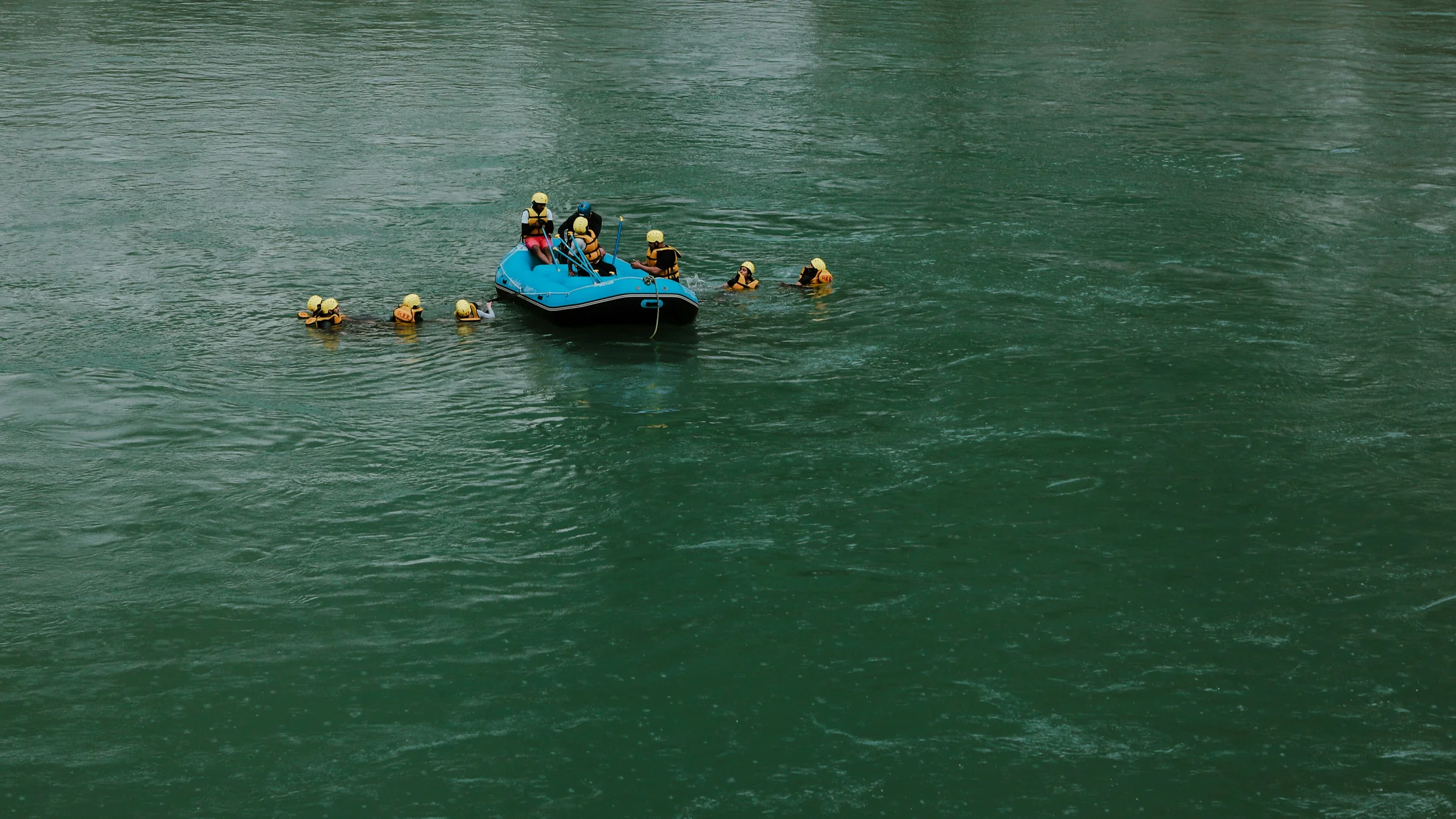
Why adapt the plan to your children's pace
Choosing the right river and stretch decides between a "I want to do it again" and a "I'm not coming back". With children, the age and development of each one weigh on their safety, their enjoyment, and what you expect from the day.
A raft moves through gentle waves while their laughter mixes with the murmur of the river. That is the image you seek when you book rafting as a family.
This guide is for families who want to combine adventure with tranquillity. Before choosing, look at the river and the stretch: that is where the plan that fits your children comes from.
Safety and age: the starting point
A 6-year-old child does not process the guide's "forward" the same way as a 12-year-old, and that changes the rapid and the duration they face. Age matters because it dictates size, strength, attention span, and the ability to follow clear instructions.
In Spain, the minimum age to go rafting with children varies by river, flow, and company. It usually moves between 6–8 years for very calm stretches and 12–14 for technical stretches.
Before booking, check that the company works with qualified whitewater guides and has up-to-date insurance. The Real Federación Española de Piragüismo (RFEP) recognises specific sports qualifications and safety protocols.
Technical sheets repeat several rules. The minimum age depends on the day's flow and the water temperature. The approved helmet and the ISO 12402-5 life jacket are mandatory. In stretches with rapids, the guide/boat ratio and the support boats are established.
Try a helmet that fits firmly and a life jacket that hugs the torso: that visible safety gives them confidence. Frame the day as something to be learned, paddling together, listening to instructions, and celebrating every small goal.
What you will take away from this reading
By the end, you will have a clear mental map: which rivers are suitable according to your children's age, what level of difficulty (I–VI) is right for your family, and when to go. You will also see how to prepare the little ones, what to ask before booking, and what a well-organised activity includes.
With that foundation, you will be able to decide on the stretch and the season calmly and book with knowledge. If you are travelling with children, start with the family section and compare options before choosing a river.
Picuco te puede ayudar
Does something here catch your eye?
Tell us.
Write to us on WhatsApp or email: we answer questions, find the best options and help you sort out the booking.
Key factors for choosing the right river
The age, size, and previous experience of your children define the starting point. Before looking at rivers, assess those three pieces of data: they determine which stretch, which raft, and which duration make sense for your family.
A first contact should ideally be short, with friendly currents and progressive difficulty jumps. For 5–8 years, 1–2 hour sessions work best. If they have already tried kayaking or canyoning, you can extend the duration and allow for some more playful rapids.
What kind of river each age requires
- From 5–8 years, look for Class I–II, with small waves and gentle currents, and stretches without mandatory swimming.
- From 9–12 years, Class II–III introduces medium waves, simple manoeuvres, and some river reading.
- From 13+ years, Class III–IV arrives with linked rapids, always with expert guides and visible rescue logistics.
The international difficulty scale goes from I to VI. Class I–II is gentle current with obvious obstacles and light splashes. Class III brings medium waves and turns that require coordinated paddling and listening to the guide. Class IV adds powerful rapids and precise manoeuvres, suitable for motivated teenagers with an expert guide.
Equipment and raft type
Check the height and fit of children's equipment: the life jacket must close by at least 3 points and the helmet must not wobble. Without experience, start with stable rafts, large rafts of 8–10 seats and a detailed briefing. With basic experience, move on to medium rafts of 6–8 seats, with more manoeuvrability and protagonism.
The large raft is more stable and forgiving of mistakes; it is great for beginners and families. The medium raft or miniraft is more agile and adds excitement for 9–12 year olds. Duckies or inflatable canoes require paddling yourself: use them only with older children and a docile river. Always confirm that controlled falling and boarding practice is done in calm water.
Flow, season and logistics
Regulated rivers (Noguera Pallaresa, Gállego) have predictable seasons, often from May to September due to dam releases. Snowmelt rivers, such as the Ara, depend more on rain and snow: spring is usually the window. Check flow rates on the SAIH Ebro, SAIH Miño-Sil, SAIH Duero and SAIH Guadalquivir networks, and AEMET forecasts, with predictions on a national, autonomous, provincial and local scale and specific ones for mountain activities.
Assess road access, possible escape points and mobile coverage.
Ask for the name and class of the most demanding rapids and if they can be portaged (walked around) with children. Some companies divide stretches and skip sections depending on the daily flow: that flexibility helps. In the area, parking, changing rooms with showers, lockers, a nearby café and shaded areas are available. Check that there is a pharmacy in the base village and a health centre within 30–40 min of driving.
Three plans depending on the family
Absolute initiation: regulated river, Class I–II, large raft and 60–90 minutes. Safe adventure: Class II–III, medium raft, 90–120 minutes and a couple of memorable rapids with optional portage. Full family day: combine a morning stretch and a picnic or river swim, or rafting plus a gentle activity such as a nearby local PR trail.
Think of the raft as a mobile classroom: the more concrete and measured the stimulus, the more enjoyment and learning. The rhythmic splashing of the paddles indicates that the pace is correct.
Where to go, when and where to sleep: families by region
In Spain there are rafting rivers that work well with children, but each one has its season. Snowmelt, rain and dam releases rule, so choose the region according to the time you are going to travel.
- Catalan Pyrenees (Lleida)
The Noguera Pallaresa is the emblem river for families, and some stretches of the Noguera Ribagorzana also work.
Barcelona and Toulouse airports are options if you are coming from far away.
- Aragonese Pyrenees (Huesca)
The Ésera (Campo–Santa Liestra) and the Gállego (Murillo de Gállego) are the family bets. The Ara has a short window depending on the snowmelt, in early spring.
The Ara is the last virgin river of high flow in Spain, without dams or interruptions. It rises at the foot of the Vignemale massif and its landscape is declared a UNESCO World Heritage Site.
Watch out for the classic stretch of the Ara: it has class III, IV rapids and stretches of V, it is done from Torla to Broto, it is mandatory to know how to swim and it is recommended for those over 18 years old.
There are sports shops, early bakeries and regional health centres less than 40 min away.
Cantabrian Mountains and Picos de Europa (Asturias, Cantabria and León)
There is local gastronomy, river recreational areas and companies that will warn you if rafting is not viable due to flow levels.
- Galicia
The Miño (Ourense–Pontevedra), the Ulla (A Coruña–Pontevedra) and the Sil (Valdeorras) are suitable under certain conditions. The Miño has activity all year round, with the best time being spring, summer and autumn.
You can arrive via the AP-9/AG-53, by train to Ourense or Santiago and car, or to the Vigo and Santiago airports. Stay in pazos and rural houses or urban hotels to combine it with a cultural getaway.
The rain is changeable: check flow levels on the SAIH Miño-Sil and book with flexible confirmation.
Central System and Meseta
The Tormes (Barco de Ávila) flows in spring, with the best time being from March to May and after rainstorms.
You can arrive via the A-66/AV-941 and regional highways, or by train to Ávila, Salamanca or Logroño and car. Stay in rural houses with fireplaces and small hotels in historic towns.
The offer is more seasonal: confirm the activity 48–24 h beforehand due to flow variability.
- Andalusia
The Genil (Benamejí–Cuevas Bajas and sections in Granada), the Guadalfeo in episodes and the Guadiaro under certain conditions. The best time is spring and early summer, paying attention to heatwaves.
You can arrive via the A-45/A-92, by AVE to Córdoba or Málaga and car 1–2 h, or to the Málaga, Sevilla and Granada airports. Stay in rural houses with cool patios or hotels with a swimming pool.
Get up early to avoid the heat, carry shade and water on hand and keep nearby medical coverage in mind.
The smell of pine and new neoprene marks the morning before entering the water.
Always check flow levels and the calendar on the SAIH networks of each basin and the weather report from AEMET. Book in advance in July–August in the Pyrenees and with flexibility during the Atlantic spring.
Recommended rivers by age
Your children's age determines which river section is suitable for you. This section organises the rafting options by age groups to adjust the difficulty, duration and excitement of each descent.
The foam that splashes without overwhelming is the right measure for each stage. Look for your children's age group and compare the rivers before booking.
1. Little ones 5–8: first waves with control
Ask for guides accustomed to families, children's helmets and life jackets and large, stable boats. Many companies mark 6–8 years as the minimum for beginners, but they confirm this the day before according to the SAIH.
Rivers and sections according to flow:
- Noguera Pallaresa, in lower sections near Sort and Gerri de la Sal.
- Ésera, with sections from Campo on calm days, small waves and a good environment.
- Gállego, in the lower section in Murillo de Gállego, with views of the Mallos and the possibility of shortening the trip.
- Deva, where mild springs allow for family sections near Potes.
Prioritise morning schedules: rested children, less wind and fewer convective storms in summer. Ask about included photos, changing rooms with showers and a pick-up point at the end of the section.
It works well because the navigation is simple, there is more play than technique, the children's equipment is specific and the distance from the base is short. It is great for a first aquatic experience and to build confidence. Walking barefoot on the warm gravel shore after the activity is the perfect end.
2. Children 9–12: medium excitement and learning
At 9–12 years old, children can stay in the water for longer and enjoy Class II–III rapids, with sustained waves and simple manoeuvres: coordinated paddling, changes of pace and basic reading of the river. The cold spray that hits your face in the first rapid sparks laughter and focus.
Before booking, check the guide/raft ratio (ideally 1/6–8), that there are support vehicles and the possibility of portaging a strong rapid if someone is overwhelmed. At the company, look for specific whitewater certification, a briefing with a demonstration of safety positions and a reminder of signals. Ask to see the public liability and accident insurance, and confirm EN 1385 approved helmets and ISO 12402-5 life jackets in children's sizes.
In the Noguera Pallaresa, the Llavorsí–Sort section in the family version allows you to portage Class IV rapids like La Rentadora if it is not appropriate to run them. The Ésera, in the Campo–Santa Liestra section, has continuous Class II–III rapids, good scenery and safety. The Gállego adds Class II–III rapids with a couple of more playful sections; the most technical ones are concentrated in the Murillo de Gállego section, regulated by the La Peña reservoir. Here, knowing how to swim is essential and the minimum age is 14 years in spring and from 8 years old in summer, depending on the flow.
The Miño has Class II–III sections after controlled floods and works well for family rafting in spring. The Genil, in the Benamejí–Cuevas Bajas section, is Class II–III, with spring flows and shade.
For family logistics, ask about parking, drinking water, toilets, a clear meeting point and photographic follow-up. This age group adds excitement without losing control, improves coordination and teamwork, and leaves you wanting to repeat.
3. Adolescents 13+: adventure with judgement (Includes Noguera Pallaresa)
At 13 years old, a sporty adolescent who swims fluently and obeys instantly can face a Class III–IV. Look for long sections, 12–18 km, with breaks and guides that combine technique and pedagogy.
The Noguera Pallaresa is the most voluminous river in the Pyrenees for kayaking and rafting: it has continuity, good safety, access points and varied lines depending on the group's level.
Other rivers fit depending on the date. The Ésera offers III–IV sections in spring, with precise lines and controlled wave surfing. The Gállego is III with occasional IV sections, continuous stretches that require paddling together and a cool head. The Ara, when it accompanies the snowmelt, is technical III–IV with wild landscapes, with a short window and only with top guides. The Genil is playful III in spring, and the heat requires getting up early and taking care of hydration.
If you go as parents and adolescents together, you have two options. Divide the group into two rafts, one "family" and one "teens", and stay together during stops and photos. Or set up a 2-in-1 day: a II–III section in the morning for everyone and, after the picnic, a mini III–IV section just for adolescents. You can also split the section or portage the most demanding passages.
The flow rules. If it rises, you portage or reduce the section; if it drops, the playfulness is extended. At the end of the day, the smell of the river and sun on the wetsuit remains.
Rafting with children: equipment, safety and what is included
The EN 1385 approved helmet in child or junior size and the ISO 12402-5 life jacket with double straps and crotch strap are provided by the company. Also the full 3–5 mm wetsuit, the short jacket if it is windy, the neoprene sock if the water is cold and the overshoes or water shoes; some ask for closed trainers that can get wet. The paddle is adjusted to the child's size and has a soft grip.
Before going down into the water, there is a briefing with a demonstration of the safety positions: the "defensive swimmer", on your back and with your feet up, and the "offensive" one, facing forward. The guide explains their signals through voice and gestures, and you practice getting in and out of the raft in calm water.
In the raft, the little ones sit close to the guide and the adults accompany them, with their feet well anchored. In active stretches, there is visible rescue rope and a support raft or safety kayak.
Thermal control is managed with the correct neoprene, waterproof sunscreen and short breaks to avoid cooling down.
An organised activity includes a qualified guide, technical equipment, internal transport (put-in/take-out), Civil Liability and Accident insurance and basic photos or video. It has a total duration of 2–3 h including the briefing, equipment, transfer and descent. The indicative price is 35–55 € per child and 45–65 € per adult, depending on the river, season and duration, and you must book in advance.
Before booking, check the current Accident and Civil Liability policy and ask about coverage and limits if you have doubts. For minors not accompanied by both parents, parental authorisation is required. Inform about allergies, asthma, epilepsy or other conditions and carry your rescue medication (inhaler, auto-injector) in a waterproof bag agreed upon with the guide.
These are the key questions before booking:
- Actual minimum age and size for the date and flow rate expected.
- River class of the stretch and the possibility of portaging the most demanding rapid.
- Guide/raft ratio and external support.
- What you must bring (swimsuit, towel, trainers) and what the company provides.
- Cancellation policy due to water flow or weather and activity relocation.
Practical tips for parents: before and during
When the child knows what to expect, the river stops being intimidating. Planning in detail simplifies the day and reduces everyone's nerves.
Book the first morning slot: there is better energy, less wind and fewer summer storms. Confirm the minimum age for that date and that river, as it can change depending on the previous day's flow. Park well in advance and confirm the location of the put-in and the take-out so you don't miss the transfer; if you are travelling without a car, ask the company for pick-up options at a nearby station.
Prepare a dry bag with a reusable water bottle, salty snack, sunscreen, towel and a full change of clothes. Dress the children in a tight swimsuit and a thin technical shirt; avoid cotton, which makes you cold when wet. A light but energising breakfast (toast, fruit, yoghurt) works better than a heavy meal, and hydrate starting an hour before. In summer, bring oral rehydration salts for afterwards.
Rehearse safety positions at home like a game: "feet up" and "hands on the rope". Repeat the basic signals with the little ones a few minutes before boarding.
For fear or nerves, validate their emotions ("it's normal to have butterflies in your tummy"). Give the child a role, such as counting strokes or being in charge of the team shout, to help them focus. Ask the guide for a "controlled fall" practice in calm water and downplay the drama with humour. Inform the guides about fears, allergies or tiredness and ask for a seat in the raft near the guide for the most nervous child.
If someone falls into the water, maintain eye contact and indicate "feet up" and "on your back" unless instructed otherwise. Do not jump in without an order: the guide directs the rescue with a paddle or rope and you follow their instructions. After pulling them back on board, the person who fell should have their arms crossed and be pulled by the life jacket, with a brief pause to assess their condition.
After the activity, dry and change the children quickly, check for minor chafing and give them a salty snack and water. Celebrate the achievement with a team photo and a chat about what has been learned.
Frequently asked questions
What is the minimum age for rafting with children?
The minimum age depends on the river, the flow and the section you are going to do. There is no single figure for all descents.
As a guide, for Class I–II waters on regulated rivers, ages 6 to 8 are required. For Class III–IV sections, the indicative minimum age rises to 12 or 14 years.
Companies confirm the minimum age the day before, depending on the flow (SAIH) and weather conditions (AEMET). Ask when booking and confirm it again before setting off.
What size or weight do they need for the life jacket and helmet?
What matters is the fit, not just the age. The ISO 12402-5 life jacket must close firmly and include a crotch strap for children.
The EN 1385 helmet must not move when the child bends down. When booking, indicate the height and weight of each person so they can assign the correct sizes.
How is the section level determined?
The section level is measured using the international scale I–VI, the same one used by rafting companies all over the world. This way you can compare one river with another before booking.
Class I–II has gentle currents, suitable for the youngest ones. Class III adds waves and manoeuvres, and class IV requires precision with every stroke.
Before booking, ask the company for the class of the section and if there are specific higher rapids with possible portage. That information tells you if the descent fits your children's age.
What happens if the river level goes too low or too high?
The flow rate is in charge. If the river does not have the appropriate water level, the activity is relocated or cancelled for safety reasons, whether it is too low or too high.
Before booking, ask about the policy for changes or free cancellations when the flow rate is not suitable. Many companies offer alternatives or vouchers for another date.
Are there options for children with limitations or special needs?
Yes, although it depends on the company: some adapt the experience with additional seats, restraint reinforcements, or more stable rafts. Mention it when booking, because every case requires a different solution.
The practical thing to do is to explain the needs in advance and ask for an extra guide or support in calm water. This way, the team prepares the equipment and chooses a suitable stretch before you arrive at the river.
What documentation or insurance do I need to check?
Before booking, ask the provider for confirmation of their civil liability and accident insurance. Also, check the qualifications of the guide who will accompany the activity.
If the participant is a minor, check the corresponding parental authorisation. And if your travel insurance covers white water activities, bring it printed or on your mobile.
Book your experience — discover active tourism activities in Spain with providers verified by Picuco.
Conclusion
Choosing the river and the stretch according to your children's age is the decision that ensures the safety and enjoyment of the day. For 5–8 years, prioritise regulated rivers and Class I–II stretches. For 9–12 years, look for Class II–III stretches with some continuity. With teenagers, opt for measured Class III–IV stretches with expert guides.
Before setting off, have the flow rate information (SAIH) and the AEMET report at hand. Confirm the minimum age and ask about carrying equipment for "key" passes when necessary. Noguera Pallaresa, Ésera, Gállego, Miño, Deva, or Genil offer solid options if you choose the right window of months.
For the next step, contact local companies, check availability and specific requirements for the date, and book in advance.