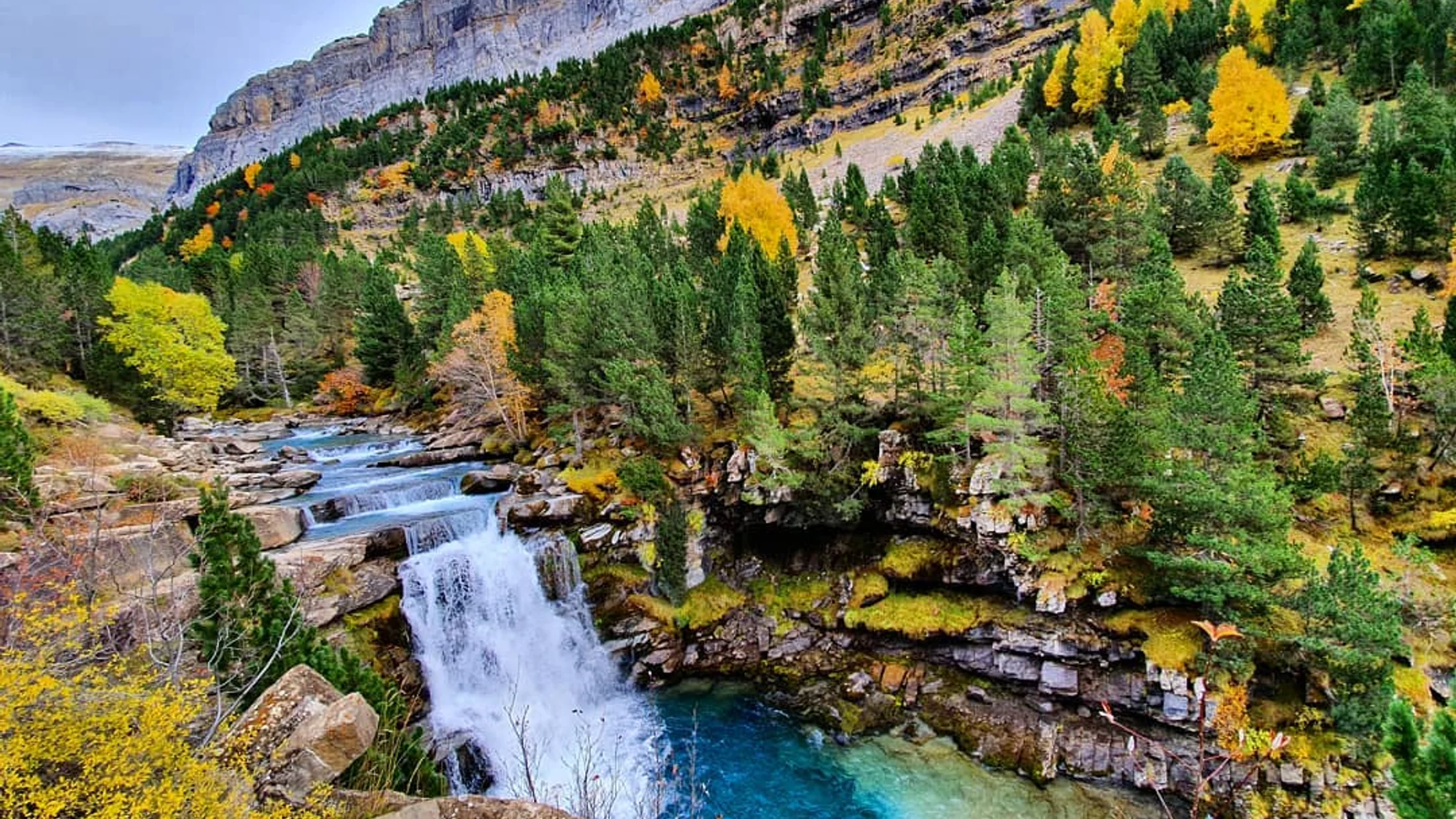
Why One Day in Ordesa Is Worth It
You can feel small and full of wonder on the Ordesa Cola de Caballo trail in just one unforgettable day. Ordesa y Monte Perdido National Park (Huesca, Aragon) concentrates glacier-carved walls, beech and fir forests, and a chain of waterfalls into a single valley that’s both dramatic and accessible. If you’ve only got a day, the classic path to the Cola de Caballo waterfall lets you soak in the essence of Ordesa without biting off more than you can chew. Morning light slips between cliffs like silk, and the rush of the Arazas River sets a steady walking rhythm.
This guide sets clear expectations for Ordesa in a day: you’ll get a practical plan-by-the-hour, a step-by-step on the Cola de Caballo hike, key viewpoints, and no-nonsense advice on permits, shuttles, parking, seasons, and safety. We’ll also show you where to stay nearby if you want an early start or a second day. Think of it as your field notes: concise, verifiable, and focused on what matters. Pack a simple picnic, move at your own pace, and leave room for pauses because the valley invites unhurried looking. Moss feels cool under the hand when you steady yourself beside the Gradas de Soaso, and the air grows fresher as you climb.
The route is long but technically simple, ideal for active families, couples, and groups used to walking a few hours. You’ll share the trail with hikers from around Europe, but there’s space enough for quiet moments. With this plan, you’ll time the crowds, find the best lookouts, and reach Cola de Caballo with energy to enjoy it. To stay grounded in facts, we reference the park’s official guidance and regional weather norms; always confirm last-minute details locally. The stone underfoot is clean and grippy when dry, and the river’s spray cools faces on warm days.
Picuco te puede ayudar
Does something here catch your eye?
Tell us.
Write to us on WhatsApp or email: we answer questions, find the best options and help you sort out the booking.
Essential Facts: Where It Is, Rules, and When to Go
Ordesa welcomes you if you arrive prepared, respect the rules, and choose your moment. The national park protects a fragile high-mountain ecosystem, and simple decisions—like where you park or when you start—shape your experience. At dawn the valley is hushed, and the first bird calls float from the beech canopy like soft chimes.
Location and quick map
Ordesa Valley sits in the Sobrarbe county of northern Huesca, Aragon, within Ordesa y Monte Perdido National Park. Your gateway is Torla-Ordesa, the stone-built village guarding the valley entrance. From Huesca it’s roughly 95 km and about 1 h 40 min via A-23/N-330 to Sabiñánigo and N-260 to Torla; Zaragoza is about 165–180 km (2 h 30–3 h); Pamplona about 160–180 km (2 h 30–3 h); Barcelona about 310–330 km (4 h 30–5 h); Madrid about 450–480 km (5 h 30–6 h). The Pradera de Ordesa is the broad meadow at the head of the access road, the standard start of the trail. If you’re wondering how to get to the Pradera de Ordesa efficiently, think in two stages: reach Torla-Ordesa, then use the seasonal shuttle or drive if off-season. The meadow sits beneath the massive cliffs of Mondarruego, and the Arazas River runs clear beside the trailhead.
- Road approach: N-260 to Torla-Ordesa, then the valley road to the Pradera (seasonal restrictions apply).
- Key reference: The main path largely follows the
GR-11(Senda Pirenaica) through the valley floor. - Nearest services: Torla-Ordesa and Broto for food, lodging, fuel, and visitor information.
Source references: Parque Nacional de Ordesa y Monte Perdido (Gobierno de Aragón) for official maps and access notes; provincial signage on N-260 confirms distances.
Permits, capacity limits, and Park rules
You don’t need a hiking permit to walk to Cola de Caballo, but access to the Pradera is regulated to protect the valley. In peak periods (Easter and summer to early autumn), private vehicles are generally not allowed beyond Torla; hikers use a mandatory shuttle from the Torla parking. Off-season, the road may open to private cars until the Pradera parking fills; gates close when capacity is reached. Signs at Torla display the current status, and rules can change with weather or conservation needs. The sound of the shuttle doors sliding shut echoes off stone like a soft clap.
- No camping or overnight stays in the valley floor; bivouac rules only apply above specific elevations/times per park regulations.
- Dogs must be on a leash; confirm current shuttle pet conditions directly before travel.
- Stay on marked trails; picking flowers, loud music, and drones are prohibited.
- Fines apply for off-road driving, littering, or wildlife disturbance; rangers monitor popular spots.
- Check up-to-date rules on the park’s official channels or Torla’s visitor center before you go.
Source references: Parque Nacional de Ordesa y Monte Perdido regulations; Gobierno de Aragón visitor advisories.
Best time to hike the route
- Spring (April–June): Waterfalls are at their fullest with snowmelt, trails can be wet or snowy early on, and temperatures are cool. Expect brisk mornings and lingering snow patches at shaded bends in April; waterproof footwear helps. The spray at the Estrecho feels like a cool mist on skin.
- Summer (July–August): Long daylight, stable weather, and daily shuttles, but crowds and heat in midday. Start early (before 8:00) or late afternoon to avoid peak flow; carry enough water and sun protection. River pools sparkle, but remember swimming is not permitted.
- Autumn (late September–October): Flaming beech and maple colors, usually stable weather and slightly thinner crowds. Days are shorter; pack a headlamp and layers. Leaves crackle softly underfoot on the lower forest.
- Winter (November–March): Snow and ice transform the valley; the trail demands winter equipment and experience beyond a casual day walk. Sections may be closed; shuttle typically doesn’t operate, and access depends on road conditions. The cold bites your fingertips when you remove gloves to open a snack.
For one-day visits, late spring and autumn balance flow, color, and comfort; summer works well with an early start; winter is for experienced parties or guided trips. Source references: AEMET (Spanish State Meteorological Agency) for seasonal temperature and precipitation norms in Huesca/Pyrenees; park advisories for winter closures.
Getting There and Access: Car, Shuttle, and Parking
Your approach shapes your day, so choose the option that fits your timing and the season. Road access is straightforward to Torla-Ordesa, and the last segment changes by date and capacity. Air smells of resin when the sun warms the pine-clad slopes above the village.
Driving and parking options
From the east or west, follow N-260 (Eje Pirenaico) to Torla-Ordesa. In peak season and holidays, the Torla-Ordesa large parking area becomes your final car stop; a signed shuttle carries you to the Pradera in about 15 minutes. Off-season, you may drive the HU-631 valley road to the Pradera if open and space allows; once the lot fills, a barrier closes. When thinking about how to get to the Pradera de Ordesa by car, the key is timing: arrive early to secure a spot or rely on the shuttle in regulated periods. The first sunlight touches Mondarruego’s grey face like a slow curtain rising.
- Arrive before 8:00 on busy days to avoid queues.
- If Pradera parking is closed/off-limits, leave the car at Torla and use the shuttle.
- Avoid roadside parking on the valley road; fines and towing are possible.
- Fuel up in Broto or Fiscal; there’s no fuel in the valley.
Tariffs, opening dates, and real-time capacity change with the season; confirm at the Torla visitor hub or the park’s official information boards the day before your hike.
Shuttle and public transport
The seasonal shuttle links Torla-Ordesa parking with the Pradera at regular intervals during peak months and Easter. Tickets are sold on-site, and frequency increases with demand on busy days; expect approximately 10–20 minute intervals in high season. The ride winds through forest and canyon walls and sets you right at the trailhead. You typically queue under shade sails as engines purr softly at idle. Benefits of using the shuttle:
- Guaranteed access when the road is closed to private vehicles
- No stress about road capacity nor turning back
- Predictable return times and late-afternoon services for hikers
Public transport to Torla is limited and seasonal. Some regional buses connect Huesca–Sabiñánigo–Broto–Torla on select dates; services vary year to year. If you travel without a car, plan carefully: pair regional buses with a night in Torla or Broto, or arrange a local taxi transfer for early starts. Always verify schedules shortly before your trip with local tourist offices.
Alternative access and tips from Torla and surroundings
- Footpaths from Torla: A signed path connects Torla to the valley entrance (Puente de los Navarros), but it adds time and is not a shortcut to the Pradera; save it for a second day.
- Bujaruelo Valley: A stunning side valley starting at San Nicolás de Bujaruelo offers quieter hikes, but it does not lead directly to the Pradera’s start without long mountain routes. Gravel crunches under boots at Bujaruelo’s old bridge.
- Cycling: Mountain biking is restricted within the national park core; do not ride the main trail to Cola de Caballo. Use only permitted tracks outside the core zones.
- Services: Stock up in Broto/Torla—water, snacks, and a simple picnic. Coverage can be spotty; download an offline map and tell someone your plan. The valley narrows into walls that swallow mobile signals for long stretches.
If the shuttle is your plan, keep small bills or a card ready and arrive 15–30 minutes before your intended departure on busy weekends. If you drive in shoulder seasons, carry chains in winter and check the road status early morning.
One-day Plan: Timing Your Walk to Cola De Caballo
A simple timeline keeps your day flowing and reduces crowd stress. Start early, pace yourself, and build in short pauses to drink, snack, and look. The scent of damp leaf litter greets you at the first forest stretch like a quiet hello.
- 07:00–07:30: Wake and breakfast in Torla/Broto; check AEMET forecast and park advisories. Prepare 2–3 liters of water per person in summer, 1.5–2 liters in spring/autumn. Pack snacks where you can reach them quickly.
- 07:30–08:00: Drive to Torla parking or walk from your lodging; if shuttle-required, queue for the first buses 07:30–08:30 depending on season. Off-season drivers head straight to the Pradera if the road is open.
- 08:15–08:30: Arrive at the Pradera de Ordesa (1,320 m). Use the toilets, top up bottles if fountains are running, adjust layers. Morning chill lingers on the meadow grass like dew on glass.
- 08:30–10:00: Pradera to Arripas and Estrecho waterfalls. The forest path is broad and signed; take the right-bank trail out and return on the left-bank variant for variety (or vice versa). Allow 90 minutes with photo stops.
- 10:00–11:30: Estrecho to Gradas de Soaso. The gorge relents to a series of stone “steps” beside the Arazas. Slow down on wet rock; use handrails if present. The waterfall’s roar becomes a steady backbeat in your ears.
- 11:30–12:30: Gradas de Soaso to Circo de Soaso meadow. Pace eases on flatter ground; views open to Monte Perdido’s realm. Take 10–15 minutes to snack in the meadow where the grass is dotted with yellow flowers in spring.
- 12:30–13:00: Final rise to Cola de Caballo (about 1,750–1,780 m). Stay behind any safety signs and avoid slippery edges; the amphitheater is fragile and often damp. Mist cools your cheeks as wind swirls the spray.
- 13:00–14:00: Lunch and unhurried time at Cola de Caballo. Photograph, rest, and scan cliffs for choughs and occasional bearded vultures. Pack out every crumb.
- 14:00–17:00: Return to the Pradera by the same route, with shorter pauses and a steady rhythm. On warm days, forest shade is a gift—cool like stepping into a stone church.
- 17:00–18:00: Shuttle return to Torla or depart by car. Stretch, refill, and consider a short stop in Broto to see the Sorrosal waterfall from town.
Variants and pacing suggestions:
- Families with children: Add 30–60 minutes to both outbound and return. Build micro-goals—Arripas (reward with a snack), Estrecho (water break), Gradas (photo pause), Soaso meadow (longer rest). Keep a brisk-but-friendly cadence and watch for slippery stones at the Gradas.
- Experienced hikers: If you want a more strenuous loop and conditions are dry, consider ascending via the
Senda de los Cazadoresto theFaja de Pelayhigh traverse, then descending the valley path past the Gradas. This adds a steep initial climb (~650–700 m elevation gain in short order) and spectacular balcony views. Only choose it if you’re fit, used to exposure, and the trail is open; it’s not suitable for young children. - Short-on-time option: Turn around at Gradas de Soaso or Circo de Soaso for a rewarding half-day that captures waterfalls and the big walls. You won’t reach Cola de Caballo, but you’ll still feel Ordesa’s vertical drama.
Typical round-trip times for the classic valley route range 6–8 hours including stops, with 17–19 km distance and about 500–600 m cumulative elevation gain. Keep an eye on afternoon storms in summer; leave Cola de Caballo by 14:30–15:00 if clouds build.
Cola De Caballo: Main Route and Field Notes
The classic path to Cola de Caballo is long, well-marked, and full of waypoints that keep motivation high. Think of it as a series of short chapters that add up to a powerful story. The damp, earthy scent near Estrecho reads like a page turn.
From the Pradera to Cola de Caballo: section by section
The Cola de Caballo Ordesa route begins at the Pradera information boards. Head upstream on the main valley path, following clear signs to Cascada de Arripas and Cascada del Estrecho. In 60–75 minutes, you’ll reach the Arripas viewpoint, then the Estrecho—a tighter gorge with thunderous water. Continue to the Gradas de Soaso, a staircase of cascades reached typically around 2.5 hours from the Pradera with unhurried stops. White water ribbons across stone shelves like folded lace.
Beyond the Gradas, the gradient eases toward the Circo de Soaso meadow, where the big cirque walls come into full frame. Pause here for snacks and photos, then take the final gentle rise to the amphitheater of Cola de Caballo at around 3.5–4 hours total, depending on pace and crowds. Return the same way, or, for fit hikers in stable, dry conditions, consider the steeper alternative loop via the Senda de los Cazadores/Faja de Pelay (ascend first, then traverse high, finishing down to the Pradera). Only tackle the high route if you’re comfortable with exposure and longer days.
Difficulty, profile, and fitness
Expect 17–19 km round trip and roughly 500–600 m accumulated ascent on the classic valley route. The path is wide and signposted, with packed dirt, stone steps, and occasional slippery rock near waterfalls. It’s a solid day for active walkers; most healthy adults can complete it with breaks and steady pacing. Heat, wet rock, and crowd bottlenecks add perceived difficulty; start early and watch your footing. The cool shade under fir branches feels like a refreshing hand on your neck.
- For families or first-timers: Aim for an 8-hour round trip including pauses; turn around at Soaso meadow if energy flags.
- For regular hikers: 6–7 hours with photo stops is realistic.
- For fast walkers: 5–6 hours is possible with minimal stops but leaves little margin for enjoying viewpoints.
Poles reduce knee strain on the descent; trail shoes or boots with grippy soles are strongly recommended, especially after rain. Build in a short break every 60–90 minutes to sip water and snack.
Key waypoints and signs to watch
- Pradera trailhead boards: Read current advisories, closures, and wildlife notes before you start.
- Miradores de Arripas, de la Cueva, and del Estrecho: Signed spur paths lead to fenced lookouts; surfaces can be slick with spray.
- Gradas de Soaso: Stone steps beside the river; slow down on wet sections and keep children close.
- Circo de Soaso meadow: Broad grassy flats with big-wall views; superb for a longer rest.
- Cola de Caballo amphitheater: Respect barrier lines and do not climb into restricted areas; stay on durable surfaces.
The main route aligns with GR-11 markers (red-white blazes) in sections; junction posts are clear at popular bifurcations. If fog or afternoon storms roll in, reduce side detours and follow the most obvious valley floor track. A gust brings the scent of wet limestone and spruce.
Unmissable Viewpoints and Short Panoramic Detours
Great viewpoints in Ordesa are close to the main path, so you won’t blow your schedule if you choose carefully. Step off the main artery for a few minutes, then fold back in with energy to spare. A jay’s call slices the air and then vanishes into the trees like a dropped pebble in a pool.
- Mirador de Arripas: A short spur from the main trail delivers a face-on view of Cascada de Arripas, often with a rainbow in late morning. Best light: mid- to late morning when the sun lifts above the east wall. Add 10 minutes round trip.
- Mirador de la Cueva: Tucked close to the Estrecho gorge, this platform lets you feel the canyon’s squeeze and hear the amplified crash of the falls. Best light: late morning. Add 5–10 minutes.
- Mirador del Estrecho: Just downstream of the Estrecho’s core plunge; fine for long exposure photos on grey days. Best light: overcast or early before reflections blow out; add 10 minutes.
- Gradas de Soaso perspectives: You don’t need a named mirador; step to signed margins and look both up- and downstream. Best light: early afternoon when shadows soften. Add 10–15 minutes across multiple pauses.
- Circo de Soaso meadow: Panoramic context of the Ordesa walls; save a snack for this stage. Best light: early afternoon for even exposures on walls; late afternoon for drama. Add 15–20 minutes for rest and photos.
- Cola de Caballo base: The amphitheater view is best experienced slightly off to either side within marked-safe zones. Best light: mid-afternoon on the falls, but watch your exit time for the return. Add 30–60 minutes to rest and explore safely.
If you crave a balcony panorama and have fitness to spare, the Mirador de Calcilarruego on the Senda de los Cazadores is a higher, more committing detour reached only if you choose the steep Cazadores ascent for the high loop. It’s not a casual add-on to the valley route. Wind at the cliff’s edge brushes your face like cool linen.
Photo and flow tips:
- Shoot waterfalls on cloudy days or in early/late light to reduce glare.
- Keep camera gear simple and protected from spray; a microfiber cloth is your best friend.
- Prioritize safety rails and marked platforms; damp rock tilts are deceptive.
- Budget 45–60 minutes total across these detours without compromising your turnaround time.
Where to Stay Nearby: Villages, Rural Houses, and Mountain Refuges
Sleeping close helps you start early and move unhurried. Torla-Ordesa is the practical hub, with Broto and Bujaruelo offering quieter bases with quick access. At night, the river’s murmur filters through village streets like a low lullaby.
Torla and nearby villages: the practical base
Torla-Ordesa sits at the gate to the valley, making it the most convenient choice for shuttles, last-minute supplies, and information. You’ll find bakeries for early bread, a small supermarket, outdoor shops, cafes, and restaurants with hearty mountain dishes. From Torla, you reach the shuttle in minutes and can be on the trail soon after dawn in peak season. In Broto (5–10 minutes drive), you get similar services and a slightly calmer pace. Church bells in Torla strike softly against the cliff echo.
- Pros: Shortest approach to the Pradera, easiest shuttle access, broadest dining options.
- Consider: Reserve early for July–August and holiday periods; parking can be tight in village cores.
- Alternatives: Oto, Fiscal, and Buesa for quieter stays within 15–30 minutes of Torla.
Rural houses and charming stays
Rural casas and small hotels dominate the area. Choose based on proximity to Torla, early breakfast availability, and parking. For couples, look for stone houses with views; for families, target apartments with kitchenettes and room to prep picnics. Ask about self-service breakfast or early coffee if you aim for the first shuttle. Wooden beams creak pleasantly underfoot in lovingly restored farmhouses.
- Selection criteria:
- Distance to Torla shuttle parking
- Quiet rooms for early rest
- Secure parking and easy luggage access
- Breakfast timing or take-away options
- Heating/AC for shoulder-season nights
- Booking tips: Reserve 4–8 weeks ahead in peak months; shoulder season offers more flexibility. Confirm whether village festivals or events overlap your dates, which may affect noise and availability.
For curated experiences and activity pairings, you can explore options on Picuco by region and activity and coordinate hiking with other outdoor plans nearby.
Refuges and sleeping in the valley
Unlike some Alpine parks, you won’t find staffed refuges on the main Cola de Caballo day route; services are concentrated at the Pradera and in villages. Higher mountain refuges exist elsewhere in the park for multi-day ascents (e.g., Monte Perdido routes), typically requiring advance booking and carrying full gear. Staying in a refuge is a deeper alpine experience with shared dorms, set meals, and early starts. The smell of soup and drying gear blends into a homely mountain perfume at dusk.
- If you plan a multi-day high route: Check booking policies, opening dates, and equipment lists directly with each refuge.
- Bivouac rules: The park sets strict conditions (altitude/time windows) for emergency bivouacs; they do not apply to casual overnights in the valley.
- Safety: Multi-day routes demand navigation skills, weather planning, and, in shoulder seasons, experience with snow travel.
For most day hikers aiming at Cola de Caballo, a night in Torla/Broto offers the best balance of rest and rapid start.
Packing Smart: What to Carry by Season
A light, reliable kit makes the route Cola de Caballo safer and more enjoyable. Think layers, traction, water, and simple calorie-dense food. Zippers click and release like small metronomes during early-morning layer changes.
Essentials for spring and summer
For the main route Cola de Caballo in mild conditions, carry:
- Footwear: Grippy hiking shoes/boots with good tread; avoid smooth-soled trainers.
- Clothing: Breathable layers, sun hat, sunglasses, and a light windproof or shell.
- Water and food: 2–3 liters per person in summer, 1.5–2 liters in spring; salty snacks, fruit, and a simple picnic.
- Sun and skin: High-SPF sunscreen, lip balm, and a light buff to shield neck and ears.
- Navigation and safety: Offline map on your phone and a printed sketch map, small first-aid kit, whistle, and a headlamp.
- Misc: Microfiber towel for spray, phone in a waterproof sleeve, small trash bag.
Pack weight should feel comfortable when you swing the pack on; adjust straps snugly to prevent shoulder rub. The chill of river spray on fingertips wakes you fully near Estrecho.
What to add for autumn and mixed conditions
Autumn mixes crisp air with occasional showers, so add:
- Extra layers: Warm mid-layer (fleece or light puffy) and a waterproof shell.
- Hands and head: Light gloves and a beanie for early starts or shady gullies.
- Traction: Trekking poles and caution on leaf-covered steps; wet leaves are slick.
- Light and time: A headlamp with fresh batteries and a firm turnaround time; days are shorter.
- Dry storage: Pack liner or drybags to keep spare layers and food dry.
Pauses feel cooler and shorter in October; sipping warm tea from a small flask turns a gray hour cheerful.
Winter gear and safety
Winter turns a simple hike into a mountain day; add:
- Insulation: Thermal base layers, warm mid-layer, hardshell, insulated gloves, and warm hat.
- Traction and tools: Light crampons or microspikes, trekking poles with winter baskets; snowshoes if depths warrant.
- Footwear: Waterproof boots with gaiters to keep snow out.
- Navigation and emergency: Paper map and compass, power bank, emergency blanket, and a more complete first-aid kit.
- Expertise: Avalanche awareness and route-finding skills; consider a certified local guide.
In winter, the park may close sections for safety; heed closures and default to conservative plans. Crunching ice under boots reminds you that margins are slimmer and daylight finite.
Practical Tips and Safety: Capacity, Weather, Wildlife, and Emergencies
Ordesa rewards those who respect its pace, people, and wildlife. Your plans shape not just your own day but the comfort of others on a busy trail. A distant vulture circles silently, drawing a slow spiral in the sky like ink in water.
- Capacity and timing: On peak days, take the first shuttle or arrive early off-season. Start before 8:30 to get ahead of groups, and eat lunch slightly early or late to avoid crowding at Cola de Caballo.
- Weather planning: Check AEMET the night before and at breakfast; watch cloud build-up and wind shifts. Turn back if thunder threatens; storms move fast in steep valleys.
- Hydration and food: Refill only at known fountains (when running) and carry enough water; do not drink straight from the river.
- Trail etiquette and conservation:
- Stay on marked paths to protect fragile soils and plant life.
- Give way on narrow sections and keep noise low; this is a shared, protected space.
- Pack out all waste, including food scraps and tissues.
- Wildlife: You may see chamois (rebecos), marmots (in higher seasons), and raptors. Keep dogs on leash and never feed wildlife. Give animals space; a zoom lens replaces a step forward.
- Emergencies: Coverage is irregular; move to open areas for a signal. Dial 112 for emergencies; mountain rescue (GREIM) is coordinated via 112 in Aragon. Carry a headlamp in case your descent runs long.
- Footing: Slow down at the Gradas and viewpoints where rock is damp. Poles help knees and balance; check each step on slick stone.
Community notes: Torla and Broto sustain services year-round with seasonal peaks; your spending supports families who keep trails signed and spaces cared for. A simple “buenos días” on the trail connects you to a long-standing mountain courtesy.
Source references: Parque Nacional de Ordesa y Monte Perdido visitor rules; AEMET forecasts; 112 Aragon emergency guidance.
Frequently Asked Questions
How long does it really take to hike the Cola de Caballo Ordesa route?
Most hikers complete the classic valley route in 6–8 hours round trip, including photo stops and a relaxed lunch. Fit walkers moving purposefully can clock 5–6 hours, while families or groups that savor viewpoints should budget 8 hours. Distances run 17–19 km with 500–600 m of accumulated ascent, so pacing and hydration matter. The Cola de Caballo Ordesa amphitheater is worth 30–45 minutes of your day—arrive with energy to sit, eat, and look. Wind ruffles jacket hems near the falls like a playful tug.
Is the route suitable for children or older adults?
Yes for many, with honest pacing and gear. The trail is well-marked, mostly gradual, and dotted with natural milestones that keep kids engaged (Arripas, Estrecho, Gradas, Soaso). Slippery stone near waterfalls requires handholding and patience. Older adults who walk regularly can enjoy it with poles, supportive footwear, and a conservative pace. Plan micro-breaks every hour, snack often, and be ready to turn around at the Soaso meadow if energy dips. A warm drink in a small flask lifts spirits when clouds drift in.
Can I take my dog all the way to Cola de Caballo?
Dogs are allowed in the national park but must remain on a leash at all times; this protects wildlife, other visitors, and your pet. Confirm the current shuttle policy for pets before you travel, as conditions (e.g., leash, muzzle, carrier) may apply. Bring water and a collapsible bowl, and avoid hot midday surfaces in summer. Keep dogs away from cliff edges and fast-moving water; rock ledges by the Gradas can be slick. A wagging tail thumps happily on a shady bench when you pause.
What if I don’t have a car or the parking is full?
Lean on the seasonal Torla–Pradera shuttle, which runs frequently in peak season and Easter. Without a car, plan to arrive in Torla the day before using regional buses (limited and seasonal) or a taxi from Sabiñánigo, then ride the first shuttle. If parking is full off-season, the gate to the Pradera closes—park at Torla and wait for shuttle days, or pivot to a nearby hike (e.g., Sorrosal waterfall in Broto) and return another day. Keeping flexible hours and an early start is the simplest fix. The quiet of early morning at the shuttle stop steadies nerves like a deep breath.
Is it better to focus only on Cola de Caballo or combine with other spots?
If you have Ordesa in a day, focusing on Cola de Caballo via the valley path offers the richest single-thread experience: waterfalls, forest, and the big cirque pay-off. Add short detours to Arripas, Cueva, Estrecho, and extra photo pauses at the Gradas without stretching your schedule. Only consider the high Faja de Pelay traverse if you’re fit, weather is settled, and you’re willing to swap some waterfall intimacy for grand balcony views. In short: choose depth over breadth unless your group moves fast. Late light on the cirque rim adds a bronze edge that lingers in memory.
Book your experience — discover outdoor activities in Spain with providers verified by Picuco.
Conclusion
One day in Ordesa is enough to feel the valley’s rhythm, reach the Cola de Caballo without rushing, and return content. Plan your approach, start early, and keep a calm, steady pace that leaves space for views and pauses. The valley’s cool, green hush wraps around you like a well-worn cloak as you step off the trail.
Remember the essentials: check access rules in Torla, use the shuttle in peak season, carry water and layers, and respect signage at waterfalls. Choose spring or autumn for balanced flow and temperature, or beat summer heat with a dawn start. Families and active walkers will find the classic valley route long but manageable; experienced hikers can opt for the high traverse only in stable, dry conditions. Supporting local stays in Torla and Broto ties your trip to the community that protects this place.
Now is a good time to pencil in dates, secure a bed near the valley, and gather a simple kit you trust. With these notes in hand, the Ordesa Cola de Caballo trail becomes a clear, uplifting plan rather than a question mark—and the day’s memories will feel as clean and bright as the water that shapes the valley.