Introduction
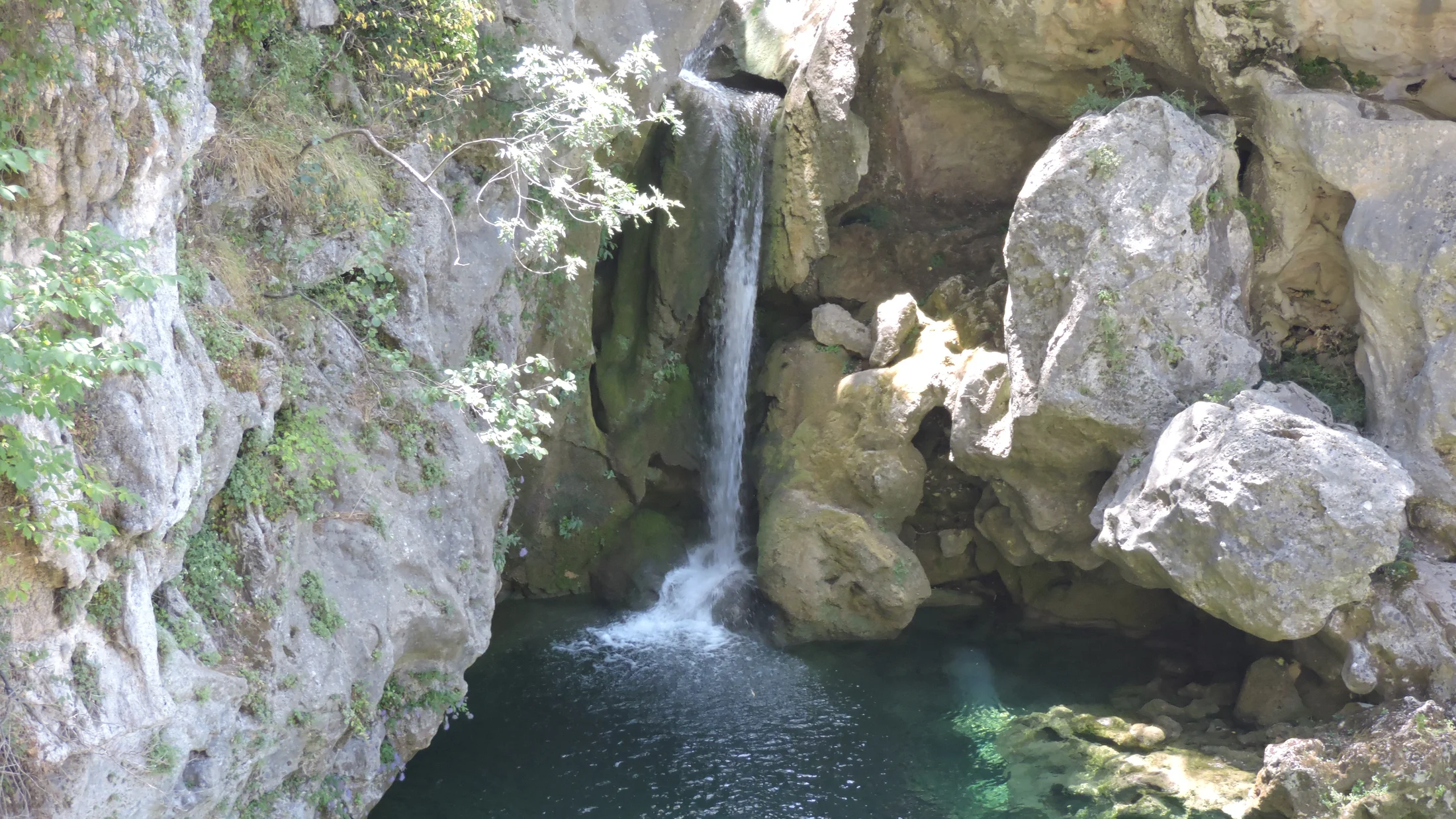
The river Borosa route traverses narrow gorges, wooden walkways, and crystalline pools until a high mountain finish next to the river's source. It is the jewel of hiking in Cazorla.
The path runs within the Parque Natural de las Sierras de Cazorla, Segura y Las Villas, Spain's largest protected area with more than 214,000 hectares and a UNESCO Biosphere Reserve since 1983. Key rivers such as the Guadalquivir are born or fed here.
The park is a mountain massif with abrupt relief and abundant karst formations, located northeast of the province of Jaén. It holds the European Charter for Sustainable Tourism (ECST).
The Cerrada de Elías, with its wooden walkways, and the final stretch towards the source concentrate the interest of the route, featuring tunnels and waterfalls fed by the high mountains. The path is simple at the beginning and more demanding at the end, so it is advisable to plan ahead with clear reference points.
This guide gathers the essentials to decide on your plan: where it is, how to get there, and what services are available, in addition to the step-by-step itinerary and advice on safety, photography, and minimum impact.
Picuco te puede ayudar
Does something here catch your eye?
Tell us.
Write to us on WhatsApp or email: we answer questions, find the best options and help you sort out the booking.
Essential information for the Borosa river route
Location and surroundings
The Borosa River route traverses the Parque Natural de las Sierras de Cazorla, Segura y Las Villas, between La Iruela and Santiago-Pontones, in Jaén. It is Spain's largest protected area, with a mosaic of pine forests, dolomites, and limestones.
The usual starting point is next to the Río Borosa Visitor Centre, near the Torre del Vinagre Visitor Centre. The Borosa river is a tributary of the Guadalquivir and flows into it at the altitude of the Casa de Tablas, before the Guadalquivir is dammed in the Tranco reservoir.
The complete route is linear, 21–23 km round trip, with 355 m of accumulated elevation gain and up to 8 h in duration; the start is at the fish farm. As you approach the first gallery shadows, a damp freshness lingers on your skin.
It is advisable to plan with a margin: the Junta de Andalucía may close the walkways without prior notice in case of a river rise or strong winds.
To get there, Coto Ríos is 10–15 min by car and Cazorla (town) is 45–60 min via the A-319; Torre del Vinagre is just a few kilometres from the start. Book a full day and check the state of the walkways before leaving.
Duration and difficulty
All routes start from the same point and share the first stretch.
The family stretch reaches the Cerrada de Elías: 6–8 km round trip, 2–3 h and gentle elevation gain. It is suitable for families accustomed to walking. The echo of your footsteps on wood and rock marks the pulse of the valley.
The intermediate stretch goes up to the power station and the Salto de los Órganos waterfalls: 13–16 km round trip, 4–5.5 h and moderate elevation gain. The complete route reaches the source of the Borosa river and the upper lagoon, with 21–23 km round trip and 6–8 h.
The technical difficulty is low at the beginning and medium at the end, due to the length, the ramps, the stony ground, and the tunnels, for which you need light. The final stretch is recommended for hikers with basic experience and good fitness.
In summer, it is mandatory to wake up early.
The use of drones requires express authorisation from the Delegación de Medio Ambiente de Jaén. To camp, you must do so in authorised areas with procedures through the Junta de Andalucía.
How to get there
The murmur of the water can already be heard from the asphalt when the valley opens up between pines.
By car, you arrive via the A-319 from Cazorla towards the Tranco reservoir, with signposted diversions to "Río Borosa" and the visitor centre. The main car park is next to the start of the route; in high season, it is advisable to arrive before 09:30 to find a space. Along the track, there are additional signposted parking areas.
There is no regular public transport service to the start of the route. Download a reliable GPS track and offline maps, as coverage is irregular; you can also ask for a map at the Visitor Centre when it is open.
In summer, avoid the hottest hours. During fire risk episodes or storms, there may be closures: check with the Natural Park (Junta de Andalucía). The Junta de Andalucía may close the walkways without prior notice due to rising river levels or strong winds.
Accommodation and services nearby
Sleeping in the mountains allows you to start early, with soft light on the path. The surrounding villages have accommodation and tables where you can share breadcrumbs or grilled meats.
On the A-319, km. 38, the hamlet of Arroyo Frío (La Iruela) hosts restaurants serving grilled meats and Mediterranean cuisine. It is the most convenient stop before or after walking.
The Río Borosa Visitor Centre is at the foot of the start of the route, next to the trout farm. A little further away, the Torre del Vinagre Visitor Centre has an exhibition, shop, and toilets, and is the classic point to resolve doubts. Torre del Vinagre is just a few kilometres from the start of the Río Borosa route.
Basic shops are located in the nearby hubs, so bring water from your accommodation: there is not always something for sale at the start.
Step-by-step itinerary of the Río Borosa route
1. Visitor centre to the Cerrada de Elías: first shadows and walkways
The first section of the Río Borosa route leaves the Río Borosa Visitor Centre car park and follows a path alongside the water. Signage appears from the very first post, so you won't get lost in the first few metres.
The path starts almost flat, with the riverbed to the left and sections of track alternating with paths stuck to the bank, under a pine forest. In the first few metres, it smells of resin and cold water.
You have three clear references in this section: the Río Borosa Visitor Centre as the start, the trout farm facilities that you pass by, and the "Cerrada de Elías" indicator post. It takes between 45 and 60 minutes to reach the start of the Cerrada.
With children, keep an eye on them near the water: there are embankments and polished stones. Bring a map or track, because although the path is clear, the forks towards forest tracks can be misleading. Start early to have soft light on the walkways and fewer people.
Access is 1.5 km from Loma de Mariángela, after diverting towards the Río Borosa from the Torre del Vinagre Visitor Centre.
2.Cerrada de Elías to Charco de la Cuna: walkways, gorge and a must-take photo
La Cerrada de Elías is the iconic section of the route: a narrow gorge with wooden walkways attached to the rock and small bridges crossing from bank to bank. The passage is comfortable, but in damp areas the planks are slippery, so walk with short, controlled steps.
For photos, bring a wide-angle lens to capture the curves of the walkway and a polarising filter to reduce reflections on the water. The best light arrives early in the morning, when harsh shadows are avoided. The handrails are firm, but it is advisable not to lean on the railings while wearing your backpack. If the flow is high after rains, pay attention to splashes and wet wood.
After the Cerrada, you return to the main track and move upstream through a comfortable stretch to Charco de la Cuna, a wide and clean pool, perfect for a brief pause.
When parking, you have two options. You can arrive by car via the Tranco A-319 road and park at km 48, at the altitude of Torre del Vinagre, 10 km from Arroyo Frío. You can also leave your car at the Centro de Visitantes Río Borosa, which features a museum and botanical garden.
3.Charco de la Cuna to the intermediate waterfalls: cold pools and responsible rest
Charco de la Cuna is a natural pool of turquoise waters. From there, you continue upstream along a well-trodden path that narrows at some points and gains some slope.
Along the stretch, there are several secondary pools and flat stones for resting; the water is freezing even at midday. If you swim, do it quickly, without soaps and away from strong currents. For a snack, look for sunny slabs in the mid-morning or shaded clearings at the riverbank.
Watch where you step: avoid edges undercut by floods, because the bank gives way without warning, and do not jump from the rocks due to submerged blocks and sudden changes in depth. The path is followed with paint markings and occasional milestones; stay on the marked side and avoid shortcuts.
After a stretch of track, the diversion towards the power station and the Salto de los Órganos waterfalls appears, which falls under the Túneles del Picón del Haza de Abajo, at 1493 metres of altitude. Follow the official signs.
4.Final stretch to the source of the Borosa river: ascent, tunnels and return
After the waterfalls, the route becomes more alpine: serious slopes, rocky ground and short tunnels linked to old hydraulic conduits. Bring a headlamp or your mobile torch with plenty of battery and walk centrally, because the floor of the tunnels is irregular.
The tunnels lead towards the upper lagoon and the surroundings of the source.
At the source, springs and upwellings under limestone walls feed the riverbed, and there is interpretive signage nearby. In low water periods, the flow can be discreet; in spring, it is vibrant.
Return via the same way, monitoring the time and the water. As a variant, part of the return can be made via a high track with wide views of the valley, which rejoins the main route.
Calculate 6–8 h in total depending on stops and photos. The Junta de Andalucía may close the walkways without prior notice due to river flooding or strong winds.
Main attractions and points of interest
1.Cerrada de Elías: iconic gorge and walkways
Cerrada de Elías is traversed via wooden walkways attached to the canyon rock above the waters of the Borosa river. You walk along these walkways and traverse the gorge without getting into the water.
It is the visual icon of the Borosa river route: accessible, exciting, and a lesson in geology on a human scale. The light bounces off the damp walls and paints the water in greens and blues that change as you advance.
Go early in the morning: there are fewer people, the light is soft, and the glare on the water is less intense. In summer, avoid midday due to the heat and harsh shadows.
If you bring a camera, look for an S-shaped composition with the walkway and the riverbed. With a mini tripod, you can use slow shutter speeds to give the water a silky effect, always respecting the passage of others.
The planks and screws are checked periodically, but walk without running. During high flow rates, respect any temporary closures.
2.Charco de la Cuna: the best-known pool
Charco de la Cuna is a wide, rounded pool, with cold, clean waters that reflect the pine forest at the bottom. It is a clear place to rest and take photos.
It is easily recognised, it is comfortable for stopping, and it has moderate depth. Many hikers decide here whether to continue or turn back.
For photography, the light-coloured rocks contrast with the green water. The light is better at the end of spring and after moderate rainfall.
During the season, avoid the early hours of Sunday: there are more people. If you go for a swim, enter and exit through the least eroded area. Do not use soaps or creams that enter the water; wipe them off with a towel.
3.Nacimiento del río Borosa: the river's origin
The Borosa river is born under limestone walls, in some karstic springs next to the upper lagoon. It is the end of the journey and the moment people remember most when they return.
The water emerges from the rock through galleries that cannot be seen. This explains the karstic character of the massif and feeds the system that flows towards the Tranco and the Guadalquivir. Depending on the low water level, you will see thin streams or a more generous supply of water.
You will recognise the point by the nearby interpretive signs and by the riverbed that appears from the wall and the slopes. Respect the railings and do not step on waterlogged areas. Also, do not eat next to the springs to avoid attracting opportunistic fauna.
The final stretch of the route passes through the Cascada de los Órganos, tunnels, and the Embalse de Aguas Negras before arriving here. The route is linear, a round trip via the same path, and starts at the Borosa fish farm car park. The difficulty is easy until Cerrada de Elías and high for the full route; the best time is spring and autumn.
4.Waterfalls and pools: water sections and meaningful breaks
The Borosa river links together minor drops, ledges, and natural baths with clear bottoms. These are short stops to refresh yourself, eat something, and rest before continuing your way.
Between Charco de la Cuna and the power station, a notable water point appears every 10–15 min. The most photogenic pools are usually located in bends with shaded slopes. If you stay still and quiet, it is possible to observe chamois and dippers in these corners.
For swimming, avoid eddies and waterfall entrances; enter slowly and never jump. Mid-morning works well, with the light rising through the riverbed; in the afternoon, there are warm reflections without backlighting.
Take care of the environment: do not move stones or build dams. If there is no space in one pool, look for another.
5. Viewpoints and walkways: panoramas and unhurried photography
As you gain altitude, the valley opens up and natural balconies appear over the green meanders of the river. From some elevated walkways, you can frame water, rock, and pine forests by playing with lines and layers.
The key points are the balconies over the river bends before the power station, the walkways with an oblique view of the gorge at the entrance and exit of La Cerrada, and the high return path for valley panoramas. The golden hour provides textures in the rock and the riverbank, and the warm evening air softens contours and colours.
To compose in layers, place wood or rock in the foreground, leave the river line in the middle, and the pine forest in the background. Use a moderate polariser so you don't lose the colour of the sky.
Mark 2–3 long stops in the itinerary and avoid getting distracted at every bend. If you go with a group, alternate who leads so you don't block the pace on the walkways.
Recommended activities and practical safety tips
Photography and best spots
Sunrise in the valley and La Cerrada de Elías gives you soft shadows and waters with fine textures. In the afternoon, the waterfalls gain warm tones and the path becomes something else entirely.
Repeat shots on the way there and on the way back: the light changes and every hundred metres a new composition appears. Shoot in burst mode on the walkways to avoid camera shake. If you are posing someone, place them in profile to scale the scene without blocking the path.
These are the moments that work best in each spot:
- La Cerrada de Elías calls for the early hours of the day.
- El Charco de la Cuna is best in the mid-morning, with less contrast.
- The intermediate waterfalls work well in the afternoon, without the overhead sun.
- The high viewpoints are best enjoyed at sunset, with layers of light.
Carry lightweight equipment: a camera or mobile with a wide angle, a mini flexible tripod if you want one, a polarising filter to control reflections, and an external battery for your mobile or torch.
Responsible swimming and minimum impact rules
The Borosa river is a fragile system: sunscreen, soap, or an inappropriate step alters its balance. That is why it is advisable to swim sensibly and leave the riverbed as you found it.
Choose wide pools far from waterfalls, and avoid entering currents. Enter and exit via stable rock areas, not via slopes, and limit your time in the water so you don't get too cold.
Do not use soaps, gels, or shampoos, even if they say "biodegradable": they contaminate. Do not build dams, nor stone piles, nor alter the riverbed.
Lower the volume: avoid loud music, shouting, and drones over the wildlife. Do not feed the animals, because it changes their behaviour.
Apply the principle "what goes in, comes out": bring a bag for your waste. On walkways and bridges, let other hikers pass.
Equipment, safety and accessibility
The upper section of the Ruta del Río Borosa requires foresight: sufficient water, footwear with gripped soles and light for the tunnels. A basic first-aid kit and the ability to turn back in time are the most useful things.
For the full day, bring hiking footwear with good grip, 1.5–2 l of water per person (more in summer), a cap, sunglasses and sun cream, a headlamp or torch for the tunnels, a charged mobile phone with a powerbank, a whistle, a first-aid kit and a light jacket or raincoat depending on the forecast.
Spring and autumn are the best times, with beautiful water flows and mild temperatures. In summer there is intense heat during the central hours, so it is advisable to start early; in winter there may be patches of ice in the shaded areas.
The initial section is flat via track or path and suitable for relaxed paces. The walkways have narrowings and steps and are not suitable for wheelchairs. Avoid the upper part if you suffer from vertigo, fatigue or low light.
Coverage is irregular, so let someone know your plan and estimated time. Call 112 in case of emergency and, if there is a storm, move away from the riverbed and avoid sudden rises in water levels.
Frequently asked questions
How long does the Río Borosa route take?: typical duration and margin
Up to the Cerrada de Elías, the round trip usually takes 2–3 hours at a family pace, with short stops for photos. The pace and the goal of the day matter more than the distance.
If you continue to the waterfalls near the power station, calculate 4–5.5 total hours walking without rushing but at a steady pace. The full route to the surroundings of the source involves 6–8 hours round trip, including breaks, photos and passing through tunnels.
Some factors extend the times: high water flow with wet planks, large groups, photography stops and heat, which forces a slower pace. If you are in doubt, set a return point with a fixed time so as not to rush the light; returning via the same itinerary makes it easier to calculate margins.
Bring a headlamp just in case, even if you do not plan to enter the tunnels late, and check the weather forecast to adjust the goal of the day.
Is it suitable for children or pets?: accessibility and recommendations
The first section up to the Cerrada de Elías can be done by families accustomed to walking, with children who already walk autonomously and follow instructions. There are walkways with railings, but also sections next to the water and polished stones: constant supervision is needed. The amplified sound of the river in the gorge can impress the little ones.
Dogs can access with a lead, which must always be worn for the safety of the fauna and other hikers. With a dog, it is advisable to avoid the hottest hours and bring specific water for the pet: the river does not always provide what it needs.
The upper part, with tunnels and ramps, is not recommended for very small children or for dogs sensitive to dark spaces or irregular ground. A family alternative is the round trip to the Cerrada de Elías, of 6–8 km and 2–3 hours, with plenty of margin and a responsible picnic.
Do I need permits or are there restrictions?: regulations and limits
The classic itinerary of the Ruta del Río Borosa is walked without a permit. However, there are seasons and situations where access changes, so it is worth checking before heading out.
During periods of high fire risk, activities and access to tracks may be restricted. Inform yourself at visitor centres or through the official channels of the Junta de Andalucía.
Drones require express authorisation. Avoiding them prevents disturbing the fauna and other visitors.
If there are warnings for storms, rising water levels, or maintenance of walkways, respect the temporary closures. To check for updates and incidents, consult the Centro de Visitantes Torre del Vinagre and the local panels of the Agentes de Medio Ambiente.
In case of emergency, call 112 and follow the instructions.
Where can I park and are there access times?: practical logistics
The main car park is next to the Centro de Visitantes Río Borosa, signposted from the A-319. In high season and on weekends it fills up early, so arrive before 09:30 if you want to park without hassle.
Along the nearby track, there are additional parking areas, always signposted. If you cannot find a spot, do not invade narrow ditches or service accesses: backtrack to a previous one and walk an extra bit along the track.
Access has no time barriers, but avoid starting late if you are planning the upper section.
There is no access toll and the parking may be free; it is worth verifying on-site because it can vary. In summer, start at dawn and take enough cold water. In winter, watch out for ice in the first hours on the shaded slopes.
What equipment and footwear are essential?: basic list
The base is simple: footwear with good grip, sufficient water, and sun protection. From there, add a headtorch for the tunnels and a lightweight windbreaker, even with a stable forecast.
For footwear and clothing, wear hiking trainers or light boots with a lugged sole, technical socks, and a breathable t-shirt. Add a light layer, a windbreaker or raincoat, depending on the forecast.
For safety and navigation, charge your mobile and carry it with a powerbank and an offline GPS track. You need a headtorch or torch for the tunnels, a minimum first-aid kit with plasters, bandages, painkiller, and a thermal blanket, as well as a whistle and ID.
To drink and eat, calculate 1.5–2 l of water per person, more in the heat, with salts or salty snacks and fruit. As useful extras, pack a cap, sunglasses, sunscreen, and a bag for waste; walking poles are optional for descents and balance.
In summer, start early and cool your cap or scarf in the pools without additives. In winter, pay attention to the shaded slopes with ice; some thin gloves help.
Book your experience — discover active tourism activities in Spain with providers verified by Picuco.
Conclusion
Walk it calmly: every bend brings a pool, a walkway or a change in light that deserves a pause. The constant murmur of the river accompanies you from the first to the last step.
Plan wisely. Choose the variant according to your time, get up early to avoid the heat and the crowds and carry the essentials to walk safely. If you are in doubt, limit your goal to the Charco de la Cuna or to the intermediate waterfalls and leave the source for another visit; the valley is still there in autumn or spring.
The environment is fragile: do not use soaps, do not move stones, keep silent to see wildlife and take all your rubbish with you. Before going, confirm the state of the trail at the Torre del Vinagre Visitor Centre and download a reliable track in case the signal fails.
Return in another season: the sierra changes and the Borosa, with its walkways, gorges and pools, always has something new to tell.