Why Explore Botanical Gardens Beyond Madrid
Spain’s living museums of plants reveal the country’s wild diversity in one day’s walk. Beyond the famed Real Jardín Botánico in Madrid, botanical gardens in Spain stretch across Mediterranean coasts, Atlantic valleys and Macaronesian islands, each shaped by local climate and culture. You gain more than pretty borders: these places protect endangered species, teach regional botany, and offer quiet paths for contemplation or family discovery. Think of this guide as a map of stories and seasons rather than a checklist.
You’ll meet collections born from distinct climates—Mediterranean drought-tolerant shrubs, Atlantic broadleaf forests, and the Canary Islands’ endemics that evolved in isolation. That regional spread matters: isolated archipelagos like the Canaries host hundreds of unique plants; coastal Catalonia blends sea winds with rocky soils; and Balearic islets shelter hardy, aromatic species. Source note: Botanic Gardens Conservation International (BGCI) and Spain’s MITECO outline how biogeographic regions drive this richness, from the Eurosiberian north to the Macaronesian southwest. The result is a patchwork of living laboratories where each bed has a purpose, often tied to conservation and restoration programs. One breath of resin and salt by a clifftop cypress fixes the memory of place.
What you’ll learn here
You’ll find everything you need to plan real visits, not just wish lists. We’ll help you choose which gardens suit your interests, when to go for peak bloom or shade, and how to get there by car, train, or public transport. You’ll also see where to sleep nearby—city hotels, quiet rural houses, or coastal apartments—and how to combine two or three gardens in a long weekend. We’ll highlight standout activities like guided walks, greenhouses, and family workshops, and we’ll close with practical tips on gear, accessibility, and etiquette. Pack curiosity, and leave space for serendipity. A whiff of damp fern under glass can turn a short stop into an afternoon.
Picuco te puede ayudar
Does something here catch your eye?
Tell us.
Write to us on WhatsApp or email: we answer questions, find the best options and help you sort out the booking.
Key Details for Visiting: Locations, Hours and the Best Seasons
Before you go, anchor your plan in the basics: where each garden sits, when gates open, and which months deliver color or comfort. Most botanical gardens in Spain open year-round with longer hours in spring–summer and shorter winter timetables; island and Atlantic sites stay lush even in the cooler months. City gardens integrate easily into urban trips, while clifftop or valley settings reward slower travel and time. A single clear question improves any visit: what do you want to feel—salt, shade, altitude, or volcanic warmth? The peppery scent of crushed rosemary on your fingers can answer faster than a map.
Locations and hours
Save time by building a quick-reference page for each garden you plan to visit:
- Address and nearest city or landmark.
- Coordinates or transport code if useful (e.g.,
R1commuter line to Blanes;TF-5motorway in Tenerife). - Typical hours by season and last entry time.
- Closed days or seasonal maintenance periods.
- Ticketing method (on-site, online, guided-only areas).
- Official website and phone—always check these for updated hours, closures, or works.
For scannability, use a compact table like this, then verify times on official pages the week you travel:
| Garden | Region | Nearest city | Ideal months | Car needed? |
|---|---|---|---|---|
| La Concepción (Málaga) | Andalusia | Málaga | March–May, Oct–Nov | No, taxi/bus ok |
| Viera y Clavijo (Gran Canaria) | Canary Islands | Las Palmas | Oct–May | No, bus ok |
| Marimurtra (Blanes) | Catalonia | Blanes/Girona | March–June, Sept–Oct | No, train+bus/walk |
| La Orotava acclimation garden (Tenerife) | Canary Islands | Puerto de la Cruz | Year-round | No, bus ok |
| Sóller (Mallorca) | Balearic Islands | Sóller/Palma | March–June, Sept | No, train+tram/bus ok |
| Valencia (Univ. of Valencia) | Valencian Community | Valencia | Feb–May, Oct | No, metro/bus ok |
| Bertiz (Navarra) | Navarre | Oieregi/Pamplona | April–June, Oct | Yes, limited bus |
| Zaragoza | Aragon | Zaragoza | March–May, Oct | No, tram/bus ok |
Always confirm opening hours and special closures on the gardens’ official sites or municipal pages; holiday timetables can shift with little notice. A shaded bench by the entrance is the best place to re-check details before you start.
Getting there: car, train, plane and public transport
- Urban and campus gardens (Valencia, Zaragoza) pair perfectly with public transport:
- Valencia: metro stops like Ángel Guimerà and buses connect within 10–20 minutes’ walk.
- Zaragoza: tram
L1and city buses stop near Parque José Antonio Labordeta.
- Coastal Catalonia (Marimurtra, Blanes):
- Take
R1Rodalies from Barcelona (about 1 h 20 min) to Blanes; continue by local bus, taxi, or a 25–30 minute uphill walk.
- Take
- Málaga (La Concepción):
- 15–20 minutes by car/taxi from the center; limited bus service may require a short walk—check EMT Málaga in advance.
- Canary Islands (Viera y Clavijo; La Orotava/Puerto de la Cruz):
- Fly into Gran Canaria or Tenerife North (
TFN). Global buses from Las Palmas reach Tafira (Jardín Canario). Frequent interurban buses link Santa Cruz, La Laguna, and Puerto de la Cruz.
- Fly into Gran Canaria or Tenerife North (
- Balearic Islands (Sóller):
- Fly to Palma (
PMI), then combine the historic train to Sóller or modern bus. The tram from Sóller to the Port is an optional scenic add-on.
- Fly to Palma (
- Rural/Atlantic Navarra (Bertiz):
- Expect to drive about 50–60 minutes from Pamplona; limited rural buses exist but schedules are sparse.
When is a car essential? Choose a vehicle for rural parks with sparse timetables (Bertiz) or if you want to string multiple gardens in one day. Skip the car in dense cities and along well-served coastal corridors. The soft click of a metro door can be the most relaxed start to a morning among leaves.
Where to stay and how to plan your route
Match your stay to your rhythm:
- City stays for urban gardens:
- Short walks or a few tram stops to the gate; mix with museums and local markets.
- Coastal or island bases for sea-and-garden days:
- Apartments near Blanes or Puerto de la Cruz let you time visits around light and tides.
- Rural houses near Atlantic valleys:
- In Navarra, a casa rural makes dawn forest walks effortless and quiet.
Plan by half-days:
- Half-day visits (1.5–3 hours):
- Valencia, Zaragoza, La Orotava’s historic grounds, Sóller’s core area.
- Full-day experiences (4–6 hours with breaks):
- La Concepción’s historic + scenic routes; Viera y Clavijo’s ravine trails; Bertiz with added forest walks; Marimurtra plus coastal viewpoints.
Link nearby sites smartly:
- Combine Marimurtra with Girona’s old town or a Calella de Palafrugell cove.
- Pair La Orotava’s garden with the old quarters of La Orotava and afternoon views on
TF-21up toward Teide lookouts. - In Málaga, add the Alcazaba or a sunset on Gibralfaro after La Concepción.
Book flexible, cancelable stays in shoulder seasons; spring rains or Atlantic mists can enrich a visit but shift your timing. After a shower, the scent of laurel and damp soil deepens like a soft chord.
Eight Botanical Gardens Across Spain Worth Your Time (beyond Madrid)
Below you’ll find eight distinctive places where plants and people have shaped landscape into learning. Each entry notes what makes it special, how to get there, and tips to time your stroll. Along the way, notice how communities maintain these places—gardeners, researchers, and neighbors tending paths and labels. The light tapping of irrigation on palm fronds feels like a heartbeat for the city around it.
1.Jardín Botánico-histórico La Concepción (málaga): a subtropical oasis above the city
La Concepción botanical garden sprang from a 19th-century dream by Jorge Loring and Amalia Heredia, who gathered subtropical species into shaded ravines and ornate walks. Today, towering palms, cycads, bamboo, and a historic wisteria pergola frame views over Málaga and the sea, while themed areas add Mediterranean and world plant stories. The garden shelters a rare mix of mature subtropical canopy and romantic landscaping that feels timeless.
- Why it’s special:
- Historic garden design with subtropical collections and fern-rich corners.
- Elevated viewpoints toward Málaga’s skyline and bay.
- Seasonal highlights include spring wisteria and summer shade walks.
- Practical notes:
- Getting there: 15–20 minutes by car/taxi from central Málaga; check EMT Málaga for any bus to the vicinity, then a short walk.
- Time needed: 2–4 hours if you add scenic routes and photo stops.
- Best months: March–May for blooms; October–November for softer light and temperatures.
- Tip:
- Start early to enjoy cooler paths; bring water and light footwear for gravel and steps.
Let the cool of a fern gully and the citrusy air after watering settle your pace.
2.Jardín Botánico Viera y Clavijo / Jardín Canario (las Palmas de Gran Canaria): the Canary flora stronghold
The Jardín Botánico Viera y Clavijo anchors conservation of the Canaries’ endemic flora, from dragon trees to laurel forest species that once clothed Atlantic valleys. Founded under botanist Eric R. Sventenius in the 1950s, it sprawls across the Guiniguada ravine, with zones for Macaronesian endemics, succulent barrancos, and shade gardens that echo prehistoric woods. Paths range from easy promenades to steeper ravine trails—bring time and curiosity.
- Why it’s special:
- One of Europe’s most important collections of Macaronesian endemics, including the living relics of laurel forest species.
- Large open-air layout crossing a natural ravine, blending garden and wild habitat.
- Strong conservation and research focus, with labeled collections and seed-bank work.
- Practical notes:
- Access: About 8–10 km from Las Palmas center; Global buses connect from San Telmo station to Tafira; taxis are affordable for small groups.
- Time needed: 3–5 hours if you include upper and lower zones.
- Best months: October–May offer freshness and active growth; summer heat is manageable early/late in the day.
- Tip:
- Bring layered clothing; trade winds can cool shade zones more than you expect.
Listen for wind through dragon tree crowns like a soft rasp over waxy leaves.
3.Jardí Botànic Marimurtra (blanes, Girona): cliffs, sea and Mediterranean collections
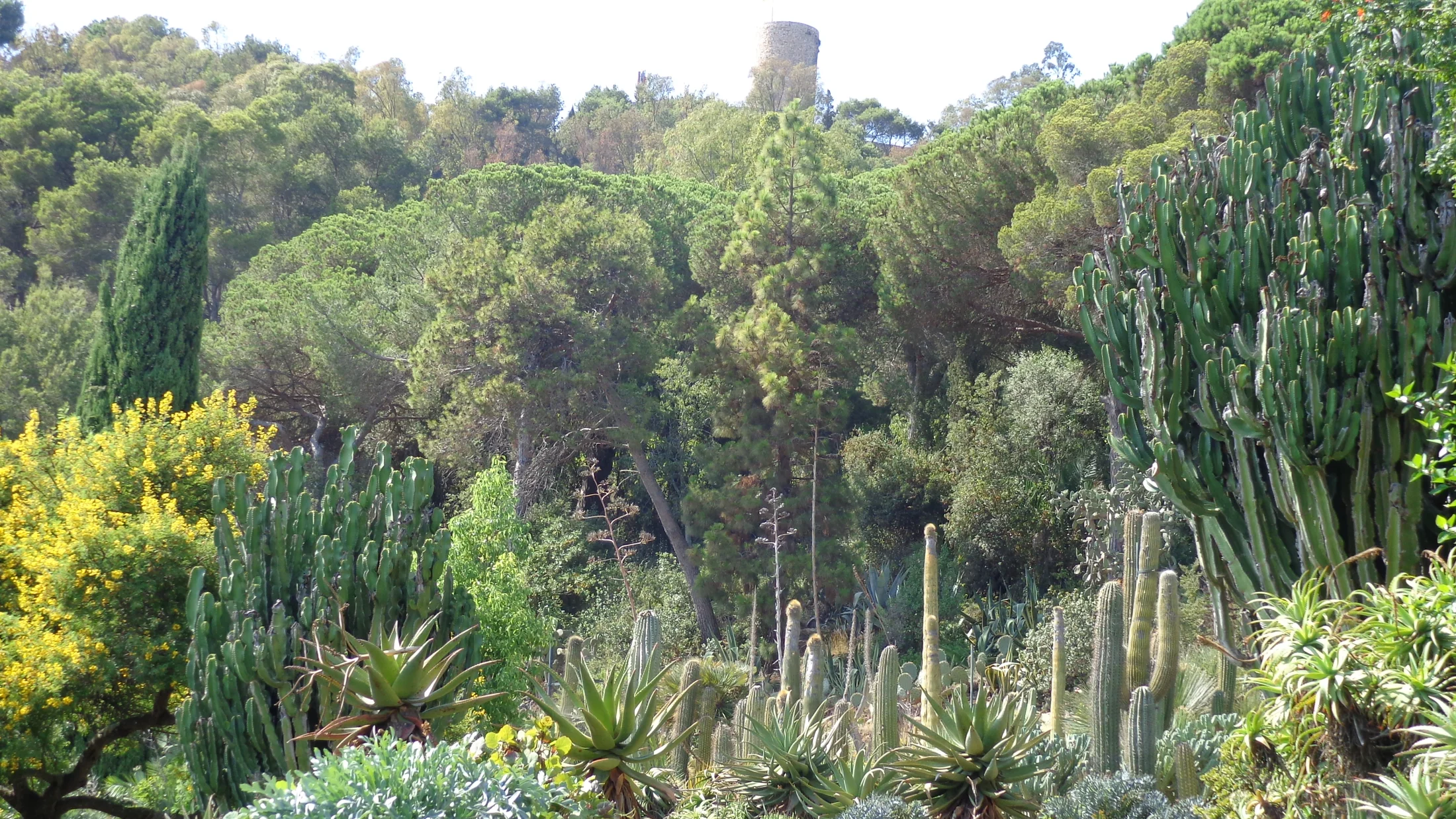
Marimurtra botanical garden unfolds on cliffs above Blanes, where Mediterranean, subtropical and cactus collections meet dazzling sea views. Founded by Carl Faust in the early 20th century, it frames plants with architecture and viewpoints, notably the Linnaeus temple mirador looking into cobalt water and granite ledges. Paths wind through terraces that tell stories of climate and adaptation, from drought-savvy shrubs to succulent spines.
- Why it’s special:
- Cliffside setting with iconic viewpoints and photogenic pavilions.
- Mediterranean backbone with strong succulent and cacti displays.
- Interpretation panels that connect plant function to landscape.
- Practical notes:
- Access:
R1train from Barcelona to Blanes; local bus/taxi or a 25–30 minute uphill walk. - Time needed: 2–3 hours with stops for photos and a coastal detour to Cala Sant Francesc.
- Best months: March–June for blooms; September–October for warm sea air and softer light.
- Access:
- Tip:
- Visit in the morning to avoid glare on the sea for photography, then descend for a beach picnic.
Salt and rosemary ride the breeze as waves thrum against the rocks below.
4.Jardín de Aclimatación de La Orotava (puerto de la Cruz, Tenerife): history under volcanic skies
Commissioned by King Charles III in 1788 to acclimatize tropical species to Europe, the La Orotava acclimation garden—located in Puerto de la Cruz—mixes historic geometry with exuberant foliage. Palms, bromeliads, and strangler figs share space with monumental specimens, while seasonal color shifts under Tenerife’s gentle north-coast climate. This compact space is both museum and living laboratory, with layered canopies and informative labels.
- Why it’s special:
- One of Spain’s oldest botanic sites, rooted in exploration and plant exchange.
- Tropical and subtropical species thrive year-round thanks to the island’s microclimate.
- Architectural elements and mature trees give a grand, historic atmosphere.
- Practical notes:
- Access: Frequent interurban buses reach Puerto de la Cruz from Santa Cruz/La Laguna; the garden sits within walking distance of town hotels.
- Time needed: 1.5–2 hours for a careful loop plus time to read key labels.
- Best months: Year-round; winter and spring are particularly pleasant on the north coast.
- Tip:
- Combine with La Orotava’s historic quarter and, weather permitting, a scenic drive on
TF-21to Teide viewpoints.
- Combine with La Orotava’s historic quarter and, weather permitting, a scenic drive on
A faint sweetness of guava and damp lava soil hangs under the palms.
5.Jardín Botánico de Sóller (mallorca): Mediterranean identity in Tramuntana light
Set in the Sóller valley against the Serra de Tramuntana, the Sóller botanical garden champions Balearic flora and Mediterranean water-wise gardening. Collections highlight endemic island species, aromatic shrubs, and orchard heritage, pairing botany with culture at the linked museum. Low stone walls and terraces echo the mountainside, grounding the garden in the Tramuntana’s dry-stone tradition recognized by UNESCO.
- Why it’s special:
- A deep dive into Balearic endemics and Mediterranean plant communities.
- Mountain-valley setting with traditional terracing and local horticulture.
- Interpretive links between plants, farming, and island culture.
- Practical notes:
- Access: From Palma, choose the historic Sóller train or modern bus; local connections and the tram make car-free visits easy.
- Time needed: 2–3 hours; add a valley walk or tram ride to Port de Sóller.
- Best months: March–June for peak bloom; September for warmth without high-summer crowds.
- Tip:
- Visit early, then enjoy Sóller’s market and a tasting of local citrus or olive products.
Pine resin and orange blossom mingle in the still morning air.
6.Jardín Botánico de la Universidad de Valencia: science in a Mediterranean city
The University of Valencia’s botanical garden ties centuries of scholarship to present-day conservation and teaching. Its origins trace to the 16th century, with the current site shaped in the 19th and revitalized in recent decades into a compact, beautifully curated space. Collections range from Mediterranean trees to tropical greenhouse species, laid out along shaded avenues and historic structures that tell both botanical and academic stories.
- Why it’s special:
- A research-active urban garden with strong Mediterranean and global collections.
- Historic greenhouses and teaching beds connect science and public learning.
- Easy to integrate into a Valencia city itinerary—markets, Turia riverbed park, and museums.
- Practical notes:
- Access: Walk or take buses/metro within central Valencia; expect straightforward city navigation.
- Time needed: 1.5–2.5 hours, more if you join a guided visit or linger in greenhouses.
- Best months: February–May for freshness and flowers; October for comfortable light and temperatures.
- Tip:
- Check the garden’s official site for guided visits or family workshops that enrich a short stop.
Cool shade, citrus zest, and the soft creak of greenhouse frames set the rhythm.
7.Jardín Botánico de Bertiz (navarra): Atlantic forest and quiet paths
Within the Señorío de Bertiz Natural Park, this garden blends historical landscaping with the living texture of an Atlantic forest. Moist air, broadleaf trees, and ornamental plantings share space with ponds and old structures, inviting slow, contemplative loops. It’s a gateway to the park’s wider network of trails, where you can extend the day into the beech and oak canopies of Navarra’s north.
- Why it’s special:
- A park-garden hybrid with authentic Atlantic character—ferns, moss, shade, and water.
- Seasonal drama: spring greens unfold fast; autumn brings copper and gold.
- Expansion options: longer hikes into the surrounding natural park.
- Practical notes:
- Access: Around 50–60 minutes’ drive from Pamplona on the N-121-A corridor; public transport is limited—check regional bus schedules in advance.
- Time needed: 2–4 hours in the garden; full day if you add park trails.
- Best months: April–June for lush growth; October for foliage.
- Tip:
- Wear waterproof footwear; shaded paths can stay slick after rain.
The hush of dripping leaves and birdsong carries like a soft amphitheater.
8.Jardín Botánico de Zaragoza: green lungs and urban heritage
Tucked inside Parque José Antonio Labordeta, Zaragoza’s botanical garden offers a compact tour of plant families, greenhouses, and regional horticulture. It’s easy to reach, friendly for families, and sits amid one of the city’s emblematic green spaces, so you can pair botany with playgrounds, kiosks, and promenades. Exhibitions and seasonal programming add a cultural thread to your walk.
- Why it’s special:
- Urban accessibility with educational focus—great labels, greenhouse windows into warmer worlds.
- Links to Zaragoza’s agricultural belt, with beds that nod to local crops and river life.
- A restful break on a broader city route—historic center, Ebro river walks, and museums.
- Practical notes:
- Access: Tram
L1and city buses stop near the park; on foot or by bike is simple. - Time needed: 1.5–2 hours; more if you attend a talk or family activity.
- Best months: March–May for spring growth; October for mild weather.
- Access: Tram
- Tip:
- Time your visit to catch late-afternoon light under mature trees before heading into the old town.
Warm greenhouse air fogs your lenses for a moment before clearing to glossy leaves.
Experiences Inside the Garden: Routes, Greenhouses and Collections
Botanical gardens aren’t single paths; they’re layered experiences. Choose a theme—coastal drought, island endemics, shade architecture—and let paths lead you. Most gardens mix free-roam areas with recommended circuits and occasional guided tours; consider light, temperature, and your curiosity when choosing when and where to start. A single petal’s scent brushed by your sleeve can reroute your plan in the best way.
Routes and walks: thematic paths and self-guided loops
- Types of routes you’ll find:
- Short loops (30–60 minutes): ideal with kids or in midday heat.
- Thematic circuits (60–120 minutes): Mediterranean shrubs, laurel forest relics, water-wise gardening.
- Panorama trails (60–120 minutes): cliff viewpoints (Marimurtra), city overlooks (La Concepción), or ravine traverses (Viera y Clavijo).
- How to plan:
- Pick two must-see areas, then allow 30% slack time for discoveries.
- In large gardens, start at the furthest point first, walking back as you tire.
- Time suggestions:
- 90–120 minutes suits most; add 30–45 minutes if you plan a picnic or photo stops.
- Comfort and safety:
- Wear shoes with grip for gravel and steps; carry water and sun protection.
Pause at a signed viewpoint and listen; even distant traffic softens under birds and leaves.
Greenhouses and special collections: tropical, succulents and island endemics
- Why greenhouses matter:
- They hold climate-sensitive species—tropicals, orchids, cycads—that can be centuries old.
- Seasonal cycles differ inside; winter mornings can be lush and warm under glass.
- What to look for:
- Succulent houses show survival strategies in leaf, spine, and rib.
- Orchid and bromeliad displays peak in varied months—check onsite notices.
- Endemic island rooms or beds map evolution in miniature, from dragon trees to rare mallorcan shrubs.
- Make it meaningful:
- Read the label trio: scientific name, origin, and habitat function (e.g., fog harvesting, fire adaptation).
- Join a specialized tour if offered; experts point out hidden structures you’d miss solo.
Dew beads on glass panes while a leaf’s waxy surface sheds droplets like quicksilver.
Education, workshops and events
- Expect a wide program:
- Family workshops on seed dispersal, composting, or pollinators.
- Talks by researchers on restoration, invasive species, or climate adaptation.
- Temporary exhibitions linking art and botany—photography, sculpture, or design.
- How to join:
- Check calendars on official sites or municipal culture pages; popular activities fill a week or more in advance.
- Many programs run weekends or late afternoons; some require online booking.
- Who benefits most:
- Families gain structure for curious kids; enthusiasts go deeper with specialist sessions.
- Teachers can coordinate school visits with tailored guides.
The murmur of a small group around a specimen turns a label into a story.
Views, photography and panorama points
- Timing and technique:
- Aim for golden hour—first or last hour of light—for soft shadows and vivid greens.
- On coastlines, shoot perpendicular to the sea to avoid midday glare; use a polarizing filter if you carry one.
- Composition:
- Frame plants with paths, arches, or rock; include a human silhouette for scale sparingly.
- Switch between wide scenes (habitat context) and close-ups (leaf texture, flower structures).
- Etiquette:
- Stay on paths, no leaning into beds; avoid flash in sensitive houses.
- Tripods may be restricted—ask at the entrance.
- Packing list:
- A lightweight prime or short zoom, a microfiber cloth for greenhouse condensation, and a small reflector or white card.
The click of a shutter blends with bees in thyme as shadows lengthen over gravel.
Practical Tips: What to Bring, Accessibility and Visitor Rules
A good garden visit is simple gear, clear norms, and room for wonder. Pack light but cover sun, hydration, and comfort; confirm accessibility routes if you need them; and leave the place even better than you found it. These are community spaces as much as collections, tended daily by teams you’ll rarely see. A faint hint of compost and cut grass tells you the work starts before dawn.
What to bring and how to dress
- Essentials:
- 1–1.5 liters of water per person in warmer months.
- Comfortable closed shoes with grip; sandals only for flat urban paths.
- Sun protection: hat, sunglasses, high-SPF sunscreen.
- Light layers for islands and Atlantic north; a compact rain jacket in spring/autumn.
- Insect repellent for shaded or riparian areas.
- Specific contexts:
- Coastal/clifftop (Marimurtra): brimmed hat and windbreaker for breezes.
- Mountain/Atlantic (Bertiz): waterproof footwear and a warm layer.
- Islands (Viera y Clavijo, La Orotava): light layers—trade winds shift temps quickly.
- Backup plan:
- Pack a small towel or sit pad for lawns where picnics are allowed; carry a dry bag for phone/camera in mist or drizzle.
The feel of cool stone steps underfoot beats midday heat if you start early.
Accessibility and reduced mobility
- Before you go:
- Check the official map for step-free routes, elevator locations, and accessible restrooms.
- Ask about wheelchair-friendly circuits—some gardens publish specific itineraries.
- On arrival:
- Inquire at the ticket desk about loaner wheelchairs, benches on routes, and shaded resting spots.
- Confirm accessible parking spaces and drop-off points near entrances.
- Planning:
- Steeper sites (ravines, terraces) may offer alternative entrances—request recommendations.
- Consider visiting in cooler hours to reduce heat stress.
A smooth ramp through dappled shade turns a complex site into an easy wander.
Visitor rules and responsible conduct
- Common norms:
- Stay on paths and respect barriers; do not pick leaves or flowers.
- No feeding wildlife; keep noise low around nesting areas and in greenhouses.
- Food often restricted to designated picnic zones—check signage.
- Respect for others:
- Step aside for guided groups; let school visits pass on narrow paths.
- Share viewpoints briefly in busy hours—everyone gets a turn.
- Care for the place:
- Pack out litter even if bins are provided; close gates behind you where indicated.
- Clean soles if you’ve visited a sensitive habitat recently to avoid soil-borne pests.
The quiet crunch of gravel under careful steps is the sound of shared stewardship.
Photography and drones: permissions and best practice
- Photography:
- Personal photos are usually allowed; flash may be prohibited in greenhouses or for nocturnal bloomers.
- Tripod use can be restricted at peak hours—ask at the entrance.
- Filming and commercial use:
- Request written permission for professional shoots; fees or time windows may apply.
- Respect privacy—avoid close shots of other visitors without consent.
- Drones:
- Most gardens ban drones for safety and wildlife; urban parks often fall within no-fly zones.
- If permitted in adjacent natural areas, comply with AESA rules and local ordinances.
- Safety:
- Keep gear compact; never step into beds for “the shot.”
A soft no-flash click preserves the deep greens that drew you in.
Frequently Asked Questions About Visiting Botanical Gardens in Spain
Tickets and discounts: do I need to book and are there reduced fares?
Many gardens sell tickets at the gate, but online booking is increasingly common for timed entries, guided tours, or special events. Reduced fares often apply to students, seniors, large families, and children; free or discounted days can rotate monthly. Check official websites a week in advance for updated prices, combo tickets with museums, or community days. For popular seasons—spring weekends, Easter, or local holidays—reserve early to secure your preferred entry time. If you plan multiple visits in a region, look for city cards or multi-attraction passes that include garden access. Keep a digital copy of your ticket for quick scanning at the entrance.
Can I take photos and videos?What are the rules and permits?
Personal photography is typically welcome; avoid flash in greenhouses or near sensitive collections like orchids and nocturnal bloomers. Tripods and light stands may be limited to off-peak hours or require permission—ask at the ticket desk. Commercial shoots, influencer campaigns, or workshops usually need prior approval and may incur fees or require liability insurance. Respect privacy: don’t film other visitors or school groups without consent, and mute shutter sounds in quiet indoor spaces. If you plan to publish widely, confirm image-use guidelines with the garden’s communications team. A quick check at the entrance can save time later.
Are dogs and other pets allowed?
Policies vary widely. Many botanical gardens in Spain prohibit pets inside collections to protect wildlife and plant beds, though some allow dogs on-leash in outer park areas. Certified assistance dogs are an exception and are generally permitted throughout. Before you go, check the garden’s website or call to confirm the current pet policy and any designated walking zones. If traveling with a dog, plan shade, water, and a comfortable wait if pets must remain outside with a companion. Remember that even well-behaved animals can stress nesting birds or fragile habitats within the grounds.
Guided tours and audio guides: how do I book?
Guided tours deepen the visit by linking plant stories to place—Mediterranean water-saving strategies, island evolution, or historic garden design. Many gardens run scheduled public tours on weekends and offer private group bookings by request; children’s trails or scavenger hunts may be available seasonally. Reserve online where possible, as small group sizes fill quickly in spring and autumn. Audio guides or mobile web apps cover highlights at your own pace—download ahead on Wi‑Fi to save data. If you’re visiting with family or a group, align tour times with meal and rest breaks to keep the day relaxed.
How long should I spend, and how can I combine multiple gardens?
Most visitors need 1.5–3 hours per garden for a satisfying loop with a few focused stops; larger or multi-zone sites can absorb half a day. To combine visits, map by proximity and travel time:
- Barcelona–Blanes: Valencia is separate, but you can pair Marimurtra with Girona’s old town in a day or make a two-day coastal itinerary.
- Tenerife North: La Orotava’s acclimation garden fits with Puerto de la Cruz walks and a partial ascent on
TF-21for Teide viewpoints on day two. - Málaga and surroundings: La Concepción plus an afternoon in the Alcazaba/Gibralfaro area makes a full city day; add Montes de Málaga on day two.
- Navarre: Bertiz merits a day with a forest hike; add a Pamplona old town morning or Baztan valley drive on the next day.
Leave buffer time for weather and light; gardens reward lingerers. A bench under laurel turns minutes into an hour without regret.
Book your experience — discover outdoor and nature activities across Spain with providers verified by Picuco.
Conclusion: Set Your Botanical Route Across Spain
Beyond Madrid’s celebrated beds, the country’s gardening of landscapes is local, lived, and wonderfully varied. The La Concepción botanical garden shows how 19th-century collectors imagined shade and ornament for a warm hillside; Viera y Clavijo protects island lineages found nowhere else; Marimurtra stages the Mediterranean above surf; and La Orotava, Sóller, Valencia, Bertiz, and Zaragoza each root science and leisure in their communities. You can feel the difference in the air—resin by the sea, laurel in the north, and volcanic damp on the islands.
Choose one garden that matches your season and mood, then build a short itinerary within a province or along a coastline. Travel light, confirm hours on official sites, and time your visit for morning or late afternoon light. If you’re planning with children or friends new to botany, add a guided tour to transform names on labels into memorable stories. Bookmark this article, share it with your travel companions, and sketch a first route with two gardens you can reach by public transport—Blanes and Valencia, perhaps—before you expand to islands or Atlantic forests.
When you visit, you support conservation and education as much as your own rest and curiosity. These gardens are kept alive by teams who weed before dawn, communities who volunteer, and researchers who bank seeds for futures we hope to see. Start close, go slowly, and let the plants set your pace. The quiet of a shaded path can be the best travel memory you bring home.