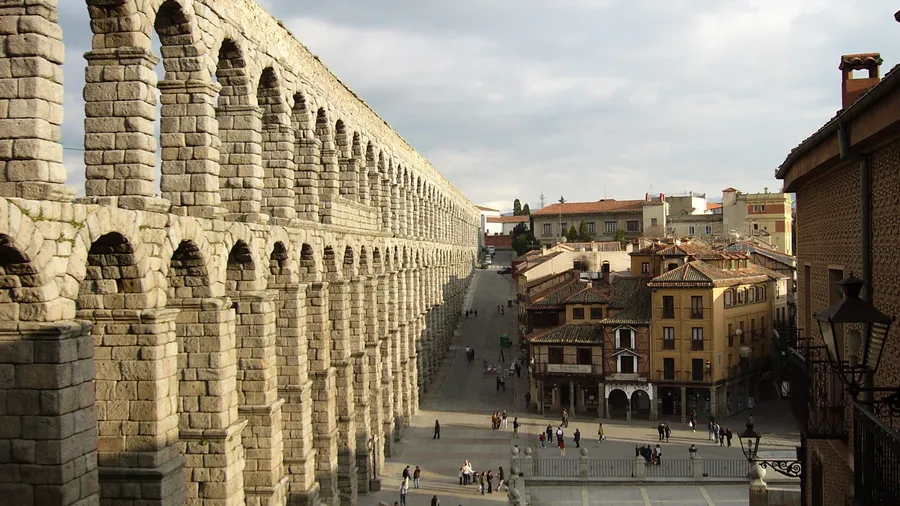
Highlights

  • • Over 160 granite arches assembled without mortar
  • • Maximum height of 28 meters at Plaza del Azoguejo
  • • 1st-century AD construction under the Roman Empire
  • • Hydraulic structure to transport potable water
  • • Located in Segovia's historic center
  • • One of the best-preserved Roman monuments in Spain

Description

What is the Acueducto de Segovia

The Acueducto de Segovia is a Roman hydraulic structure built in the 1st century AD to transport water from the mountains to the city. It consists of more than 160 granite arches, assembled without mortar, stretching nearly 800 meters. This engineering marvel is a tangible testament to Roman technical skill and its importance for urban development.

What you will see

As you walk along the aqueduct, you will observe its two levels of arches, reaching a maximum height of 28 meters at Plaza del Azoguejo. The granite stone, with its rough texture and grayish color, contrasts with the sky and urban surroundings. Nearby, cobbled streets and historic buildings complement the landscape. The structure is integrated into daily life in Segovia, serving as a meeting point and visual landmark.

Historical context

Built under the reign of Emperor Trajan or possibly during Claudius's time, the aqueduct supplied potable water to the city, facilitating its growth and wellbeing. Its preservation is due to the quality of its construction and the importance it has held for Segovia throughout the centuries. The structure has survived urban and climatic changes, maintaining its function and historical value.

Practical information

Visiting the aqueduct is free and accessible, with pedestrian paths allowing close approach to its arches. No prior reservation is needed, and it is suitable for families and people with reduced mobility. It is recommended to visit during the day to appreciate details and the surroundings. Nearby are tourist services, restaurants, and museums that complement the experience.

Key Information

Visit Duration

1-2 hours

Recommended Seasons

Spring, Autumn

Pricing

Free

Accessibility

High

Kid-Friendly Pet-Friendly No Booking Required

Related Destinations

Guide

Essential information for visiting Aqueduct of Segovia

Location

In this area

Practical Information
Pricing
Free
Visit Duration
1-2 hours
Features & Services
  • Accessibility:High
  • Kid-Friendly:Yes
  • Pet-Friendly:Yes
  • Booking:No Booking Required
Planning Information

Recommended Seasons

Spring · Autumn

Best Time to Visit

Spring and autumn offer pleasant temperatures and ideal natural light to explore the aqueduct and its surroundings without the intense summer heat.

Visitor Tips

To make the most of your visit, stroll leisurely around the aqueduct to appreciate its scale and construction details. Wear comfortable shoes for walking on nearby cobbled streets. Also visit the Aqueduct Museum to better understand its history and function. Avoid peak hours to enjoy a quieter atmosphere and take photos without crowds.

Historical Facts

The Acueducto de Segovia was built in the 1st century AD to supply water to the city, using Roman engineering techniques that have allowed its preservation for nearly two millennia. Its mortarless design and use of large granite blocks are notable features of Roman architecture.

Frequently Asked Questions

Get answers about Aqueduct of Segovia

Yes, there are pedestrian paths that allow you to approach and walk under some of the aqueduct's arches.
No, visiting the Acueducto de Segovia is free of charge.
Yes, the area around the aqueduct has adapted access to facilitate visits.
No, no reservation is required; access is free and open.
The aqueduct is an outdoor monument and can be visited at any time during the day.