The essentials of Valle de Valdeón

  • • Cares Trail: 12 km of path carved into rock above the River Cares gorge
  • • Central massif peaks above 2,500 m (Cerredo 2,650 m, Llambrión 2,642 m)
  • • Cantabrian chamois visible from trails and bearded vulture sightings
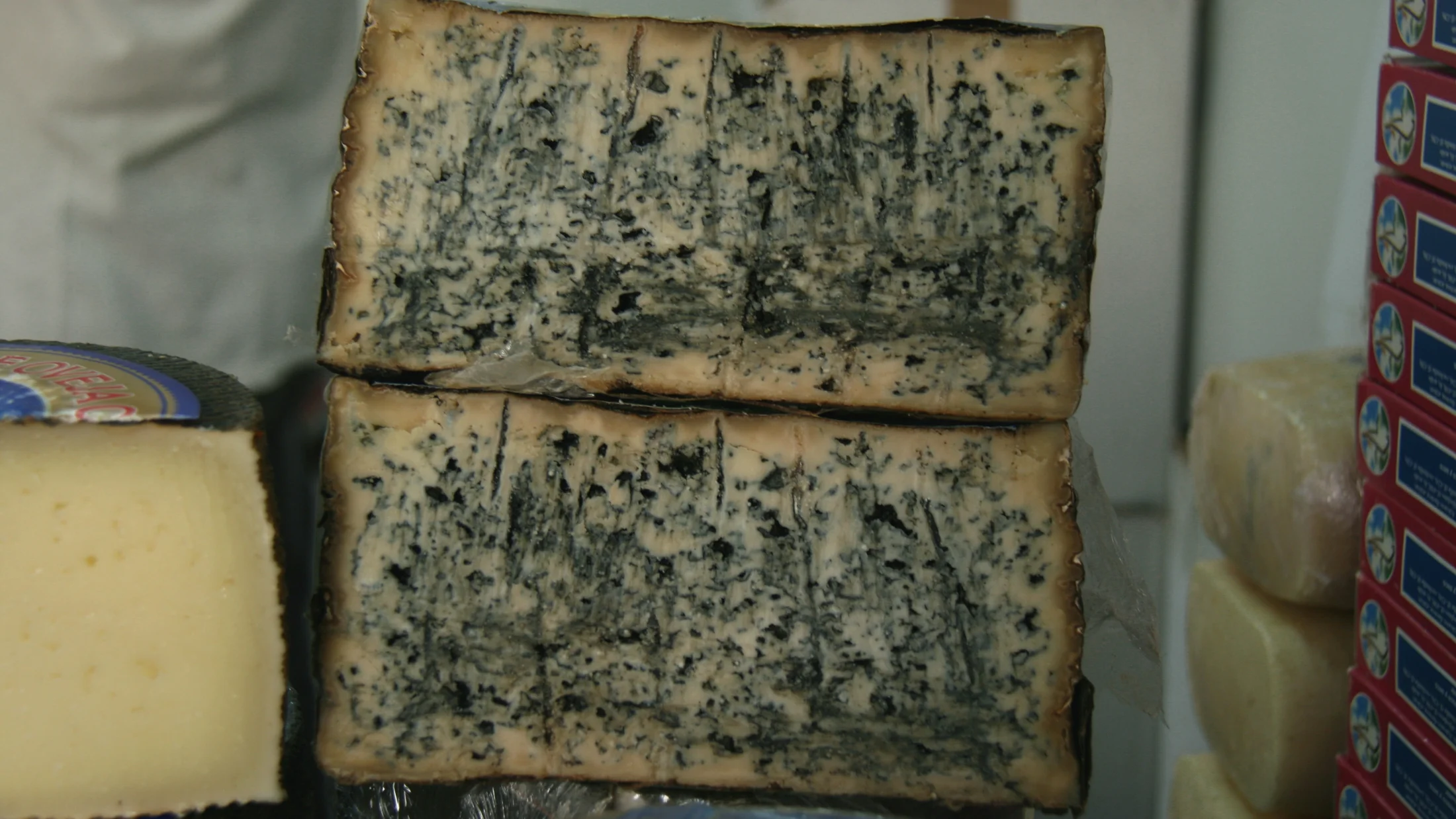
  • • Valdeón DOP cheese, an artisan blue wrapped in maple leaf and made in the valley
  • • Climb to Vega de Liordes (2,000 m) with access to high-mountain karst depressions

Description

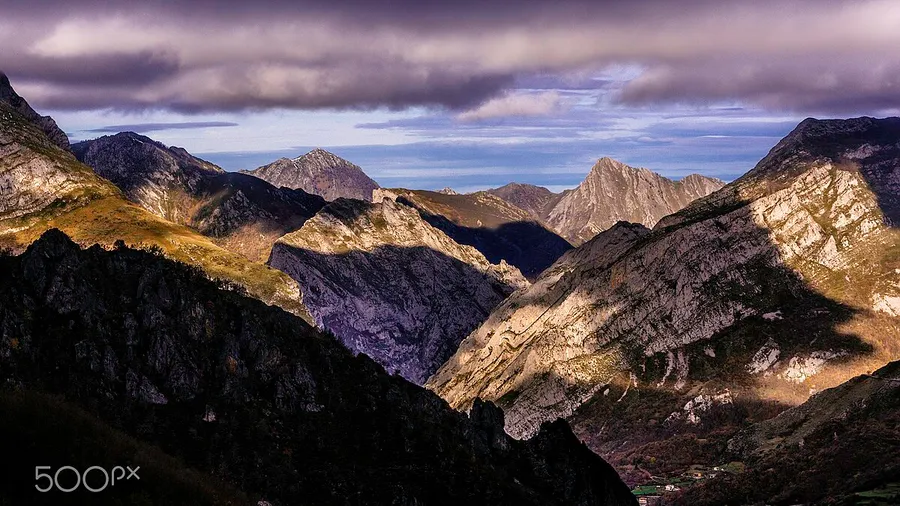
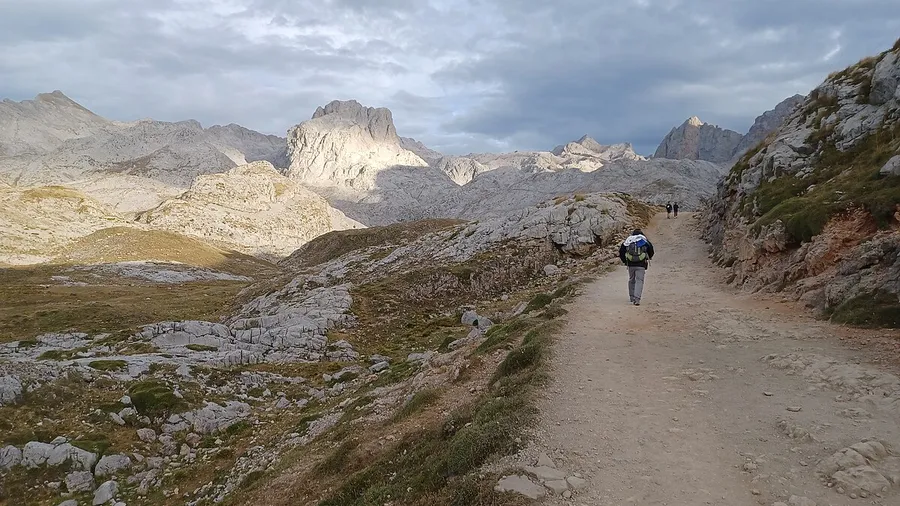
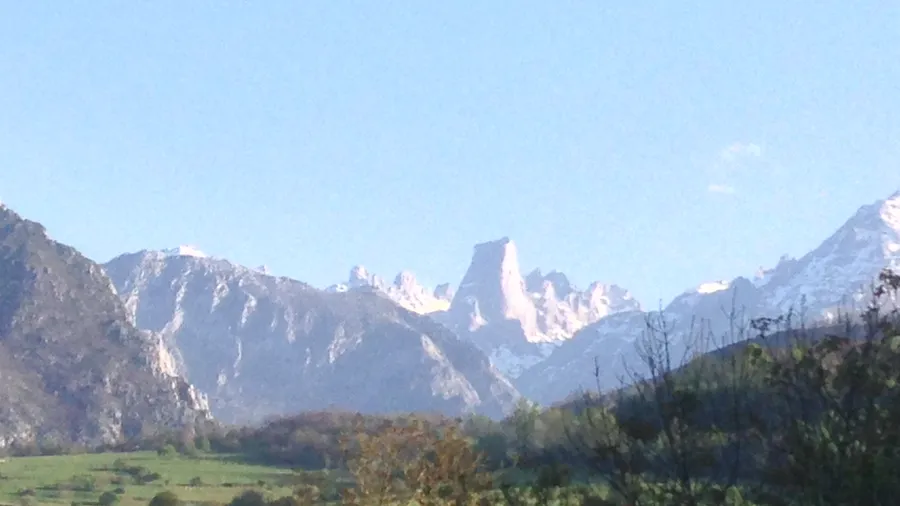
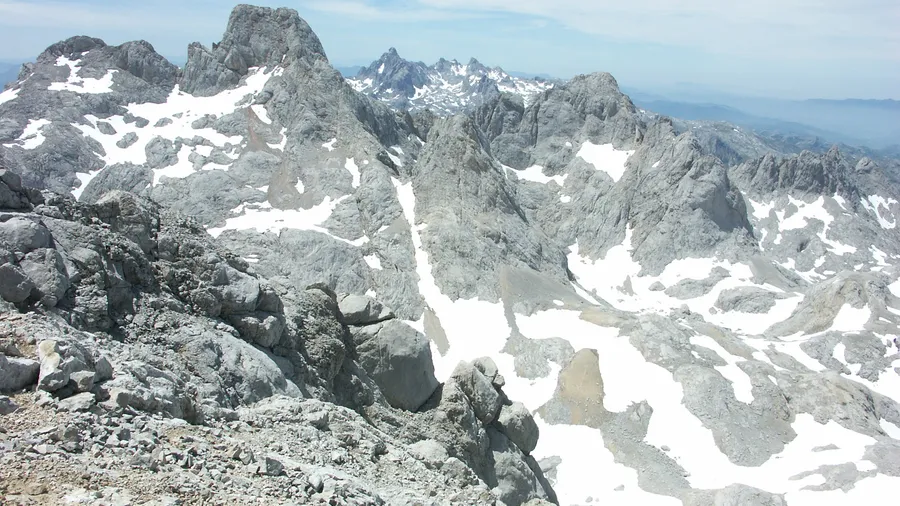
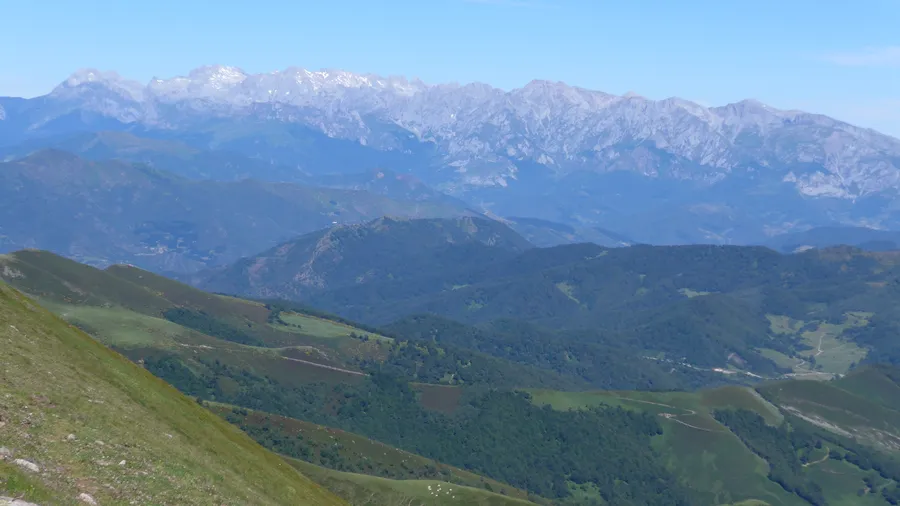
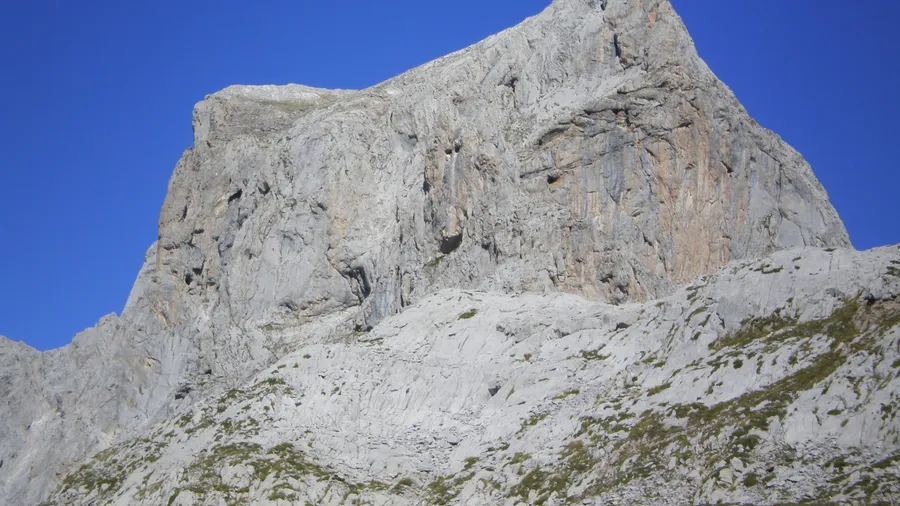
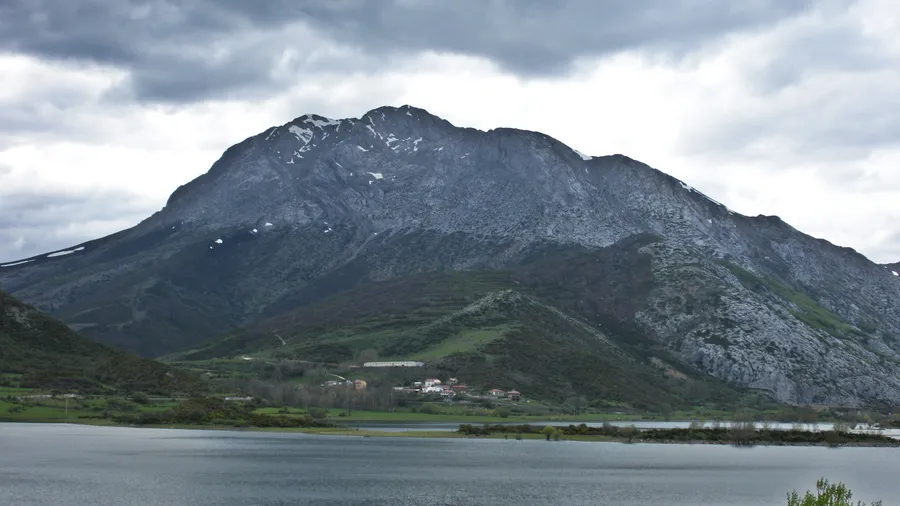
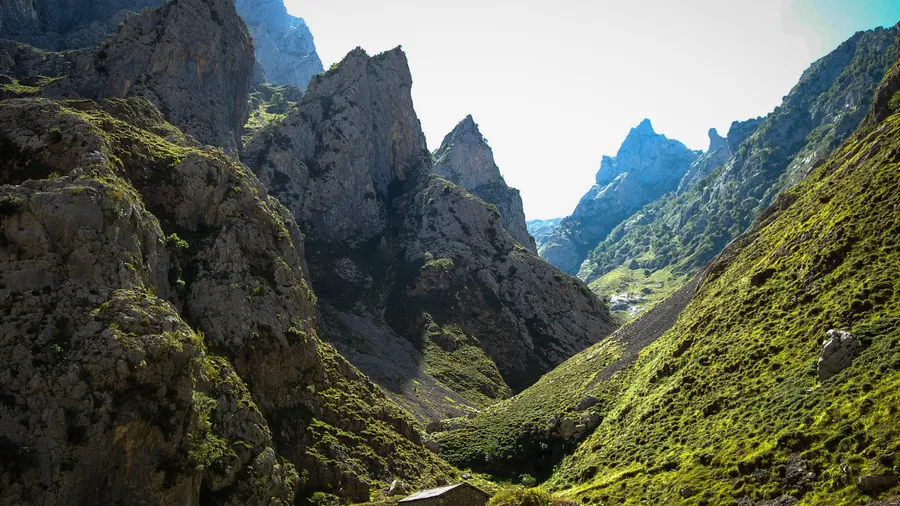
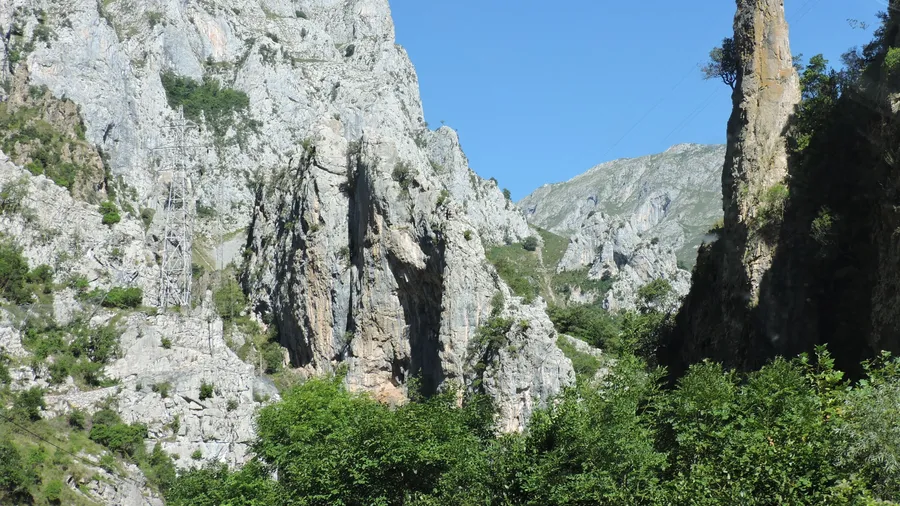
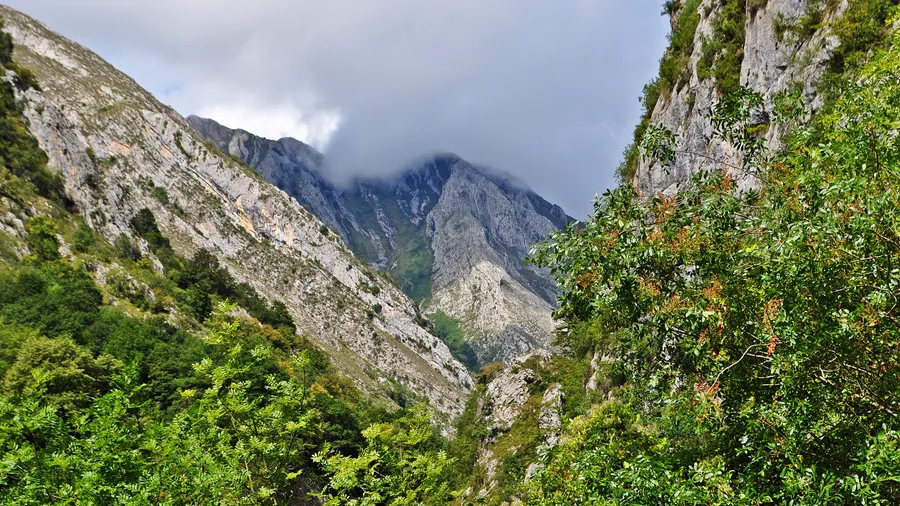
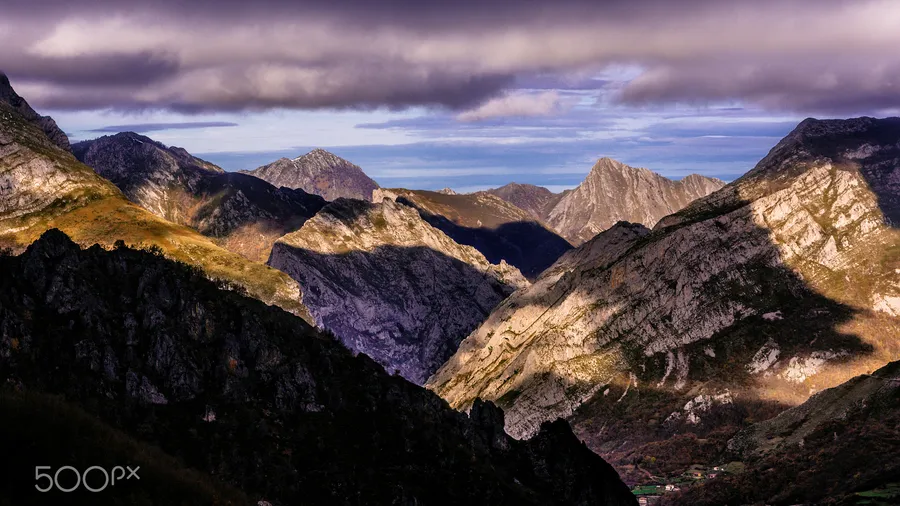
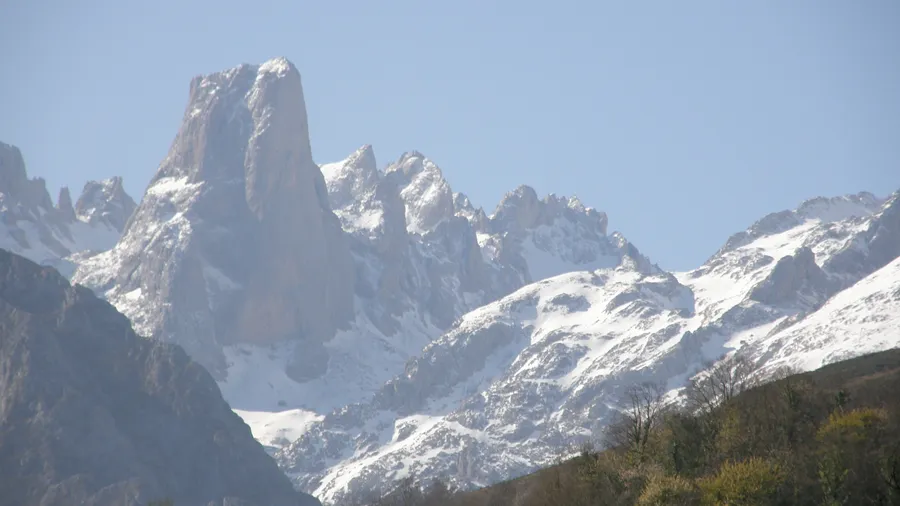
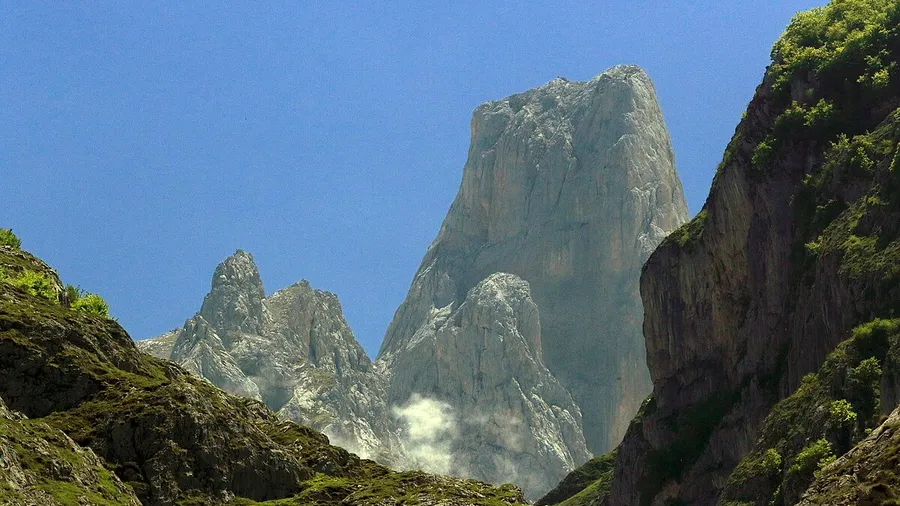
The Valle de Valdeón is wedged between the limestone walls of the Central and Western massifs of the Picos de Europa, in the north-east of León province. The River Cares runs through it from south to north before plunging into the gorge that bears its name, one of Spain's most walked hiking routes. Surrounding peaks exceed 2,500 metres — Torre de Cerredo (2,650 m), Torre del Llambrión (2,642 m) — and their vertical Carboniferous limestone faces form a natural amphitheatre that traps Atlantic moisture and produces a wet microclimate with over 1,500 mm of annual rainfall. Snow covers the higher ground from November to May and feeds streams that tumble down to the valley floor, where green meadows contrast with the grey rock of the ridges.

Posada de Valdeón, at 940 metres, is the valley's main settlement. It houses the Picos de Europa National Park headquarters for the León sector, with a visitor centre providing updated information on trails, access restrictions and mountain weather. The valley also includes smaller hamlets — Caín, Cordiñanes, Los Llanos, Caldevilla, Soto — with fewer than 500 permanent residents combined. Depopulation has been steady in recent decades, but the local economy is sustained by nature tourism, extensive Tudanca cattle farming and artisan cheese production.

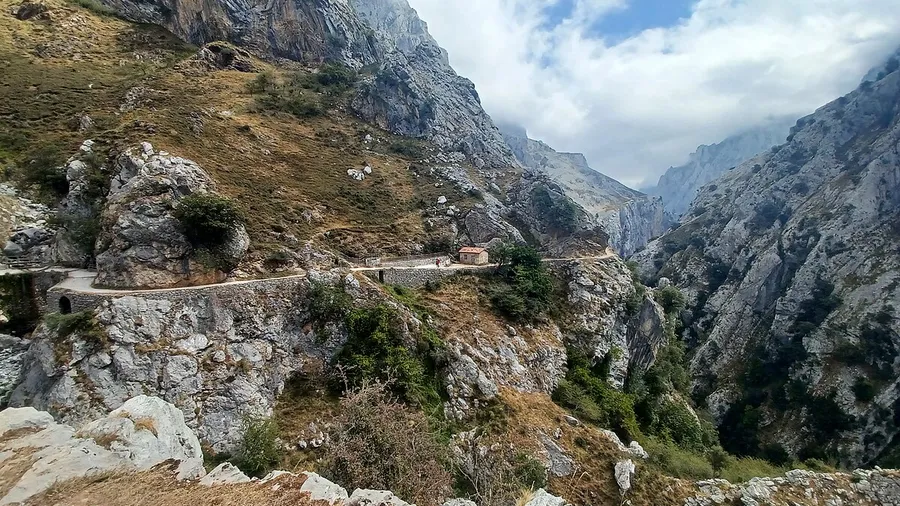
The Cares Trail links Caín (León) with Poncebos (Asturias) along 12 kilometres of path carved into the rock halfway up the gorge wall. The gradient is moderate (the León section drops about 300 m), but lateral exposure to the void, the total length (24 km return) and the lack of shade in summer call for careful planning. The path was built between 1945 and 1950 for the maintenance of a hydroelectric canal and now serves as a traffic-free greenway. Beyond the Cares, the valley offers lesser-known routes: the climb to Vega de Liordes (2,000 m), giving access to the jous — high-mountain karst depressions — and the Corona trail, with views of the Central massif without the Cares crowds.

Valley wildlife includes the Cantabrian chamois, which grazes on high meadows and is easily spotted from the trails, and an Iberian wolf population inhabiting the forests on the southern slopes. The Cantabrian brown bear has confirmed presence in the area, though sightings are sporadic. Among raptors, the bearded vulture has been successfully reintroduced in the Picos and is frequently seen soaring above the massif's couloirs. The beech and oak woods on the valley floor turn copper in October, and the smell of damp leaf litter fills the paths descending toward the Cares.

Local cuisine centres on the leonés stew, cecina (air-dried beef), Tudanca beef and artisan cheeses, notably Valdeón DOP — a blue cheese wrapped in maple leaf and made in the valley's own dairies. Restaurants in Posada and Caín serve set menus with local produce at reasonable prices. Accommodation ranges from rural guesthouses and pensions to a handful of mountain hotels. In high season (July–August and Easter), booking weeks ahead is advisable. The access road, the LE-243, is narrow and winding; entry via the Pandetrave pass from Riaño (45 min) is the most common approach.
Practical information

Everything you need to know for your visit to Valle de Valdeón

How to get there
From Riaño (León), via the LE-243 and the Pandetrave pass, about 45 minutes. From Cangas de Onís (Asturias), via the N-625 and the Beyos Gorge, one hour. Narrow, winding roads. No regular public transport. From León city, about 2 hours on the N-621.
Area Information
National Park visitor centre in Posada de Valdeón. Marked PR and GR trails. Information point in Caín (summer). Summer shuttle bus between Posada and Caín for the Cares Trail. Limited mobile coverage in the gorge.
Geography
Glacial valley wedged between the Central and Western massifs of the Picos de Europa. Valley floor at 940 m (Posada). Surrounding peaks up to 2,650 m. Carboniferous limestones, the Cares gorge and karst depressions (jous) at higher elevations.
Flora & Fauna
Beech and oak woodland on the valley floor, alpine meadows at height. Wildlife: Cantabrian chamois, Iberian wolf, brown bear (confirmed presence), bearded vulture (reintroduced), golden eagle. Trout in the Cares. Coppery beech tones in October.

Things to do

Find the best plans and things to do in Valle de Valdeón

20

Accommodations

Best accommodation options in Valle de Valdeón

Loading accommodation options...

Frequently Asked Questions

Get answers about Valle de Valdeón

The path from Caín to Poncebos covers 12 kilometres one way (24 km return) with moderate cumulative elevation change, about 300 metres on the León section. The trail is wide and well maintained, but some stretches have unguarded lateral exposure to the gorge drop. It is not technically difficult, but the total distance and lack of shade in summer can make it a demanding day. Carry at least 2 litres of water and start early in hot months.
The trail is linear, so the standard option is an out-and-back (24 km). In peak season a shuttle bus connects Posada de Valdeón with Caín on one side and Poncebos with Arenas de Cabrales on the other, allowing you to walk one way and ride back. Another option is to leave a car at each end if travelling as a group. There is no alternative return route through the gorge.
The Cantabrian brown bear has confirmed presence in the area, but sightings are infrequent and depend on the season and chance. Spring and autumn are the periods of greatest activity. There is no guarantee of a sighting, and observation should always be from a distance, without disturbing the animal. Local nature companies offer guided observation outings with specialist knowledge.
Valdeón DOP is an artisan blue cheese made from cow's and goat's milk, aged in natural caves in the valley and wrapped in maple or chestnut leaf. It has an intense, creamy flavour. You can buy it directly from the valley's dairies, in shops in Posada de Valdeón and at some local restaurants. In peak season it is worth asking about availability, as production is limited.
The LE-243, entering the valley via the Pandetrave pass from Riaño, is narrow with tight bends and stretches without crash barriers. In winter it can have snow or ice and requires chains. There is no petrol station in the valley; the nearest is in Riaño. The drive from Riaño takes about 45 minutes. The alternative entry via the Beyos Gorge from Cangas de Onís takes an hour and is equally winding.