The essentials of Valle de Mena

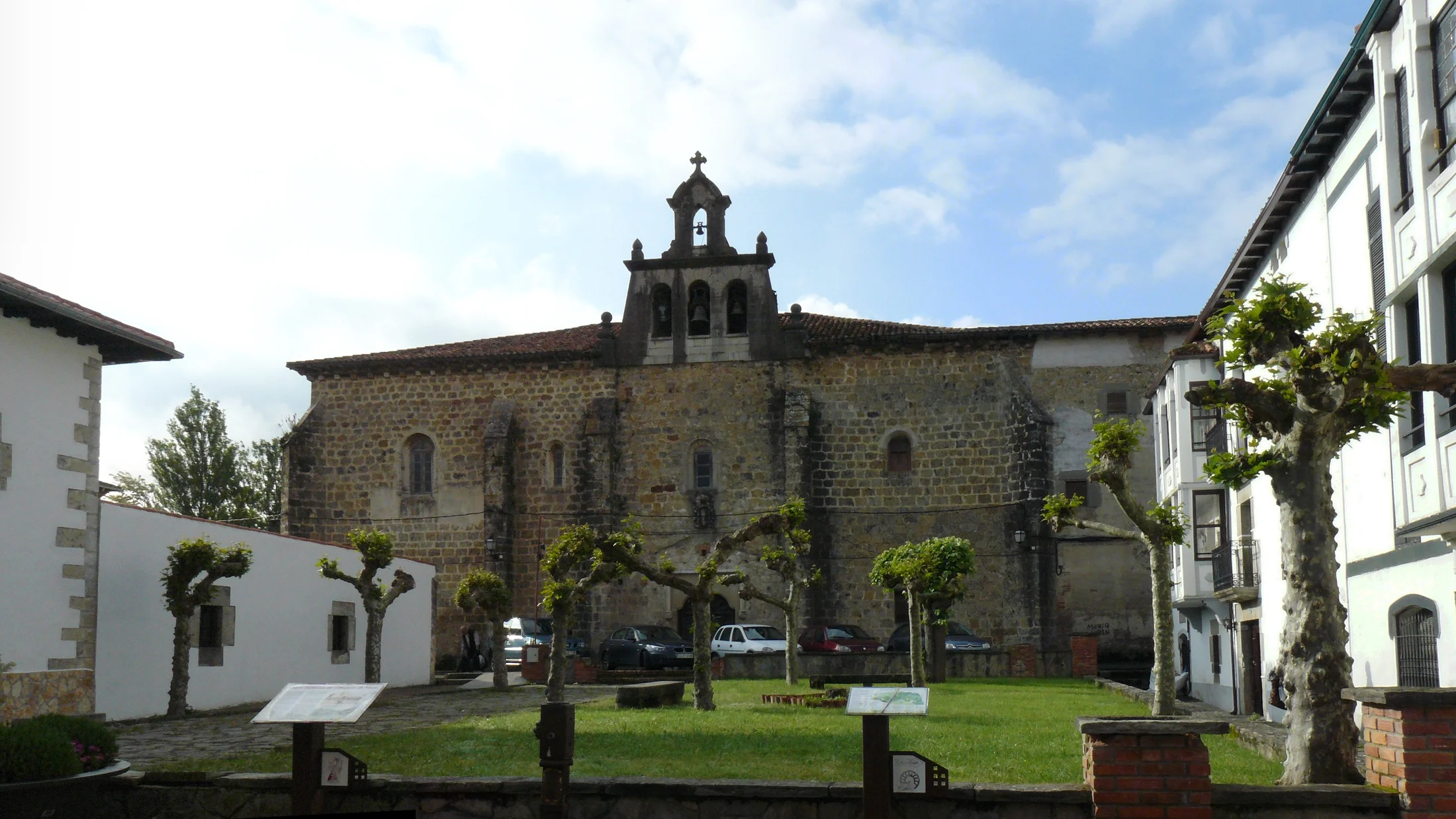
  • • San Lorenzo de Vallejo church with 12th-century Lombard-style Romanesque apse
  • • 59 villages spread across 258 km² between the Ordunte mountains and Sierra de la Peña
  • • Cadagua river headspring waterfall reachable on a half-hour walk from Villasana
  • • Grand heraldic mansions built by returning emigrants in Artieta, Araduenga and Cadagua
  • • Waymarked trails through beech groves and oak stands with native trout in the streams

Description

Valle de Mena covers 258 km² at the northeastern tip of Burgos province, wedged between the Ordunte mountains to the north and Sierra de la Peña to the south. Its 59 villages are scattered along a natural corridor that for centuries served as the main route between the Castilian plateau and the Cantabrian coast, a role still visible in the architecture and layout of each settlement. The Cadagua river runs nearly 70 kilometres before meeting the Nervión at Baracaldo, crossing the valley from west to east and feeding banks lined with alder, ash and willow trees that keep the landscape vivid green well into winter. Elevations range dramatically: the hamlet of Arza, home to just eleven residents, sits at 182.7 metres above sea level — the lowest point in all of Castilla y León — while the Ordunte ridgeline tops 1,000 metres, creating a gradient that packs multiple ecological zones into a compact area.

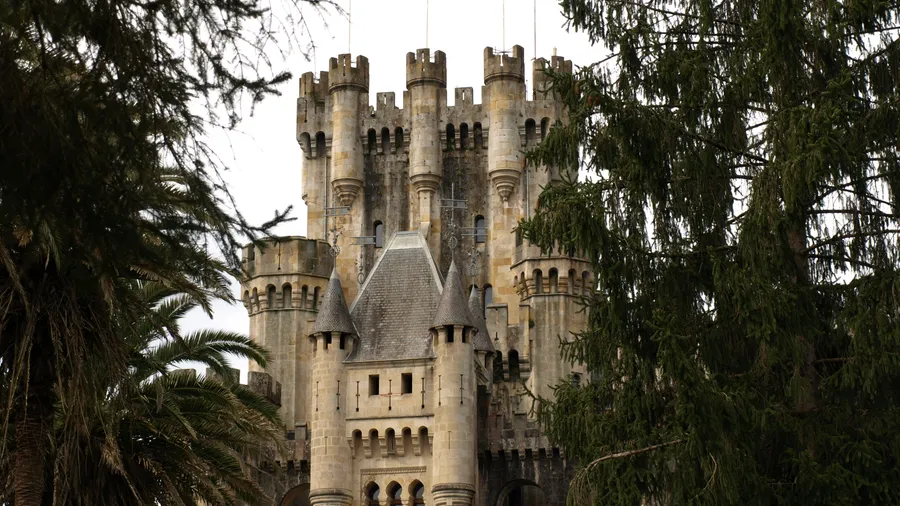
The valley holds one of the densest and best-preserved collections of Romanesque architecture in Burgos province. The church of San Lorenzo de Vallejo, built between the late 12th and early 13th centuries, features an apse decorated with Lombard-influenced blind arcading that art historians rank among the finest Romanesque work in the province. A short drive away, the church of Santa María de Siones completes a heritage ensemble that alone justifies the visit. Beyond the medieval layer, returning emigrants who had built fortunes in the Americas during the 17th and 18th centuries erected grand mansions with heraldic crests in Artieta, Araduenga, Cadagua and Paradores, adding a colonial accent to the stonework that sets this valley apart from neighbouring districts.

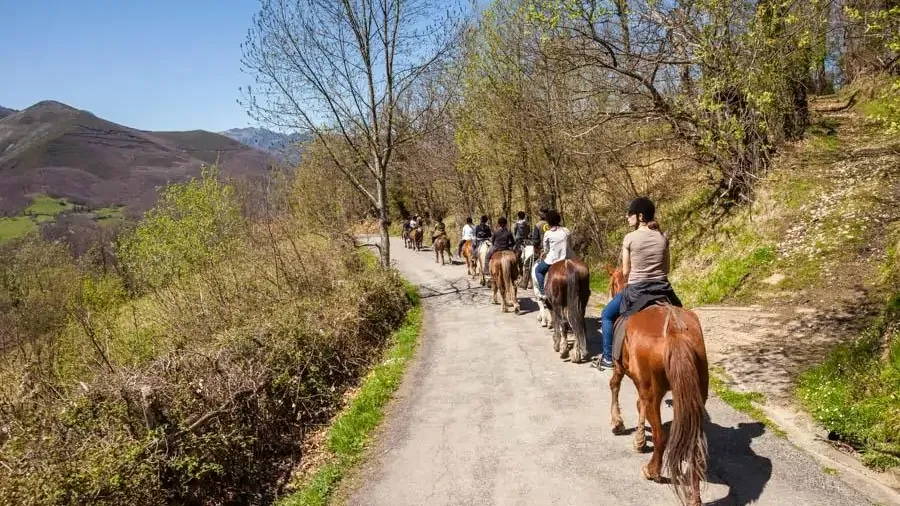
The altitude difference between the valley floor and the surrounding peaks produces a climatic gradient that supports notable biodiversity. Atlantic mixed forest of beech, oak, chestnut and holly covers the slopes, while streams sustain stable populations of native brown trout and otter. Griffon vulture and Egyptian vulture circle above the limestone cliffs of Sierra de la Peña, and roe deer, wild boar and fox are regularly spotted in the undergrowth. Waymarked trails pass through beech woods where autumn light filters in amber tones, oak stands that crunch underfoot with fallen leaves, and meadows where the smell of damp grass follows every step.

Villasana de Mena, the municipal seat for a population of over 3,500 across the whole municipality, serves as the base for outdoor activities. From here a half-hour walk of easy difficulty reaches the Cadagua headspring, a waterfall set in a shaded ravine. Fitter hikers can tackle the Ordunte ridgeline, gaining roughly 800 metres of elevation for views that on clear days stretch to the Cantabrian Sea. Local cuisine reinforces the experience: suckling lamb roasted in a wood-fired oven, Burgos black pudding, artisan cow and sheep cheeses, and seasonal forest mushrooms — porcini and chanterelles — that fill the menus of family-run restaurants scattered across the valley's hamlets every autumn.
Practical information

Everything you need to know for your visit to Valle de Mena

How to get there
From Bilbao, the N-629 reaches Villasana de Mena in roughly one hour. From Burgos, the CL-629 crosses the Mazorra pass in about two hours. Bus services run from Bilbao with a stop in Villasana. The nearest airport is Bilbao-Loiu, 75 km away.
Area Information
Valle de Mena belongs to the Las Merindades district in northern Burgos. Villasana de Mena serves as the main hub. The Nature Interpretation Centre provides trail maps and Romanesque heritage route guides.
Geography
A 258 km² natural corridor between the Ordunte mountains (north, over 1,000 m) and Sierra de la Peña (south). Lowest point: 182.7 m at Arza, the lowest in Castilla y León. The Cadagua river runs west to east for nearly 70 km.
Flora & Fauna
Atlantic mixed forest of beech, oak and chestnut on the slopes. Roe deer, wild boar and fox in the uplands. Native trout and otter in the Cadagua and its tributaries. Griffon vulture and Egyptian vulture on the cliffs of Sierra de la Peña.

Things to do

Find the best plans and things to do in Valle de Mena

20

Accommodations

Best accommodation options in Valle de Mena

Loading accommodation options...

Frequently Asked Questions

Get answers about Valle de Mena

A full day covers the two main highlights: San Lorenzo de Vallejo church and Santa María de Siones, both reachable by road from Villasana in under 15 minutes. Adding the colonial-era mansions in Artieta and Cadagua, plan at least a day and a half to visit at a relaxed pace.
Yes. Low-difficulty trails along the Cadagua river work well for children aged five and up. The Cadagua headspring is a short half-hour walk, and the waterfall makes a good reward for young hikers. Villasana also has picnic areas and restaurants serving family-friendly menus.
The Cadagua headspring route from Villasana (about 4 km return, easy) is the most popular. For a tougher outing, climbing the Ordunte mountains rewards hikers with full valley views across roughly 800 metres of elevation gain. Short village-to-village paths like Vallejo to Siones combine heritage and scenery.
Bus services run from Bilbao to Villasana de Mena, though departures are limited, usually one or two per day. Driving is the most practical option since the valley's villages are spread out and moving between them on public transport alone is difficult.
Suckling lamb roasted in a wood-fired oven is the signature dish, alongside Burgos black pudding and artisan cow and sheep cheeses. In autumn, forest mushrooms — especially porcini and chanterelles — feature on most menus. Villasana has several family-run restaurants serving these products at fair prices.