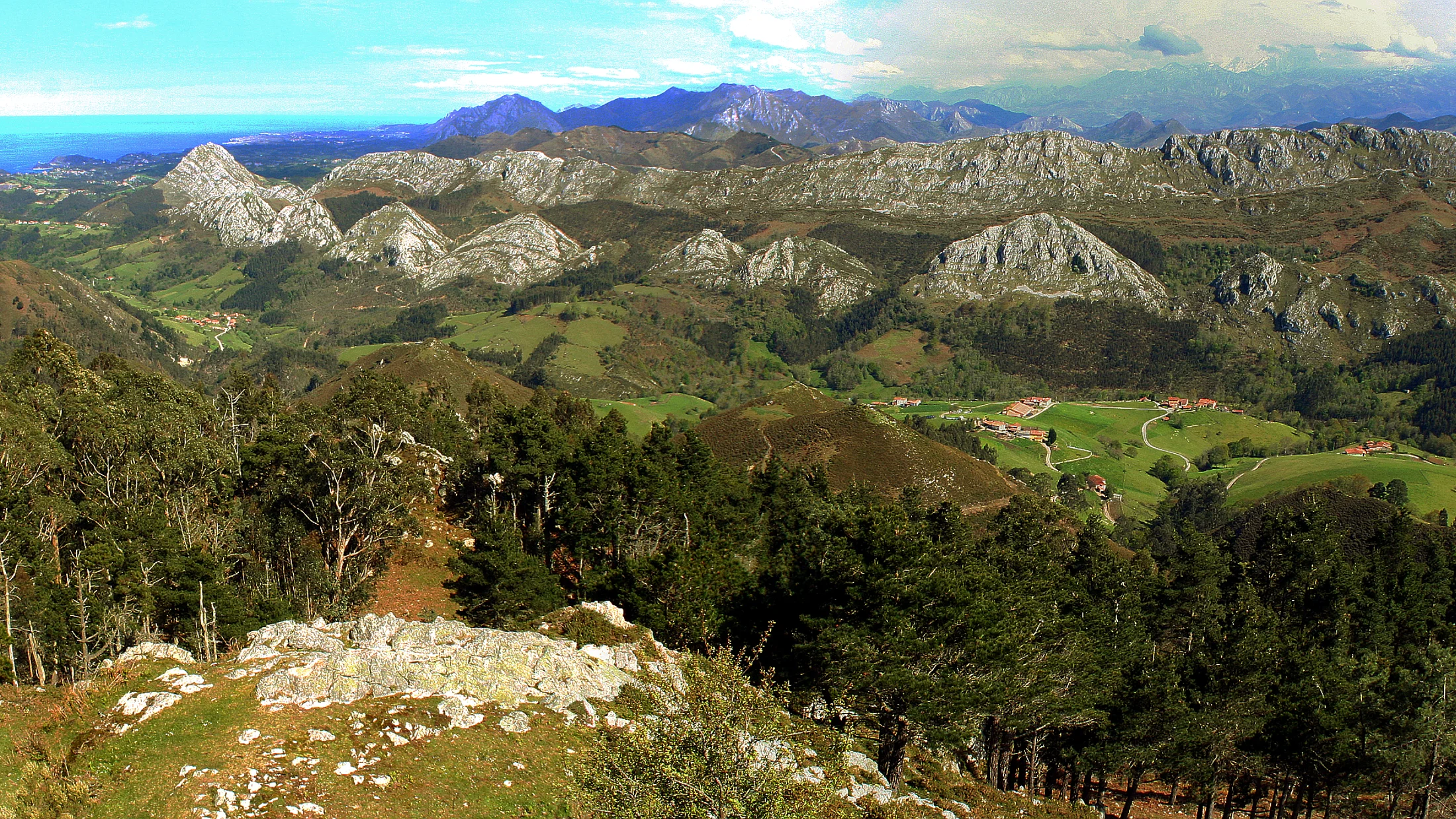
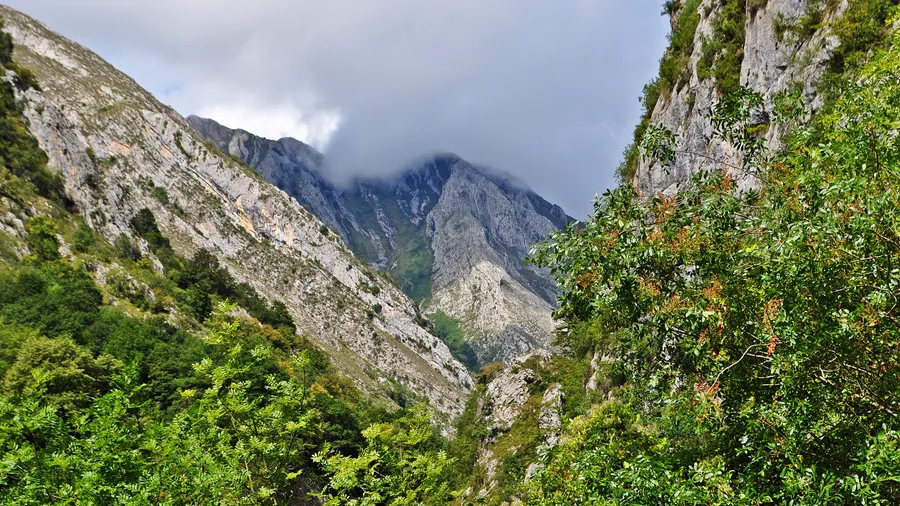
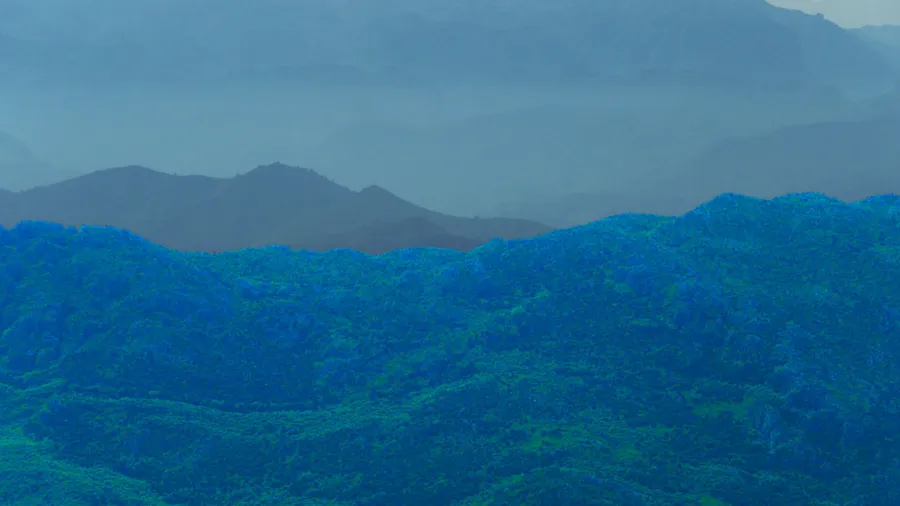
The Sierra del Sueve rises between the Cantabrian Sea and the Picos de Europa, in central-eastern Asturias, shared among the councils of Colunga, Caravia, Ribadesella, Piloña, and Parres. Its summit, Picu Pienzu, reaches 1,161 metres just five kilometres from the coast, making it the tallest mountain so close to the sea along the entire Cantabrian seaboard. From the top, the view stretches along the coastline from Gijón to Llanes on one side and the Picos de Europa on the other, with the deep green of intermediate pastures dotted by dark patches of forest. When the north wind blows, the salt scent of the sea reaches the summit meadows, mixing with the fresh smell of wet grass.
The Sueve is the last refuge of the asturcón, a small, hardy native horse breed that lives in semi-freedom on the summit grasslands. In 1978 barely twenty remained; today the population has recovered and it is common to see them grazing at the heights during summer, gathered in small family herds. Each year, the asturcón festival brings together herders and visitors for a day of branding and veterinary checks that doubles as a celebration of the sierra's pastoral culture. Alongside the horses, fallow deer introduced in the 1960s roam the slopes and can be spotted at dawn in forest clearings. The coexistence between both species and domestic livestock defines the pastoral landscape of the Sueve.
Two plant formations make the Sueve exceptional for botanists and for anyone walking beneath its canopy. The Tejeda del Sueve holds over 8,000 yew trees across 80 hectares, considered the largest concentration of this species in Europe. Some specimens are several centuries old, their twisted trunks composing a dark, silent forest where light barely penetrates. The Hayedo de la Biescona, on the northern slope, is likely the lowest-altitude beech forest on the continent, with centuries-old trees growing at barely 200 metres above sea level. The contrast between the constant moisture of these woods and the windswept summit meadows, where the grass presses flat and the wind carries salt, captures the dual character of this range.
The route to Picu Pienzu starts from the Mirador del Fitu — opened in 1927 at 1,100 metres with a 360° panorama — and covers about 5.5 km one way at moderate difficulty, except for the final stretch to the iron cross on the summit. The round trip takes about five hours at a relaxed pace. The yew forest and Biescona beech forest have their own shorter, shadier trails, ideal for warm days or those who prefer flat walking. The entire area has been designated a Protected Landscape within Asturias' Regional Network of Protected Natural Spaces since 1994, covering 81.12 km², ensuring conservation of its most valuable habitats without restricting public access or the extensive livestock farming that has shaped the landscape for centuries.