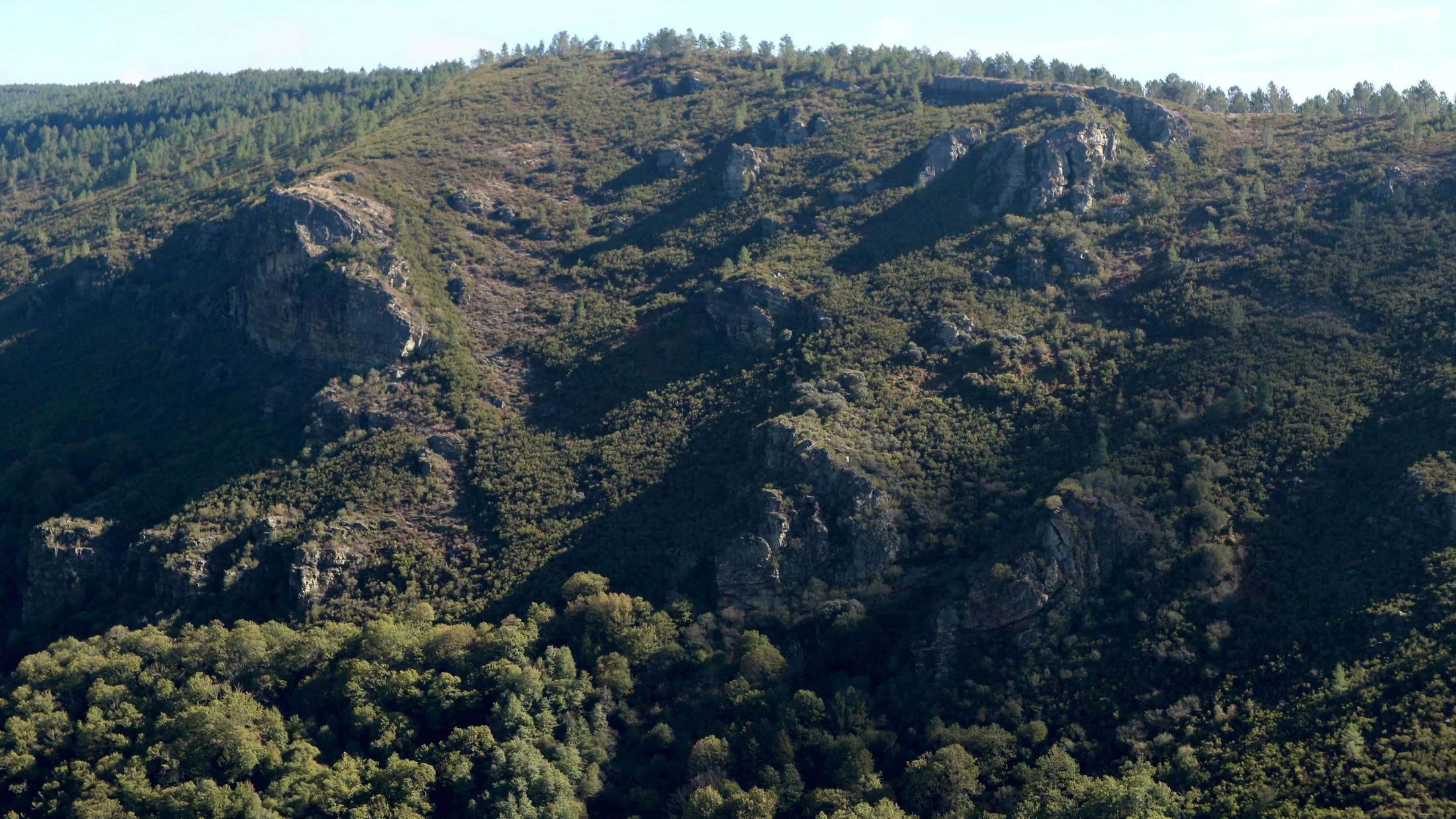
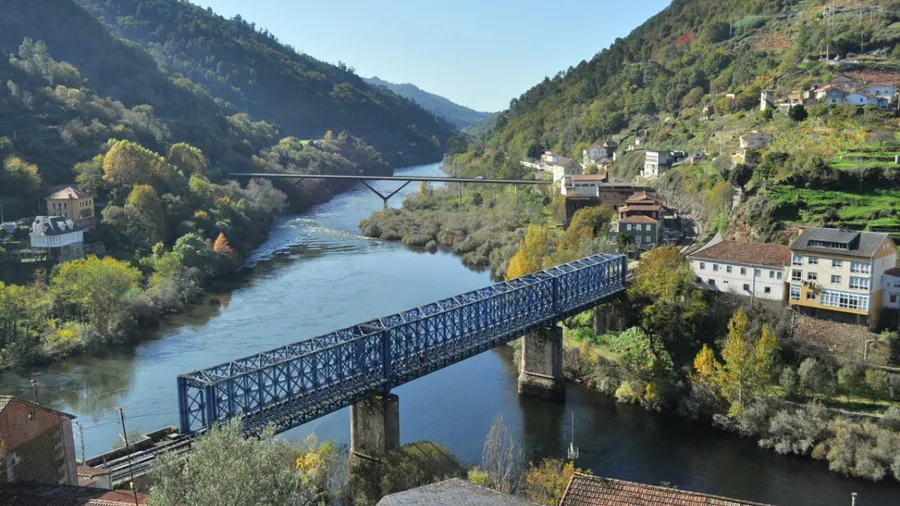
The Serra do Courel occupies the eastern edge of Lugo province, where the Galician mountains meet the León plateau. Its peaks, exceeding 1,600 metres at Pico Formigueiros, drop into deep valleys carved by the Lor, Selmo and Quiroga rivers, tributaries of the Sil. The elevation difference between ridges and valley floors reaches 1,000 metres in horizontal distances of just 5 km, a gradient that packs distinct vegetation belts into a compact space: from chestnut and oak woodlands on the valley floor to heathland and summit grasslands, passing through the Atlantic mixed forests that are the sierra's true botanical treasure.
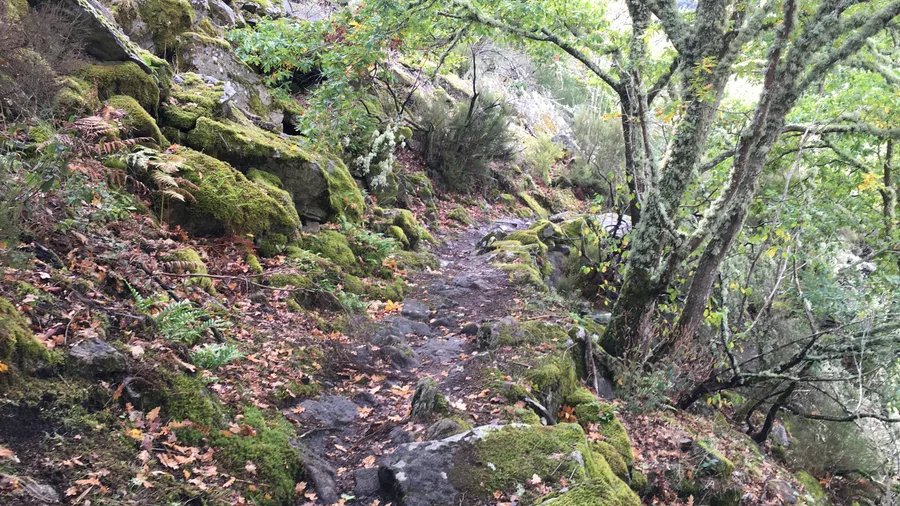
O Courel harbours the last native forests in Galicia close to their original state. Chestnut groves, some with specimens over 500 years old and trunks exceeding 8 metres in girth, cover the middle slopes and were for centuries the dietary backbone of the villages. Above them grow sessile oak and birch woodlands whose autumn colours grade from gold to copper across the hillsides. But the most distinctive ecosystem is the devesa, the Atlantic mixed forest where holly, yew, maple, rowan, hazel and ash share a canopy so dense that light reaches the ground filtered in green tones. The Devesa da Rogueira, on the northern flank of Formigueiros, is the best known and most intact: a 200-hectare forest functioning as a glacial refuge for relict flora, with over 800 catalogued plant species including several Macaronesian fern species.
The sierra's geology is complex and ancient. The dominant materials are Precambrian and Ordovician slates, quartzites and gneisses, some over 600 million years old. Tectonic activity has folded and fractured these layers, producing a landscape of sharp ridges and incised valleys. Karst caves in the Ordovician limestone, such as Cova do Oso, Cova da Pena and Cova do Rei Cintolo (the last being Galicia's largest cave, with over 6 km of passages), bear witness to an active underground hydrology. Waterfalls on the Selmo river and its tributaries dot the hillsides, some reachable only on foot along forest trails.
Wildlife matches the botanical richness. Roe deer and wild boar are the most frequent ungulates. The Iberian wolf maintains a stable presence in the sierra, and its howls carry through winter nights from the highest hamlets. Wildcat, pine marten and common genet inhabit the dense woodland. Among birds, northern goshawk, sparrowhawk and tawny owl are permanent residents of the forest canopy, while white-throated dipper and grey wagtail follow the mountain streams. The presence of the gold-striped salamander, endemic to the Iberian northwest, confirms the quality of the watercourses.
The Serra do Courel's hamlets retain a stone-and-slate architecture that blends into the landscape. Houses with wooden balconies, stone granaries and circular pallozas of pre-Roman origin define a rural heritage preserved in part by geographic isolation. Seceda, Visuña, Moreda and Paderne are among the most visited hamlets, with populations often below 20. The cuisine has peasant roots: caldo gallego, empanada, lacón con grelos, roast chestnuts and heather honey. The Magosto festival in November celebrates the chestnut harvest with communal roasts on village threshing floors. From Monforte de Lemos (30 km) or Quiroga (20 km), the sierra is reached by local roads winding through the valleys.