The essentials of Reserva Natural de la Ría de Villaviciosa

  • • Cantabrian salt marshes with curlew and bar-tailed godwit on migratory passage
  • • Rodiles wave: tubular left of up to 2 m at the estuary mouth
  • • Grey heron and oystercatcher present year-round in the reserve channels
  • • Pre-Romanesque Valdediós monastery (9th century) 9 km from the estuary
  • • Natural cider apple orchards in the municipality's inland valleys

Description

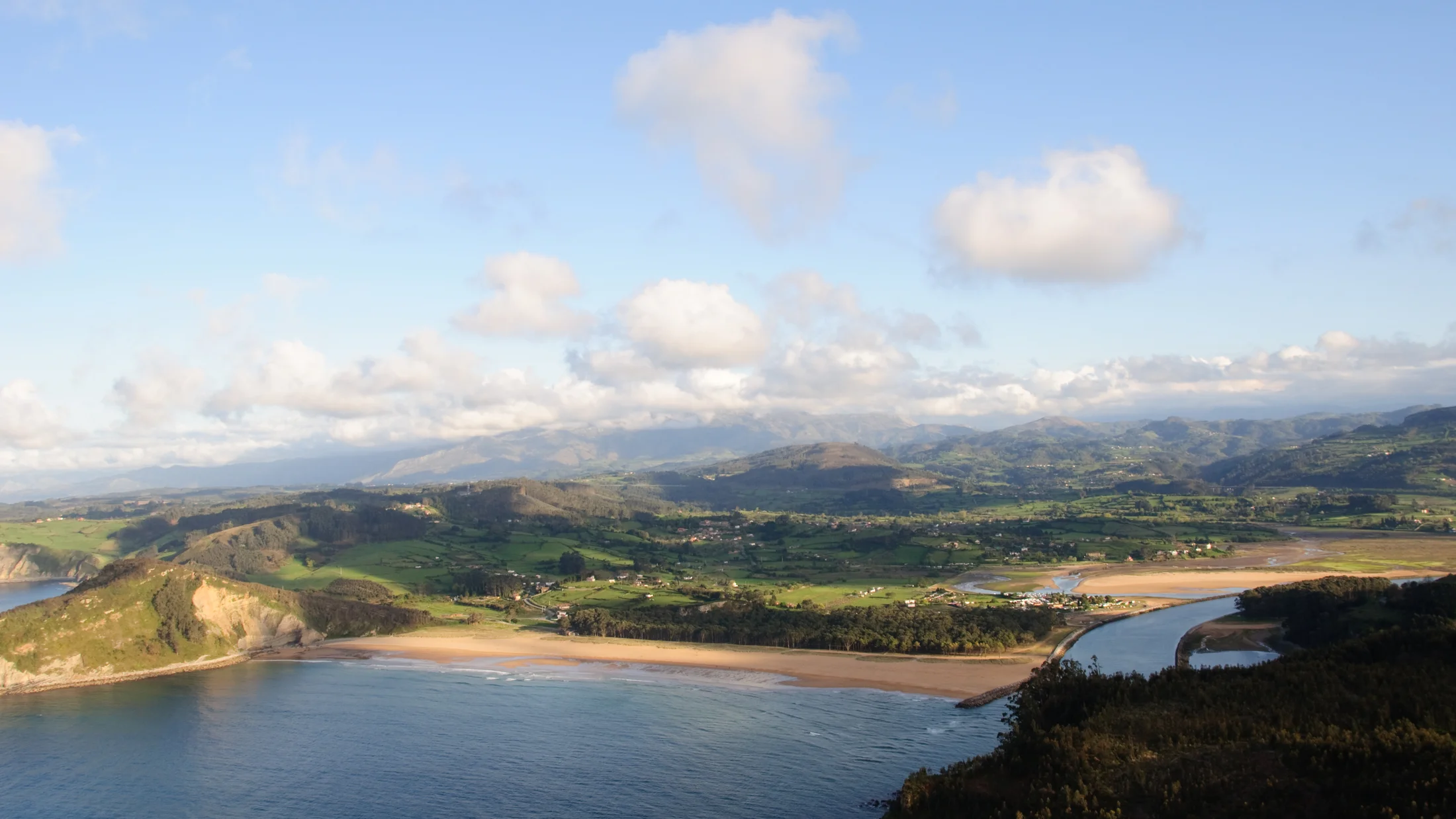
The Ría de Villaviciosa Nature Reserve occupies the estuary of the Valdediós river in the municipality of Villaviciosa, in Asturias, where the river's fresh water mixes with the Cantabrian Sea tides to form a system of marshes, sand banks and channels that change character with every tidal cycle. The estuary stretches about 8 kilometres from the mouth at Rodiles beach to the most interior zones, with a maximum width exceeding 500 metres at El Puntal. The nature reserve was declared in 1995 and protects around 240 hectares of estuarine habitats including Spartina and Salicornia salt marshes, coastal meadows, seagrass beds of Zostera marina, and riparian woodland with alders and willows.

The ría is one of the most ornithologically valuable sites on the Cantabrian coast. During migratory passage, between August and October, and through winter, the reserve hosts concentrations of waders using the mud banks as feeding grounds: curlew, bar-tailed godwit, grey plover, common sandpiper and turnstone are regular species. The Eurasian oystercatcher frequents the rocky edges of the estuary, and the grey heron is present year-round in the inner channels. In winter, flocks of seaducks — mainly tufted duck and red-breasted merganser — rest in the deeper water near the mouth.

Rodiles beach, on the western bank of the estuary mouth, is one of Asturias's most recognised surf spots. The Rodiles wave, which breaks over a sand bar at the river entrance, produces a tubular left of up to two metres that draws surfers from the entire northern coast in north-swell conditions. Beach access is regulated in high season to reconcile recreational use with estuary conservation and dune-nesting birds. Rodiles beach measures around 1,400 metres in length and is flanked by eucalyptus pine plantation and a mixed woodland of oaks and alders.

The surrounding landscape is integrated into the Villaviciosa municipality's cider-apple country, with orchards covering the gentle slopes of inland valleys. Local cider mills offer visits and tastings during production season, which runs from October to December. The 9th-century monastery of Santa María de Valdediós is 9 kilometres from the estuary mouth via road AS-267, and is one of the best-preserved examples of Asturian pre-Romanesque architecture in situ. The town of Villaviciosa, 4 kilometres from the reserve, has a historic centre with the church of Santa María de la Oliva and hospitality options oriented towards Asturian inland tourism.

The reserve is integrated into the Asturian Network of Protected Natural Spaces, managed to balance public use with habitat conservation. During peak months, access to Rodiles beach is managed via a shuttle service from the overflow car park at Selorio, around 3 kilometres away. The El Puntal interpretation trail runs along the eastern bank of the estuary and offers observation points with information panels about bird species present in each season. The trail covers around 3 kilometres with no technical difficulty.
Practical information

Everything you need to know for your visit to Reserva Natural de la Ría de Villaviciosa

How to get there
From Gijón, 35 km via A-8 to the Villaviciosa exit then road AS-267 to Rodiles. Regulated parking at the beach in summer. From Oviedo, 45 km via A-64.
Area Information
Villaviciosa town 4 km away, with Santa María de la Oliva church. Valdediós monastery (pre-Romanesque) 9 km away. Cider country with mill visits in autumn. Rodiles beach 1.5 km from the core protected zone.
Geography
Valdediós river estuary 8 km long and up to 500 m wide. Spartina and Salicornia salt marshes, intertidal mud banks, Zostera seagrass beds. Open mouth to the Cantabrian Sea with active coastal dune at Rodiles.
Flora & Fauna
Spartina maritima, Salicornia europaea and Zostera marina in intertidal zones. Alder and willow in riparian woodland. Curlew, bar-tailed godwit, oystercatcher, grey heron, tufted duck. Otter in inner channels.

Things to do

Find the best plans and things to do in Reserva Natural de la Ría de Villaviciosa

20

Accommodations

Best accommodation options in Reserva Natural de la Ría de Villaviciosa

Loading accommodation options...

Frequently Asked Questions

Get answers about Reserva Natural de la Ría de Villaviciosa

Between August and October, groups of migratory waders pass through: curlew, bar-tailed godwit, grey plover and common sandpiper feed on the mud banks at low tide. In winter, seaducks such as tufted duck and red-breasted merganser arrive. Grey heron and Eurasian oystercatcher are residents visible year-round. The best observation point is the El Puntal trail on the eastern bank of the estuary.
The Rodiles wave breaks at the estuary mouth over a sand bar, producing a hollow, tubular left that can exceed two metres in optimal north-swell conditions. It is a powerful, fast wave suited to intermediate-advanced surfers. In smaller conditions (under one metre), it is accessible to intermediate levels. There is no surf school at the beach itself; the nearest is in Gijón.
Yes, the estuary is navigable by kayak at high or mid-tide when the channels have sufficient depth. The paddling distance between the mouth and the inner zones is around 6-7 km. There is no kayak rental at the reserve itself; the nearest option is in Villaviciosa. Signposted nesting areas must be respected and a sufficient distance should be kept from bird flocks.
Yes, the ría is well suited to families. The El Puntal trail is flat and around 3 km, manageable with a pushchair. Rodiles beach has wide sandy areas for children to play on calm days. At low tide, intertidal rock pools allow observation of crabs, periwinkles and anemones. Bring binoculars so children can watch the waders on the mud banks.