The essentials of Parque Natural de la Sierra de Espuña

  • • Morrón de Espuña at 1,583 m, the highest point in Murcia with Mediterranean views on clear days
  • • More than forty 17th-century snow wells accessible by trail, with the Majal Blanco well intact at 1,200 m
  • • Resident colony of over one hundred pairs of griffon vultures nesting on the northern cliff faces
  • • 230 km of waymarked trails crossing gullies, century-old pine forests and limestone ridges
  • • Herds of Iberian wild goat visible on western rocky terrain at dawn

Description

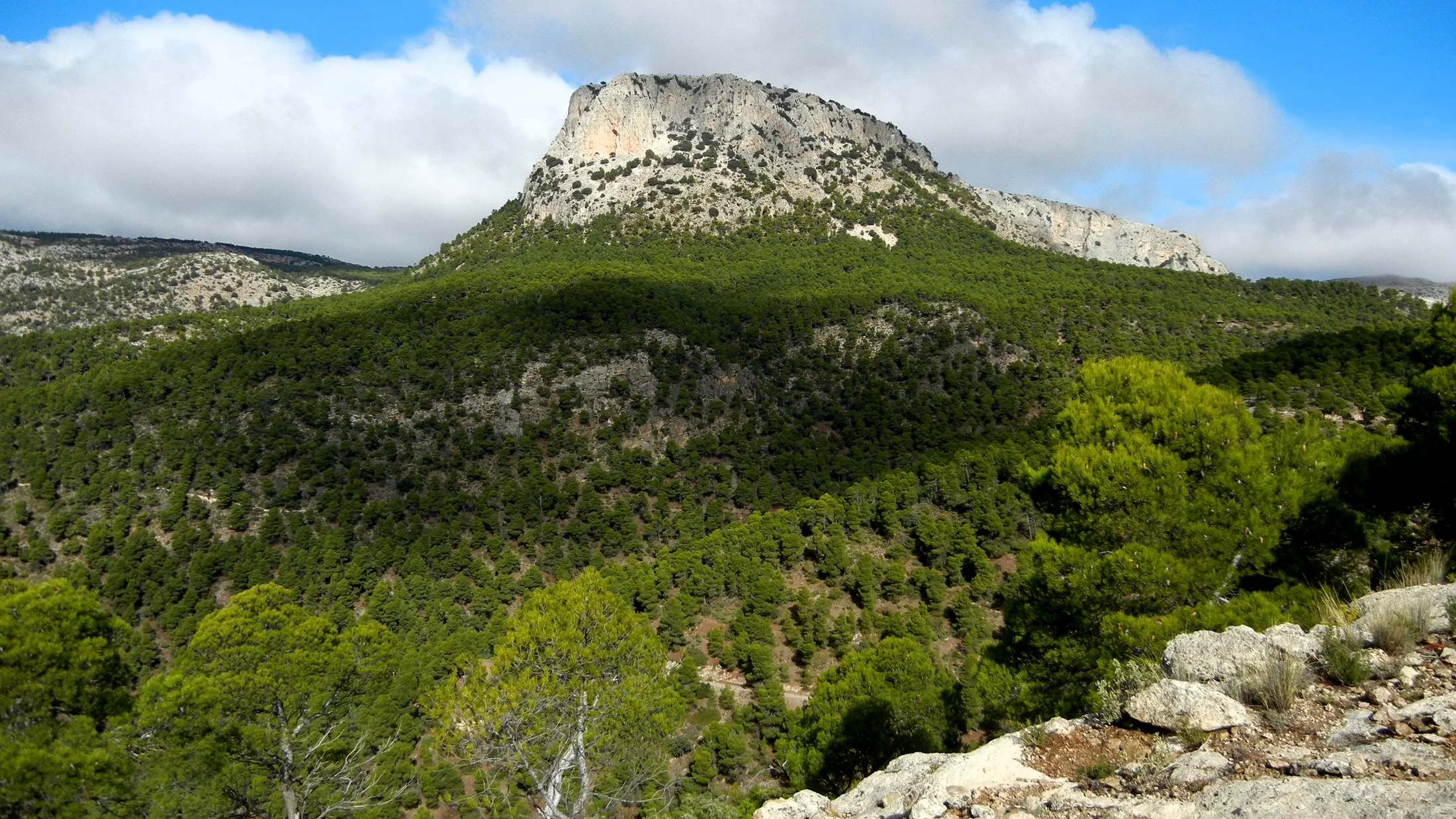
The Sierra de Espuña rises in the interior of the Region of Murcia as a limestone massif reaching 1,583 metres at the Morrón de Espuña, its highest point. This natural park of 17,804 hectares holds the largest expanse of Mediterranean mountain forest in the entire region, with pine forests planted in the 19th century that now grow alongside holm oaks, Portuguese oaks and strawberry trees native to the original landscape. The difference in elevation between the valley floors, below 400 metres, and the ridgeline of the Morrón creates a climatic variety that translates directly into biodiversity: within a single day you can move from the semi-arid vegetation of the foothills to the cool shade of upland forests.

Much of the park's forestry history is tied to the 17th-century ice wells. These snow pits, known locally as 'pozos de la nieve', were excavated on north-facing slopes to store winter snow and supply it to Murcia and Lorca through the summer months. More than forty inventoried wells survive today, and several are accessible by trail. The most impressive, the Pozo de la Nieve del Majal Blanco, stands intact at 1,200 metres of elevation. This historical infrastructure turned the sierra into an economic asset that motivated, centuries later, the first reforestation campaigns that shaped the landscape visitors see today.

The hiking network covers more than 230 kilometres of waymarked trails. The PR-MU 55 trail follows the ridge from Collado Bermejo to the Morrón de Espuña in around four hours of walking with 600 metres of cumulative elevation gain. The PR-MU 56 crosses the Barranquete gully and climbs to the Umbría Larga, where pines reach impressive dimensions. For shorter outings, the Las Alquerías campsite area provides quick access to viewpoints overlooking the Valle del Guadalentín. In autumn, the scent of thyme and rockrose fills the mid-elevation slopes while griffon vultures — a resident colony of more than one hundred pairs — soar above the northern cliffs.

The wildlife includes species rarely seen elsewhere in the Region of Murcia. Wildcats and badgers inhabit the quieter corners of the park, while the Iberian wild goat (Capra pyrenaica hispanica) forms herds that are most visible on rocky terrain in the western sector during the hours around dawn. Raptors are well represented: golden eagle, Bonelli's eagle, peregrine falcon and eagle owl all nest within the park boundaries. The butterfly count exceeds 80 species, including the Iberian apollo (Parnassius apollo), whose presence confirms the quality of the high-altitude habitat.
Practical information

Everything you need to know for your visit to Parque Natural de la Sierra de Espuña

How to get there
From Murcia city, take the A-7 motorway towards Lorca and exit at Alhama de Murcia (exit 615). From there, follow the RM-5 towards Gebas and reach the Ricardo Codorníu Visitor Centre in 20 minutes. From Totana, the RM-E4 climbs directly into the heart of the park over 15 km. The Las Alquerías car park is the standard starting point for ridge routes.
Area Information
The Ricardo Codorníu Visitor Centre in Alhama de Murcia offers a permanent exhibition on forestry history and the snow wells. The park has a recreational area at Las Alquerías, a campsite with a free camping zone, and several picnic areas. Access is free; the campsite has its own fees.
Geography
North–south oriented limestone massif with the Morrón de Espuña (1,583 m) as its main peak and the Morrón del Buitre (1,547 m) to the south. Deep gullies — Barranquete, Malvariche, El Sorbas — dissect the slopes creating moist microhabitats just a few kilometres from the Murcian semi-desert.
Flora & Fauna
Aleppo and Laricio pine forests grow alongside holm oak, Portuguese oak and strawberry tree woodlands. Notable wildlife includes the Iberian wild goat, wildcat, badger, golden eagle, Bonelli's eagle, and more than 80 butterfly species including the Iberian apollo (Parnassius apollo).

Things to do

Find the best plans and things to do in Parque Natural de la Sierra de Espuña

20

Accommodations

Best accommodation options in Parque Natural de la Sierra de Espuña

Loading accommodation options...

Frequently Asked Questions

Get answers about Parque Natural de la Sierra de Espuña

The most common route from the Las Alquerías car park, following the PR-MU 55 to the summit, covers about 14 km return with 600 m of cumulative elevation gain. At a steady pace, allow 4 to 5 hours for the full outing. In summer, starting before 8:00 is essential to avoid the midday heat.
Yes. The Pozo de la Nieve del Majal Blanco is accessible via a forest track driveable to the upper car park and then an easy 30-minute trail. The Alhama de Murcia Visitor Centre can point you to the most accessible wells based on your fitness level and available time.
There is no regular bus service into the park interior. From Murcia or Totana you can reach foothill towns such as Alhama de Murcia and Mula, but from there a private vehicle or taxi is required. Some activity providers offer transport included in their guided excursions.
The best times are the first two hours after dawn and the final stretch before sunset. The rocky terrain in the western sector of the park, between the Morrón del Buitre and the Gebas track, concentrates most herds. In winter and spring the groups descend to lower elevations and are easier to spot from the trail.
The park has a regulated free camping area at Las Alquerías, open year-round except during maximum fire-risk periods, generally July and August. Camping outside designated zones is not permitted. It is advisable to check with the Visitor Centre before visiting during peak season.