The essentials of Parque Natural de Enciña da Lastra

  • • Galicia's largest underground cavity network with roughly 200 catalogued caves
  • • 470-million-year-old karst limestone landscape, rare in Galicia
  • • Over 25 orchid species and Mediterranean flora in an Atlantic setting
  • • Egyptian vulture, golden eagle and peregrine falcon on the Sil canyon cliffs
  • • Godello and mencia wines from the Valdeorras DO in the municipality of Rubia

Description

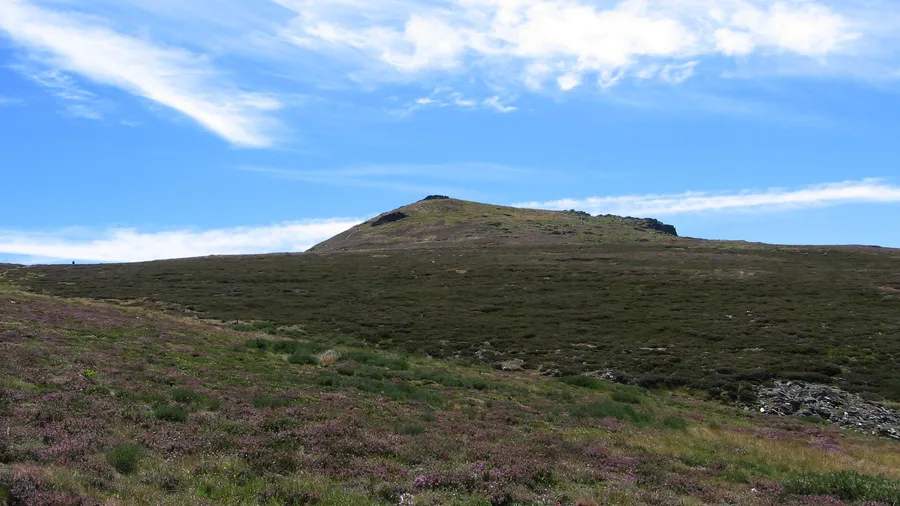
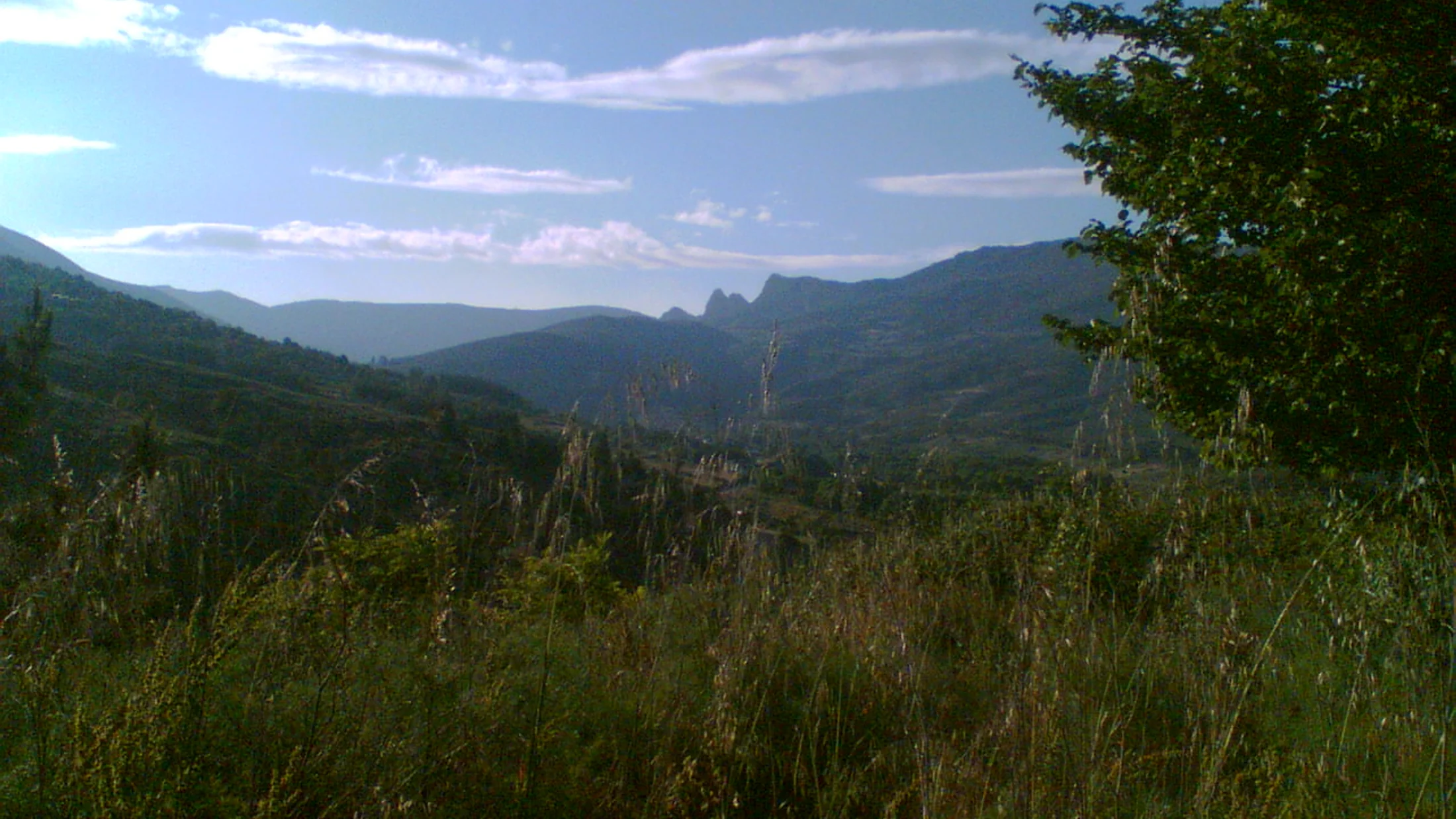
The Parque Natural Serra da Encina da Lastra covers 3,151 hectares in the municipality of Rubia, in southeastern Ourense province within the Valdeorras comarca. Declared in 2002, it is the youngest of Galicia's six natural parks and the most atypical: its limestone and dolomite landscape contrasts with Galicia's usual granite terrain, creating a markedly Mediterranean ecosystem in a region where Atlantic climate predominates. The Sil river divides this mountain range, carving a canyon with steep slopes that separates the park's two main massifs.

The karst relief is the defining geological feature. The limestone rock, estimated at 470 million years old, has been shaped by water dissolution over millennia, forming Galicia's largest network of underground cavities: roughly two hundred recorded sinkholes and caves. The caves are called "palas" locally, a term of pre-Roman origin. The most notable include Cova da Zorra (600 m in length), Pala de Xilberte, Pala do Pombo, Trasmonte and Pala de Tralapala. Many of these caves remain in pristine condition and host Galicia's richest bat colonies, with at least 9 confirmed species.

The flora has a Mediterranean character that is singular within Galicia. Holm oak and strawberry tree forests coexist with wild thyme scrub, and over 25 orchid species grow in the clearings and limestone meadows. The holm oak that gives the park its name is the dominant tree on sunny slopes, while chestnuts and oaks occupy the shaded areas and gullies. In the cracks of the limestone outcrops, rock-dwelling plants adapted to poor, dry soils survive — species rarely found elsewhere in the autonomous community.

The vertebrate fauna includes 39 confirmed mammal species, one of the most complete lists in Galicia. The native white-clawed crayfish inhabits the park's streams, representing one of the few remaining populations in the provinces of Lugo and Ourense. Birds are among the park's principal assets: over one hundred nesting species have been recorded thanks to the high habitat diversity. Nesting raptors include Egyptian vulture, golden eagle, short-toed snake eagle, booted eagle, peregrine falcon and eagle owl, which occupy the limestone cliffs of the Sil canyon.

Cave exploration requires prior contact with local speleology associations, as the caves are not set up for tourist visits. Signposted trails within the park run through holm oak forests and along Sil canyon viewpoints, with routes ranging from 5 to 12 km. The municipality of Rubia, with its winemaking heritage linked to the Valdeorras DO, offers rural accommodation and dining based on godello and mencia wines, octopus, chestnuts and Galician pie. The proximity of Ponferrada (30 km) and Ourense allows combining the visit with El Bierzo or the Ribeiras do Sil.
Practical information

Everything you need to know for your visit to Parque Natural de Enciña da Lastra

How to get there
From Ponferrada, take the N-120 toward Ourense; the park is about 30 km away. From Ourense, the same N-120 in the opposite direction, roughly one hour. Buses run from Ponferrada to Rubia with limited frequency. A private vehicle is recommended.
Area Information
Signposted trails of 5 to 12 km through holm oak forests and Sil canyon viewpoints. Caves are not set up for tourism; contact with speleology associations is needed. Information available at the Rubia town hall.
Geography
A 3,151 ha limestone range in southeastern Ourense, divided by the Sil river canyon. Karst terrain with sinkholes, caves and 470-million-year-old limestone outcrops, unique within Galicia's granite landscape.
Flora & Fauna
Holm oak, strawberry tree and wild thyme define Mediterranean flora rare in Galicia, with over 25 orchids. Fauna includes Egyptian vulture, golden eagle, peregrine falcon, 39 mammal species and colonies of 9 bat species. The native crayfish is threatened.

Things to do

Find the best plans and things to do in Parque Natural de Enciña da Lastra

19

Accommodations

Best accommodation options in Parque Natural de Enciña da Lastra

Loading accommodation options...

Frequently Asked Questions

Get answers about Parque Natural de Enciña da Lastra

The caves are not set up for conventional tourist visits. Access requires contacting local speleology associations that organise guided trips with technical equipment. Some cavities require prior caving experience. The park prohibits unauthorised entry to protect the bat colonies that inhabit the underground spaces.
It is the only protected area in Galicia with a karst limestone landscape, in contrast to the granite that predominates across the region. This creates a Mediterranean ecosystem with holm oak, strawberry trees and orchids within an Atlantic setting, a combination found nowhere else in the Galician autonomous community.
The park has signposted trails ranging from 5 to 12 km that run through holm oak forests, viewpoints over the Sil canyon and karst areas. The routes are of low to moderate difficulty, suitable for most hikers. Mountain footwear, water and sun protection in summer are recommended.
The municipality of Rubia and the Valdeorras comarca offer rural guesthouses and restaurants serving Galician cuisine: octopus, pie, chestnuts and godello and mencia wines with Designation of Origin. Ponferrada, 30 km away, has more accommodation and dining options for those seeking a wider range of services.
Yes, the park's location allows combining it with the Ribeiras do Sil (catamaran through the canyon), the Valdeorras DO vineyards, the Bierzo region in Leon and the thermal baths of Ourense. A three- or four-day trip allows covering the natural park and at least two of these complementary areas.