The essentials of Laguna de Gallocanta

  • • Up to 80,000 common cranes gathering between October and March during migration
  • • Over 220 bird species recorded, including great bustard and Dupont's lark
  • • Four free-access observatories and photographic hides for long lenses
  • • Steppe landscape at 1,000 m altitude with wide horizons and clear skies
  • • Dawn crane departures with trumpeting calls audible for kilometres

Description

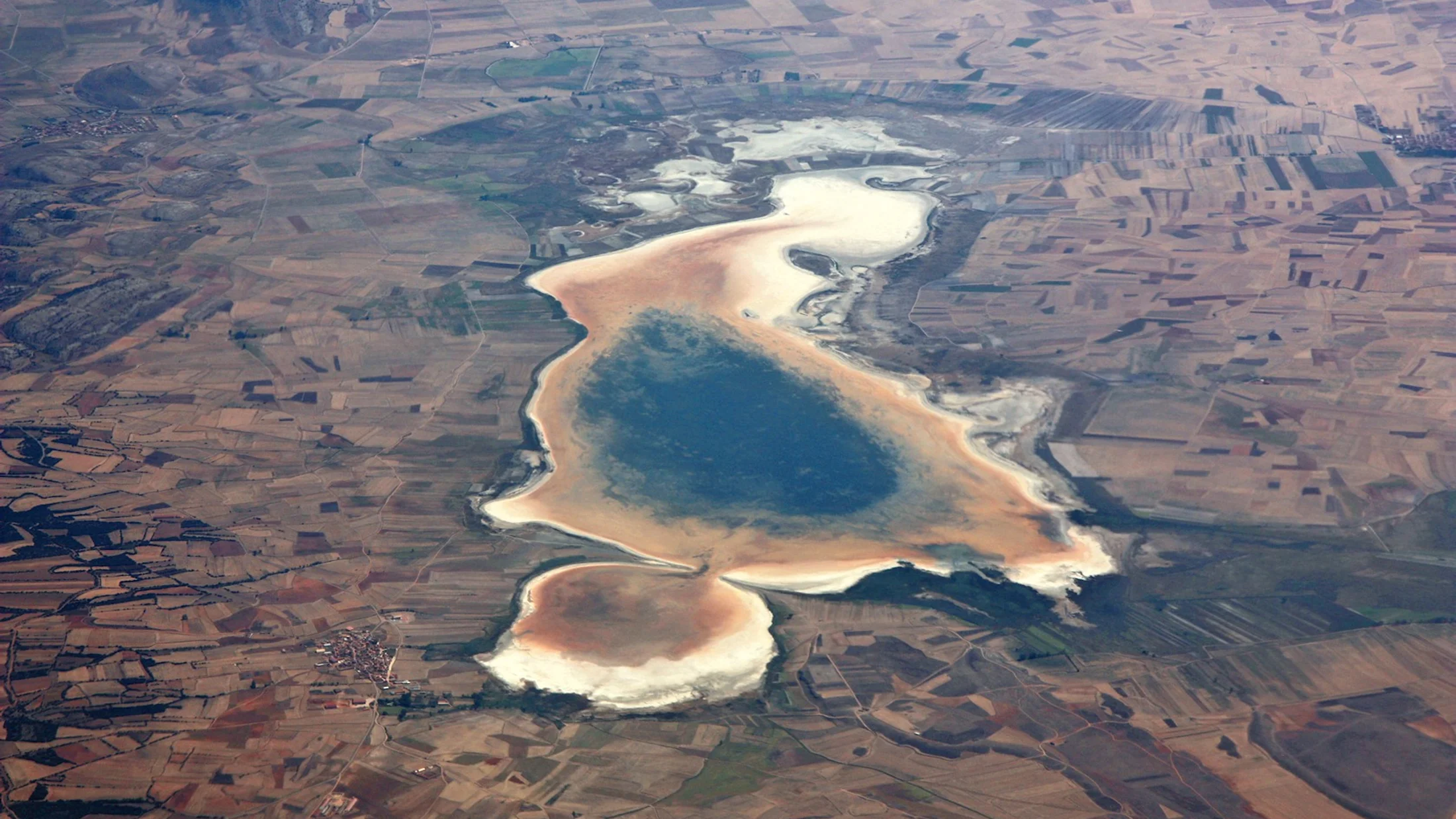
Laguna de Gallocanta lies between the provinces of Zaragoza and Teruel, in the endorheic basin of the sierra bearing the same name, at 1,000 metres altitude on the Aragonese plateau. Covering over 14 km², it is the largest saline wetland on the Iberian Peninsula and one of the most significant in western Europe. The lagoon occupies 1,924 hectares, stretching 7 km long and 2 km wide, surrounded by cereal fields, ecologically valuable saline meadows and gentle hills that shape a steppe landscape where the sky seems to take up more space than the land. This is a territory of long horizons, constant wind and silences broken only by birdsong.

Gallocanta's defining feature is the concentration of common cranes (Grus grus) during their annual migration between northern Europe and Africa. Almost the entire western crane population — between 20,000 and 80,000 birds depending on the year and season — uses the lagoon as a resting area. Arrivals take place from mid-October to mid-December, and the spring departure runs from February to early March. At dawn, the flocks lift off from the lagoon towards the surrounding cereal fields with a trumpeting sound audible for kilometres; at dusk, their return in orderly formations silhouettes against the red western sky.

Beyond the cranes, the lagoon supports over 220 bird species recorded throughout the year. Great bustards (Otis tarda) roam the surrounding steppe fields and represent one of Aragon's most stable populations. Little bustard, stone-curlew, pin-tailed sandgrouse and Dupont's lark — the last one endangered — inhabit the dry grasslands and esparto scrub around the lagoon basin. At the Aguanares, Ojos, Reguera and Cañizar observatories, distributed around the lagoon with free access, birdwatching is possible year-round without a hide, though several photographic hides allow close-range sessions for 300-600 mm lenses.

The Gallocanta area offers a slow, contemplative tourism experience. The villages of Gallocanta, Tornos, Bello, Berrueco and Las Cuerlas preserve rural Aragonese stone-and-rammed-earth architecture with small permanent populations. The lagoon interpretation centre in Bello provides ornithological route maps and an updated migration calendar. Local rural lodgings organise early-morning crane departures and guided sunset sessions with telescopes. For photographers, the best light arrives at dawn and dusk with the sun behind you along the southern shore; November to February concentrates peak migration activity and the clearest skies for landscape and astrophotography.
Practical information

Everything you need to know for your visit to Laguna de Gallocanta

How to get there
From Zaragoza via the A-23 to Daroca, then A-211 to Gallocanta (120 km, 1 h 30 min). From Teruel via the N-234 and A-211 (90 km, 1 h 15 min). No regular public transport to the lagoon; a private vehicle is needed. Free parking at the observatories and in the surrounding villages.
Area Information
Lagoon Interpretation Centre in Bello with exhibition, ornithological maps and migration calendar. Four free-access observatories (Aguanares, Ojos, Reguera, Cañizar). Rural lodgings in Gallocanta, Tornos and Bello offering birdwatching activities. Restaurants serving Aragonese cuisine.
Geography
Endorheic basin at 1,000 m altitude between the Sierra de Santa Cruz and the sierra of the same name. Lagoon of 1,924 ha, 7 km long and 2 km wide. Saline soil with halophytic meadows around the perimeter. Steppe cereal-farming landscape in the surroundings.
Flora & Fauna
Ecologically valuable halophytic saline meadows around the lagoon perimeter. Esparto grasslands and cereal fields on the surrounding steppe. Common crane (20,000-80,000 during migration), great bustard, little bustard, stone-curlew, pin-tailed sandgrouse, Dupont's lark (endangered). Over 220 bird species recorded.

Things to do

Find the best plans and things to do in Laguna de Gallocanta

Accommodations

Best accommodation options in Laguna de Gallocanta

Loading accommodation options...

Frequently Asked Questions

Get answers about Laguna de Gallocanta

Peak crane numbers occur between November and February, with up to 80,000 birds in the best years. The spring departure from February to early March is shorter but more intense. Dawn is the optimal moment: flocks lift off towards the cereal fields with trumpeting calls audible for kilometres.
Binoculars of 8x42 or 10x42 are enough for general observation from the observatories. For photography, 300 to 600 mm lenses and a tripod are recommended. Several photographic hides allow close-range sessions. The Bello Interpretation Centre lends binoculars free of charge if you do not have your own. Warm clothing is essential because of wind and altitude.
No. The four observatories (Aguanares, Ojos, Reguera and Cañizar) have free access year-round. They are distributed around the lagoon and reached by car with parking next to each one. The Bello Interpretation Centre has set hours and may charge for the exhibition, but the outdoor information is freely accessible.
Yes, it is one of the best on the Iberian Peninsula for ornithological photography. Light conditions at dawn and dusk are excellent, with low sun illuminating crane flocks over the lagoon. Photographic hides allow close approaches without disturbance. The clear skies and low light pollution also make it a strong astrophotography spot with the Milky Way visible to the naked eye.
The lagoon supports over 220 species. Great bustards are visible year-round in the surrounding fields, and Gallocanta is one of the best sites in Aragon for watching them. Little bustard, stone-curlew, pin-tailed sandgrouse and Dupont's lark inhabit the steppe grasslands. Waders and ducks increase in spring. Raptors such as Montagu's harrier and lesser kestrel also frequent the area.