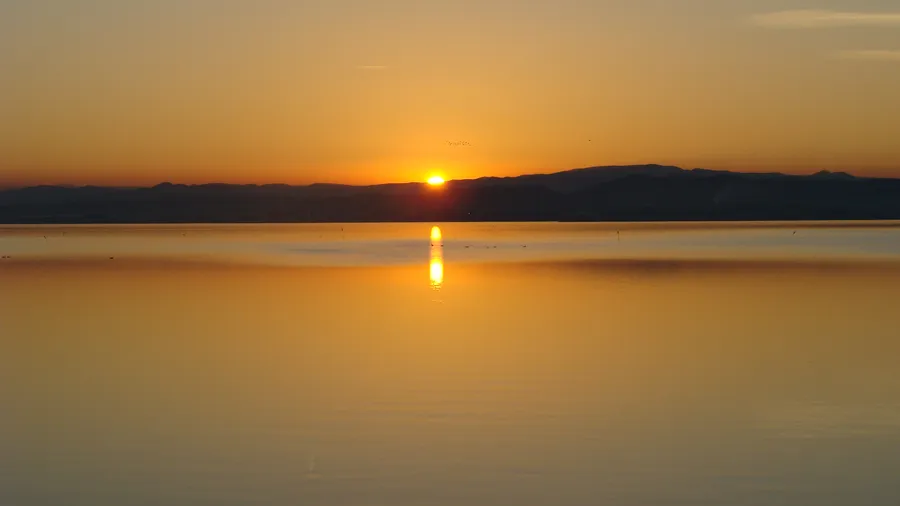
Why Sunset Turns La Albufera Into A Quiet, Golden Stage
The Albufera sunset is not just a view; it is a slow change of light over still water that calms your pace. Just 20 km south of Valencia, the Albufera nature reserve protects a shallow lagoon ringed by dunes, pinewoods, and rice fields shaped by centuries of farming. You’ll find a simple plan that rewards unhurried travelers: a boat ride across mirror-like water, a stroll beside rice fields, and dinner in El Palmar where paella still tastes of the land.
One breath-long hush often arrives before the last light, and the lake turns copper then violet for a minute.
This guide gives you everything you need to plan an afternoon-to-evening visit timed to the sky: sunset boat tour Valencia options, short walks, photography tips, and a relaxed El Palmar paella without rushing. You’ll also find how to get there, when to go for the best color, what to bring, and how to be a good guest in a working landscape.
Why the Albufera at dusk is worth your time
You come for calm water and big sky, but also for living heritage where fishers and rice farmers still set the pace. At dusk the wind often falls and the lake acts like glass; silhouettes of egrets and cormorants slide across the horizon. A boat ride Albufera style—on flat-bottomed craft steered by local barqueros—lets you feel that stillness from the center of the lagoon. Pair it with El Palmar for a full circle: day on the water, evening at the table.
The park was declared a protected area in 1986 by the Generalitat Valenciana; the lagoon covers roughly 2,800 ha within a 21,000+ ha park. These are facts that support what you’ll feel: light, water, and working countryside in balance.
What you’ll find in this guide
You’ll get practical, on-the-ground detail for visitors coming from Valencia: the best months and times for the Albufera sunset, exact ways to reach the lake by car, bus, bike, or taxi, and how to pick a paseo en barca Albufera that matches your pace. You’ll learn how rice fields Albufera shape the seasons, where to spot birds, and how to frame photographs. Finally, you’ll see how to enjoy El Palmar paella without stress and what to bring to keep the experience comfortable and respectful.
Picuco te puede ayudar
Does something here catch your eye?
Tell us.
Write to us on WhatsApp or email: we answer questions, find the best options and help you sort out the booking.
Escríbenos
Essential Details And How To Get There From Valencia
Dusk is short, so knowing where to stand—or float—matters. The Albufera nature reserve begins just beyond the urban beaches and dunes of El Saler, yet feels quiet the moment you leave the pines.
A soft salt-and-reed smell hangs in the air as the last boats nose out from the channels.
Where it is, when to go, and sunset timing
Parc Natural de l’Albufera lies immediately south of Valencia, bordered by the Mediterranean to the east and towns like El Saler, El Palmar, and El Perellonet along its edges. From Valencia’s center to El Palmar is about 20–25 km (30–45 minutes by car depending on traffic). The Gola del Pujol viewpoint—where the lagoon meets the sea through a controlled channel—is a classic place to watch color bloom on the water.
For the strongest tones and comfortable temperatures, spring (April–June) and autumn (September–October) are ideal. In winter, cool dry days often deliver crystal visibility and birdlife in abundance, with early sunsets. Summer brings longer evenings and warm air, but haze and mosquitoes can be part of the scene at dusk.
Sunset times shift across the year:
- Winter (Dec–Jan): around 17:30–18:00
- Spring (Mar–May): around 19:30–21:00
- Summer (Jun–Aug): around 21:15–21:30
- Autumn (Sep–Nov): around 18:00–20:30
Plan to be at your chosen spot 45–60 minutes before official sunset; the 20 minutes after the sun drops often hold the best color. If you search “puesta de sol Albufera Valencia” on the day, check live times and weather updates for precise planning.
Practical source check
Confirm daily sunset and weather via AEMET (Spain’s official meteorology) or a reliable almanac; road and bus updates appear on EMT Valencia’s channels.
Getting there: car, bus, bike and transfers
Getting from Valencia to the lake is straightforward. Two EMT bus lines connect the city to the park edges; driving remains the quickest door-to-door. Cycling is an enjoyable option for those comfortable with a 20–30 km round trip on mostly flat routes.
- By car: Take the V-15 (Autovía del Saler) south toward El Saler; for El Palmar, continue via CV-500 and local signs. Expect 25–45 minutes from central Valencia depending on traffic. Parking fills near sunset at Gola del Pujol and inside El Palmar; arrive early or park slightly outside the village and walk in.
- By bus: EMT line
25runs to El Palmar/El Perellonet; EMT line24serves El Saler and beaches. Frequencies vary by season (roughly every 20–40 minutes by day, less frequent evenings). Buy tickets onboard or with the EMT app, and check last return times before sunset. From the El Palmar stop, several embarcaderos offer paseos en barca El Palmar within a short walk. - By bike: A flat, coastal route threads pinewoods in the Devesa. Combine metro or train to the southern city edge, then ride through El Saler to El Palmar. Bring lights for the return after dusk and a reflective vest.
- By taxi/transfer: Taxis from central Valencia to El Palmar typically take 30–40 minutes depending on traffic. Pre-book a return, especially on weekends, or use a transfer service if you plan a late dinner.
A quick comparison helps you pick your mode:
| Mode | Time (one way) | Approximate cost | Best for | Notes |
|---|---|---|---|---|
| Car | 25–45 min | Fuel/parking | Flexibility | Arrive early for Gola del Pujol parking |
Bus 24/25 |
40–60+ min | Low fare | Budget/relaxed | Confirm last bus before/after sunset |
| Bike | 60–90 min | Free | Active travelers | Bring lights for return |
| Taxi/transfer | 30–40 min | Medium | Comfort | Pre-book the ride back |
Where to stay near the lagoon
If you want the light without the rush, consider sleeping near the lake or in Valencia and visiting late afternoon. You’ll find a spectrum: simple hostales in El Palmar, seaside hotels in El Saler, rural casas around Sueca, and city stays in Valencia with an easy evening hop to the park.
- Budget-friendly (sleep, then sunset):
- Hostales and small guesthouses in El Palmar or El Saler with basic rooms; expect modest amenities and walking distance to channels and embarcaderos.
- Valencia city pensions near Ruzafa or Jesús offer good value and late-night dining back in town.
- Mid-range (closer to nature):
- Beachside hotels in El Saler set by dunes and pines—good if you want a morning walk by the sea and an evening on the lake.
- Rural casas in nearby villages with porch views over irrigation canals or rice fields Albufera.
- Special stays (for slow evenings):
- Boutique hotels with larger terraces, some facing the Devesa greenery; useful if you plan to photograph and need space to sort gear afterward.
Typical ranges swing widely by season—budget rooms can start under 80–100 € per night in shoulder months, while boutique properties near the coast may exceed 160–220 € on weekends. Confirm current prices on the property’s site or compare options in central Valencia if you prefer city culture plus an evening excursion.
Boat Rides And Sunset: Routes, Durations, And How To Book
A paseo en barca Albufera is simple and deeply local: flat-bottomed wooden boats, shallow draft, and a barquero who knows channels by heart. Most departures leave from El Palmar or nearby embarcaderos, skimming through narrow channels before opening to the lake for the main show.
As the oar nudges off the dock, reed stalks brush the gunwale with a dry whisper.
Types of boat rides (traditional, guided, private)
You’ll see three common formats as you compare options for a sunset boat tour Valencia-style:
- Traditional shared ride:
- Operated by local barqueros, often family-run, with fixed durations (30–60 minutes) and sunset departures in small groups.
- Expect calm navigation through channels and 15–30 minutes on open water during golden hour.
- Good for first-timers who want the essence of paseos en barca El Palmar without a big time commitment.
- Guided nature ride:
- Led by barqueros or nature interpreters focusing on birds, rice farming, and park history.
- Typically 60–90 minutes to allow for observation stops and gentle drifting on the lake.
- Ideal if your goal is observación de fauna and you enjoy commentary while the light changes.
- Private charter:
- Reserved for couples, families, or small groups who want space and silence.
- Timing is flexible; some charters allow 60–120 minutes, which aligns perfectly with the run-up to the Albufera sunset and blue hour.
- Best if you’re after specific photographs or a quiet moment together.
All boats are low and stable by design for shallow water, and most provide life jackets. Check capacity (commonly 8–20 seats) and whether a canopy or blankets are available in cooler months.
Booking, prices, and durations that work
Sunset is the most popular slot, so reserve in advance on weekends, holidays, and peak months (May–June, September–October). You can often book same-day on site outside peak periods, but don’t rely on it if you’re aiming at the exact puesta de sol Albufera Valencia.
- Typical durations: 45–60 minutes for shared rides; 60–90+ minutes for guided or private.
- Price ranges: commonly 10–18 € per person for shared rides; private boats vary by duration and group size. Confirm the latest price with the operator on site or consult curated options on Picuco.
- Best timing: board 30–45 minutes before official sunset to catch the warm-up and linger through the first moments of twilight.
Ask your barquero about wind and clouds; a slight breeze can ruffle reflections, while high clouds often amplify color.
How to make the most of your sunset ride
Pick a seat at the bow for a clear view forward, or near the stern if you enjoy watching oarwork and the changing wake. Dress for the drop in temperature after sundown—layers and a light windproof jacket help even in summer. Bring:
- Water and a small snack
- A headlamp or phone light for post-dusk paths
- Insect repellent year-round; more in warm months
- A dry bag or zip pouches for phone and camera
Respect the lagoon: keep voices low, avoid standing suddenly in small boats, and leave no litter. If you plan dinner, coordinate a return to El Palmar so you can walk straight to a table for El Palmar paella while color fades from the lake. Alternatively, return to shore and take a 15–20 minute stroll along a rice-field track to feel the evening deepen before you sit down.
Rice Fields, Wildlife, And Photography As The Light Fades
Here, farming shapes the view you photograph. The rice fields around the lagoon aren’t backdrop; they are the working engine that feeds both kitchens and birds.
In the last light, cut stalks and flooded parcels turn into a quilt of bronze mirrors.
Rice fields and a living agrarian heritage
Arrozales Albufera define the flat horizon and the yearly rhythm. In spring, seedbeds and planting begin, channels fill, and fields hold a steady sheet of water. By midsummer, green stands thick above the waterline; come September–October, stalks yellow and harvesters move. Winter brings the seasonal flood—fields re-flooded after harvest—which creates broad reflective surfaces and rich feeding for birds.
This rice-water cycle, managed through centuries-old irrigation ditches and gates, is why the landscape looks different each month at dusk. Paths along the margins make easy short walks; you can step out after your ride and follow the levees for 15–30 minutes to watch the color change over planted lines. Raised spots such as the Gola del Pujol viewpoint show you how lagoon, channels, and paddies mesh into one system.
Farmers, fishers, and conservation teams keep the balance here—the people behind the view. Treat gates, crops, and tracks as workplaces first, photo sets second.
Wildlife: what to look for and when
Even if you come for light, you’ll likely stay still for birds. Regulars include:
- Herons and egrets (grey heron, little egret) stalking margins
- Avocet and black-winged stilt sweeping shallows with long legs
- Glossy ibis and spoonbill feeding in winter floods
- Cormorants aligned on stakes at dusk, wings open to dry
- Marsh harrier quartering low over reeds
Autumn and winter bring peak diversity; spring has courtship behavior and cleaner light. For observación de fauna in the best light, aim for the 90 minutes bracketing sunset. Bring binoculars (8× or 10×) or a telephoto lens (300 mm+) if you want more than silhouettes. Good viewing points include rice-field edges reachable from El Palmar’s back lanes, the Gola del Pujol viewpoint for wide angles, and quieter tracks near Sueca’s margins when you can arrive earlier.
Rules are simple: keep distance, never flush birds, and stay on tracks—this is both home and pantry for them.
Photo tips for a burning horizon
Sunset works best when you compose with layers: a boat in the foreground, reed lines as mid-ground, and the sky pulling you out. For the puesta de sol Albufera Valencia, consider:
- Tripod or beanbag for stability on levees; on boats, brace elbows and use higher ISO.
- Settings to start: aperture f/5.6–f/8, ISO 400–800 near dusk, shutter 1/250s+ for moving birds.
- If your camera allows, spot-meter for highlights and pull shadows later to keep color in the sky.
- For birds, switch to continuous autofocus and a faster shutter (1/1000s if light allows); silhouettes against color can be striking without perfect detail.
- Polarizers cut glare earlier in the afternoon but remove them at low sun; reflection is your friend here.
Finally, shoot through blue hour—the five to ten minutes after the sun disappears can give you the strongest gradient and glassiest reflections.
El Palmar: Food, Barracas, And Everyday Culture
El Palmar is the human heart of the lake, a village of canals, boats, and kitchens that cook what the fields and lagoon provide. You come for paella, yes, but also for a pace that invites you to linger between water and table.
A warm curl of wood smoke and sofrito drifts from doorways as oars click against wooden posts.
Where to eat paella: honest plates and easy timing
El Palmar paella is best when cooked over wood with rice from these fields and broth that carries the lake’s breath. Expect the classic Valencian style—rice, chicken, rabbit, garrofó (large lima bean), and green beans—plus local rice dishes like all i pebre (eel stew) or arròs a banda. Weekends and holidays fill fast, especially after the sunset boats return.
How to time and choose without stress:
- Reserve for late lunch (14:30–15:30) if you plan a sunset walk later; or book a 20:30–21:30 dinner in summer after your ride.
- Ask if wood-fire (“a leña”) is used and whether paellas are cooked to order; good kitchens will be direct about waiting times (often 30–45 minutes).
- If pairing with paseos en barca El Palmar, confirm your boat’s return and choose a restaurant within a 10-minute walk of the embarcadero.
- Share starters from the lagoon—clóchinas in season, tellinas, or eel—then split a single paella for two to keep the meal balanced after an active afternoon.
Prices vary by ingredient and season; paellas are commonly priced per person with a minimum of two, and starters change with catch and market. Ask for the rice variety—Senia and Albufera are local classics—and enjoy a dessert flavored with orange or pumpkin from nearby fields.
Barracas, heritage, and village life
Barracas are traditional thatched houses with whitewashed walls and high-pitched roofs designed to breathe in summer and shed winter rain. You can still spot restored examples around El Palmar’s lanes and along some canals. Their shape tells the story of reed beds, local timber, and a craft adapted to wet ground and warm weather.
Walk respectfully—these are often private homes—and look for cultural signs that explain features like the hearth, the loft, and the reed thatching. Local festivals and small exhibits sometimes open doors to the public; when you see posted hours, step in and ask simple questions. You’ll connect the architecture to the landscape that supplied its materials.
Local experiences at an easy pace
Not every hour needs a schedule here. If you have half a day:
- Rent bikes in the village and follow a signed route along rice-field tracks, looping back before dusk to board your boat.
- Join a short, guided walk to learn how gates manage water between lagoon and paddies.
- Visit in harvest months to watch cutting and transport—stand well back and follow farmer instructions at crossings.
- Idle by a canal café with an horchata or a glass of local white, then meander to your dinner table.
A simple rhythm works: activity when light is high, ride at sunset, slow food after dark.
Practical Tips: What To Bring, Safety, And Accessibility
Small choices make a big difference to dusk comfort. The lagoon’s openness means a gentle temperature drop after the sun slips; mosquitoes are active at warm times of year; and paths are unlit once twilight deepens. Your checklist:
- Clothing by season:
- Spring/autumn: light layers, windproof shell, closed shoes for levee walks.
- Summer: breathable long sleeves and trousers at dusk to reduce bites; carry a light layer for the return.
- Winter: warm mid-layer and hat for boat rides; gloves on breezy days.
- Essentials:
- Insect repellent, especially May–October
- Water and small snacks for children
- Headlamp/phone light for unlit paths and parking areas
- Power bank for maps and cameras
- Small first-aid kit; plasters and bite cream
- Dry bag or zip pouches for devices on the boat
- Navigation and timing:
- Pin your embarcadero and parking location before leaving coverage; paths can look similar in low light.
- Arrive 45–60 minutes before sunset to secure parking and confirm boat departure.
- Safety on boats and levees:
- Follow barquero instructions; sit low when boarding, distribute weight evenly, and keep gear tucked.
- Life jackets should be available for all ages—ask proactively.
- On levees, walk single-file and step aside for farm vehicles; avoid muddy margins to protect banks.
- Accessibility and families:
- Several embarcaderos use low, stable platforms; ask about ramps or assistance for wheelchairs and strollers.
- EMT buses
24and25are typically low-floor with priority seating; confirm with the driver for ramp operation. - Choose wider levee paths for pushchairs; dusk makes narrow tracks harder to read.
- Respect for the Albufera nature reserve:
- Stay on marked tracks, never enter planted parcels, and keep gates as you found them.
- Keep noise down near roost sites at sunset; this is a crucial feeding and resting window for birds.
- Pack every scrap out—wind carries napkins and wrappers across open water quickly.
- Emergencies and logistics:
- Save local emergency number
112and know your nearest landmark (El Palmar canal, Gola del Pujol parking). - If using taxis, pre-book the return ride during busy weekends.
- Save local emergency number
In short: plan your light, pack for comfort, and move with care through a place that feeds both kitchen and marsh.
Frequently Asked Questions
What time should I board to catch the best Albufera sunset?
Aim to be on the water 30–45 minutes before official sunset, and stay through 10–15 minutes after. The color often peaks just after the sun drops, with calm reflections if wind is light.
Do I need to reserve a sunset boat ride in advance?
On weekends and in peak months (May–June, September–October), yes—reserve earlier the same day or 24–48 hours ahead. Weekdays outside peak can be walk-up, but for a sunset boat tour Valencia travelers should not risk missing the slot.
Is the experience suitable for children and older visitors?
Yes. Boats are stable and rides are short (45–60 minutes). Bring layers, repellent, and water. Ask the embarcadero about life jackets in child sizes and assistance for boarding if mobility is limited.
How much does a sunset ride cost, and how long does it last?
Shared rides commonly range 10–18 € per person and last 45–60 minutes. Private or guided nature rides run longer (60–90+) and cost more depending on group size. Confirm the latest on site or through Picuco.
Where should I eat El Palmar paella without rushing?
Book a table within a 10-minute walk of your embarcadero. Choose a wood-fired kitchen if possible, allow 30–45 minutes for the rice to cook, and pair your ride so you arrive to dine as twilight settles.
What if the weather turns windy or cloudy?
Light breeze adds texture; heavy wind can reduce reflections and may cancel rides. High clouds often enhance color. If canceled, watch from shore at Gola del Pujol viewpoint or reschedule for the next clear evening.
Book your experience — discover nature and outdoor activities across Spain with providers verified by Picuco.
Conclusion
Unhurried is the Albufera’s language. Arrive with time to find your footing, ride with locals who read the water, and let a simple dinner in El Palmar close the day. Check sunset and bus times, reserve your boat if you visit on a busy weekend, and pack lightly for comfort and care. If this guide helped you picture the light and plan the flow, share it with a friend who needs a quiet escape by the water—and keep the lagoon’s peace by treating it as a living home, not just a postcard.