Highlights

  • • Altitude of 3,718 meters, Spain's highest point
  • • Active volcano with last eruption in 1909
  • • Cable car ascending near the summit
  • • Volcanic landscapes with lava flows and craters
  • • Clear night skies ideal for stargazing
  • • UNESCO World Heritage Site

Description

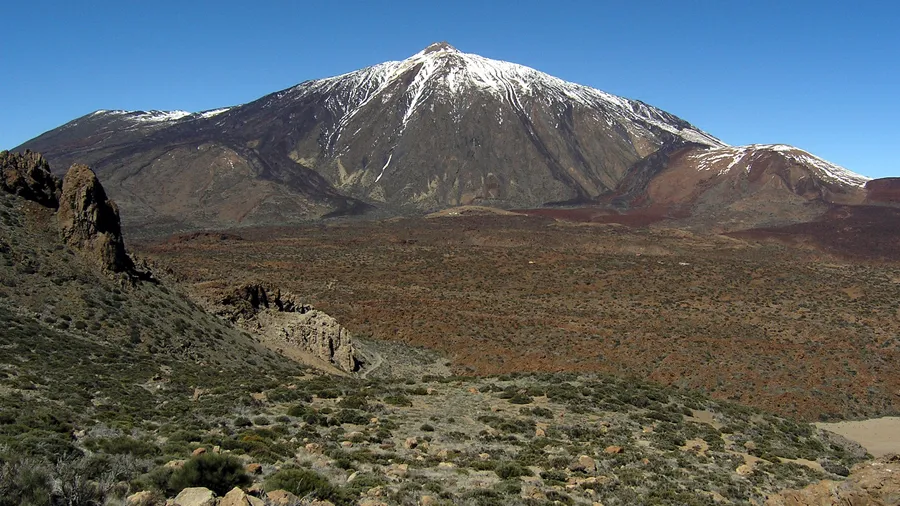
Teide is a volcano located on the island of Tenerife in the Canary Islands, and it is the highest peak in Spain at 3,718 meters above sea level. It lies within Teide National Park, a UNESCO World Heritage Site, and is a key geological and natural landmark in the Canary archipelago. Its imposing silhouette dominates the island landscape, offering a striking contrast with the surrounding Atlantic Ocean.

Visiting Teide allows you to witness a unique volcanic landscape formed by lava flows, craters, and rock formations that tell the geological history of the area. The cable car ascends near the summit, providing panoramic views of Tenerife and neighboring islands. On clear days, the contrast between the arid terrain and blue sky is remarkable, and at night, the starry sky is among the clearest in Europe.

Teide is an active volcano, though its last recorded eruption was in 1909. Its formation began about two million years ago and has been fundamental in shaping Tenerife’s geography and climate. The mountain holds great cultural value for the indigenous Guanche people, who considered it a sacred place.

When visiting Teide, it is advisable to wear clothing suitable for variable temperatures and sun protection. Park access is free, but a special permit must be reserved in advance to ascend to the summit. The cable car operates year-round but may close due to weather conditions. The approximate visit duration is 3 to 4 hours, including ascent and exploring the surroundings.

Key Information

Visit Duration

3-4 hours

Recommended Seasons

Spring, Autumn

Pricing

Free

Accessibility

Medium

Kid-Friendly Pet-Friendly Booking Required

Related Destinations

Guide

Essential information for visiting Mount Teide

Location
Practical Information
Pricing
Free
Visit Duration
3-4 hours
Features & Services
  • Accessibility:Medium
  • Kid-Friendly:Yes
  • Pet-Friendly:No
  • Booking:Booking Required
Planning Information

Recommended Seasons

Spring · Autumn

Best Time to Visit

Spring and autumn are the best seasons to visit Teide, offering moderate temperatures and fewer tourists.

Visitor Tips

Dress in layers to adapt to temperature changes, as it can be cold at the summit even in summer. Wear comfortable footwear for walking volcanic trails and bring enough water. Book your summit permit well in advance and check the cable car status before your visit. Take advantage of the clear night skies for stargazing, especially on cloudless nights.

Historical Facts

Teide began forming about two million years ago. For the Guanches, Tenerife's indigenous inhabitants, it was a sacred site central to their mythology. The last recorded eruption was in 1909, and since then it is considered active but dormant.

Frequently Asked Questions

Get answers about Mount Teide

Yes, accessing Teide's crater requires a permit that must be reserved in advance.
The cable car runs throughout the year but may close temporarily due to adverse weather conditions.
Yes, although it is recommended to assess children's physical endurance due to altitude and terrain.
There is a visitor center with basic services at the cable car base, but bringing water and food is advisable.
Spring and autumn offer pleasant temperatures and fewer visitors.