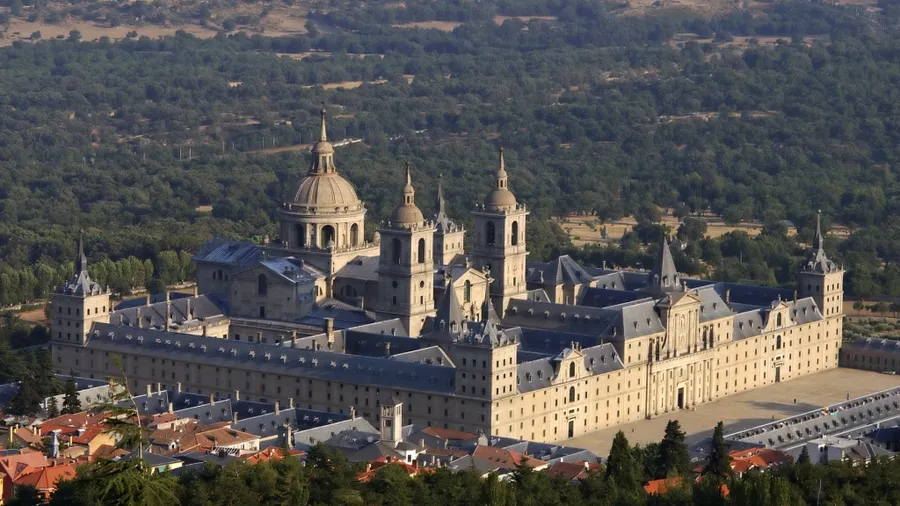
El Escorial Monastery
Highlights
- • Royal Pantheon with royal tombs
- • Library with ancient manuscripts
- • Renaissance frescoes by Pellegrino Tibaldi
- • Sober and symmetrical Herrerian architecture
- • Basilica with an imposing dome
- • Courtyards and gardens integrated into the mountain landscape
Description
Key Information
Visit Duration
2-3 hours
Recommended Seasons
Spring, Autumn
Accessibility
High
Related Destinations

Guide
Essential information for visiting El Escorial Monastery
Location
Practical Information
- Visit Duration
- 2-3 hours
Features & Services
- Accessibility:High
- Kid-Friendly:Yes
- Pet-Friendly:No
- Booking:Booking Required
Planning Information
Recommended Seasons
Spring · Autumn
Best Time to Visit
Spring and autumn offer pleasant temperatures and fewer crowds, ideal for exploring the monastery and its gardens comfortably.
Visitor Tips
To make the most of your visit, wear comfortable shoes and book your ticket online to avoid queues. Consider a guided tour to better understand the history and art of the site. Take time to stroll through the exterior gardens and enjoy the mountain views. Avoid very hot summer days and bring water, as some areas can be sunny.
Historical Facts
El Escorial was built between 1563 and 1584 under Philip II's reign as a symbol of Spanish power and Catholic faith. Its Herrerian design reflects Renaissance austerity and order, housing the pantheon of Spanish kings since Charles I.
Gallery
Photos and images of El Escorial Monastery
Frequently Asked Questions
Get answers about El Escorial Monastery