The essentials of Valle de Núria

  • • Núria rack railway: the only access from Ribes de Freser (1,000 m ascent in 12 km)
  • • Puigmal at 2,913 m: Girona province's second highest peak via a 3-hour trail
  • • Coll de Noucreus (2,780 m) on the GR-11 transpyrenean route connecting to Planoles and Setcases
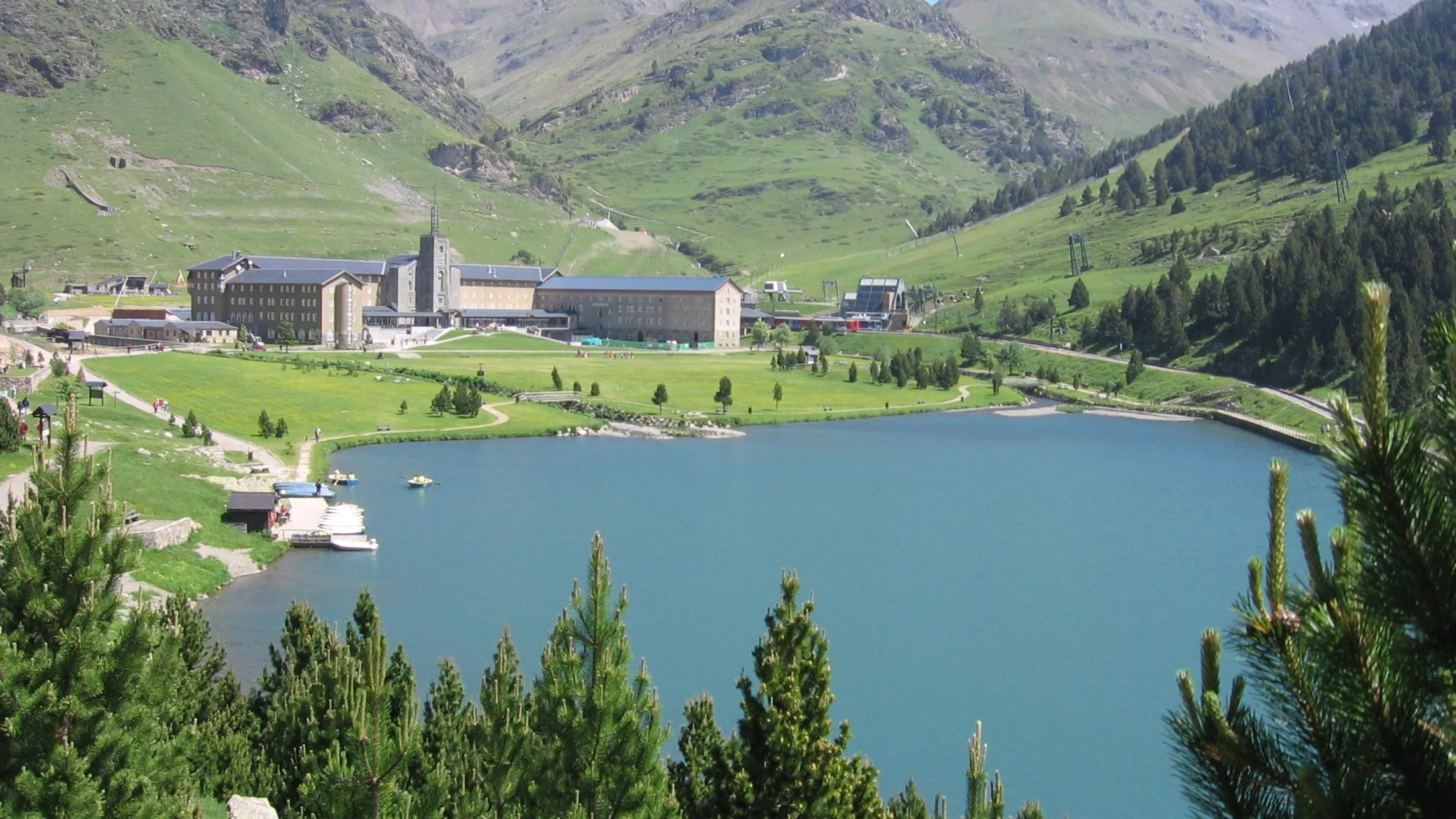
  • • Núria lake surrounded by ridges at 2,000 m with rowing boat hire in summer
  • • Ski touring and snowshoeing in the glacial cirque from November through May

Description

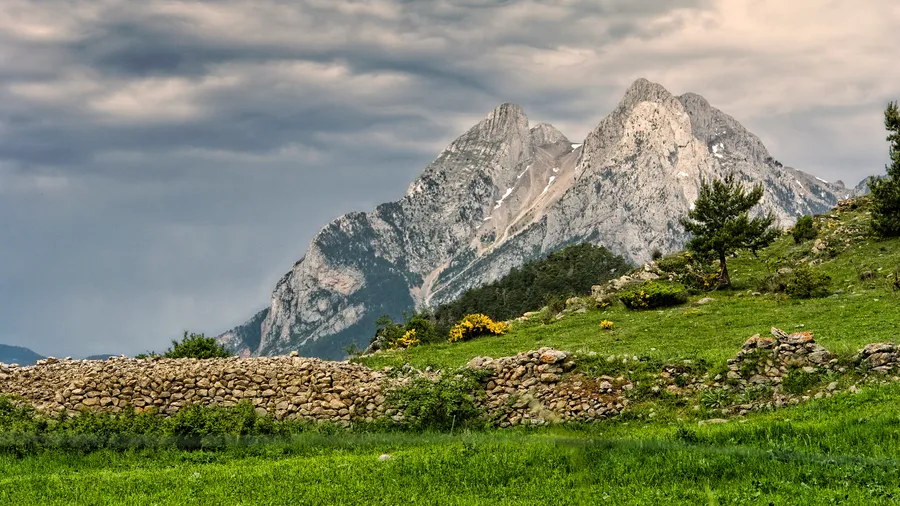
Valle de Núria is a glacial cirque enclosed by walls exceeding 2,800 metres in the eastern Catalan Pyrenees, in the far northeast of Girona province within the municipality of Queralbs. There is no road access: the only motorised way in is the rack railway that departs from Ribes de Freser at 915 metres and climbs 12.5 kilometres of curves to the Sanctuary of Núria at 1,967 metres altitude. That inability to arrive by car transforms the character of the place — it shields the valley from casual drive-through tourism and turns it into a stay-and-explore destination where mountain time replaces the outside world. The final minutes of the journey, when the train crosses the Pont dels Enginyers viaduct and the cirque suddenly opens up, produce one of the most abrupt contrasts in the Pyrenees: from the dark gorge of the Freser river to the wide open high meadow, surrounded by ridges such as Puigmal (2,913 m), Pic de l'Àliga (2,736 m) and Puig de la Fossa del Gegant (2,676 m).

The cirque has an irregular horseshoe shape. The Nuria river originates here, fed by spring snowmelt and mountain rainfall; the artificial Núria lake at the centre of the meadow was created in 1913 to supply the sanctuary, and on windless days its surface mirrors the ridgeline. The average altitude of the valley floor exceeds 2,000 metres, which means high-mountain conditions for most of the year: snow covers the ground from November to May, flowering meadows dominate in June and July, and September brings clear skies and long evening light that stretches ridge shadows across to the sanctuary building. Rainfall is high compared to other eastern Pyrenean valleys — the Girona Pyrenees receive more precipitation than the Aragonese side due to Mediterranean influence — and that feeds the lush meadow vegetation of the valley floor.

The Sanctuary of Núria, linked to the hermit Sant Gil in the 11th century and an active Marian pilgrimage tradition lasting more than a thousand years, is the organising element of the territory. The current building dates mainly from the 20th century, but the tradition of walking up from Queralbs along the historic El Pèlec path (4.5 km route with 1,000 metres of ascent) remains the most direct way to connect with the place's history. Beyond the sanctuary, the compound includes a hotel, a campsite, rowing boat hire on the lake and a snow-making ski area that operates in winter. That concentration of services inside a car-free cirque creates a distinctive mountain economy where everything consumed in the valley must come up on the rack railway.

Hiking routes from the sanctuary allow exploration of lateral valleys and ridges in half-day or full-day outings. The Coma de l'Embut route climbs to Puigmal (2,913 m), Girona province's second highest point, in a three-hour ascent over slate and alpine grass. To the north, the Coll de Noucreus pass (2,780 m) opens onto the Freser valley and connections with the Planoles cross-country ski area. The GR-11 long-distance trail crosses Núria, linking the valley westward to Setcases and eastward to Molló. In winter the cirque offers alpine skiing at the small resort — 14 km of pistes, maximum 300 m vertical — plus sought-after ski touring and snowshoeing terrain, with moderate routes towards Puig de la Fossa del Gegant and technical lines on the Puigmal couloir.
Practical information

Everything you need to know for your visit to Valle de Núria

How to get there
Rack railway from Ribes de Freser (reachable by Renfe train from Barcelona in ~2 h 30 min via Ripoll). No road access to the valley. By car to Ribes de Freser via the N-152 from Ripoll (15 km). The rack railway takes about 45 minutes to ascend.
Area Information
The sanctuary compound includes a hotel, restaurant, campsite and boat hire. The Parc Natural de les Capçaleres del Ter i del Freser information centre is within the complex. Several mountain huts on perimeter routes. Medical standby service in high season.
Geography
Glacial cirque in the eastern Catalan Pyrenees, municipality of Queralbs (Girona), at 1,967 m altitude. Surrounded by Puigmal (2,913 m) to the north, Pic de l'Àliga (2,736 m) to the west and Puig de la Fossa del Gegant (2,676 m) to the south. The Nuria river originates in the cirque and drains to the Freser.
Flora & Fauna
High-mountain vegetation: fescue and mat-grass meadows on the valley floor, rhododendron and bilberry shrubs on the slopes. The Pyrenean chamois (Rupicapra pyrenaica) is common on the ridges; marmots and golden eagles are seen in summer. Rock ptarmigan inhabit the highest zones.

Things to do

Find the best plans and things to do in Valle de Núria

20

Accommodations

Best accommodation options in Valle de Núria

Loading accommodation options...

Frequently Asked Questions

Get answers about Valle de Núria

No. The only motorised access is the rack railway departing from Ribes de Freser. The road running along the Freser river ends at Queralbs; from there a 4.5 km hiking trail (El Pèlec) with 1,000 metres of ascent reaches the sanctuary on foot in about three hours. The rack railway takes 45 minutes and runs on a scheduled timetable that should be checked in advance.
The Puigmal route via the Coma de l'Embut demands a solid high-mountain hiking level. It involves around 950 metres of ascent from the sanctuary over approximately 5 km of slate and alpine grass terrain without signposting on the upper sections. Typical ascent time is 2 h 30 min to 3 h. Good mountain footwear, warm clothing (the summit exceeds 2,900 m) and an early start before 9 am in summer to avoid afternoon thunderstorms are all essential.
Yes. The sanctuary compound includes the Hotel Vall de Núria with double rooms and full or half board. There is also a campsite with basic facilities. Both options allow you to stay overnight and enjoy the valley in the early morning or at dusk, when most day visitors have already descended. Advance booking is essential in July, August and during the ski season.
In winter the valley operates as an alpine ski resort with 14 km of pistes, four lifts and a maximum vertical of 300 metres. The glacial cirque is also a popular destination for ski touring (routes towards Puig de la Fossa del Gegant are the most popular) and snowshoeing. Exclusive rack-railway access limits visitor numbers and helps maintain a less crowded atmosphere than other Pyrenean resorts.
The lake is artificial. It was built in 1913 to meet the sanctuary compound's water needs. Its surface area is modest but photogenic: on windless days it mirrors the surrounding ridges, and in summer rowing boats are available for hire on site. Swimming in the lake is not permitted.