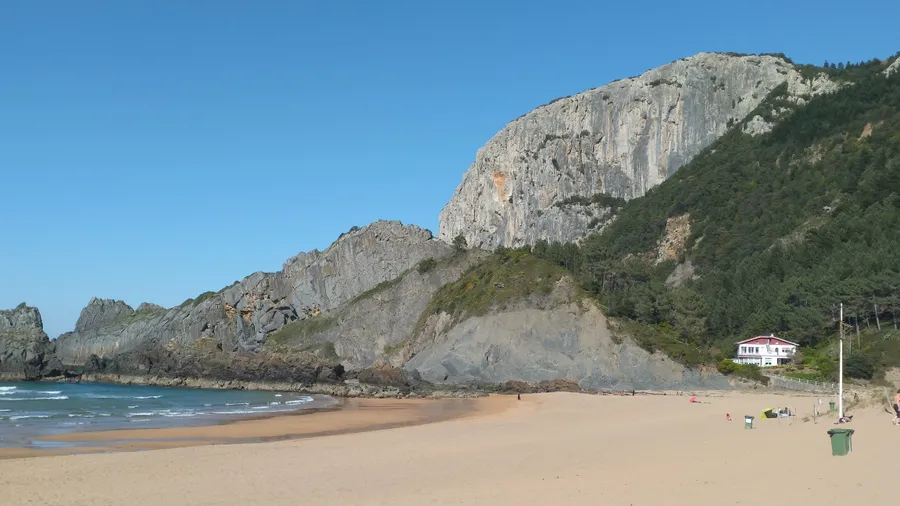
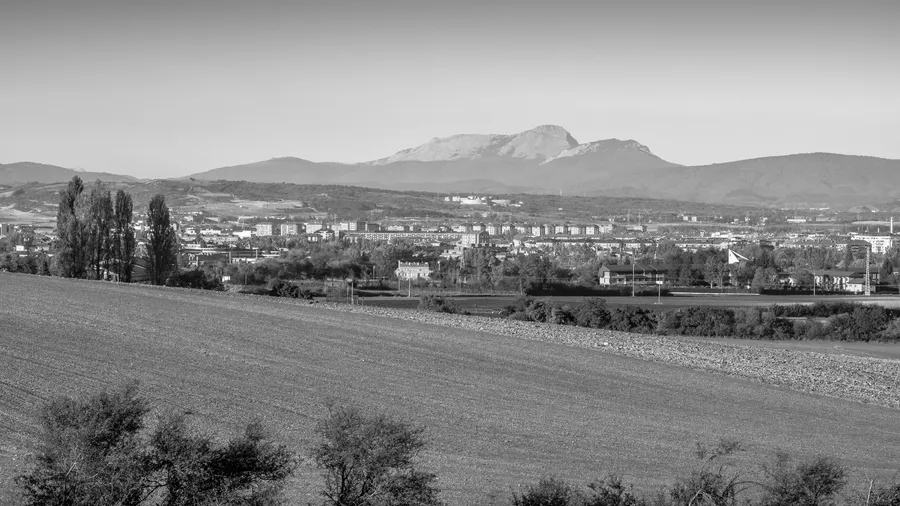
The Parque Natural de Urkiola covers 5,958 hectares in the heart of the Basque Country, straddling the provinces of Bizkaia and Álava, south of Durango and north of Vitoria-Gasteiz. It is the smallest of the Basque natural parks and simultaneously one of the most visited, thanks to its proximity to Bilbao and Vitoria. The Urgonian limestone arc of Anboto (1,331 m), Astxiki (1,231 m), Aramotz and Saibigain creates a mature karst landscape in which sheer vertical cliffs cast their shadow over permanently wet meadows where moss grows year-round. In foggy weather, the ridges disappear entirely and only the sound of wind through the beech trees confirms that the forest is still there, above you.
The park's character is shaped by its oceanic climate: 1,400 to 2,000 mm of annual rainfall distributed throughout the year feeds dense, permanently green vegetation. Beech forest (Fagus sylvatica) is the dominant formation between 600 and 1,200 metres: continuous stands with grey trunks, sparse understory and a floor of dead leaves that crunch underfoot in autumn. On the drier southern slopes, downy oak (Quercus pubescens) and Montpellier maple replace beech. The limestone walls support rupicoline plant communities with ferns such as Asplenium trichomanes and Ceterach officinarum; in the wettest corners, Sphagnum mosses form cushions that retain water like sponges.
The fauna of Urkiola centres on cliff-nesting birds. Griffon vulture (Gyps fulvus) has one of the most accessible breeding colonies in northern Spain here: the Anboto cliffs hold 30 to 50 pairs, easily observed from the Urkiola pass (780 m) with binoculars. Egyptian vulture (Neophron percnopterus) arrives in spring from sub-Saharan Africa and breeds in the most sheltered sections of the massif. Golden eagle (Aquila chrysaetos) holds territory in the park and is a regular sight circling the ridges in early morning. In the beech forest, great spotted woodpecker (Dendrocopos major), coal tit (Periparus ater) and nuthatch (Sitta europaea) all breed. Roe deer (Capreolus capreolus) and wild boar (Sus scrofa) are the most common ungulates; European hare (Lepus europaeus) inhabits the summit meadows.
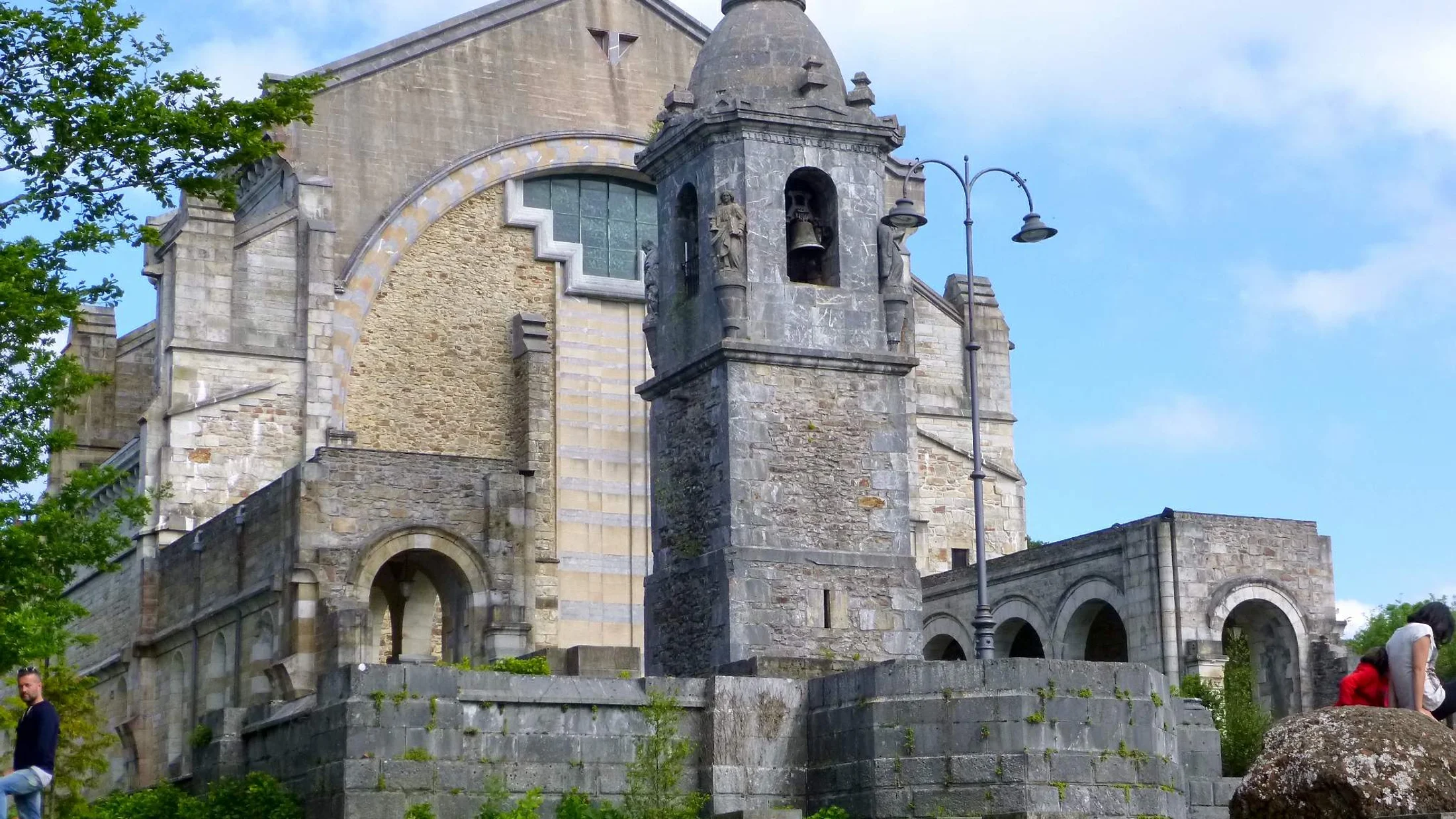
The sanctuary of San Antonio de Urkiola at the eponymous mountain pass is the park's cultural landmark: a 17th-century hermitage surrounded by centuries-old oaks that has been a pilgrimage destination since the Middle Ages. The GR-282 climbs from the sanctuary to the Anboto summit in 3 km and 550 m of elevation gain, along a limestone ridge where wind exposure and altitude create a mountain atmosphere that surprises visitors given the park is just 40 km from Bilbao. The trail network also includes the PR-BI-86, a 14-km circular route around the massif perimeter passing through the farmsteads of Mañaria and Apatamonasterio.