The essentials of Serra da Capelada

  • • 613 m cliffs at Vixía de Herbeira, the highest on continental Europe's Atlantic coast
  • • Ultrabasic mantle rock exposed by the Hercynian orogeny 300 million years ago
  • • Feral garano horses on common land, with the Rapa das Bestas in July
  • • 8 km ridgeline trail from the cliffs to the Santuario de San Andrés de Teixido
  • • Mineral serpentinite beach at Teixidelo, with no conventional sand

Description

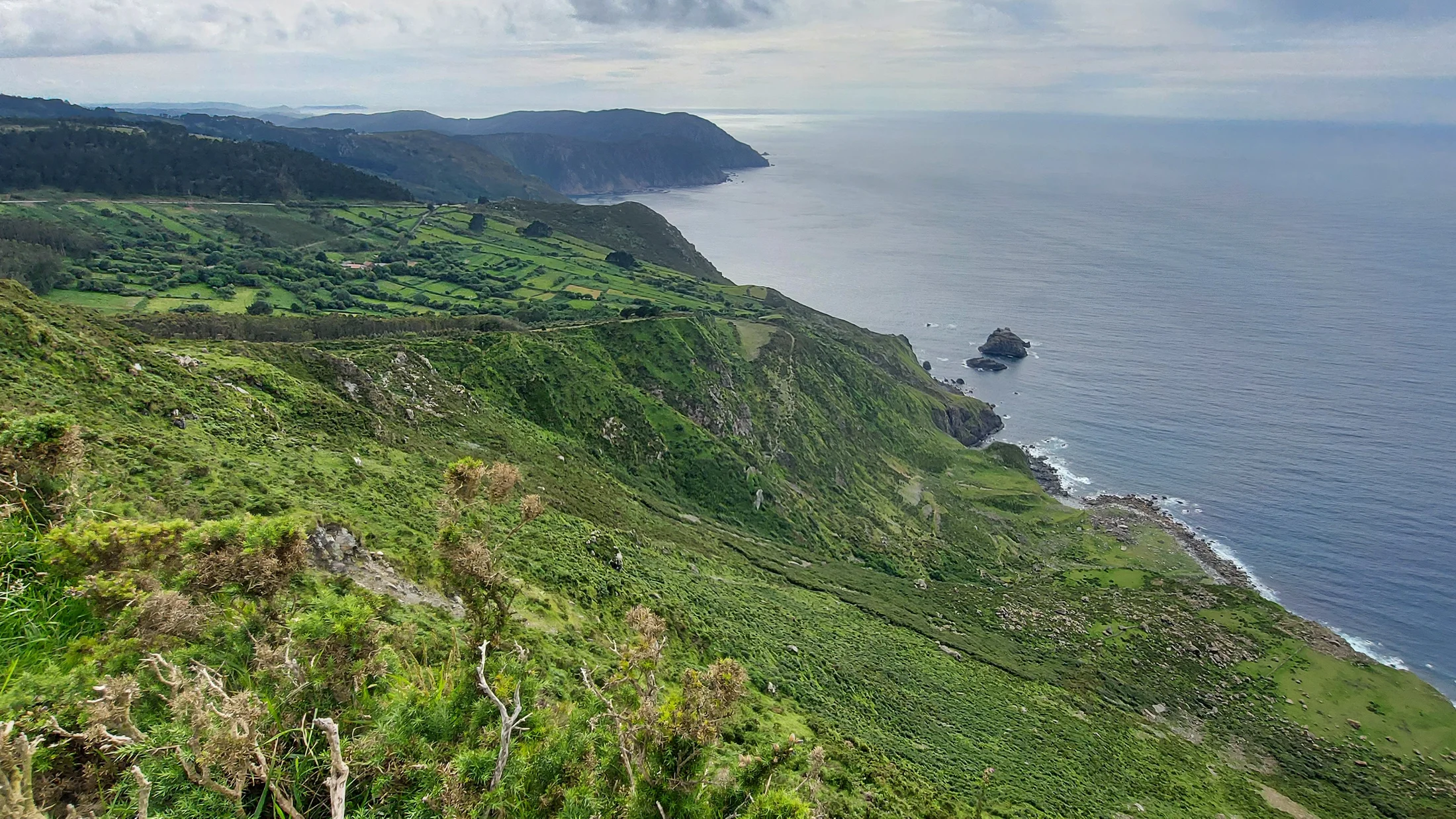
Serra da Capelada stretches 15 kilometres along the northern coast of A Coruña province, between the municipalities of Cedeira and Cariño. Its cliffs reach 613 metres at Vixía de Herbeira, making them the highest on continental Europe's Atlantic seaboard. From the geodetic-vertex viewpoint the vertical drop to the ocean exceeds 580 metres: a wall of dark rock where north-westerly winds push clouds uphill and the roar of the surf arrives muffled by distance. The sense of scale is hard to convey; you need to stand at the edge to grasp the dimension of this coastline.

The geological substrate of Serra da Capelada is one of its most distinctive features. Ultrabasic rocks — peridotites and serpentinites — crop out here; they once formed part of the Earth's mantle before being thrust to the surface during the Hercynian orogeny over 300 million years ago. These rocks, rich in magnesium and poor in common nutrients, produce soils where only plants adapted to extreme conditions thrive. The resulting landscape is a succession of bare ridges covered in heather, gorse and sparse grassland, with peat patches in waterlogged hollows. In spring, gorse paints the hillsides yellow and the scent of heather mingles with Atlantic salt.

The sierra's fauna includes populations of feral horses (garanos) that graze freely on common land. On the first Saturday of July, locals hold the Rapa das Bestas de Cedeira, rounding up the horses for branding and deworming. Peregrine falcons and European shags nest on the cliffs, while bottlenose dolphins and harbour porpoises pass through the offshore waters. For photographers, the combination of vertical cliffs, shifting skies and free-roaming wildlife offers opportunities in every season, though the low-angle evening light of summer — when the sun drops toward the Atlantic — creates the most striking conditions.

The most-walked route starts from the Vixía de Herbeira car park and follows the ridgeline for 8 km to the Santuario de San Andrés de Teixido, one of Galicia's oldest pilgrimage sites. Local tradition holds that whoever does not visit San Andrés in life will go after death. The sanctuary, set in a fold of the cliff 200 metres above the sea, preserves wax ex-votos and a fountain where custom says to drop bread crumbs to tell your fortune. Beyond the sanctuary, the path descends to the harbour of Teixidelo, where green serpentinite rocks form a mineral beach with no sand. Cedeira, 12 km away, offers accommodation, seafood restaurants and a quiet waterfront promenade overlooking the estuary.
Practical information

Everything you need to know for your visit to Serra da Capelada

How to get there
From Ferrol (50 km, 50 min), take the AC-566 via Cedeira. From A Coruña (120 km, 1 h 40 min), the AP-9 to Ferrol then AC-566. Free parking at Vixía de Herbeira and at the Santuario de San Andrés de Teixido. No regular public transport; a private vehicle is recommended. The road is narrow in places with tight bends.
Area Information
No formal visitor centre. Information panels at the Vixía de Herbeira viewpoint and at the Santuario de San Andrés de Teixido. Free parking at both locations. Cedeira (12 km) has accommodation, restaurants, supermarkets and a petrol station. Mobile coverage is patchy on the ridges.
Geography
Coastal sierra stretching 15 km between Cedeira and Cariño, with cliffs up to 613 m above the Atlantic. Substrate of peridotites and serpentinites (ultrabasic mantle rocks). Poor soils supporting Atlantic heathland and peat bogs in waterlogged areas.
Flora & Fauna
Flora: Atlantic heathland (Erica, Calluna), gorse (Ulex), grasslands on serpentinite with species adapted to ultrabasic soils. Fauna: semi-feral garano horses, peregrine falcons and European shags on the cliffs, bottlenose dolphins and harbour porpoises in coastal waters.

Things to do

Find the best plans and things to do in Serra da Capelada

Accommodations

Best accommodation options in Serra da Capelada

Loading accommodation options...

Frequently Asked Questions

Get answers about Serra da Capelada

The cliffs at Vixía de Herbeira, at 613 metres with a vertical drop exceeding 580 metres, are the highest on continental Europe's open-ocean coast. Iceland and the Faroe Islands have taller sea cliffs, but those are island territories. No other cliff on the Spanish mainland reaches this height. The measurement refers to altitude above sea level with a direct drop to the water.
There are no safety barriers, so extra caution is needed, particularly in strong wind or fog. The ridgeline route has well-marked sections, but the ground can be slippery after rain. Wear hiking boots with good grip, stay back from the edge and keep children closely supervised at all times. On stormy days, it is better to postpone the visit altogether.
The Rapa das Bestas is a centuries-old tradition in which locals round up the feral horses (garanos) that graze on common land to trim their manes, brand them and deworm them. In Cedeira it is held on the first Saturday of July. It is not a staged tourist show but a real livestock event, so follow the organisers' instructions and keep a safe distance from the animals.
Public transport to Serra da Capelada is very limited. Arriva buses run from Ferrol to Cedeira, but there is no regular service up to the cliffs. From Cedeira you need a private vehicle or taxi for the 12 km to Vixía de Herbeira. If travelling without a car, another option is to book an organised excursion from Ferrol or A Coruña.
Cedeira is the most practical base, with hotels, guesthouses and rural cottages 12 km from the cliffs. Cariño, at the far end of the sierra, also has accommodation. San Andrés de Teixido has a couple of rural tourism houses, but options are limited. In high season (July–August), book ahead. Prices are moderate compared with other tourist areas in Galicia.