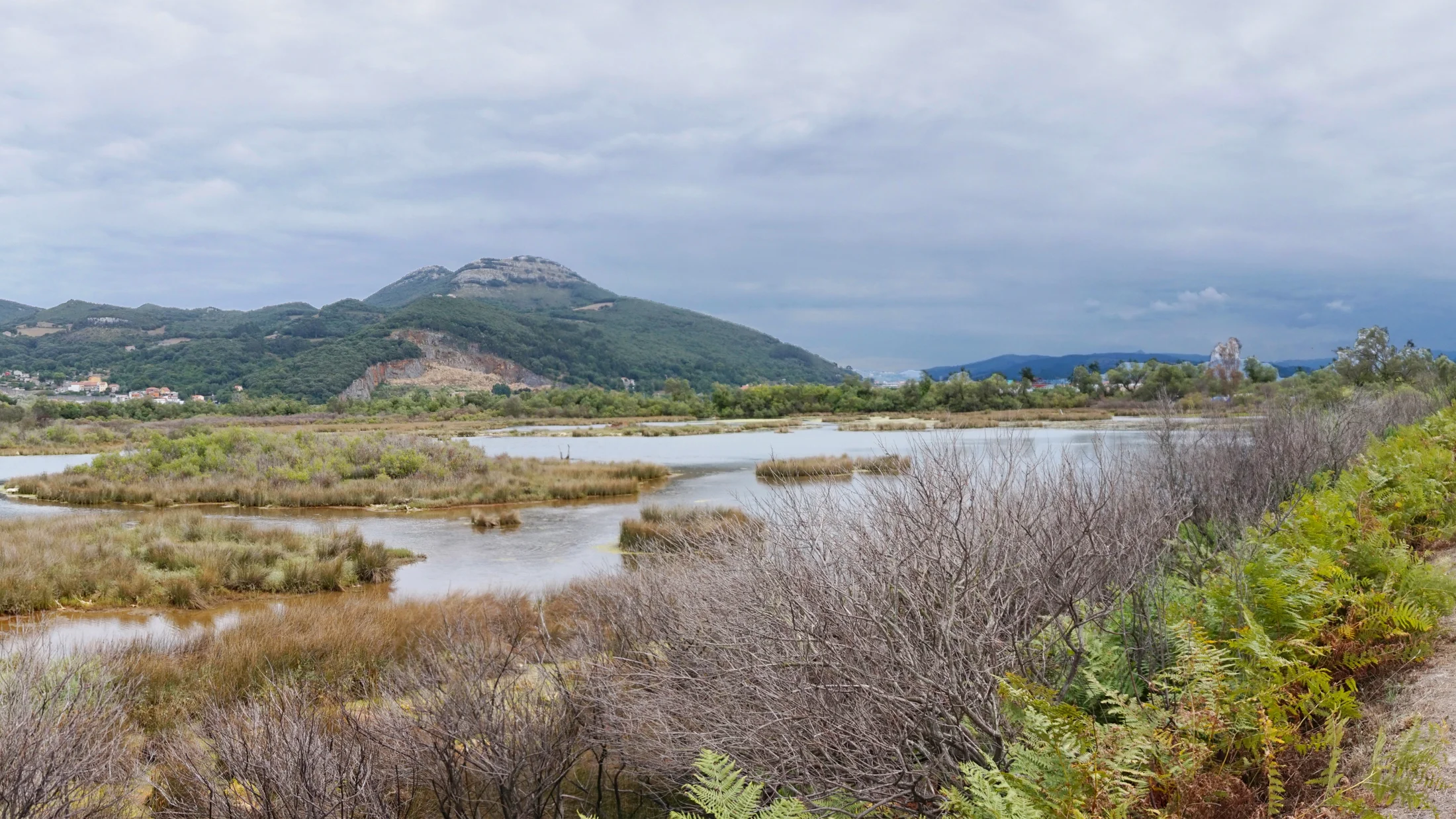
Parque Natural de las Marismas de Santoña, Victoria y Joyel
The essentials of Parque Natural de las Marismas de Santoña, Victoria y Joyel
- • Ramsar site since 1993: largest wetland on the Spanish Cantabrian coast
- • Zostera marina seagrass meadows underpinning the entire estuary food chain
- • Spoonbill, great egret and over 10,000 waders in migratory passage
- • Monte Buciero with laurel forest and panoramic views over the estuary and coast
- • Santoña anchovy PGI, artisan-processed from the spring fishing season
Description
Practical information for Parque Natural de las Marismas de Santoña, Victoria y Joyel
Everything you need to know for your visit to Parque Natural de las Marismas de Santoña, Victoria y Joyel
How to get there
How to get there
From Santander, A-8 towards Bilbao to Beranga then CA-141 to Santoña (45 km, 40 min). From Bilbao, A-8 to Laredo and ferry Laredo–Santoña (15 min). Bus Santander–Santoña (ALSA). Parking in Santoña; trails on foot or by bike around the marsh perimeter.
Area Information
6,745 ha across Santoña, Laredo, Noja, Argoños and Escalante (Cantabria). Designated as SPA and SAC within Natura 2000. Interpretation centre in Escalante (Tuesday to Sunday).
Geography
Estuarine system of the Santoña estuary and the Asón and Clarín river mouths. Intertidal marshes with a tidal range of up to 4 m. Monte Buciero (224 m) closes the mouth to the north. Berria dune system at the park's eastern edge.
Flora & Fauna
Subtidal meadows of Zostera marina and Z. noltii. Common reed, sea rush and halophyte communities. Spoonbill, marsh harrier, kingfisher, common tern. Otter in channels. Trout and elvers in tributary rivers.
Accommodations in Parque Natural de las Marismas de Santoña, Victoria y Joyel
Best accommodation options in Parque Natural de las Marismas de Santoña, Victoria y Joyel
Gallery of Parque Natural de las Marismas de Santoña, Victoria y Joyel
Photos and images of Parque Natural de las Marismas de Santoña, Victoria y Joyel
Frequently asked questions about Parque Natural de las Marismas de Santoña, Victoria y Joyel
Get answers about Parque Natural de las Marismas de Santoña, Victoria y Joyel
What is the best time to see birds in the marshes?
The spring (March–May) and autumn (October–November) migration peaks bring the greatest numbers and diversity of birds to the marshes, with species arriving from West Africa, northern Europe and the Arctic. In winter, ducks and waders that overwinter in Cantabria remain in the park. Dawn and low tide are the most active times, as mud flats are exposed and birds concentrate to feed in the channels and interior pools.
Where are the bird hides and how do you reach them?
The La Becada hide in Argoños is built over the marsh and allows close views of waders and spoonbills feeding. The Escalante canal offers direct views over reedbeds and interior pools. Both are accessible by car and signposted from the main road. The Escalante Interpretation Centre organises guided birdwatching visits with binoculars during peak migration periods.
Can you visit the anchovy processing factories?
Yes. Several canneries in Santoña offer guided visits explaining the artisan process: spring fishing, salt-curing, months of barrel maturation, then hand-filleting and packing. Advance booking directly with the canneries is required as group sizes are small. The active production season runs April to June, making this the most instructive time to visit.
Is there a cycling route in the park?
Yes. A marked perimeter cycling route follows the main marsh on compact tracks and low-traffic roads. The full circuit covers approximately 25 km and is suitable for recreational cyclists. Bikes can be rented in Santoña and Laredo. The Laredo–Santoña ferry allows a one-way linear route without retracing the same stretch.