The essentials of Embalse de San Juan

  • • Designated beaches La Ermita and El Pontón with water temperatures reaching 24–26 °C in July and August
  • • Non-motorised watersports: kayaking, paddleboarding, windsurfing and sailing with schools operating in summer
  • • Sport fishing for pike, carp and largemouth bass in one of Madrid's most frequented reservoirs
  • • Vinos de Madrid DO vineyards at the reservoir's edge in San Martín de Valdeiglesias
  • • Waterbirds: wintering great cormorants, year-round kingfishers and migrating black terns in spring

Description

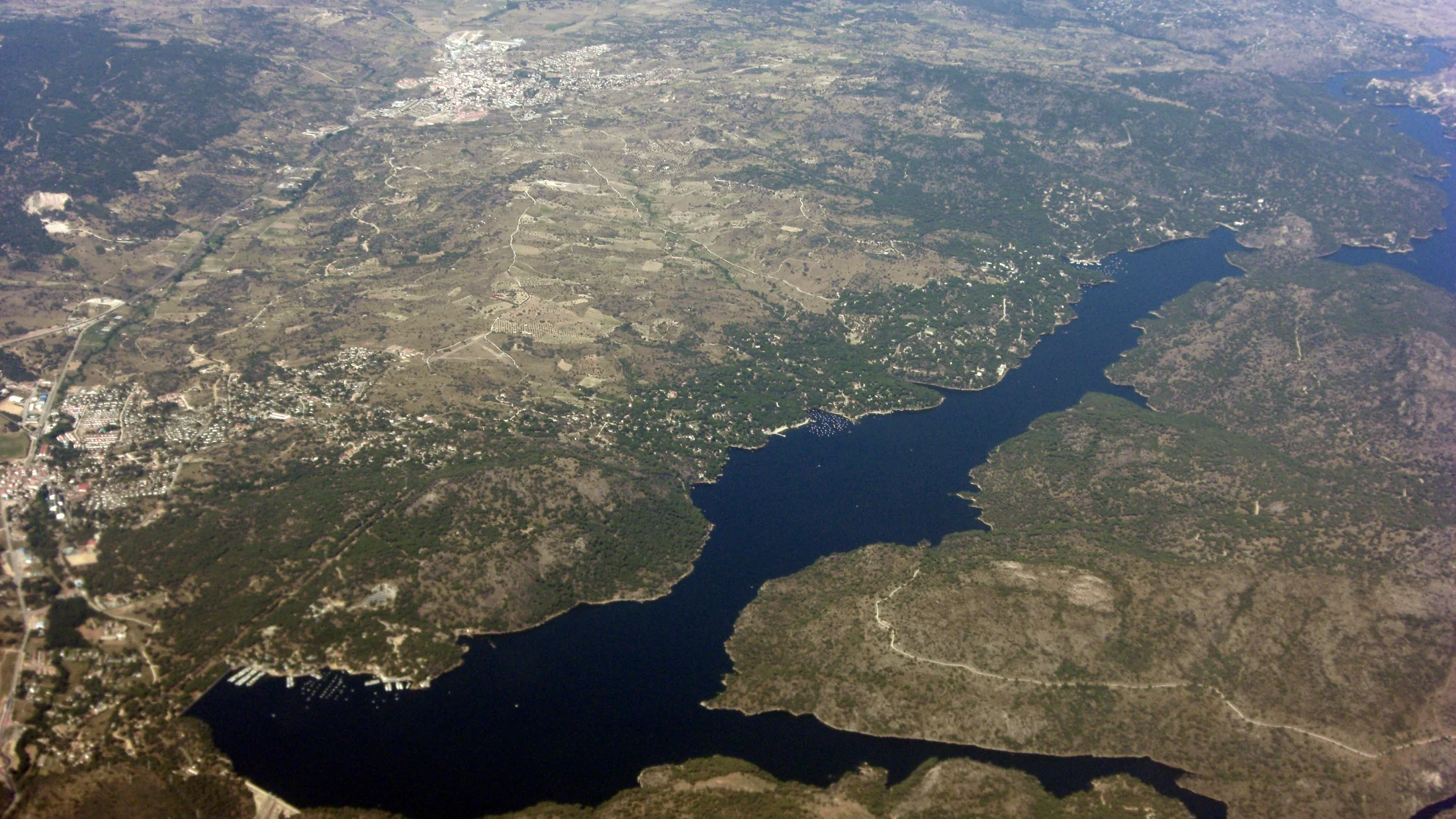
The Embalse de San Juan spreads across the Alberche River in the municipality of San Martín de Valdeiglesias, just over 60 kilometres west of Madrid. With a capacity of 98.7 cubic hectometres and a surface area near 700 hectares at full level, it is the most visited body of water in the western Madrid sierra. Its elongated shape follows the original riverbed for about 14 kilometres, with shores that combine fine sandy beaches, reed beds and slopes of pine and holm oak that reach almost to the water in some sections.

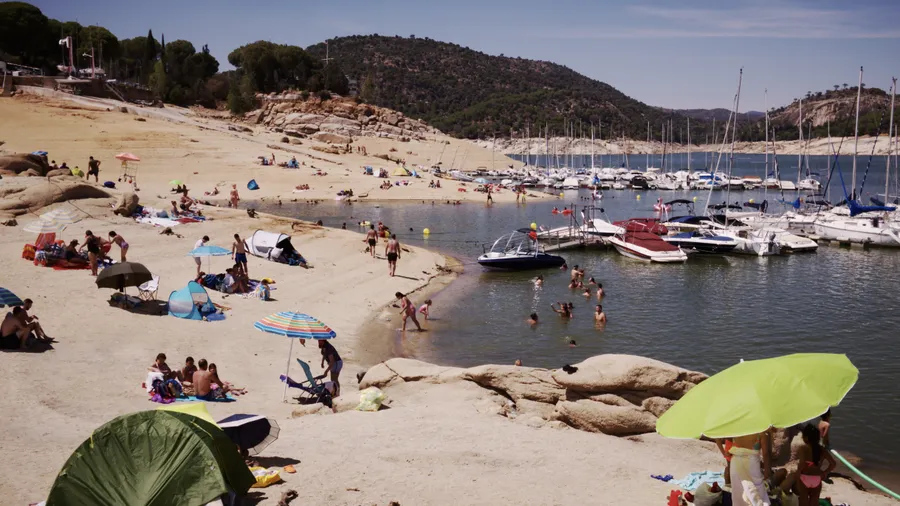
The reservoir functions as a family and water-sports destination for residents of Madrid, Ávila and Toledo. During the bathing season, the designated swimming areas of La Ermita and El Pontón attract thousands of visitors each weekend. Water temperatures reach 24–26 °C at the surface in July and August. Motorised boat regulations in swimming areas make the reservoir well suited for non-motorised water sports: kayaking, paddleboarding, windsurfing and sailing. Several sailing and watersports schools operate on its shores during summer months.

The surrounding land extends the activity options. The Sierra del Membrillar and the Cerro de San Isidro, on the northern hillsides framing the reservoir, offer hiking and mountain biking routes of moderate difficulty. The GR-10 long-distance trail passes through San Martín de Valdeiglesias and connects the reservoir with the Sierra del Rincón Biosphere Reserve trails to the north or with the Las Vegas comarca routes to the east. In autumn, the vineyards surrounding the town — San Martín holds a Vinos de Madrid Denomination of Origin — add colour and cultural context to the landscape.

The wildlife of the reservoir and its riparian areas is particularly rewarding for birdwatchers. Great cormorants winter on the open water in flocks of dozens of individuals. Grey herons and common kingfishers frequent the reed bed sections year-round. In spring, black terns and several duck species use the reservoir as a stopover during migration. The most common fish are carp, pike and largemouth bass, making this one of the most popular sport-fishing spots in the Community of Madrid.
Practical information

Everything you need to know for your visit to Embalse de San Juan

How to get there
From Madrid, take the A-5 towards Badajoz and at Móstoles join the M-501 towards San Martín de Valdeiglesias. The total distance is about 65 km, taking under an hour. Access to the designated beaches is signposted from the town centre of San Martín.
Area Information
The beaches of La Ermita and El Pontón have lifeguards, toilets, showers and parking during peak season (June–September). Several campsites operate nearby, along with a watersports service area and picnic zones. The town of San Martín de Valdeiglesias offers full hospitality services.
Geography
Artificial reservoir on the Alberche River, set between the southern foothills of the Sierra de Gredos and the southern Madrid ranges. The visual basin includes the Cerro de San Isidro (930 m) to the north and the Sierra del Membrillar to the west. The maximum reservoir level stands at 664 m above sea level.
Flora & Fauna
Riparian vegetation of black poplars, willows and tamarisks along the shores. Holm oak and pine forest on the hillsides. Notable waterbirds: great cormorant, grey heron, common kingfisher and black tern. Fish species: common carp, pike, largemouth bass and tench. Otters present in quieter sections.

Things to do

Find the best plans and things to do in Embalse de San Juan

20

Accommodations

Best accommodation options in Embalse de San Juan

Loading accommodation options...

Frequently Asked Questions

Get answers about Embalse de San Juan

Yes. The designated beaches of La Ermita and El Pontón have official swimming authorisation during the summer season, generally from June to mid-September. Both have lifeguard service, showers and toilets. Swimming outside the marked zones is not permitted.
The reservoir is suitable for kayaking, canoeing, paddleboarding, windsurfing and sailing. Motor boat navigation is restricted in swimming areas, creating a safe environment for non-motorised sports. Several watersports schools offer equipment rental and courses during summer, with indicative rates of 10–20 euros per hour for kayak or paddleboard.
From central Madrid to the reservoir beaches is about 65 km via the A-5 and M-501, taking between 50 and 70 minutes depending on traffic. Summer weekend mornings can see the M-501 congested from around 10:00, so leaving earlier or after 13:00 makes for a smoother journey.
The Embalse de San Juan is one of the most valued sport-fishing spots in the Community of Madrid. The most sought-after species are pike, largemouth bass and carp. A Community of Madrid regional fishing licence is required. Seasonal closures apply in some areas during spring; check the official calendar before visiting.
San Martín de Valdeiglesias has several hotels, rural houses and tourist apartments a few minutes from the beaches. Campsites with pitches and bungalows also operate around the reservoir. In peak season, booking in advance is strongly recommended, especially for weekends in July and August.