The essentials of Embalse de La Tranquera

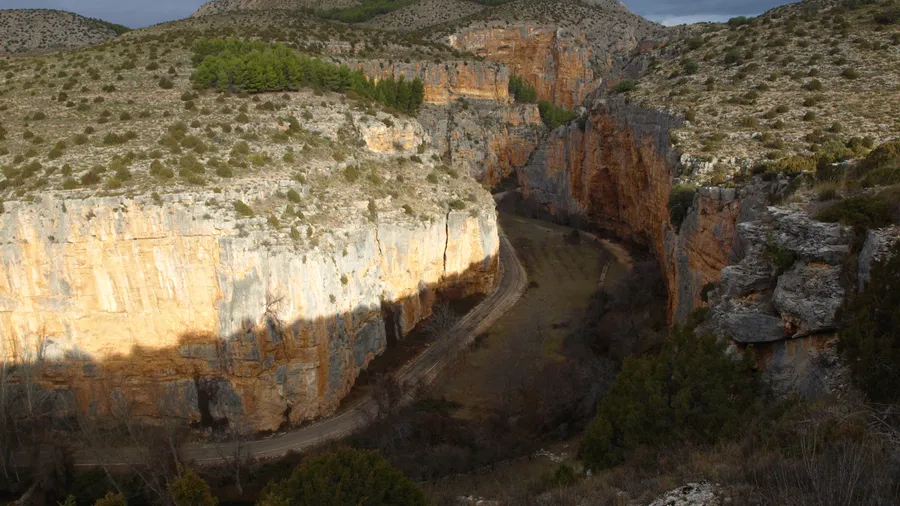
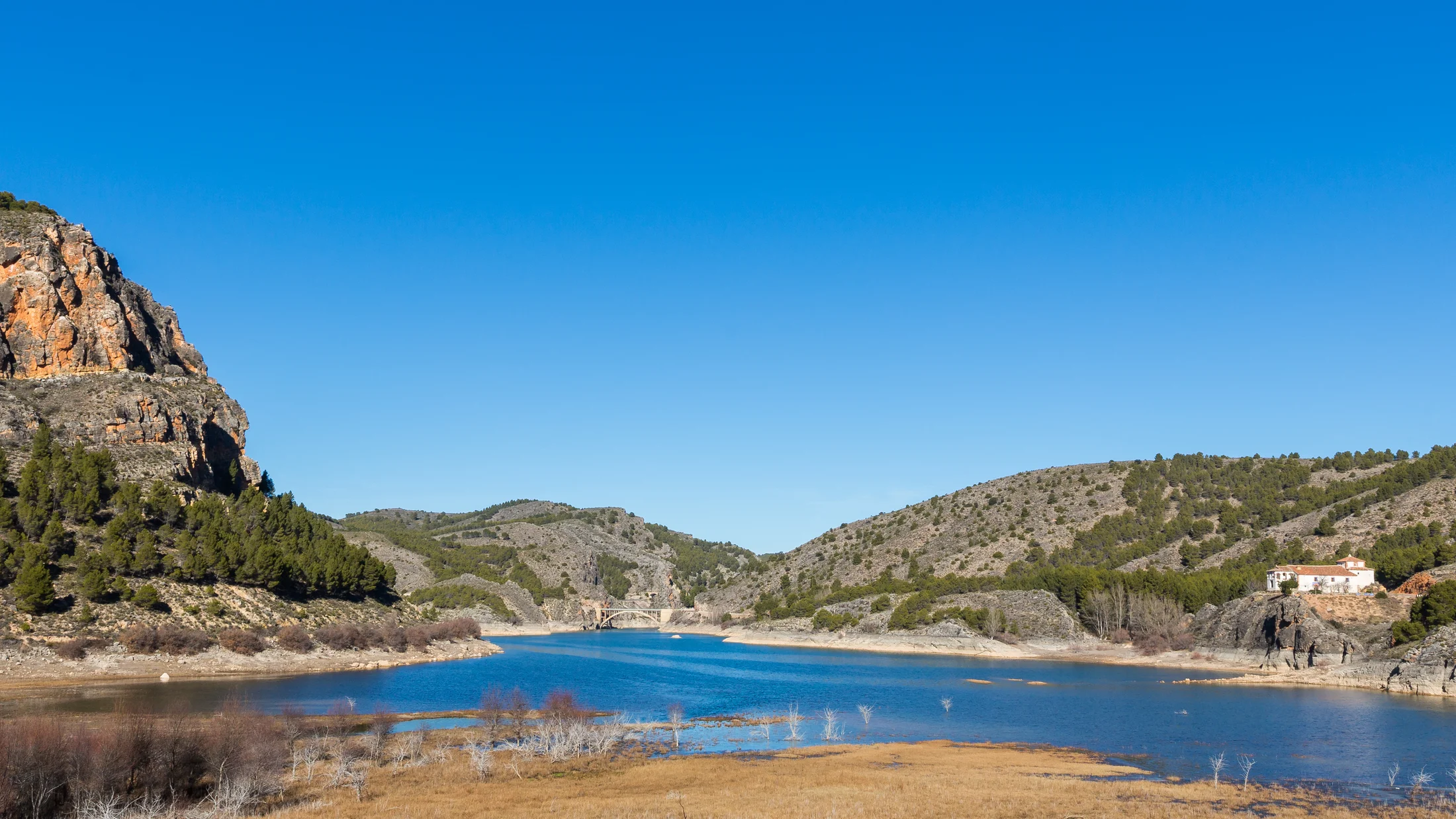
  • • 7 km limestone canyon with 80-100 m walls and blue-green water warm enough for summer swimming
  • • Las Palmeras artificial beach with kayak and paddle board hire
  • • Monasterio de Piedra 3 km away: waterfalls, Gothic cloister and the Cola de Caballo (50 m)
  • • Griffon vultures and peregrine falcons nesting on the cliffs above the water
  • • Mudéjar villages of Nuévalos, Carenas and Ibdes with brick towers and manor houses

Description

Embalse de La Tranquera fills a stretch of the Piedra river on the western edge of the Calatayud district, between the municipalities of Nuévalos, Carenas and Ibdes in Zaragoza province. With a capacity of 84 cubic hectometres and a water surface extending 7 kilometres between limestone walls, the reservoir creates a landscape resembling an inland fjord: blue-green water set within a narrow canyon where cliffs rise 80-100 metres above the surface.

The dam was built in 1960 to regulate irrigation in the lower Jalón valley. Over time, the combination of its rocky setting, proximity to the Monasterio de Piedra (3 km from the reservoir) and scope for water sports turned La Tranquera into one of the most popular aquatic leisure destinations in Zaragoza province. Reservoir water stays at a comfortable temperature in summer (20-24 °C between June and September), allowing swimming, canoeing and paddle boarding for four months of the year.

The most popular bathing area is at Las Palmeras, on the reservoir's right bank near Nuévalos, where an artificial gravel-and-sand beach gives access to shallow water. In summer, the site has lifeguard cover, regulated parking and a refreshment stand. From Las Palmeras you can rent kayaks and paddle boards to explore the canyon upstream — a 3-kilometre crossing where limestone walls close in progressively and riparian vegetation — poplars and ash trees — mirrors itself on the water with photogenic symmetry.

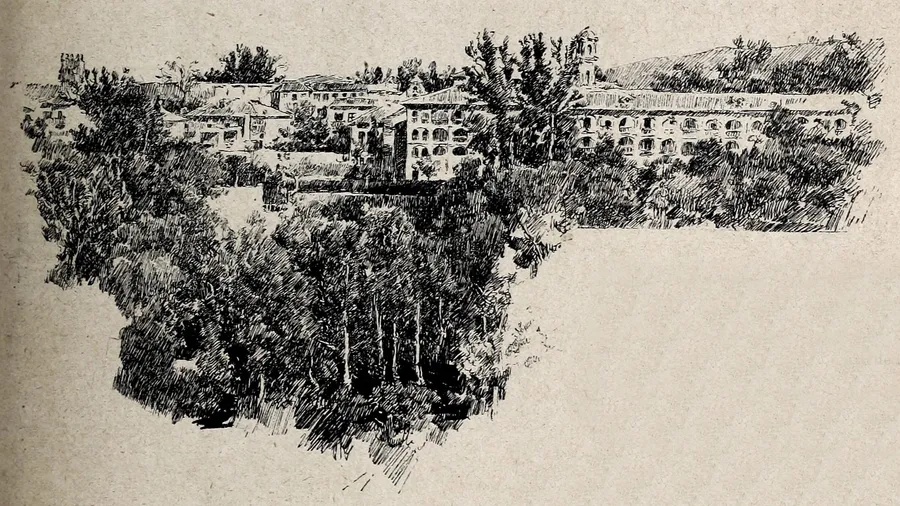
The Monasterio de Piedra, located at the reservoir's head, is a 12th-century Cistercian monastery converted into a private natural park and hotel. Its main draw is the waterfall circuit along the Piedra river within the monastery grounds, with the Cola de Caballo (50-metre drop) as the centrepiece. The visit combines the historic garden, natural grottoes behind the falls and monastic buildings with a Gothic cloister. The relationship between the reservoir and the monastery creates a half-day circuit: monastery in the morning, water activities at the reservoir in the afternoon.

The geological setting is Iberian System limestone karst, with sinkholes, potholes and caves formed by water dissolving the rock over millions of years. The canyon walls display horizontal strata of grey and ochre limestone that read like an open-air geology textbook. Griffon vultures, peregrine falcons and red-billed choughs nest on the cliffs, and it is common to see them gliding above the water surface while paddling.

The villages around the reservoir — Nuévalos, Carenas and Ibdes — preserve quality Aragonese Mudéjar heritage: brick church towers, sandstone doorways and manor houses with wrought-iron balconies. Nuévalos, the most visited thanks to its proximity to the monastery, has restaurants serving roast ternasco (young lamb), Pilar beans and Calatayud peach. The wineries of DO Calatayud, 20 kilometres away, round out the offer with altitude Garnacha grown in vineyards at 700-1,000 metres above sea level.
Practical information for Embalse de La Tranquera

Everything you need to know for your visit to Embalse de La Tranquera

How to get there
From Zaragoza, A-2 to Calatayud and regional road to Nuévalos (115 km, 1 h 15 min). From Madrid, A-2 to the Alhama de Aragón exit (230 km, 2 h 30 min). Seasonal buses from Calatayud to Nuévalos. Parking at Las Palmeras.
Area Information
Calatayud district, western Zaragoza province. Municipalities of Nuévalos, Carenas and Ibdes. Tourism linked to Monasterio de Piedra. DO Calatayud wineries 20 km away. Aragonese Mudéjar heritage.
Geography
Piedra river limestone canyon in the Iberian System, Calatayud district (Zaragoza). 84 hm³ reservoir with 7 km water surface. Cliffs of 80-100 m. Limestone karst with sinkholes and caves.
Flora & Fauna
Flora: poplar, white poplar, ash, holm oak and Mediterranean scrub on slopes. Fauna: griffon vulture, peregrine falcon, red-billed chough, trout, barbel and carp in the reservoir.

Things to do in Embalse de La Tranquera

Find the best plans and things to do in Embalse de La Tranquera

What to see in Embalse de La Tranquera

Discover the must-see sights in Embalse de La Tranquera

Accommodations in Embalse de La Tranquera

Best accommodation options in Embalse de La Tranquera

Frequently asked questions about Embalse de La Tranquera

Get answers about Embalse de La Tranquera

Yes, the Las Palmeras area in Nuévalos has an artificial beach with lifeguard cover in summer (June-September). Water temperature ranges from 20 to 24 °C during the warm months. There is parking, a refreshment stand and kayak and paddle board hire.
General admission to the park and monastery is approximately 16 euros for adults (2025). Reduced rates are available for children and seniors. The visit takes 2 to 3 hours and includes the waterfall circuit, Gothic cloister and gardens. Online booking is recommended in summer.
Yes, kayaks and paddle boards can be hired from Las Palmeras. The most popular route heads upstream through the canyon for 3 kilometres, between 80-100 metre limestone walls. No prior experience is needed near the beach, but some paddling practice is advisable for the deeper canyon.
Nuévalos has hotels, guesthouses and holiday apartments. The Monasterio de Piedra itself operates as a hotel. Rural houses are available in Carenas and Ibdes. Advance booking is recommended in high season (July-August). Prices range from 50 to 120 euros per night.
The villages of Nuévalos, Carenas and Ibdes have Mudéjar heritage (brick towers and churches). DO Calatayud wineries 20 km away offer altitude Garnacha tastings. Alhama de Aragón thermal baths (15 km) feature 34 °C thermal waters and an underground lake.