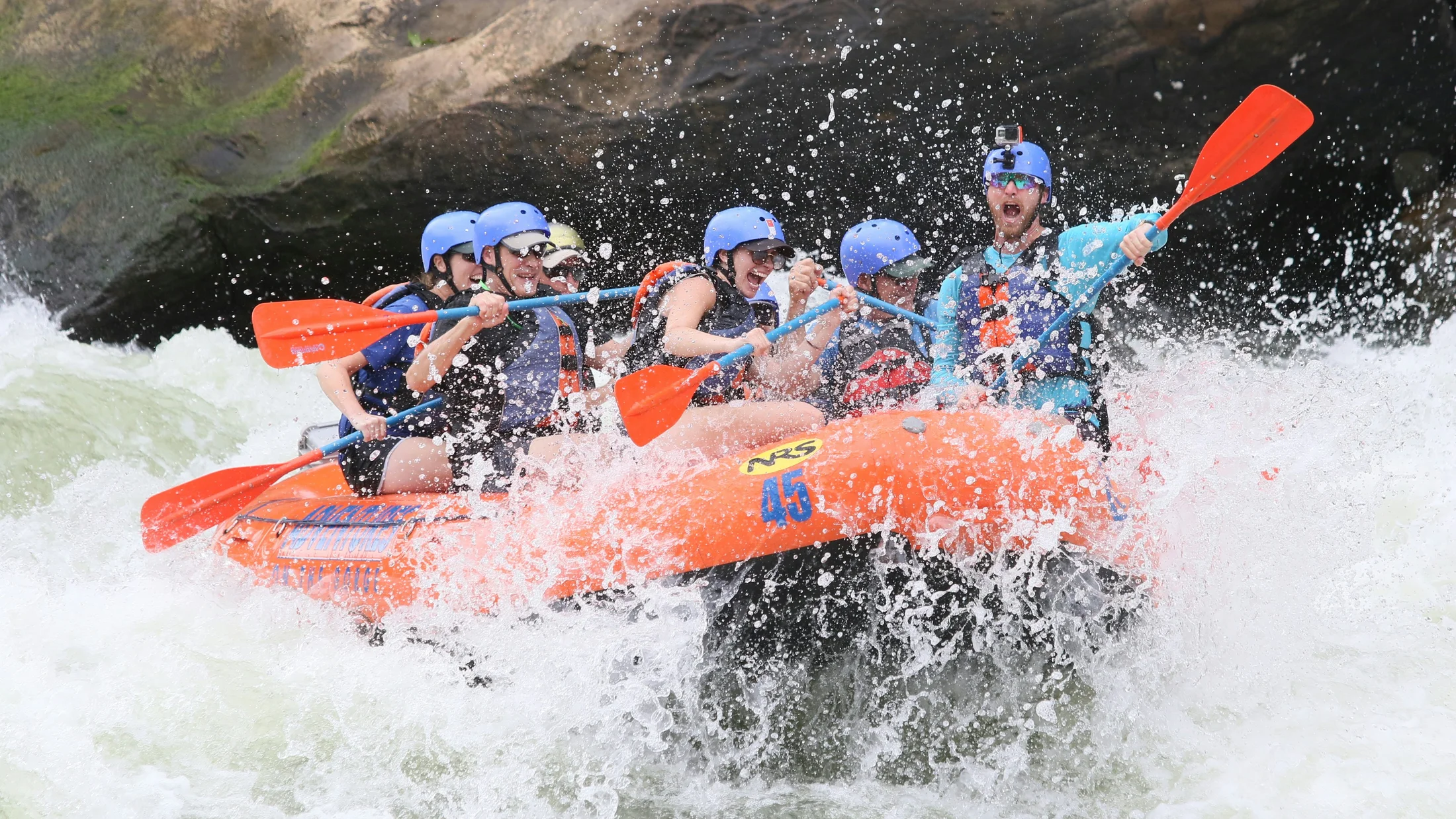
Start Here: Rafting With Children Can Be Safe, Fun, And Memorable
You want an outdoor adventure your kids will remember for years without overstepping comfort or safety. This guide on rafting with kids Spain is for families with toddlers, school‑age children, and teens who want a simple, confident plan. Picture cool spray on your cheeks as the raft glides past a riverside oak, and your child grins while learning to paddle together.
Here you’ll find where to go, when to go, and how to match rivers and sections to your child’s age and confidence. We cover family rafting Spain options across the Pyrenees, Cantabrian coast, Central Plateau, and the Júcar–Cabriel canyons. You’ll see minimum age rafting guidance for each section, what the typical rapids mean in real life, how long trips last, and what comforts—parking, changing rooms, warm showers—you can usually expect nearby. A brief note on the difference between rafting (in a guide-led inflatable boat) and other river activities like canoe descents will help you pick the right fit.
If you’re new, know this up front: with professional guides, certified gear, and the right section, rafting is a family-friendly activity. Reputable operators outfit your group with helmets and buoyancy aids, lead a safety talk, and match the river to the day’s flow. Think of rafting as a moving classroom where kids learn teamwork, river awareness, and self-confidence by doing. The splash is the fun; the structure behind it is the safety.
Here’s the scope, so you can skim to what matters now and return later to plan the details:
- Recommended family-friendly rivers in Spain, by region and section.
- Minimum ages per section and why they vary by flow and rapid class.
- When to go to catch mellower levels (and school-holiday windows that still work).
- How to reach the put-in areas by car, train, or plane—and where to sleep nearby.
- What to pack, how to size gear, and how long kids should be on the water.
- FAQs that settle the common doubts before you book.
Take a breath, imagine the raft nudging past a sandbar as swallows skim the surface, and keep reading to build your plan with confidence.
Picuco te puede ayudar
Does something here catch your eye?
Tell us.
Write to us on WhatsApp or email: we answer questions, find the best options and help you sort out the booking.
Why Rafting With Children Is A Strong Family Choice
Rafting brings you close to living water, with a guide showing how to read currents, listen for hidden rocks, and paddle together. On a calm eddy your child feels the boat steady under their feet like a floating bench, while the river hums softly at the gunwales. The adventure is real, but it can be structured, short, and gentle for first-timers.
For kids, benefits cluster in four areas parents care about:
- Nature immersion: Rivers are corridors of life—kingfishers, willows, and cobbles shaped by snowmelt. A slow Class I–II float means time to notice and ask questions.
- Teamwork and trust: Each paddle stroke matters, so siblings learn rhythm and listening without a lecture.
- Confidence building: Small safe challenges—splashy waves, a simple maneuver—create quick wins that stick.
- Safe physical activity: Short bursts of paddling and fresh air beat screens and require no prior skill.
A few practical considerations keep the day smooth:
- Age and size: Operators set age minimums by section and flow. A typical Class I–II family float accepts children 6–8 years old; Class II–III family sections often start at 8–10 and may move to 10–12 in high water. Some providers use height (120–130 cm) or weight (25–30 kg) to ensure buoyancy aids fit properly.
- Basic conditions: Kids should be comfortable in water with a buoyancy aid, able to follow simple instructions, and happy outdoors for 1.5–3 hours including shuttles.
- Water confidence vs. swimming: Strong swimming is not required, but water confidence helps. Helmets and buoyancy aids are standard, and guides brief and supervise any in-water practice.
- Rafting vs. canoe/kayak: Rafting uses a large, stable inflatable with a professional guide onboard steering (oar frame or paddle guide). A canoe descent (e.g., on the Sella) is usually self-guided in sit‑on‑top kayaks or open canoes, suitable for children when flows are low, but responsibility shifts more to adults. For very young kids, guided rafting offers the extra control many parents want.
- Adaptability of sections: The same river can host both gentle floats and sporty runs. In early snowmelt, guides may move families to a quieter stretch; in late summer, they may choose a playful riffle section to keep it engaging.
Balance head and heart as you decide. If your 6‑year‑old is curious but cautious, start on a mellow Class I–II stretch in late spring or summer, 1.5–2 hours on the water. If your 12‑year‑old wants more bounce, aim for a family Class II–III run when flows stabilize. The International Scale of River Difficulty—Class I (moving flatwater) to Class VI (extreme)—is a practical yardstick parents can understand at a glance. Think of Class I–II as “sightseeing with splashes” and Class II–III as “rollercoaster for beginners,” both always under a guide’s control.
A final word on community: rivers are part of local livelihoods, from rural guesthouses to river outfitters, farmers, and park rangers. Treat the river corridor as a shared home—pack out snacks, respect access points, and say hello at the village bakery. That courtesy comes back as local tips and a warmer welcome.
When To Go, How To Reach The Rivers, And Where Families Sleep Well
Plan timing first, because flow (how much water is in the river) shapes the whole experience. Snowmelt in the Pyrenees (Lleida, Huesca) usually peaks May–June, bringing bouncier runs for teens and more cautious section choices for small children. By July–August, flows moderate, perfect for kid-friendly rapids on many family stretches. On Atlantic rivers (Asturias, Cantabria), spring and autumn rains can restore flow for rafting, while summer often favors canoe descents. In the Júcar–Cabriel region (Cuenca, Valencia), regulated releases and spring storms create reliable windows from late spring through early autumn.
Quick seasonal pointers:
- Pyrenees (Noguera Pallaresa, Ésera, Noguera Ribagorzana): May–September, with July–August best for younger kids; morning trips often mean steadier conditions and fewer crowds.
- Cantabrian (Sella, Deva): March–June and September–October are rafting windows; summer is ideal for self-guided canoeing where rafting levels drop.
- Central & East (Cabriel, Júcar, upper Tajo): April–October in most years; family sections thrive June–September with warm air temps.
Getting there is straightforward by car and reasonable by public transport with a bit of planning:
- Pyrenees access hubs: Lleida (AVE high-speed rail) to Sort/Tremp for the Noguera Pallaresa; Huesca or Zaragoza to Aínsa–Campo–Benasque for Ésera and Ribagorzana. Many operators run shuttles from their bases to put-in points; you usually park at the base.
- Cantabrian access: Asturias Airport (OVD) for Sella (Arriondas–Ribadesella corridor) and Santander Airport (SDR) for the Deva (Panes/Unquera). Feve (narrow-gauge) trains run along the coast with bus links inland.
- Central & East: Valencia (VLC) and Cuenca AVE for Cabriel/Júcar; Madrid (MAD) and Guadalajara for the upper Tajo. Driving times are manageable for weekend getaways.
Family-friendly stays cluster near river towns:
- Campings by the river with bungalows or glamping tents are ideal for gear drying and early starts.
- Rural guesthouses (casas rurales) offer breakfast and local tips; many know the river schedule by heart.
- Small hotels in river villages provide comfort plus walking access to cafes and playgrounds.
Booking tips that save headaches:
- Reserve guided outings 1–3 weeks ahead in school holidays; ask for “family sections” and declare your children’s ages, heights, and any hesitations.
- Confirm what’s included: neoprene wetsuit, jacket, booties, helmet, buoyancy aid, transfer to/from put-in, and shower access. Prices often fall in the 35–55 € range for children and 40–65 € for adults; check current options on Picuco.
- Choose morning slots for steadier flows and better focus in young kids; nap‑friendly families appreciate finishing by lunch.
- Bring snacks for after the river; many bases have picnic tables and shaded areas.
Easy extras for longer stays expand your trip beyond the raft:
- Short hikes to viewpoints and river beaches; many towns signpost 1–3 km family loops.
- Local culture: Romanesque churches in the Pyrenees, fishing ports on the Cantabrian coast, or cave hermitages in the Júcar canyons.
- Nature parks: Hoces del Cabriel Natural Park or Alto Tajo Natural Park feature visitor centers and gentle trails.
As you plan, imagine the scent of sun‑warmed pine needles near the riverbank while your kids chase minnows in the shallows. A well‑timed itinerary turns a single splash into a relaxed weekend everyone enjoys.
Family-friendly Rivers In Spain And Minimum Ages By Section
Below you’ll find river sections where family rafting Spain thrives, with sensible age recommendations, typical rapid classes, and nearby comforts. Imagine the soft thud of the raft on pebbles at take‑out as you trade high‑fives and unzip wetsuits.
1.Noguera Pallaresa: Gentle Family Section In The Lleida Pyrenees
The Noguera Pallaresa near Sort and Llavorsí is a Spanish rafting classic with dedicated family sections and top-tier safety culture. In summer, flows mellow into kid-friendly rapids where a guide can coach simple strokes and keep the mood playful.
- Location: Pallars Sobirà, Lleida (Catalonia), around Sort/Llavorsí.
- Rapid class (family section): Typically Class II–III in early season; Class II–II+ by mid/late summer.
- Minimum age: 6–8 years on Class II family floats; 8–10 years when sections touch Class II–III or flows are higher.
- Duration: 1.5–2.5 hours on the water; 3–4 hours total including kitting and shuttle.
- Access and services: Ample parking at river bases in Sort/Llavorsí; changing rooms, hot showers, and cafes nearby.
- Season: May–September; July–August best for younger children.
- Family tips: Morning departures beat wind and crowds; ask for the “family section” put‑in below the spiciest rapids.
- Local notes: Villages like Rialp and Sort host river festivals and bakeries that open early—perfect for pre‑raft croissants.
A single image captures the feel: sunlight flickers through alder leaves as the raft slides into a glassy tongue.
2.Noguera Ribagorzana: First-timer Options On A Border River
Straddling the border of Catalonia and Aragon near Pont de Suert, the Noguera Ribagorzana offers forgiving channels and well-scouted family runs. Guides tune the put‑in to suit the day’s flow, making it a strong choice for first rafting days.
- Location: Alta Ribagorça (Lleida) and Ribagorza (Huesca), around Pont de Suert/Sopeira.
- Rapid class (family section): Class II, with short II+ ripples; early melt can push into II–III under guide control.
- Minimum age: 6–8 years on summer Class II; 8–10 years if flows lift to II–III.
- Duration: 1.5–2 hours water time; compact logistics suit younger kids.
- Access and services: Parking at activity bases; straightforward shuttles; easy roadside access to put‑ins.
- Season: Late May–September; family sweet spot June–August.
- Family tips: Bring a lightweight fleece for shaded canyon stretches; water can feel cool even on warm days.
- Local notes: Small restaurants in Pont de Suert pride themselves on local stews—ask for kids’ half portions after your session.
Listen for the low rush as water threads between pale limestone blocks like a whispered path.
3.Ésera River: Smooth Introductions In The Aragonese Pyrenees
The Ésera near Campo and Benasque is renowned for clear flows and layered options, from mild riffles to beginner rollercoasters. Family sections downstream of Campo are ideal when children are building confidence.
- Location: Ribagorza, Huesca (Aragón), around Campo–Santa Liestra–Benasque corridor.
- Rapid class (family section): Class II in summer; sections reach II–III earlier in the season.
- Minimum age: 6–8 years for Class II family stretches; 8–10 years when waves push into II–III.
- Duration: 1.5–2.5 hours water time; teens can try slightly longer runs midseason.
- Access and services: Road access to multiple put‑ins; bases offer parking, gear rooms, and hot showers.
- Season: May–September; July–August are warm and stable for kids.
- Family tips: Choose morning trips; the valley breeze often picks up after lunch.
- Local notes: Pair rafting with the Benasque Valley’s short alpine walks or a picnic by the turquoise Ésera pools.
In a quiet eddy, you may see trout flicker like quicksilver beneath the raft’s shadow.
4.Sella River: Family Experiences In Asturias
The Sella is world‑famous for canoe descents (Ribadesella–Arriondas), and rafting appears when rain or spring flows lift levels. For most families in summer, a guided canoe descent is the norm; at higher flows, ask specifically for rafting family sections under a professional guide.
- Location: Eastern Asturias, Arriondas–Ribadesella corridor.
- Rapid class (family rafting windows): Usually Class I–II; after rains, brief II+ sections suitable for confident kids with a guide.
- Minimum age: 6–8 years for mellow rafting or canoe descents; operators may raise to 8–10 after heavy rain.
- Duration: Popular family descents run 7–15 km choices (2–4 hours on water); guided rafting, when offered, tends to be 1.5–2.5 hours.
- Access and services: Extensive infrastructure—parking areas, riverside pick‑ups, changing facilities, and many cafes.
- Season: Rafting windows in spring/autumn rains; summer ideal for canoeing with kids.
- Family tips: Clarify “guided rafting” vs. “self-guided canoe” when booking; choose shorter distances for young children.
- Local notes: Combine with Jurassic Coast beaches or a short walk in the Picos de Europa foothills.
As you drift, the aroma of damp ferns mixes with salty breezes funneling up from the Bay of Biscay.
5.Deva River: Easy Access And Wild Edges In Cantabria
Flowing along the Asturias–Cantabria line near Unquera and Panes, the Deva pairs mountain scenery with approachable family rapids. It’s a favorite when the Sella is busy, offering guided floats that still feel wilder than the crowds.
- Location: Liébana and eastern Asturias, near Panes/Unquera.
- Rapid class (family section): Class I–II most of summer; Class II–II+ after rains under guide supervision.
- Minimum age: 6–8 years on calm levels; 8–10 when the river perks up.
- Duration: 1.5–2 hours on water suits mixed ages well.
- Access and services: Easy roadside access; parking close to base areas; showers common at operator facilities.
- Season: Spring–autumn; best for small children June–September.
- Family tips: Bring a dry top for kids after the take‑out; the valley can feel breezy even on warm days.
- Local notes: Taste local “quesucos” cheeses and stroll the Roman bridge at Potes on a longer day out.
In shaded bends, the scent of wet slate rises as the raft noses past mossy boulders.
6.Cabriel River: Reliable Family Options In The Alto Cabriel
Set in the Hoces del Cabriel Natural Park (Cuenca/Valencia), the Cabriel offers clear, warmish water and family sections with excellent access. Regulated flows and protected landscapes make it a go‑to for first timers from Valencia or Madrid.
- Location: Border of Cuenca (Castilla–La Mancha) and Valencia, Hoces del Cabriel area.
- Rapid class (family section): Class I–II steady; selected stretches with playful II+ waves.
- Minimum age: 6–8 years on standard family runs; some II+ waves may push minimum to 8–10.
- Duration: 1.5–2.5 hours on water; well-suited to morning or late‑afternoon slots in hot weather.
- Access and services: Good road access; ample parking; natural park visitor centers nearby; family campings and rural houses abound.
- Season: April–October, with June–September ideal for young children thanks to warm air temps.
- Family tips: Hydrate well and pack light sun layers; bring river shoes if not provided.
- Local notes: Combine rafting with an easy trail to a mirador or a swim at a signed river beach.
On calm pools, sun‑struck water shows strands of aquatic grass swaying like green ribbons.
7.Tajo River (tranquil Stretches): Family Rafting And Flatwater Floats
The Tajo, Spain’s longest river, offers mellow rafting and raft‑assisted nature floats in high‑plains sections where the current is steady but tame. Near the Alto Tajo Natural Park, families find long views, birdlife, and gentle practice strokes under a guide’s eye.
- Location: Guadalajara/Cuenca provinces; Alto Tajo Natural Park and nearby stretches.
- Rapid class (family section): Class I–I+ with short II ripples depending on season.
- Minimum age: 5–6 years on very calm floats; 6–8 years when small waves appear.
- Duration: 1.5–2 hours on water; add picnic time by the river.
- Access and services: Rural road access; simple parking; limited but welcoming village services (cafes, small shops).
- Season: May–September most consistent for families.
- Family tips: Great for very young or water‑cautious children as a first taste of river travel.
- Local notes: Rangers and local associations often maintain trails and signage—greet them and ask for family loop suggestions.
A warm breeze ripples cereal fields above the valley while the raft whispers along a green channel.
8.Júcar River: Family Sections Near La Alcarria And Albacete
Carving ochre canyons through Cuenca and Albacete, the Júcar hosts family rafting with a scenic punch. Expect easy access, dramatic cliffs, and short Class II bursts that feel adventurous but controlled.
- Location: Cuenca/Albacete provinces; popular bases near Alcalá del Júcar and downstream stretches.
- Rapid class (family section): Mostly Class I–II with occasional II+ waves on curated family runs.
- Minimum age: 6–8 years for the gentlest sections; 8–10 for runs with more II+ play.
- Duration: 1.5–2.5 hours on water; add time to explore villages built into canyon walls.
- Access and services: Roadside parking, riverside restaurants, and shaded picnic spots are common.
- Season: May–October; peak family comfort June–September with warm evenings.
- Family tips: Schedule a sunset village walk after your session; the canyon glows and kids unwind naturally.
- Local notes: Respect riverside gardens and irrigation paths—these are living landscapes tended by local families.
In evening light, swallows stitch arcs across the red rock as the river carries you home.
Rapid Classes Explained And How To Read Minimum Ages
Rapid classes sound technical until you translate them into family terms. The International Scale of River Difficulty (commonly referenced by American Whitewater and used by guides across Europe) rates rivers from Class I (moving flatwater) to Class VI (extreme). For families, you only need to interpret Classes I–III, and leave IV–VI to advanced crews and stunt videos.
- Class I: Moving water, small riffles, few obstacles. Kid analogy: a gentle travelator at the airport. Suitable for children 5–6+ with a guide, depending on operator policy.
- Class II: Straightforward rapids with wide, clear channels. Occasional maneuvering. Kid analogy: a beginner rollercoaster you can see entirely from the queue. Suitable for children 6–8+ when water temperatures and flows are friendly.
- Class II+: Stronger Class II with splashier waves; precise steering still manageable. Suitable for 8–10+ when flows and confidence line up.
- Class III: Waves and maneuvers that need teamwork; significant but controlled splash. Kid analogy: a mid‑size rollercoaster with a couple of whoops. Suitable for 10–12+ when flows are moderate and a guide is onboard.
Why age minimums vary:
- Flow changes: Spring snowmelt raises levels and speeds; a simple Class II becomes bigger, colder, and longer. Operators raise the minimum age accordingly.
- Temperature: Cold water taxes small bodies faster, so a 20 °C July river feels different than a 9–12 °C May river.
- Gear fit: Buoyancy aids and helmets must fit to function. Many operators require a minimum height (around 120–130 cm) or weight (25–30 kg) for proper fit.
- Attention span and stamina: Younger children thrive on shorter trips (60–90 minutes on water), while preteens can enjoy 2–3 hours.
How operators adapt trips:
- They choose put‑ins and take‑outs that match the day’s flows.
- They staff with certified guides who brief, seat kids strategically in the raft, and sometimes add a safety kayaker.
- They carry throw ropes and have bailout eddies planned.
When an age minimum isn’t enough on its own:
- Ask about minimum height/weight and gear sizing.
- Disclose any medical conditions or neurodivergence so guides can pace instructions effectively.
- Confirm guide‑to‑guest ratios; a common family ratio is 1–8 on easy rivers, with adjustments for younger groups.
A quick mini-checklist before you reserve:
- What rapid class and expected flow window will you run, in plain language?
- What is the minimum age and any height/weight requirement?
- How long will you be on the water and total door‑to‑door time?
- What gear is included and what should you bring?
- What are the guide certifications and safety protocols (briefing, rescue plan)?
- What is the cancellation/weather policy and minimum/maximum group sizes?
Picture this standard: a buoyancy aid snug to the chest, chin clear, helmet level above eyebrows, and a child smiling after a clear, simple safety talk. That’s the baseline that builds a fun day.
Practical Tips: Gear, Safety, And Good Durations For Different Ages
Packing and sizing right makes the difference between “great” and “a bit chilly.” For families, think in layers and keep it simple. The smell of neoprene and river mud fades fast when kids are warm, fed, and proud of their paddling.
What to bring (most operators supply core gear):
- Provided by operators on guided trips: neoprene wetsuit (often 3–5 mm), neoprene booties, splash jacket, helmet, buoyancy aid.
- Bring from home: swimsuit, towel, synthetic or merino base layer for cooler days, elastic hair ties, and a dry change of clothes.
- Optional comfort: thin fleece for under the jacket, sunscreen (water‑resistant), lip balm, and a water bottle for after.
Sizing tips:
- Wetsuit: snug but not constricting—no air gaps at lower back or shoulders. If in doubt, try one size up and ask the guide to check.
- Helmet: sits level, not rocking; strap snug enough to fit one finger between strap and chin.
- Buoyancy aid: when lifted by shoulder straps, it should not rise above the child’s chin; if it does, size down or adjust.
Sun and food:
- Apply sunscreen at the car, not the raft, so it absorbs before splashes wash it off.
- Pack quick carbs for after: bananas, cereal bars, or a small sandwich. Guides often time a short bank break on family runs.
- Hydrate beforehand—cool rivers mask thirst.
Ideal duration by age (water time):
- Ages 5–7: 60–90 minutes on very calm floats.
- Ages 8–10: 1.5–2 hours on Class I–II; shorter if water is cold.
- Ages 11–14: 1.5–2.5 hours, including a couple of playful waves.
- Teens: up to 3 hours on Class II–III beginner runs.
Emotional prep for kids:
- Show a short video of a similar family section so they expect splashes and laughter.
- Practice sitting position and basic paddle grip with a broom at home—play “follow the guide.”
- Frame the safety talk as a game: “freeze, listen, high‑five paddles.”
Insurance and permissions:
- Ask if operator insurance includes minors and medical transport.
- Many providers require a parental authorization form for under‑18s; bring ID.
- If in a natural park, check any local access rules (e.g., parking limits, riverbank protection areas).
Choosing an operator:
- Look for experienced, certified guides and a manageable guide‑to‑guest ratio (e.g., 1–8 on easy water).
- Seek clear pre‑trip information and age/size policies that make sense.
- Favor companies that conduct annual gear checks and display safety credentials.
A last comfort image: warm sun on the gear yard while steam rises from wetsuits, kids rehashing their favorite splash.
Frequently Asked Questions
What is the right age for children to try rafting?
For guided family sections at mellow flows, many operators accept children 6–8 years old on Class I–II and 8–10 years on II–III. Policies vary with flow, temperature, and gear fit, so always confirm for your dates.
Do we need to know how to swim?
Strong swimming is not required for family rafting, but water confidence helps. Certified guides provide helmets and buoyancy aids and explain what to do if someone goes overboard, with practice in a calm eddy when appropriate.
What happens if it rains on the day?
Light rain is usually fine—wetsuits and jackets keep kids warm. Heavy rain that raises levels or reduces visibility can trigger itinerary changes or cancellations; check the operator’s weather policy when booking.
How is rafting different from the Sella canoe descent?
Rafting is in a larger, guide‑controlled inflatable, ideal when you want extra supervision. The Sella canoe descent is usually self‑guided in sit‑on‑tops; it’s great in summer at low flows, but adults manage steering and safety directly.
How long are family trips, door to door?
Plan 3–4 hours total, including check‑in, kitting up, transport to put‑in, 1.5–2.5 hours on water, and return. With small children, request the shorter water time and morning slots.
How do I choose between Class I, Ii, and Iii for my family?
Match to your youngest child’s confidence and the trip’s season. Class I–II works for first timers 6–8+, while Class II–III suits 10–12+ when flows stabilize. Ask operators to explain the day’s conditions in plain language.
Book your experience — discover active tourism activities in Spain with Picuco-verified providers.
Conclusion
Rafting with kids in Spain can be simple, safe, and rewarding when you match the river to the season and your children’s ages. You’ve seen how Pyrenees classics like the Noguera Pallaresa and Ésera offer structured family sections, how the Cabriel and Júcar provide warm, accessible runs, and when Cantabrian rivers like the Sella and Deva work best. Like any good day out, success comes from a few practical choices—right duration, well‑fitted gear, and a patient guide.
Remember the essentials as you choose: age and size fit for safety equipment, honest flow information, and a comfortable timetable for your kids. Your reward is that shared raft rhythm, a few playful splashes, and the quiet pride on a child’s face after trying something new. If you’re ready to turn notes into a plan, pick your river and date, and confirm details with a verified provider. Then pack lightly, leave room for serendipity, and let the river set the day’s pace.