Why the Ebro Delta is perfect for an active getaway
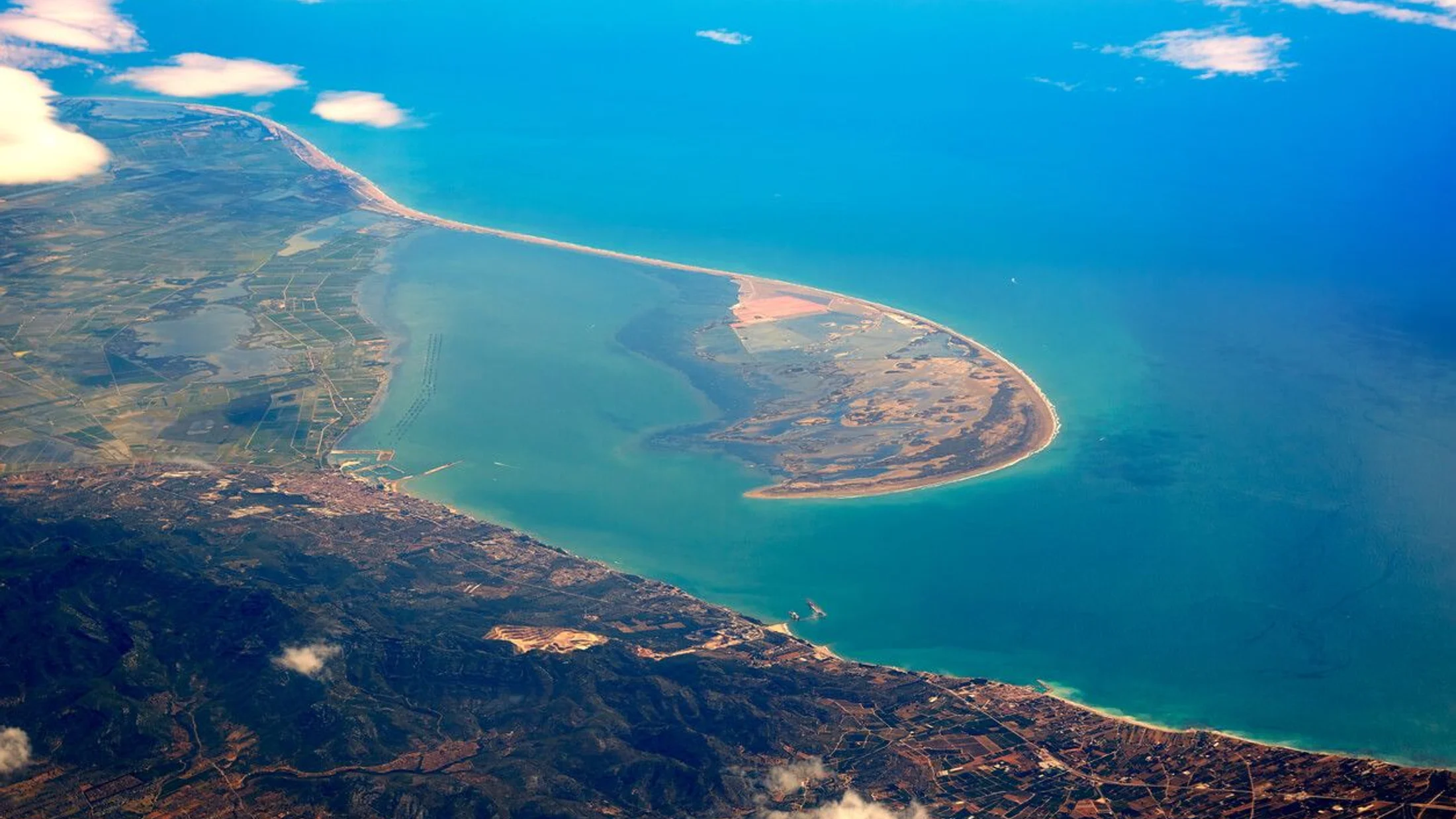
In southern Tarragona, the Ebro Delta is one of the most important wetlands in the western Mediterranean. Lagoons such as the Tancada and the Encanyissada, rice fields that change colour with the season, salt pans, beaches and a tranquil network of canals form its landscape.
The Natural Ebro Delta Natural Park covers 7,736 ha and is a SPA Zone, a Ramsar Convention site and part of the Terres de l'Ebre Biosphere Reserve, which covers Baix Ebre, Montsià and Terra Alta. Thousands of migratory birds depend on it, including greater flamingoes: the brackish water and the mix of fresh and salt sustain the wildlife.
Here, the plan is made by cycling on gravel, rowing among reeds and listening to the distant takeoff of a flock of greater flamingoes. We propose six activities to enjoy it without stress, with practical details, a map, tips according to season and level, and answers to the most frequent questions.
A mosaic of water, salt and rice
The Ebro releases its sediment load into the Mediterranean and forms a sand spit that extends nearly 22 km into the sea. It is the second largest wetland in Spain, after Doñana, and its low-lying, fertile lands are divided into three environments.
The rice fields remain flooded for much of the year. The coastal lagoons of the Tancada and the Encanyissada and the beaches and sandy points of the Trabucador and the Banya complete the map. This mix of habitats feeds fish, invertebrates and birds: swans, waders and greater flamingoes (Phoenicopterus roseus) feed, rest or breed here during their migrations.
At the peak of the season, the delta hosts tens of thousands of birds, so the landscape changes and life appears just a few metres from the path. Organise your outings at sunrise or sunset: you avoid the heat and the wind and see more animal activity.
What we have prioritised and what you will find
The Ebro Delta is best explored slowly: by kayak, by bicycle or with binoculars in hand. The proposals in this guide are designed to move at your own pace and with low impact.
To choose them, we have looked at accessibility (flat tracks and clear starting points), a reasonable indicative price, options suitable for families, natural and photographic value and good sustainability practices. Based on these criteria, we include kayaking in the Ebro Delta, cycling routes through the Ebro Delta and greater flamingo watching in designated areas.
Each activity includes a recommended location, duration, approximate price, best time, who it is ideal for, safety and sustainability, and how to book or rent equipment. Before setting off, confirm the current regulations in the Natural Park and check the updated options on Picuco.
Picuco te puede ayudar
Does something here catch your eye?
Tell us.
Write to us on WhatsApp or email: we answer questions, find the best options and help you sort out the booking.
Six essential activities to experience the Ebro Delta
The Ebro Delta is enjoyed slowly and up close, like when you approach to listen to the hum of dragonflies among the rushes. Here are six plans with practical details to choose yours and not improvise on the go.
1) Kayaking through channels and lagoons: from the Tancada lagoon to the inner channels
In a kayak, you experience the wetland at its own scale: low, silent and attentive, among common reed and riverbanks, with great herons and greater flamingos in sight. You paddle through channels and lagoons of the Ebro Delta Natural Park, in authorised and marked areas.
Avoid the integral reserve areas and follow the marked channels.
The excursion lasts 2–3 hours. Self-guided kayak rental costs 12–20 € per hour/kayak; the half-day guided route costs 20 €/pers. and includes a life jacket and guide.
Book at least one day in advance. Spring and autumn are the best times due to the mild temperatures; in July and August, it is advisable to avoid midday. It works well for families with children (double kayaks), wildlife photographers and those trying it for the first time.
Always carry a life jacket, cap and sunscreen, water and a waterproof bag. Do not go out with strong Mestral (NW) or Garbí (SW) winds. Do not invade marked zones or chase birds.
2) Cycling routes through rice fields and the coastline: flat tracks for everyone
The Ebro Delta is explored by bicycle through flat and photogenic tracks, with a morning for the family or a long afternoon of horizon ahead of you. The physical level is low–medium, so it is suitable for beginners.
The Encanyissada–Tancada Circuit follows perimeter tracks around both lagoons and starts from Poblenou del Delta (TV-3405). The starting point is the Casa de Fusta, with ample parking nearby. The area is a reserve for numerous waterbirds and waders, and the Casa de Fusta information centre is open all year, every day of the week.
The Ebro Riverbank (Deltebre–Riumar) has a path along the river and tracks up to the mouth, on a route through the Ebro Delta Natural Park. It begins at the riverside promenade car park.
For these compact tracks, a hybrid/trekking bike or a light MTB with wide tyres works well. Rental can be for half a day (10h-14h or 16h-20h) or a full day (10h-20h), and there is a transport service to pick up and drop off bicycles at different points in the Delta. You can rent in shops in Deltebre, Sant Carles de la Ràpita and Amposta; check availability in advance during bank holidays.
The best time is spring (planting) and autumn (harvest, golden fields). In summer, avoid the middle hours and days with strong winds. It is an ideal plan for families, couples looking for sunsets in the rice fields and landscape photographers.
Cycle on marked tracks, do not cross cultivated plots, respect speed limits and yield to agricultural vehicles. Carry water, a cap, insect repellent and lights if you return late.
3) Greater flamingo watching: key viewpoints and observatories
In the Ebro Delta, you can see greater flamingos and birds such as great herons during the tour. Go at sunrise or sunset, when they feed and the wind usually calms down. In winter, they gather in the lagoons and the spectacle is even greater.
Their pink colour comes from feeding on small crustaceans such as Artemia salina. The perimeter of the La Trinitat salt marshes, at Punta de la Banya, has signposted external access; the interior is a restricted zone and access changes depending on the season to protect the wildlife. Arrive via track and walkway, with signposted parking areas.
Bring 8x42 or 10x42 binoculars. If you are going to take photographs, a 300–600 mm telephoto lens and a tripod or monopod will give you the distance you need.
Keep silent, do not use flash or drones, and keep dogs on a short lead. Stay in the hides and viewpoints, at a distance, and do not go down to muddy banks where other birds breed. It is a plan that works for curious families, amateur ornithologists, and photographers.
4) Guided ornithology and photography excursions: learn with those who read the landscape
A guide teaches you how to read the delta: interpreting the habitat, locating the birds, and explaining how to photograph them without disturbing them. The outings guarantee the observation of greater flamingos and include the loan of binoculars and the use of a spotting scope.
You will see greater flamingos, great herons, Eurasian spoonbills, whiskered terns, terns, waders, and western swamphens; during migration, there is more diversity. Some outings include the Tancada lagoon and the Barra del Trabucador, and you can add a visit to a vulture feeding station in the Ports for 15 €, just 12 metres from the griffon vultures.
The excursions are suitable for all audiences and there are photography workshops focused on distance photography and basic camouflage. To choose well, look for small groups, minimum distances to the wildlife, Natural Park credentials, and civil liability insurance; they should avoid breeding areas and not use decoys.
The best times are sunrise and the last light; in summer, go early to avoid the heat and the glare. Use high shutter speeds, moderate ISO, a lightweight tripod, and clothing in neutral tones.
The meeting point is in towns such as Tortosa, Amposta, Sant Carles de la Ràpita, Ampolla, Freginals, Camarles, Sant Jaume d'Enveja, Deltebre, Eucaliptus, Muntells, or Riumar (train station, hotel, parador, or campsite), with free van transport from there. Local operators of guided ornithology and photography excursions have regular departures in Sant Carles.
5) Beaches and family activities: Trabucador Beach and calm shore
Trabucador Beach is a sand spit 6 km long and 30 m wide between the Alfacs bay and the open sea. On the bay side, it has a gentle slope and shallow water, so it works well for families looking for space and a relaxed pace.
You can enjoy swimming on the bay side, sunset walks, birdwatching from the shore, sand games, and picnics there.
There is little shade and limited services: bring water, food, and a bin bag. Watch out for the Mestral or Garbí winds, which create waves, and do not go out into the water with children if the swell rises. Do not drive or park off-track and respect nests and dune plants.
Spring and autumn are the best times due to the mild temperatures; in summer, go early or late in the day. During high season, there may be access control with a limit of 700 spaces (650 for cars, 50 for motorhomes), from 06:00 to 23:00 h, and overnight stays are prohibited; if the spaces are full, the entrance closes until new ones are freed. Access and parking are free.
Arrive from Tortosa via the C-12 (~30 km) and then 10 km of paved track, with signposted access from the local network and a compacted sand track on the final stretch; only follow official access points.
6) Combined experiences: rice fields, sunsets and salt pans
One afternoon is enough to see the delta in three ways: cycling through rice fields, stopping at a lagoon viewpoint, and finishing at a sunset spot with open views. As the sun sets, the rice fields turn copper and the salt pans reflect the sky in pinks and oranges.
The bike route through Poblenou del Delta can be travelled all year round in about 4 hours. Bicycle or e-bike rental is offered for half a day (10:00-14:00 or 16:00-20:00) or a full day (10:00-20:00).
If you prefer the car, you can combine the visit with short stops and brief walks, and add fuel to your budget. The Trinitat salt pans are the only active ones in the Delta and produce about 50,000 tonnes of salt per year. Illa de Buda is the largest island in Catalonia and can only be visited on 29 June (Saint Peter); you can reach it by boat (line T-340) from Riumar Beach.
At dusk, you can see birds feeding, intense reflections in the salt pans and lagoons, and activity in the channels in low light. To take photographs, arrive 30-45 min before sunset and use a tripod, graduated filters, and framing with water lines or salt patches.
Bring a light layer, a headlamp, insect repellent, and extra water. Park in authorised areas and do not step on salt crystals or microbial mats. Avoid loud music and bright lights that disturb the wildlife.
Ebro Delta map: routes, viewpoints and rental points
A well-prepared map saves you half a morning of doubts in the Ebro Delta. It is useful for planning your day: locate main access points, rental points, viewpoints and parking areas.
In an interactive map, activate layers for wildlife (observatories and sensitive periods), services (rental and food), access points and track closures, and weather and wind. Save the map offline: coverage sometimes fails in the delta near the tips and lagoons.
For the layers, use wildlife and breeding periods to avoid disturbance, passable tracks and paths with good road conditions, services such as water, food and toilets in nearby towns, and weather and wind (Mestral, Garbí) to adjust your departure times.
You can rent bikes in Deltebre, Sant Carles de la Ràpita and Amposta. The cycling routes are flat: the Tancada and Encanyissada perimeter routes, and the Deltebre–Riumar riverbank. It includes free helmets and locks, and free assistance on the route. In Amposta, the base is next to the Vía Verde, with rentals for half a day or a full day and predominantly flat terrain, suitable for all levels.
Plan short loops with options to escape to local roads, mark points for water and shade for stops, and export GPX tracks if you are cycling to share the plan with the group.
How to choose your activity according to level, season and sustainability
The Ebro Delta changes depending on who visits it and in which month. Choose the activity based on your group, the season and the park rules, and the day will be perfect.
With small children, prioritise 10–15 km bike routes, kayaking in protected channels and the beach on the bay side of Trabucador. For couples, a sunset over the rice fields and a morning of gentle kayaking work well. For groups looking for activity, combine 25–35 km cycling with observatories and, if the wind allows, a short guided kayaking route. If you come for photography, focus on sunrise and sunset, leave room for the wind and opt for well-known hides.
Spring brings mild temperatures, flooded fields and active migration: ideal for cycling and birdwatching. In summer, the heat and the harsh light at midday force you to go out early or at sunset, and mosquitoes appear more frequently after sunset, so bring repellent. Autumn arrives with the rice harvest, golden tones, migratory passage and clear skies after the tramontana: perfect for photography and combined routes. In winter there are fewer people, clean light and wintering birds; a windbreaker is essential.
Bring water (1–2 l per person), a cap, sunscreen, sunglasses, mosquito repellent and a headlamp if you run out of light. For cycling, add a helmet, spares, lights and a reflective vest; for kayaking, a life jacket, a whistle and a waterproof bag.
Navigation is only permitted in the allowed areas of the park. At Trabucador beach there may be access and capacity limitations during the season or due to storms, so check local notices. Drones, in general, are not permitted in sensitive areas and require authorisation: avoid using them.
Stay on tracks and observatories, do not cross crops or damage dune vegetation. Keep a minimum distance of 50 m from wildlife, without music and with dogs on leads. Zero waste: everything that goes in, comes out.
Hire a guide if it is your first visit, if you prioritise seeing wildlife or if there is uncertain wind, for safety and landscape reading. Self-guided activities work well on marked cycling routes and observatories with easy access; check reliable tracks and maps.
Frequently asked questions
In the early hours the delta is tranquil, with still water and flapping wings. Organising the day well allows you to maintain that calm throughout the day, so here are the most common doubts before coming.
When is the best time to see greater flamingos?
If you can choose, aim your visit for the winter weeks, when the greater flamingos gather in the lagoons and the spectacle is greater.
The most active hours are sunrise and sunset, when the light also helps for observing them. Book your outing in advance and bring binoculars so you don't miss any detail.
Do I need a permit to go kayaking?
No permit is needed to navigate with authorised companies in the permitted areas of the delta. It is enough to book the outing with an operator working there.
That said, respect the restricted areas of the Parc Natural: avoid integral reserves and always follow the marked channels and the operator's rules.
Can I get there by public transport?
Yes, although the final stretch requires some planning. Within the park, travel is done by taxi or by bicycle, so it is advisable to organise your journeys before setting off.
Before booking, verify the updated schedules for your travel dates: they change according to the season and affect your return.
Is the sea and the lagoons safe?
In the Mediterranean of this area, there are no strong tides, but the wind rules. The Mestral and the Garbí can raise waves and currents in a few minutes, also in the lagoons.
If strong wind is blowing, do not enter the water or the kayak. Look for sheltered plans and leave the outing for another day.
Do I need to book in advance?
Yes, especially if you go on a weekend, during a bank holiday, or in summer: bicycles, kayaks, and guided excursions fill up. Book with at least 48–72 hours of margin to secure your spot.
When booking, confirm the cancellation policies due to wind. In the delta, the wind can change the plan of the day and it is advisable to know what happens with your booking if it blows hard.
How do I avoid mosquitoes?
Carry repellent and light long-sleeved clothing at sunset. In summer, stay away from waterlogged areas when the sun goes down.
If you go by bike or in a kayak, the wind usually helps to reduce the presence of mosquitoes.
Can I fly a drone?
In the sensitive wildlife areas of the Delta, you cannot fly a drone, and generally, a specific authorisation is required. Before taking the device out, check which area you are in and what permit you need.
Think of the birds first: a drone can cause nest abandonment and stress in the greater flamingos and the rest of the colony. If your plan is to observe wildlife, keep the drone tucked away and use binoculars from the designated viewpoints.
How is the access and parking at Trabucador Beach?
Arrive at Trabucador Beach via the marked access points and respect closures due to storms or capacity limits. In high season, there may be access regulation, so it is advisable to allow extra time.
Park in the designated areas and never on the dune. This way you protect the dune system and avoid problems with the park regulation.
Book your experience — discover active tourism activities in Spain with providers verified by Picuco.
Conclusion
The Ebro Delta combines calm and movement: you can cycle without any elevation gain, paddle in a kayak at your own pace, and spot greater flamingos in lagoons such as Tancada, beaches like Trabucador, and rice fields that change according to the season.
Choose the moment depending on what you are looking for. To focus on wildlife, sunrises and sunsets; with family, flat tracks and bay beaches; for photography, golden light and margin for the wind.
The logistics are simple and the prices are affordable, especially for self-guided activities. Even so, plan in advance, check availability and local conditions, and book with responsible operators.
Travel light and with respect: stay on the marked routes, do not leave litter, and keep your distance from the wildlife.