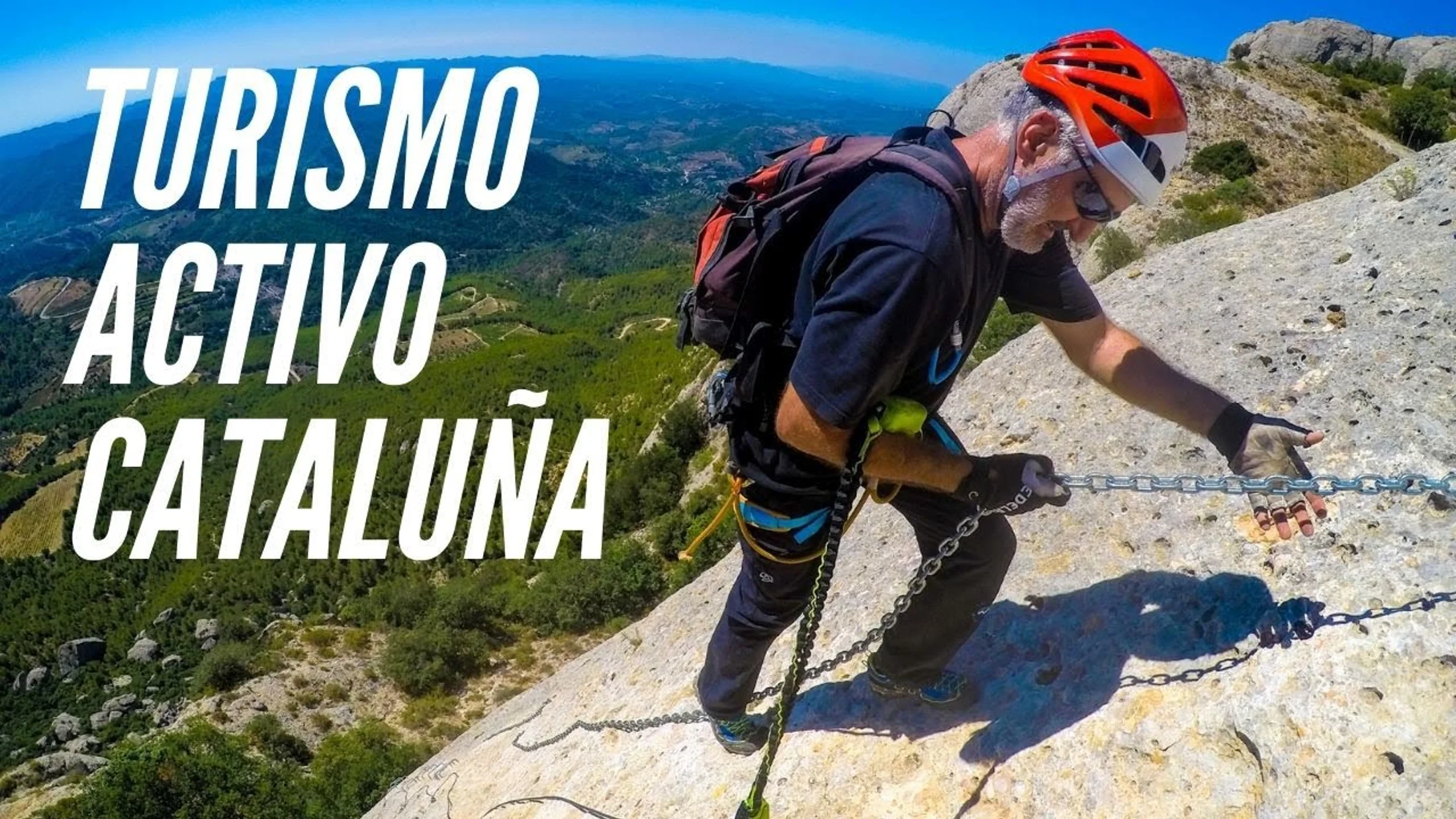
Active tourism in Catalonia: diverse nature, adventure tailored to you
In Catalonia, you find the Pyrenees, plateaus, rivers and a wild coastline that reaches as far as Cap de Creus. In a short space, you go from fossil glaciers to marine cliffs and beech forests on lava.
The ten experiences in this selection are chosen for their quality, safety and natural and cultural value. There are classic routes in the Catalan Pyrenees, coastal crossings sheltered from the tramontana and family plans among volcanoes.
Each proposal includes duration, levels, best time, indicative prices and logistics. This way, you can decide calmly and at your own pace.
In Aigüestortes, you must book your spot in advance through the refuge central booking system. Vehicle and bicycle circulation is restricted, and bicycles only reach the information points of Aigüestortes and Sant Maurici.
Some refuges are a short walk away: the Ernest Mallafre, 15 minutes from Estany de Sant Maurici, and Colomèrs, 45 minutes from the Aiguamòg car park. The crunch of gravel under your boots at dawn in Aigüestortes sets the tone for the day.
Landscapes that multiply your options
Catalonia fits into an escape with snow in the morning and salt on your fingers in the afternoon. The Pyrenees concentrate ridges, ibones and glacial valleys for trekking, rafting or skiing, and Cap de Creus has sea caves and coves for paddling and snorkelling.
Between those two extremes appear agricultural plateaus, the forests of La Garrotxa and massifs like Montserrat, where rock and traditions share the landscape. La Garrotxa has about 40 volcanic cones and more than 20 basaltic lava flows, and can be explored on foot via the route of Fageda d'en Jordà, Santa Margarida and Croscat: 10.9 km and about 3 h 15 min.
If you are short on time, the Joan Maragall path is circular, practically flat and takes about 35 minutes.
Short distances and the network of trains and roads allow you to combine the Pyrenees and the coast in a single getaway.
Plan by season: snow in winter, rivers in spring, coast in summer and red forests in autumn.
How we choose these 10 experiences
Safety rules this list: signposted itineraries, accredited companies and staffed refuges. From there, each experience must offer something unique.
We look at the uniqueness of the landscape and accessibility, with access via public transport or tracks in good condition. The season also matters: spring water flows, windiness in Cap de Creus and reliable snow.
We value environmental impact and options for different levels. And we look at the local communities that maintain refuges, cultivate Empordà or guide in their valley.
Picuco te puede ayudar
Does something here catch your eye?
Tell us.
Write to us on WhatsApp or email: we answer questions, find the best options and help you sort out the booking.
What information you will find in each experience
The ten experiences in this guide follow the same template, so you can compare them at a glance. In each one, you will see where it is, how much time it requires, how much it costs on average and who it is aimed at.
The data changes according to the season and the level of the practitioner. This way, you can plan without surprises: if you go in winter or if it is your first time, you will know what to expect before booking.
The murmur of the wind on a mountain pass or the splash of the kayak sets the rhythm of the activity. Read the full description before deciding and book in advance the outings that include a guide.
What the fact sheet includes
Each experience on this list comes with a fact sheet containing what you need to know before booking: where it is, how much it costs, and what level it requires from you.
The fact sheet starts with the location and access: municipality, valley or massif, with a landmark and GPS coordinates where useful. It also indicates how to get there by car and, if available, by nearby public transport.
Next comes the level and duration. The physical level is marked as low, medium, or high, and the technical level as none, basic, intermediate, or advanced, explained in plain language. It adds the typical duration in hours or days and its variants.
The best time combines the optimal weather windows and the key conditions for each activity, such as water flow, snow, or wind. The indicative price is given in ranges per person and activity, without specific companies; it is advisable to confirm this on Picuco or with the operator.
In activities and logistics, you will see exactly what you will do, for example, trekking with mountain refuges in the Catalan Pyrenees or kayaking and snorkelling on the coast. The fact sheet also includes permits, reservations, and indispensable equipment.
Technical levels are read as follows: "basic" means simple movements with common equipment, such as snowshoe poles or a stable paddle. "Intermediate" requires manoeuvres or terrain reading, and "advanced" includes objective risk and mastery of techniques.
Quick tips for comparing activities
Before booking, look at the calendar: the Noguera Pallaresa rivers have high water flow from May to June. Outside of that window, the plan changes.
The journey between the Pyrenees and the Coast lasts between 2 h 32 min and 4 h 58 min depending on the itinerary, and can exceed 4 hours. Therefore, it is worth considering intermediate bases such as Girona or Olot.
If you do not have technical equipment, prioritise activities with rental or a guide included. Add up the activity, travel, and accommodation: the ranges of 40–70 € p.p. cover half-day aquatic outings, and mountain refuges add a separate cost.
Choose according to your level: for beginners, simple via ferratas; for experts, Carros de Foc or crossings with a guide. And decide beforehand if you are looking for adrenaline or contemplation: listening to the foam breaking against the rock or the silence of a beech forest changes the experience significantly.
Pyrenees and mountains: five adventures that define Alta Cataluña
1. Carros de Foc: refuge-to-refuge trek in Aigüestortes i Estany de Sant Maurici
Carros de Foc is the classic high mountain circuit of the Catalan Pyrenees: a loop that links staffed refuges in the Aigüestortes i Estany de Sant Maurici National Park amidst lakes, passes and granite. It connects 9 historical refuges and dozens of lakes in a 55–65 km loop with more than +9,000 m of accumulated ascent.
The physical difficulty is high and the technique is basic or intermediate alpine trekking: there is residual snow at the start of the season, snow patches, and you need to be able to navigate. The classic duration is 5–7 days, with express variants of 3–4 days by linking sections. The best time is from late June to September, although snow can persist until July on the high passes.
The route has no special markings: you follow the GR 11 marks (red and white), yellow wooden stakes and stone cairns. When crossing a pass, the thin air feels like cold crystal against your skin.
Book in advance at the refuges; booking for the forfait option is done through the Central de Reservas. The forfait is collected at the starting refuge, except in the Espot area (Mallafré, Amitges and J.M. Blanc refuges), where it is collected at the Tu Rai shop (Espot). Wild camping is not permitted in the park: you can only sleep in the refuges of Anexo 2 and in the Estallos and Riumalo areas.
Bring hiking boots, light crampons at the start of the season, a 1:25,000 map and a GPS. Check the weather daily and prepare an alternative plan; if you have any doubts, rely on a qualified guide.
2. Rafting on the Noguera Pallaresa: a benchmark for white water
Between Llavorsí and Sort, the Noguera Pallaresa has been filling with rafts for decades: it is a benchmark for rafting in Pallars Sobirà (Lleida). The river has a long culture of descent and the rapids range from grade II–III+ and reach IV depending on the flow.
On the raft, the guide covers the technique and sets the pace. The physical difficulty is medium: you must know how to swim, and it is not suitable for pregnant women or people with heart conditions or serious medical problems.
Each trip lasts 2–3 hours and covers 14–18 km. The season runs from 15 March to 15 October, and the indicative price is 40–65 € per person for a half-day; it is advisable to confirm with local operators.
The price includes accident insurance for the rafting trips on the Noguera Pallaresa.
Follow the guide's instructions, drop your paddle if you fall into the water and protect your feet upstream.
3. Alpine skiing and touring in Baqueira‑Beret: snow in the Val d’Aran
Baqueira-Beret has 130 runs and 173 km of skiable terrain in Naut Aran (Lleida), the reference resort of the Val d'Aran. The valley is Atlantic, with generous snow and its own culture.
Alpine skiing is suitable for all levels. Touring requires an intermediate or advanced level and knowledge of avalanches, and the resort has mountain passes to head out with a guide. In a forest clearing, the powder snow crunches under your skis.
The season runs from December to March, sometimes until April at high altitudes. Ski rental costs between 25 and 40 €, so it is worth checking the current rates.
When touring, take a DVA (avalanche transceiver), shovel, probe and helmet, and have basic training. Check the avalanche bulletins and, if you do not master slope assessment, hire a guide. Risk updates are available at the Servici de Lauegi of the Conselh Generau d'Aran. Respect beacons and signage: the resort and the piste crews work so that the valley remains safe for everyone.
Access is via the C-28 road from Vielha. Rent at the foot of the slopes and choose ski-in/ski-out accommodation or rural houses down in the valley.
4. Climbing and via ferratas around Pedraforca: a technical school in Berguedà
Pedraforca draws two horns over Berguedà and is the mountaineering symbol of Catalonia. Around it, there are climbing sectors and nearby via ferratas for different levels, as well as hikes through its scree slopes.
The mountain reaches 2506 m and its rock is limestone. The entire complex is within the Cadí-Moixeró Natural Park, so the terrain combines cliffs, scree and forest within a few kilometres.
Spring and autumn are the best times to climb and do via ferratas here. In early summer, look for shade; avoid extreme heat and winter snow without equipment.
Always wear a helmet, because the scree slopes release stones, and bring rope and approved gear. For a via ferrata, you need gloves, a dissipater, a harness and a rest lanyard.
Access is via the B-400 from Guardiola de Berguedà. In high season there are regulated car parks and it is advisable to check nesting restrictions before heading up.
In Saldes and in the network of refuges, mountaineering hospitality is maintained: buying local bread and cheese usually provides good advice.
5. Volcanic hiking in Garrotxa: Fageda d’en Jordà and volcanoes
In Garrotxa, you walk on lava: 40 volcanic cones, 10 craters and more than 20 basaltic lava flows. The volcanic activity in the area dates back to between 350,000 and 8,300 years ago.
The Garrotxa Volcanic Zone is a mosaic of craters, lava flows and beech forests that is unique in the Peninsula. Hiking here is gentle and educational, and works well with children.
The Fageda d'en Jordà grows on lava from Croscat. Its ground has lava prominences of more than 20 m in altitude called tossols. In spring, the humid air of the beech forest smells of earth and new leaves.
The physical difficulty is low or medium and the technique is nil: there are accessible circular routes and well-marked paths. Choose autumn for the colours, spring for the freshness and flowering, and in summer walk during the early or late hours of the day.
Access is free. For the Fageda d'en Jordà, park at Can Serra, at km 4 of the road from Olot to Santa Pau; motor vehicles are not allowed inside the forest.
Bring hiking boots and water. Respect the regulations: do not leave the paths or pick flora.
Coast, plain and varied routes: from Montserrat to Cap de Creus
6. Active Montserrat: hiking, MTB and adventure near Barcelona
Montserrat is less than 60 km from Barcelona and is one of the most symbolic mountains for Catalans: conglomerate needles, hermitages and panoramic paths. At dawn, the singing of birds mixes with the distant tolling of the monastery.
You can combine the hike to Sant Jeroni with MTB on perimeter tracks and regulated adventure zones. Hiking has low or medium difficulty; MTB, medium on authorised tracks and paths; climbing and via ferratas, intermediate or advanced. The best time is spring and autumn, and early summer: winters are cold but dry.
Arrive by R5 train from Plaça Espanya to Monistrol de Montserrat (1 h) and then go up by rack railway to the monastery (15 min). The first rack railway connections from Monistrol-Vila depart at 8:35 and 8:55. Access to the cable car or the rack railway is subject to its own fares, and there are regulated car parks; signage includes the GR-172 and local paths.
Wear footwear with good grip and a helmet on via ferratas and climbing, and respect nesting restrictions and temporarily closed climbing zones.
All information about the park is at Montserrat.
7. Kayak and snorkelling in Cap de Creus: coves and caves from Cadaqués
From Cadaqués or Portlligat, a kayak takes you to skirt the cliffs, passages and Mediterranean tapeweed meadows of Cap de Creus. The outings aim for coves such as Sa Sabolla or S'Alqueria and sea caves when the sea is calm.
The transparent water lets you see purple sea urchins and saddled seabream shimmering in the sun. With favourable conditions, you can enter Cova de s'Infern by kayak.
The physical difficulty is low or medium and the technique is basic, always with a guide. Families can do short outings, and the usual duration is around 2–3 h of kayaking.
The best time is from June to September. Avoid days with strong tramontana and choose mornings with calm seas. Meetings are usually around 10:00 h.
A guided outing with equipment costs between 30 and 55 € per person; confirm this on Picuco or with a local operator. All participants must know how to swim and minors must be accompanied by an adult sharing the same kayak. If you are exceptionally tall, overweight, or have any medical condition or disability, inform the centre before booking.
Always wear your life jacket, sunscreen and a cap. Do not step on the Mediterranean tapeweed or touch the fauna, and inform someone of your route. Outings depart from sheltered beaches: follow the instructions of fishermen and guides from Alt Empordà.
8. Coastal path from Cadaqués to the lighthouse: the most photogenic gr-92
The GR-92 connects Cadaqués with the Cap de Creus lighthouse through a rugged coastline of coves, mountain pine and wind-beaten slate.
The physical difficulty is medium, with gentle but continuous elevation changes. The technical difficulty is low, although you are exposed to the sun almost the whole time. Estimate 2–2.5 h for one way and about 4.5 h for the round trip; you can also return by taxi or via a track.
Go in spring, at the beginning of summer or in mild autumn, and avoid heatwaves and the tramontana. The activity is free: the only possible expenses are the taxi and parking.
The path has no shade or water, so bring a minimum of 1.5 l of water per person, a cap and hiking footwear, and check the wind forecast. The local bus has limited frequencies. Do not approach the edge of the cliffs when the sea is rough and use GPS for inland variants if the sea is heavy.
Car access to Cap de Creus is restricted from 15 June to 31 August. The marked path begins in Portlligat, although it is common to do it from Cadaqués. Pick up what you bring and leave the coast better than you found it.
9. Horse riding routes through l’empordà: from vineyards to marshes
On horseback through l'Empordà, you move from vineyards to marshes with great herons, among stone masias. The routes depart from Baix and Alt Empordà (Girona), in the Aiguamolls area and in inland zones.
Full-day routes last 4–6 h and include a picnic. They are suitable for both beginners and riders: the physical difficulty is low or medium depending on the duration, and there is always guided technique.
The pace of the trot raises a warm aroma of earth and rosemary. In summer, ride during the early or late hours of the day; in winter, look for clear and dry days.
The price includes accident insurance. Wear long trousers and closed footwear; groups are small. The minimum altitude and permitted age depend on each centre.
Respect authorised paths and the guide's instructions. Do not feed the wildlife and maintain your distance in marshes and sensitive areas, where there may be native birds.
10. Cycle touring and e-bike in Lleida: valleys, canals and plains
In spring, the fruit trees of Aitona tint the fields pink and the air smells of blossom.
The terrain is gentle, rural heritage is nearby and the climate remains dry for much of the year. The physical difficulty is low or medium thanks to electric assistance, and the technical difficulty is low on tracks and local roads. Families with trailers have plenty of space to ride.
In summer, pedal only early; winters are cold but sunny. Bike-friendly accommodation usually has a workshop and bike washing facilities.
For logistics, the regional train allows bikes on authorised sections and guided routes include support vans. You can get GPX tracks at the tourist offices.
A helmet is mandatory; bring lights and extra water on dry days. Respect agricultural machinery and give priority to pedestrians. On the service tracks of irrigation communities and fruit cooperatives, yield the right of way and close the gates if you find them.
Location map: plan by levels, season and logistics
The article's interactive map locates the 10 experiences and adds layers for planning: type of activity (mountain, water, bike, coast), physical and technical difficulty, recommended season and logistical points such as regulated parking, train stations and information centres.
With the colour palette, you can filter by families, by level (beginners or experts) and by season. The icons distinguish guarded refuges in Carros de Foc, kayak embarkation points in Cadaqués, points of the GR-92 and e-bike bases in Lleida.
The filters help you to create sequences. You can set up a Garrotxa + Montserrat weekend in autumn, or a long weekend with rafting in the Noguera Pallaresa and a final stroll in Cap de Creus if the tramontana allows it.
Each file opens with practical data, the GPX track can be downloaded when available and your selections are saved to print or consult offline. If you combine the Pyrenees and the coast, activate the transport layer to estimate times and choose an intermediate base.
Practical tips according to your profile and the season
The key to active tourism in Catalonia lies in matching your level, your enthusiasm and the weather. You don't need to be an expert to enjoy yourself, but it is advisable to choose the activity wisely according to your experience.
Choosing by sensations also helps: think about whether you prefer the rustle of a beech forest or the shimmer of the sea. With that answer and the weather forecast for the day, you have already made half the decision.
Choose according to your level and profile
If the return journey involves more than 45–60 min of walking in the heat, look for an alternative or add a taxi or support boat.
Couples looking for scenery and calm have the Camí de Ronda between Cadaqués and the lighthouse (partial section), horse riding routes through l'Empordà and e-bike trips along the Segre at sunset. Spring and autumn are the best seasons, with soft light and fewer people.
Combining two different activities in 48 h allows you to alternate muscle groups.
For all profiles, hiring local guides provides knowledge of the terrain and regulations and reduces uncertainty. If conditions are variable, choose the level immediately below your ambition.
Seasons, weather and safety
Catalonia changes activities depending on the month: snow rules in winter and kayaking in summer. Choose the season based on what you want to do and prepare your clothes and plan accordingly.
In winter, there is stable snow in Val d'Aran (Baqueira-Beret). You need cold-weather gear and expect short days. Book in advance during holidays and check the avalanche bulletin.
In spring, the rivers are at their peak, with the Noguera Pallaresa in May–June. Wear layers and a raincoat.
In summer, the coast is the protagonist: go kayaking in Cap de Creus in the morning. In the Pyrenees, there are occasional afternoon storms. Avoid the middle of the day and carry 2 l of water per person.
In autumn, the beech forests are at their peak and the sea remains temperate. It is a good time for photography and hiking.
Book in advance: the Aigüestortes refuges, e-bike rentals and weekend kayaking trips fill up. During the season, do it 1–3 weeks before. The Aigüestortes refuges are booked through the FEEC (Federació d'Entitats Excursionistes de Catalunya) website, and half board costs between 50 € and 65 € per person.
For the mountains, check that your insurance covers rescue. Serious guided activities include civil liability and accident insurance.
Verify the conditions before heading out: official weather, avalanche reports, wind, water levels and park warnings. If a key variable worsens, change your plan. In the Empordà, the tramontana blows with more intensity between November and March; with a strong tramontana, it is dangerous to sail and it is advisable to seek shelter in ports or coves. The summer wind is the garbí.
Take care of the environment: go in a small group, stay out of sensitive areas and leave no trace. Respect fishing bans, nesting periods and Mediterranean tapeweed meadows. Think of safety as another layer of clothing: light, present and adjustable throughout the day.
Frequently asked questions
Do I need a guide for these activities?
A guide is not always necessary, but having one provides safety and learning. It depends on the activity and your previous experience.
For rafting on the Noguera Pallaresa, the activity is always done with a guide.
If you are starting out in via ferratas or climbing in Pedraforca, a professional looks after your technique and equipment. Book in advance during high season and confirm the equipment included in the trip.
How do I book activities and refuges?
Book activities with verified local operators or through Picuco. In high season, do it 1–3 weeks in advance.
For the Carros de Foc route, you must book the refuges; the forfait or passaports for the route are optional. If you are going to do horse riding or e-bike routes through Lleida or l'Empordà, confirm schedules and group sizes before closing the booking.
Save your confirmations offline in case mobile coverage fails in the mountains.
What insurance do I need?
Before heading out, check what your sports insurance covers. For mountains and skiing, check if it includes rescue and assistance in Spain; if not, take out a specific policy for the days.
In guided activities such as rafting, kayaking or via ferrata, the operator must include civil liability and accident insurance. Ask them for the details of the coverage before booking.
Carry your health card and documentation with you.
How to get there and move between areas?
From Barcelona and Girona, there are trains and buses to Montserrat and to the coast. You can reach the Catalan Pyrenees by bus to the main valleys; to reach the trailheads, you will need a car.
Staying in Girona or Olot helps you split up your journeys.
On the coast, local taxis can make returning from the Camí de Ronda easier.
What equipment is essential?
Equipment changes depending on the activity, but there is a base that repeats: footwear with a good sole, layered clothing and sun protection. From there, every plan requires its own specific items.
In the mountains, for trekking or hiking, bring a headlamp, a first-aid kit and a map or GPS. In the water, for rafting or kayaking, a swimsuit, a towel and a thermal t-shirt if it is cool are enough: the operator provides a wetsuit, helmet and life jacket. If you go by bike or e-bike, do not forget a helmet, gloves, a basic kit, water, lights and a lock.
There are three extras that depend on the terrain. For snow traverses, add an avalanche transceiver (DVA), a shovel and a probe. For via ferratas, add a helmet and a dissipater. In Cap de Creus, add a snorkel mask and a waterproof case.
Prepare your backpack the night before and check the forecast: in the Pyrenees the weather changes quickly and safety gear is decided at home, not on the trail.
Are there special permits or regulations?
Yes. Several natural spaces in Catalonia have their own regulations and it is advisable to get information at the official park centres before setting off.
In Aigüestortes, wild camping is not permitted. In La Garrotxa, you must respect the marked paths. In Montserrat, there are temporary climbing restrictions due to nesting.
In Cap de Creus, cooking or making fires inside the park is prohibited. There, the Rector Plan for Use and Management (PRUG) comes into force on 14 August 2025, so check the current rules before your visit.
Where to stay near the activities?
Staying near the activity changes the day: less driving and more time in the mountains or in the water. The offer varies greatly depending on the area, so it is advisable to choose your base before booking your excursion.
In high mountains, you have staffed refuges in the Carros de Foc circuit and rural houses in nearby valleys such as Boí and Espot. In the Boí valley, there are rural houses from 21 € per person per night (Casa Torellola) and at 22 € per person per night in Barruera. For river activities, look for campsites and hotels in Sort and Llavorsí. On the coast, Llançà has accommodation and Alt Empordà also offers options for sleeping near the activities.
3,1 km.
Campsites open from 15 March to 16 November. A night for two adults costs between 17,50 and 52,60 € depending on the season, electricity is 9,20 € per day and the supplement for a dog is 3,70 €. The maximum occupancy is six people per pitch and up to three pets are admitted in designated areas.
Vielha works well as a base for Val d'Aran. If you go by bike, look for "bike-friendly" accommodation; if you set off at dawn, ask for options with an early breakfast.
Book your experience — discover active tourism activities in Spain with providers verified by Picuco.
Conclusion
From the Pyrenees to Cap de Creus, the ten experiences in this article offer different seasons, levels and landscapes. Choose according to the time you have and how much enthusiasm you bring.
Plan according to weather windows, book the essentials in advance and keep a plan B in case conditions change. Leave the environment as you found it.
At Picuco, activities with verified providers are gathered together for you to compare and book. Check the files and the map to adjust the details of each outing.