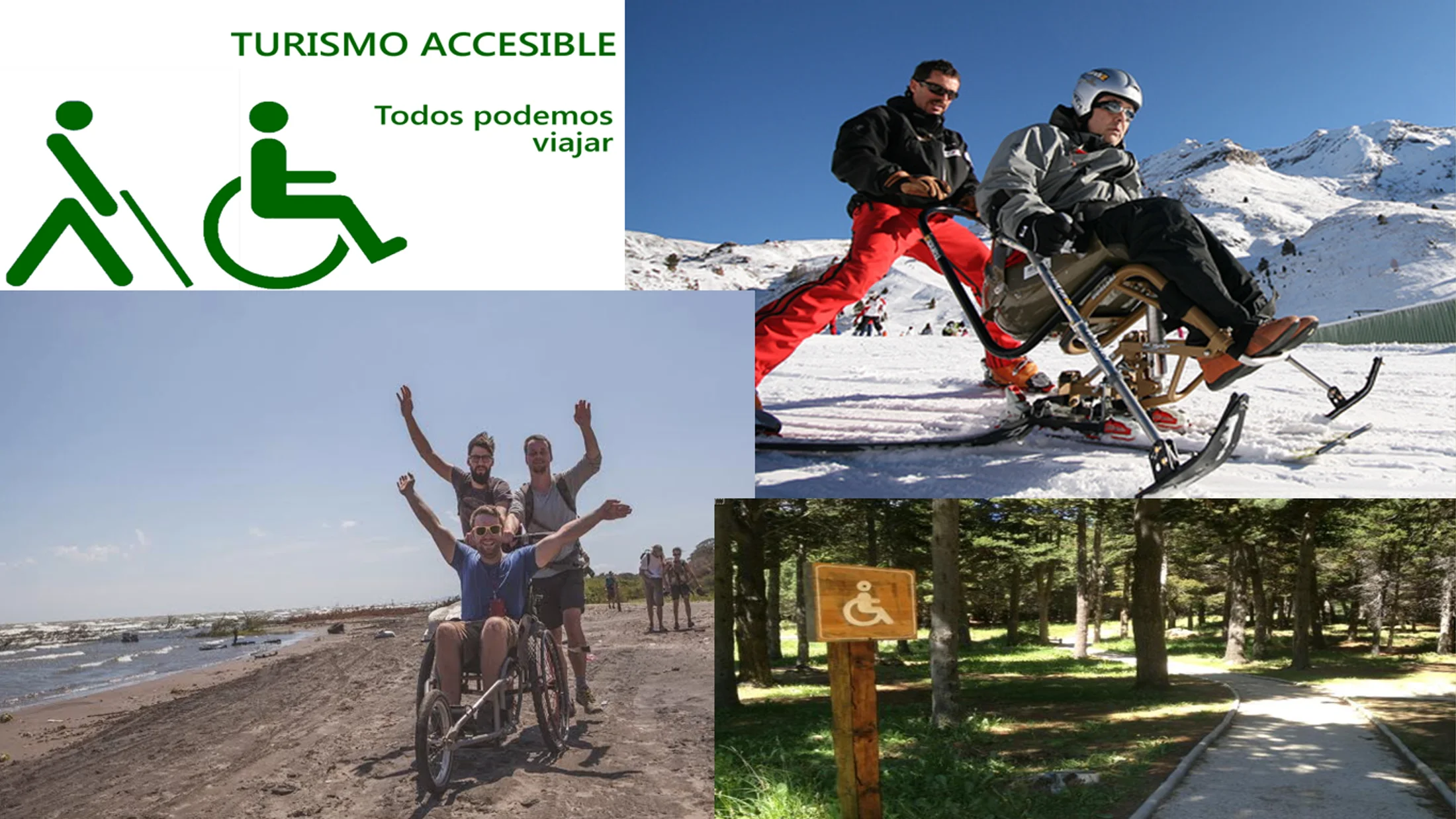
Why Accessible Nature Experiences Matter in Spain
Accessible active tourism in Spain opens forests, rivers, and coastlines to more people without sacrificing safety or dignity. You will find accessible trails, adapted activities, and operators ready to welcome wheelchair users, families with strollers, and travelers with sensory or cognitive needs. Morning air over olive groves smells of thyme and dust after the first bike wheel rolls.
We focus on practical, verified information so you can plan with confidence and avoid surprises on the ground. Expect clear details on surfaces, gradients, widths, services, and booking logistics. You will see who each option suits, how to get there on accessible transport, and when to go for calm water or cooler shade. Our aim is inclusion and comfort for you and your travel companions.
What we mean by accessible tourism
Accessible tourism includes people with reduced mobility, wheelchair users (manual and power), blind or low-vision travelers, Deaf travelers, neurodivergent visitors, and families pushing strollers. It also serves those who prefer shorter distances, frequent rest points, or step-free facilities. The sea breeze feels softer when a ramp leads you straight to the water.
This article uses accessible active tourism Spain as a broad lens to highlight accessible trails in Spain, accessible greenways, and adapted activities Spain such as guided walks with tactile models or quiet-time visits. We explain simple technical terms immediately—like gradient, the slope measured in percent—so you can decide fast. Each experience is oriented to safety, clarity, and the joy of being outdoors together.
How we chose the routes and activities
We selected options using concrete criteria: prepared surfaces (asphalt, compacted gravel, boardwalk), minimum widths (typically 1.5–2.0 m), gentle gradients (usually below 3–5%), and barrier-free access to viewpoints or boats. Sun-warmed wood on a boardwalk gives a reassuring, grippy feel under wheels.
We looked for adapted gear (tandems, handbikes, kayaks with outriggers), accessible toilets and parking, reliable signage, guide training in accessibility, and nearby transport and lodging. We cross-checked with official sources like the Fundación de los Ferrocarriles Españoles – Vías Verdes, regional park authorities, and the Red de Parques Nacionales. Each entry follows a uniform format so you can compare quickly.
Picuco te puede ayudar
Does something here catch your eye?
Tell us.
Write to us on WhatsApp or email: we answer questions, find the best options and help you sort out the booking.
How to Read the Route and Activity Cards
Each card follows the same structure so you can scan, compare, and decide quickly. Think of it as a field note that tells you exactly what you need, nothing you don’t. The faint clink of trekking poles on a ramp can be your cue that the details match the reality.
- Location and access:
- Municipality/province and the most practical accessible trailhead or meeting point.
- How to get there: road access, step-free train/bus stops, and transfer notes.
- Price and timings:
- Typical ranges (e.g., 0–5 € for parking, 35–60 € p.p. for guided outings).
- Seasonal schedules and best hours for shade or calmer water.
- Best time to go:
- Weather windows, migration seasons, and crowd patterns.
- Ideal for:
- Wheelchair hiking Spain (manual/power), reduced mobility, families with strollers, and sensory-friendly options.
- What to do:
- A brief step-by-step of the route or activity, including distances or durations.
- Accessibility level (1–5):
- 1 = challenging; 5 = fully step-free with consistent surface, signed, and serviced.
- Technical details:
- Width (m), gradient (%), surface (asphalt, compacted gravel, boardwalk).
- Rest areas, shade, and pinch points.
- Services nearby:
- Accessible toilets, parking, rentals (handbikes, adaptive kayaks), and sheltered spaces.
- Booking and contact:
- Reserve in advance for adapted gear; confirm current conditions and assistance.
- Practical tips:
- What to bring, how to self-advocate, and when to call off due to wind/heat.
Adapt the experience to your needs: choose the flattest sections, request a tactile briefing, specify lift assistance at the dock, or plan shorter out-and-back segments.
Top Accessible Routes and Activities Across Spain
1) Vía Verde del Aceite (jaén/córdoba/sevilla): Olive Grove Greenway, Flat and Far-reaching
Gentle gradients and a firm track make this classic greenway a strong pick for accessible cycling and wheelchair users. Warm olive-scented air drifts over the track as you roll beneath old railway cuttings.
- Location and access:
- The Vía Verde del Aceite spans roughly 120+ km between Jaén and Puente Genil, with multiple trailheads; accessible parking and services are common near former stations like Doña Mencía and Lucena (Córdoba).
- Road access is straightforward; regional buses may stop near towns, but confirm step-free vehicles in advance.
- Best sections and distances:
- Recommended accessible stretches: 4–10 km out-and-back near well-serviced stations (surface often compacted gravel or asphalt).
- Gradients are typically gentle (under 3%) as it follows a former rail bed.
- Price and timings:
- Access is free; small fees may apply for parking or rentals.
- Best seasons: spring and autumn; mornings in summer to avoid heat.
- Ideal for:
- Manual and power wheelchairs, families with strollers, and newcomers to accessible greenways Spain.
- Accessibility level: 4/5
- Surface: compacted gravel/asphalt; Width: 2.5–3 m; Gradient: mostly <3%.
- Check for short, rough patches after heavy rain.
- Services:
- Accessible parking, shaded rest areas in station areas, cafés nearby; toilets vary by station—confirm open hours.
- What to do:
- Start at a station hub with parking and toilets.
- Head out on a flat 2–5 km segment; turn back at first signs of fatigue or heat.
- Picnic in shaded rest areas, then explore olive-mill towns.
- Tips:
- Wide pneumatic tires or FreeWheel-style front attachments help on compacted gravel.
- Carry water; distances between services can be long.
- Source check:
- Network info via Fundación de los Ferrocarriles Españoles – Vías Verdes and provincial tourism boards.
2) Coastal Path of Rincón de la Victoria (málaga): A Seafront Walk Without Steps
The seafront promenade and coastal path offer mostly level surfaces, beach access points, and summer services for inclusive beach days. The hush between waves and wheels blends into a steady seaside rhythm.
- Location and access:
- Rincón de la Victoria lies 15–20 minutes east of Málaga by road; accessible buses operate along the coastal corridor—verify ramp-equipped services.
- The path links zones like La Cala del Moral and Torre de Benagalbón with sections of boardwalk and promenade.
- Length and surface:
- Choose 2–6 km roundtrips along continuous promenade/boardwalk segments.
- Surfaces: concrete, wood boardwalks; width often 2–3 m; gradients minimal.
- Price and timings:
- Free access; summer beach services (accessible toilets, amphibious chairs) usually operate on set hours—ask at tourist info points.
- Best times: spring and autumn; in summer, go early/late for cooler temperatures.
- Ideal for:
- Wheelchair hiking Spain along seafront paths, families, travelers seeking tactile or audio interpretation opportunities.
- Accessibility level: 4/5
- Continuous step-free stretches; occasional sand transitions may need assistance.
- Services:
- Accessible parking bays near beach entries; adapted beach access points in season; cafés with terraces and accessible restrooms in newer venues.
- What to do:
- Start near a signed beach access with boardwalk and toilets.
- Follow the coast for 1–3 km; stop at viewpoints and shaded benches.
- In summer, request amphibious chair assistance for sea entry if available.
- Tips:
- Check tide and wind forecast; easterly winds can raise chop.
- Bring sun protection and watch for hot boardwalk surfaces at midday.
- Source check:
- Senda Litoral de Málaga info via Diputación de Málaga and local municipality updates.
3) Vía Verde de la Sierra (cádiz/sevilla): A Wheelchair-friendly Stretch Between Tunnels and Cliffs
This 36 km greenway between Puerto Serrano and Olvera is known for viaducts, gentle grades, and the vulture-rich Peñón de Zaframagón. Cool tunnel shade smells faintly of wet limestone and rail history.
- Location and access:
- Trailheads at old stations (Olvera, Puerto Serrano, Coripe) with parking and services; road access is straightforward from the A-384/A-375 corridors.
- Step-free access varies by station; verify current ramps and toilet availability.
- Recommended segment:
- Choose a 4–8 km return near a station hub with compacted gravel/asphalt; gradients commonly 1–2%.
- Lighting in longer tunnels may be limited—carry lights and reflective gear.
- Price and timings:
- Free access; rentals or shuttles (if available) have fees—consult local operators.
- Go in spring/autumn; in summer, early hours beat the heat.
- Ideal for:
- Power/manual wheelchairs with support, families, and birders seeking accessible viewpoints.
- Accessibility level: 4/5
- Surface: compacted gravel/asphalt; Width: 2.5–3 m; Gradient: mostly <2%.
- Services:
- Station cafés (seasonal), accessible parking, picnic areas; accessible toilets vary—confirm.
- Some areas rent adapted bikes (tandems/handbikes)—reserve in advance.
- What to do:
- Begin at a station with assured services.
- Follow a flat stretch toward a viewpoint or viaduct.
- Use shaded rest spots; return before midday sun.
- Tips:
- Expect cool tunnel air; pack a light layer.
- For handbikes, low rolling resistance tires help on compacted gravel.
- Source check:
- Vías Verdes official materials and Cádiz/Sevilla provincial tourism notes.
4) Doñana National Park (huelva/sevilla/cádiz): Adapted Guided Visits for Wildlife Watching
Doñana offers adapted guided tours, short step-free circuits, and accessible viewpoints near visitor centers. Reedbeds whisper as a heron lifts from a lagoon’s edge.
- Location and access:
- Visitor centers like El Acebuche and La Rocina (near Matalascañas and El Rocío) provide starting points with parking and information; roads are paved and signed.
- Some guided 4x4 tours use adapted vehicles—request lift and tie-down information when booking.
- What’s offered:
- Short accessible circuits on boardwalks/hard surfaces near lagoons and pinewoods.
- Accessible hides and observation decks; staff trained in interpretation and basic accessibility.
- Price and timings:
- Visitor centers typically free; guided tours charge per person; prices vary by route and season—confirm current rates.
- Best wildlife: spring migration and autumn; summer mornings for cooler conditions.
- Ideal for:
- Wheelchair users, low-vision travelers (with guided audio), families, and guests preferring shorter, shaded routes.
- Accessibility level: 4/5
- Boardwalks/firm paths; widths generally >1.5 m; mild ramps with handrails.
- Services:
- Accessible parking bays, step-free center access, adapted restrooms; hearing loops may be available—ask in advance.
- What to do:
- Start at a visitor center; request an accessibility briefing and map.
- Follow a signed loop (under 2–3 km) to hides and viewpoints.
- Join an adapted guided tour if you want longer-range wildlife viewing without trail exposure.
- Tips:
- Bring binoculars and sun protection; insect repellent in warm months.
- Ask for quiet-time slots to reduce sensory load.
- Source check:
- Red de Parques Nacionales and Junta de Andalucía park authority publications.
5) Adaptive Kayaking in the Ría de Arousa (galicia): Calm Waters, Tailored Boats
Sheltered ria waters and specialized support make adaptive kayaking Spain (kayak adaptado España) both feasible and fun in Galicia’s lower estuaries. Salt air and eucalyptus mingle as paddles tap the surface like drumsticks.
- Location and access:
- Launch sites around Vilanova de Arousa, Vilagarcía, and O Grove often provide calm entry points; parking is common near small harbors.
- Request ramp or floating-dock access and assistance for transfers.
- Equipment and support:
- Stable sit-on-top kayaks with outriggers, high-back seats, and tandem setups.
- Instructors trained in assisted transfers, towing techniques, and emergency protocols.
- Price and timings:
- Typical guided sessions 1.5–2 hours: 35–60 € p.p.; private support may add cost—confirm with the operator.
- Best time: late spring to early autumn; mornings before afternoon “nortada” winds.
- Ideal for:
- Paddlers with reduced mobility, upper- or lower-limb differences, and beginners seeking protected water.
- Accessibility level: 3–4/5
- Key factor is dock access and transfer method; once afloat, stability is high.
- What to do:
- Book in advance, stating mobility and transfer needs.
- Meet 30–45 minutes early for fitting and safety briefing.
- Paddle along sheltered coves; return before wind rises.
- Services:
- Dry storage, accessible parking, nearby cafés; ask about accessible toilets at the marina.
- Tips:
- Wear a snug PFD; bring sun/thermal layers depending on wind chill.
- Confirm contingency plans for wind-driven cancellations.
- Source check:
- Capitanía Marítima advisories, local coastal councils, and adaptive paddlesport best practices.
6) Cycling on Basque Greenways: Flat Routes and Adapted Bikes
The Basque Country and nearby provinces offer rail-trail segments with mild gradients and services suitable for tandems and handbikes. Damp forest air smells of moss as tires hum over smooth aggregate.
- Location and access:
- Look for sections of the Bidasoa, Plazaola, and Vasco-Navarro greenways accessible from towns with train/bus links (verify ramped rolling stock and stations).
- Start from hubs with parking and services to simplify logistics.
- Equipment and rentals:
- Tandems for mixed-ability pairs; handbikes (manual/e-assist) for upper-body propulsion; trailers for kids.
- Reserve adapted bikes well ahead; bring measurements for fittings.
- Price and timings:
- Rentals: 25–50 € half-day; 40–80 € full-day; guided outings cost more—confirm inclusions.
- Best seasons: late spring to early autumn; avoid stormy fronts.
- Ideal for:
- Riders seeking low gradients, families, and anyone trying adapted cycling for the first time.
- Accessibility level: 4/5
- Surfaces often compacted gravel/asphalt; widths >2 m; gradients typically <3%.
- What to do:
- Start with a 5–10 km out-and-back to test fit and terrain.
- Increase distance if comfort remains high; plan return before weather shifts.
- Use rest areas and shelters during showers.
- Services:
- Wayfinding signage, benches, picnic tables, and nearby cafés; accessible toilets vary by trailhead.
- Tips:
- For handbikes, e-assist can neutralize small grades and headwinds.
- Carry a multi-tool and spare tube; mobile coverage is good near towns.
- Source check:
- Vías Verdes materials and Basque tourism boards for current trail conditions.
7) Accessible Trail in Albufera de Valencia: Birdlife and Mirror-smooth Waters
Boardwalk circuits and short paths near interpretation centers make Albufera accessible for birdwatching and sunset views. Reeds rustle like paper when a light breeze runs across the lagoon.
- Location and access:
- Near El Palmar and the Racó de l’Olla Interpretation Center; paved approaches with signed parking.
- Public buses operate from Valencia; verify wheelchair ramps and stop locations.
- Trail details:
- Short step-free loops and observation platforms; lengths under 1–2 km.
- Surfaces: wood boardwalk and firm paths; widths often >1.5 m; mild ramps with rails.
- Price and timings:
- Center access typically free; guided outings or boat rides charge per person—confirm current rates.
- Best times: winter and migration seasons for birds; golden-hour sunsets year-round.
- Ideal for:
- Wheelchair users, families with strollers, and travelers seeking quiet sensory experiences.
- Accessibility level: 4/5
- Consistent boardwalks and viewpoints; occasional narrow gates—ask staff for alternatives.
- What to do:
- Stop at the center for maps and a short briefing.
- Follow a loop to accessible hides; use benches for breaks.
- Optionally add a boat outing—confirm ramp or assisted boarding in advance.
- Services:
- Accessible parking bays, adapted toilets at the center; restaurants in El Palmar with rice dishes and step-free terraces in newer venues.
- Tips:
- Bring binoculars and a light jacket; mosquitoes can be active at dusk.
- For boat tours, specify transfer assistance and seat preferences.
- Source check:
- Parc Natural de l’Albufera official channels and Valencia city mobility info.
Greenways and Coastal Paths That Welcome Everyone
Spain’s Vías Verdes convert disused railways into level routes with firm surfaces, clear signage, and frequent services, making them ideal for accessible active tourism. The steady cadence of wheels over compacted gravel turns into a gentle metronome for the journey.
What makes a greenway work for accessibility?
- Rail-grade alignments: gradients mostly below 3–5%, predictable for handbikes and wheelchairs.
- Surfaces: compacted gravel or asphalt with widths commonly over 2 m.
- Services: trailheads at old stations with parking, shaded rest areas, and in some cases accessible toilets.
- Signage: distance markers, hazard warnings, and route maps at hubs.
Examples with adapted potential include the Vía Verde del Aceite (Andalucía) and Vía Verde de la Sierra (Cádiz/Sevilla), plus northern corridors like Bidasoa and Plazaola near Basque/Navarra borders. Coastal paths such as Málaga’s Senda Litoral add seafront promenades and beach access points that operate seasonally with amphibious chairs and lifeguard support.
Planning tips:
- Start and finish at station hubs; these are more likely to have parking, toilets, and cafés.
- Inquire about current surface conditions after storms or maintenance works.
- For handbikes and tandems, book ahead near major towns; fittings and e-assist availability matter.
- For coastal routes, match your plan to tide, wind, and sun exposure.
Where to verify:
- Fundación de los Ferrocarriles Españoles – Vías Verdes for route descriptions and updates.
- Diputaciones or regional park authorities for current accessibility measures and seasonal services.
- Red de Parques Nacionales and natural park websites for boardwalk status and guided-visit schedules.
Adapted Activities in the Wild: Kayak, Diving, Cycling and Guided Visits
Adaptive kayaking: safety and verified operators
Adaptive kayaking relies on stable boats, assisted transfers, and calm water windows for safe, enjoyable outings. The soft slap of a paddle on quiet water sets a reassuring rhythm.
- Boats and fittings:
- Sit-on-top kayaks with outriggers for stability, high-back seats, thigh straps if needed, and tandem options.
- Embarkation:
- Best with floating docks or low piers; use transfer boards, slings, and trained staff.
- Safety measures:
- Mandatory PFDs, pre-launch drills, towlines, radios, and wind thresholds for cancellation.
- How to verify an operator:
- Ask about adapted equipment inventory, staff training, and assisted transfers.
- Request maximum wind/wave limits and contingency plans.
- Confirm insurance coverage and ratios (e.g., 1 guide per 4 paddlers).
- Booking tips:
- Share body measurements, mobility needs, and prior experience.
- For adaptive kayaking Spain (kayak adaptado España), mornings in sheltered rías and bays are best.
Ideal for: travelers with lower-limb disabilities or beginners seeking stable, guided time on the water.
Accessible diving: centers and certifications
Adaptive scuba offers “try dives” in pools or calm coves and certificated pathways for ongoing training with qualified instructors. The first cool breath from a regulator tastes faintly metallic and new.
- What to look for:
- Centers with instructors trained in adaptive methods (e.g., HSA, IAHD, PADI Adaptive Techniques).
- Step-free entries, beach trolleys, and lift-assist plans at boats or piers.
- Medical and safety:
- A standard diving medical may be required; disclose medications and mobility aids.
- Buddy ratios increase for safety; shallow, calm sites favored at first.
- Where it works:
- Sheltered Mediterranean coves and Atlantic bays with visibility and easy entries.
- Booking tips:
- Ask about equipment customization (weighting, donning aids), emergency oxygen, and evacuation plans.
- Confirm insurance coverage for diving and adaptive activities.
Ideal for: travelers comfortable in water who benefit from structured instruction and close supervision.
Adapted cycle touring: handbikes and tandems
Adapted cycling lets mixed-ability groups ride together on flat greenways with predictable grades and surfaces. Fresh-cut grass and wet stone smells rise after a brief rain on the trail.
- Equipment:
- Handbikes (manual or e-assist), tandems for paired riding, and cargo or child trailers.
- Logistics:
- Transport bikes in vehicles with tie-downs; ask rental shops about delivery to trailheads.
- Maintenance:
- Learn quick fixes: tube changes, chain issues, brake tweaks; carry a multi-tool and pump.
- Route choices:
- Greenways with <3% gradients and even surfaces; start with 5–10 km segments.
- Insurance and operators:
- Verify liability cover, roadside assistance options, and fittings by trained staff.
Ideal for: riders seeking predictable terrain, families, and travelers building aerobic capacity without steep climbs.
Accessible guided visits: interpretation and inclusive resources
Inclusive guiding turns landscapes into shared stories using multiple senses and clear language. The thud of a stamp on a tactile map anchors a place in memory.
- What to expect:
- Guides trained to use plain language, tactile models, audio descriptions, and flexible pacing.
- Small-group sizes and quiet-time slots reduce overstimulation.
- Materials:
- Braille or large-print handouts, QR-triggered audio, loop systems for hearing aids.
- Where it works best:
- National and natural parks with interpretation centers and short step-free loops.
- Booking questions:
- Ask about route length, rest points, toilets, and shade.
- Request a sensory profile (noise, light, smells) and alternatives for pinch points.
Ideal for: mixed-ability groups, low-vision travelers, and anyone who prefers storytelling over long distances.
Quick comparison
| Activity | Best for | Core gear | Key limitation | Season window |
|---|---|---|---|---|
| Adaptive kayaking | Lower-limb disabilities, beginners | Sit-on-top with outriggers, PFDs | Wind/wave thresholds | Late spring–autumn mornings |
| Adaptive diving | Confident swimmers needing close support | Adaptive-trained instructor, lift plans | Medical clearance, visibility | Spring–autumn, variable |
| Adapted cycling | Mixed groups, e-assist users | Handbikes/tandems, flat greenways | Long climbs off-limits | Spring–autumn (year-round mild days) |
| Accessible guided visits | Multisensory learning | Tactile models, audio, plain language | Group size limits | Year-round, best spring/autumn |
Sources: Fundación Vías Verdes, Red de Parques Nacionales, regional tourism and park authorities.
Accessible Stays, Transport and On-the-ground Services: What to Ask and Verify
Finding reliable lodging, transport, and services is as important as choosing the right trail. The quiet click of a room’s door on a level threshold can signal true rest after a day outside.
- Lodging checklist (call and confirm):
- Step-free entrance and elevator dimensions; door widths ≥80 cm.
- Bathroom: roll-in shower, grab bars, shower chair, space for transfers.
- Bed height and clearance for hoists; space to turn a wheelchair.
- Parking bay dimensions and route from car to room.
- Transport options:
- Trains: confirm ramps, platform heights, and boarding assistance booking windows.
- Buses: ensure kneeling buses or ramps; verify stops near trailheads.
- Adapted vehicle rentals: confirm hand controls or wheelchair tie-downs.
- Dining and services:
- Restaurants with step-free access and accessible toilets.
- Public toilet maps; seasonal opening hours near beaches and greenways.
- Equipment rental: adapted bikes, beach wheelchairs, amphibious chairs—reserve early.
How to document accessibility before you travel:
- Request photos or short videos of room, bathroom, and entrances.
- Ask for floor plans with measurements or a simple accessibility factsheet.
- Note exact addresses for parking and step-free entries; pin them on your map app.
- Keep a shared trip file with bookings, assistance confirmations, and emergency contacts.
Travel insurance:
- Choose policies that cover adapted equipment, medical support, and cancellations due to weather or operator decisions tied to safety thresholds.
Interactive Map, Practical Tips and What to Do Next
Use the interactive map to locate the seven featured spots and nearby accessible points of interest, accommodation clusters, and operators offering adapted gear. A soft chime from your phone’s GPS can be the cue to roll, paddle, or ride.
What you’ll find on the map:
- Pins for trailheads, marinas, and visitor centers with notes on toilets, parking, and surfaces.
- Icons for adapted gear rentals (handbikes, tandems, kayaks) and guided visit hubs.
- Layers for seasonality: beach access services in summer, bird migration hotspots in spring/autumn.
How to choose the right activity:
- Match need to terrain:
- Wheelchair hiking Spain: choose boardwalks/asphalt and gradients under 3%.
- Adapted cycling: pick greenways with services every 5–10 km.
- Adaptive kayaking: sheltered water with morning windows and trained staff.
- Plan around weather:
- Heat: prioritize shade and short loops; go early.
- Wind: coastal paddling mornings only; inland cycling routes on breezy days.
- Logistics:
- Start at hubs with parking and toilets; build in rest points; pre-book assistance.
Share feedback:
- After your trip, note exact conditions (surface, widths, ramps) and accessibility wins or gaps.
- Your feedback helps travelers and local communities improve what works for everyone.
Book your experience — discover accessible outdoor activities in Spain with providers verified by Picuco.
Conclusion
Accessible active tourism is not a niche; it is how landscapes become shared spaces. With greenways that keep gradients low, boardwalks that bridge wetlands, and operators who adapt gear and pace, you can travel at your rhythm. Choose a flat stretch beneath olive groves, a quiet boardwalk among reeds, or a calm ria for a first paddle, and build from there. When you’re ready, explore options and book with trusted local providers, then tell us what you find so we can make the next journey easier for everyone.
Frequently Asked Questions
How can I verify that a route is truly accessible?
Ask for surface type, minimum width, and average/maximum gradient, plus photos or a short video of pinch points. Confirm accessible toilets and parking at the trailhead. Cross-check with Fundación Vías Verdes and park authority pages for maintenance notices.
What documents should I carry for adapted activities?
Bring a photo ID, insurance details, medical notes relevant to transfers or exertion, and any disability card that facilitates assistance. Carry measurements for fittings (seat height, hip width) when renting adapted bikes or booking adaptive kayaking.
Who can accompany me on these activities?
Most operators welcome companions and recommend at least one helper for transfers or shoreline support. Ask about guide-to-participant ratios and whether your companion can share a tandem bike or tandem kayak.
What insurance is recommended?
Choose travel insurance that covers adaptive equipment, medical care, evacuation, and weather-related cancellations. For cycling and kayaking, verify liability coverage and accidental damage clauses for rented gear.
How do I request special adaptations from an operator?
State your mobility or sensory needs clearly when booking: transfer method, seating, assistance at docks, or communication preferences (plain language, Spanish Sign Language, tactile maps). Ask for written confirmation of equipment and assistance.
Where can I find reliable resources?
Check Fundación de los Ferrocarriles Españoles – Vías Verdes for route details, Red de Parques Nacionales for accessible visits, and municipal tourism offices for seasonal beach services. Consult regional park authorities for boardwalk conditions and guided tour schedules.