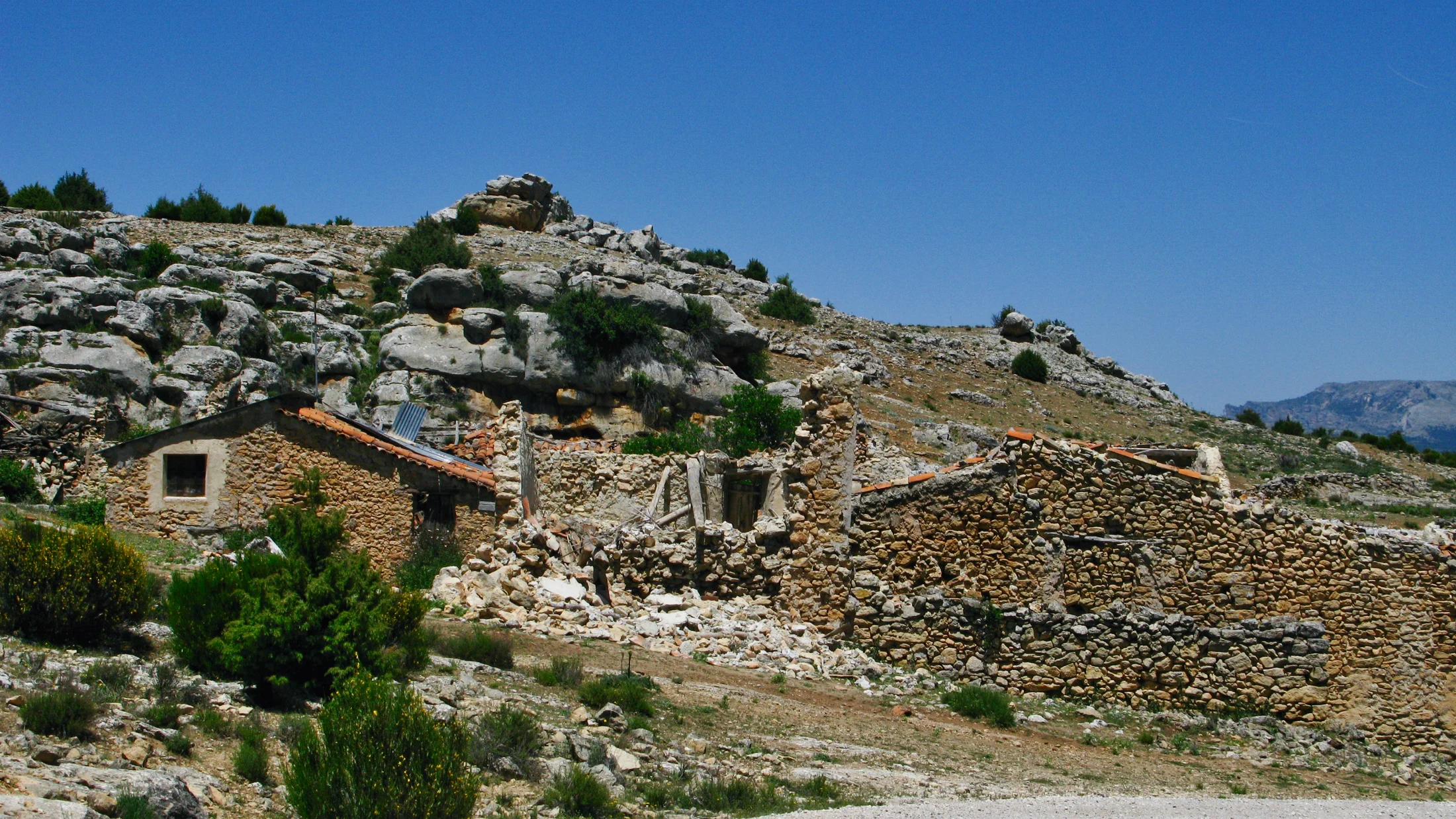
Ruins that tell stories: why abandoned places attract us
A warm wall in the sun, cracked, with ivy perfuming a void inhabited by common swifts. That is how an abandoned village in Spain feels: a frozen past, silence, and curiosity towards interrupted lives. They attract through their historical interest and photography, and because of the desire to understand what happened there.
It is worth distinguishing three realities. There are villages evacuated due to wars or reservoirs, historical ruins preserved as memory, and recovered settlements with clear schedules and rules. Each one is visited in a different way.
Not all abandoned places are explored the same way. Before setting off, check what type of ruins you are going to find.
Safety comes first: unstable structures, landslides, and extreme heat. Avoid entering buildings that might collapse. Respect the law as well: private property and protected areas, and do not move, paint, or take anything, because every stone is heritage.
This article gathers where the places are and how to see them on the map, the best time to go, the access points, the bases for sleeping, and whether permits are needed. Afterwards, you will find 10 ruins with history ordered by interest and geographical diversity.
Picuco te puede ayudar
Does something here catch your eye?
Tell us.
Write to us on WhatsApp or email: we answer questions, find the best options and help you sort out the booking.
The essentials before you go
Where they are and how to locate them on a map
Before setting off, mark the ruins on a map and save their coordinates: arriving without them usually costs an hour of wandering. Start with a base map (IGN, OpenStreetMap, Google Maps) and note each location with its coordinates and the nearest road reference.
Downloading the cartography saves you when there is no coverage. Apps like Maps.me, Gaia GPS, or the viewer from the Instituto Geográfico Nacional allow you to download offline maps and mark waypoints. If you are going to walk through the mountains, check the tracks and access points beforehand.
Grouping by zones saves kilometres. Aragón and Cataluña concentrate vestiges of the Civil War; Castilla y León and Castilla-La Mancha, hermitages and depopulated areas from rural emigration; Extremadura and Aragón hold stories of reservoirs; Andalucía combines farmhouses and mountain villages.
These are the combinations that work best for a getaway:
- Belchite (Zaragoza) and Corbera d'Ebre (Tarragona) join together in a route through the Ebro and the battle.
- Ochate (Burgos) and Caudilla (Toledo) fit together if you cross towards the south via the A-1/A-5, in the Sistema Ibérico.
- La Mussara and the villages around Prades are explored in the mountains of Tarragona.
- Tablate is next to the gates of the Alpujarra; the middle Alpujarra comprises the slopes of the southern side of Sierra Nevada.
- Granadilla and the valleys of the Ambroz and the Jerte form a block in Extremadura and northern Cáceres.
Also save access points, car parks, and viewpoints.
When to go: seasons, light and crowds
Spring and autumn are the best seasons: mild temperatures, changing skies and blooms. The low light at sunrise and sunset enhances textures and volumes in stone, and the golden light at the end of the day makes plaster and bricks shine.
Summer brings long days and clear paths, but also extreme heat in the plateau and the south. Winter leaves fewer tourists and a better atmosphere, with a risk of snow and ice in mountain areas. At sunrise, there may be fog in the valley bottoms.
In open villages, arrive early to avoid groups and capture the calm of the place. In spaces with opening hours, check closures and plan your visit near sunset.
It is advisable to check before setting off:
- There are temporary closures due to fire risk in July and August in several autonomous communities.
- In protected areas, there may be access restrictions during bird breeding, such as in the Hoces del Duratón.
- For urban ruin photography, autumn and winter provide more contrast and less vegetation.
- For hiking in La Mussara, choose spring and autumn for their atmospheric stability.
How to get there: car, public transport and final stretches
Most of these places require your own car or a rental. Buses arrive at regional hubs and the final stretch is done by taxi, on a track or on foot.
The typical route is always similar: main road to the nearest inhabited village, a detour via a paved local road and the last 500 m – 3 km on a dirt track or on foot. If you are travelling without a car, consider combining a train to nearby cities with a taxi or local transfer.
A 4x4 is rarely essential if you drive carefully and in dry weather. After rain, mud makes access difficult. Park only in safe areas and without blocking agricultural crossings.
As an alternative to walking, you have local paths or PR (Short Distance) routes that link viewpoints, hermitages and ruined villages. Ask at tourist offices for marked routes that connect with abandoned places to visit them safely.
Bring GPX tracks and a power bank: mobile coverage drops in the shadow zones of the mountain ranges.
Where to sleep and nearby services
Choose a base with services —rural accommodation, petrol station, pharmacy and food— in medium-sized or regional towns, and go on day trips from there. This way you solve the basics without depending on anything in the middle of the route.
Each ruin has its reference village. For Belchite and its surroundings, Zaragoza capital or Fuentes de Ebro via the N-232.
If you are travelling in a van or camping, confirm the municipal and protected area regulations: wild camping is regulated and may be prohibited. Book in advance during bank holidays and Holy Week, and carry cash in regions with little banking.
Support local business: many communities maintain these places from anonymity. If you are looking for complementary activities (kayak, guided routes), check options on Picuco for verified outings.
Abandoned villages in Spain: 10 ruins with history
1. Belchite (Zaragoza): memory of 1937 between open walls
Access to the site is regulated, with guided tours and schedules managed by the Town Hall. Inside you will see the church of San Martín de Tours, the convent of San Rafael, the entrance arches, the urban layout and the visible scars of artillery. At dusk, the jagged silhouette of the Mudéjar tower lights up with the light.
The entrance costs 9€ per person. It is free for children aged 0 to 8, 5€ for children aged 9 to 14 and 5€ per person for groups of more than 20 people. Book on the official website or at the tourist office, and do it in advance.
Wear closed footwear and avoid touching unstable rubble. Keep quiet in groups and respect the signage: it is a space of memory, not a film set. Dogs must be on a lead and there are no toilets inside the Old Town site. Do not fly drones without municipal authorisation either.
From Zaragoza, the N-232 leaves you in Belchite in 63.4 km, 1 h 3 min. Access to the ruins site is on foot and with an entrance during the indicated schedules.
2. Corbera d’ebre (Tarragona): the Poble Vell and the Battle of the Ebro
The Poble Vell is at the top and the new town is at the foot.
The Poble Vell is located on the Colina de la Muntera, at 337 metres altitude, and was declared a Site of Cultural Interest of National Importance in 1992. The Interpretation Centre and the Ecomuseu help to provide historical and human context to what you see.
What to see: the church of Sant Pere as a viewpoint, scorched streets, remains of dwellings with niches and lintels and memory panels. The Old Church of San Pedro is an 18th-century Baroque building. The Abecedario de la Libertad is a collection of 28 works distributed throughout the village.
The entrance costs 3 € and the guided tour 5 €; tickets are purchased at a booth at the entrance. It is better to go early or at sunset, because of the textures and the low crowds.
For photographers: wide angle and respect; avoid tripods in narrow passages. It is advisable to check the calendar of historical memory activities in the region and possible conservation donations.
How to get there: via the N-420 to Gandesa and a signposted detour to Corbera; park in the new town and walk up to the Poble Vell.
3. La Mussara (Tarragona): high villages and trail horizons
La Mussara is a high-altitude village that was depopulated in the mid-20th century, in the Prades mountains. Fountains, house walls, and threshing floors with open views over the Camp de Tarragona remain, and the church of San Salvador preserves a bell tower from 1859. Legends of disappearances circulate around it.
The village is at 990 m altitude on the escarpment of the Airasses. On clear days, the Balearic Islands can be seen. It is a starting point for hiking, with a nearby refuge and several circular routes. One of them measures 9.98 km, climbs 591 m of elevation gain and lasts 3 h, with moderate difficulty, through pine and holm oak forests.
It is worth seeing the church, the scattered ruins, the old pens, and the natural balconies. Bring a windbreaker even in summer, water, and a headlamp if you plan to squeeze the last bit of light. Avoid approaching the cliffs with strong winds and do not enter cracked structures.
For photos, look for the sunrise with a sea of clouds or the golden sunset. On hazy days, climb a little higher via the local PR trails to gain perspective.
You can arrive from Reus or Prades, and you can climb up from Vilaplana via the T-704, which covers an elevation gain of 500 m. The final stretch is via a narrow mountain road: park in the designated areas and walk.
4. Ochate (Burgos): ruin, landscape and legend in the Treviño County
Ochate is a depopulated settlement in the Treviño County (Burgos), an enclave surrounded by Álava. The tower of San Miguel still stands out above the cereal fields.
Beyond the paranormal, Ochate is a landscape of cereal crops, depopulation, and the memory of epidemics and migrations. Remains of the tower, the hermitage of Burgondo, and traces of dwellings remain. Near the village, there is a medieval necropolis with anthropomorphic tombs carved into the rock.
If you are interested in legends, take them as local folklore: the living reality is the people and farmers who sustain the territory. Part of the surroundings is private property, so respect gates and signage. Do not feed domestic or wild fauna and take extreme care in summer due to the risk of fires.
To get there, leave Vitoria-Gasteiz via the A-1/N-622 towards Treviño and take the detour to Imíruri; the last few kilometres are rural tracks. Ochate is 33 km from Miranda de Ebro and 20 km from Vitoria, and the nearest settlement is Imiruri. Park without encroaching on crops or livestock crossings.
5. Tablate (Granada): stones with a balcony to the Alpujarra
Tablate is a village in ruins next to the Béznar reservoir, at the gateway to the Alpujarra.
The parish church of Santiago still stands. The site was a strategic location during the rebellion of the moriscos in 1569.
What to see: remains of dwellings, the old bridge of Tablate (not passable), viewpoints of the gorge, and views towards Sierra Nevada on clear days.
In summer, avoid the middle hours and bring sun protection. Do not approach the edge of unstable slopes. If it rains, do not go through clay paths: they are more slippery than they look.
Include it in an itinerary through the middle Alpujarra (Órgiva, Pampaneira, Bubión) to make the most of the day. From Granada, arrive via the A-44 and the detour to the A-348; follow the signs to Lanjarón/Órgiva and look for safe parking in wide verges or designated areas.
6. Granadilla (Cáceres): a village reclaimed next to the Gabriel y Galán
Granadilla is a village evacuated in the 60s due to the construction of the Gabriel y Galán reservoir. It was never submerged, but it became a peninsula surrounded by water.
Since the 80s, the Abandoned Villages Recovery Programme has been rehabilitating streets and buildings. This allows you to take a complete stroll through walls, a square, and restored houses. It is a unique case of a ruin that is tamed, educational, and alive, declared a historical-artistic site in 1980.
What to see: the walled enclosure, the tower and the square, recovered dwellings and temporary exhibitions. The walls reflect the blue of the reservoir.
Access is free, with variable hours depending on the season. It closes on certain days and at midday, so it is advisable to confirm before going. Combine it with the perimeter route of the reservoir, birdwatching of waterbirds, or swimming in permitted areas in summer. Respect spaces closed due to construction or educational use.
How to get there: from Hervás, take the EX-205 towards Zarza de Granadilla and then the EX-204 until the marked detour. You can also go via the A-66, Plasencia norte exit, with subsequent signage.
7. Jánovas (Huesca): the slow return after a reservoir that never was
Jánovas is a village forcibly evacuated since the 60s in the Ara valley, in Sobrarbe. The hydroelectric project that emptied it was cancelled decades later, and today it is a place of memory and of a future under construction.
The residents resisted the construction of a reservoir that cut off their water and electricity and destroyed their irrigation channels and trees. The last two families abandoned the village in 1984. Part of the families has returned and some houses are being rebuilt, while other ruins remain standing as witnesses.
The Ara river flows cold and transparent, with a constant murmur under the bridge.
Respect construction signs and private property: do not enter houses under reconstruction or cross fences. Park in the indicated areas and walk, because the terrain has rubble and uneven levels. Find out at Sobrarbe tourism about access if there are active works.
The final track is passable with good tourism and dry weather.
8. Umbralejo (Guadalajara): black architecture and environmental education
Umbralejo is a village of slate and wood in the Sierra de Ayllón, restored to educate and raise awareness about the rural environment. It is part of the Abandoned Villages Recovery Programme alongside Granadilla and Búbal, and it is situated at 1,260 metres altitude, on a gentle slope facing west.
The cobbled streets lead between dwellings restored with traditional techniques, a vegetable garden and educational enclosures, and an ethnographic museum in a traditional house. All around, the mountain landscape frames the hamlet. The slate slabs shine like wet scales when the sun peeks through the clouds.
The general public only enters during specific days and hours announced officially. Check the public opening calendar before travelling and do not enter outside of hours. As vernacular heritage, any improper intervention leaves a mark: walk, look and learn, that is all.
From Guadalajara, the journey is ~1 h via CM-101 and CM-1006; from Soria, ~1 h 50 min via CM-1001. The final stretch is mountainous, with bends and variable road surfaces.
9. Caudilla (Toledo): castle silhouette over the plain
Caudilla is next to the A-5, and a single street connects the road with the castle. The view can be seen from the road and is one of the most recognisable in the La Mancha plain.
The wind sweeps across the fields and stirs a dry scent of cereal and earth.
The best light arrives at sunset with high clouds. If you come at night, respect the boundaries and do not leave litter. The fields have owners and crop cycles: if you are in doubt, ask in the nearby village.
Do not climb onto the walls or the remains of the castle, because the collapse is real. It is forbidden to enter the interior of the church and it is advisable to exercise extreme caution in the ruined houses due to the poor condition of the walls and roofs.
How to get there: from Toledo via the A-42 and the A-5 towards Madrid-Extremadura. Caudilla is between Maqueda and Santa Cruz del Retamar, crossed by the Val de Santo Domingo-Novés road (TO-1332), with access via signed local roads. A single street connects the road with the castle; you can park on the road, next to the old schools, always outside of the agricultural paths.
10. Convento de Nuestra Señora de los Ángeles (Segovia): ruin in the Hoces del Duratón
The convent of the Hoz peeks out over the Duratón river canyon, within the Hoces del Duratón Natural Park. Remains of its walls and arches endure, and the surrounding landscape consists of the river meanders, the cliffs, and a colony of cliff-dwelling birds.
The area hosts a large colony of griffon vultures. The griffon vultures soar in silence and the limestone smells of sun and thyme.
Access is only possible from the reservoir, or by walking if the water level of the reservoir drops. The park imposes seasonal restrictions due to nesting, so inform yourself beforehand about regulated access and parking.
Do not leave the path or approach the cliff edges. Bring binoculars and keep silent to observe the wildlife.
What to do nearby: activities that add up
Around the ruins, there is more to do than just the visit: photography, hiking, historical memory routes, wildlife watching, or a picnic in a nearby village. Plan with plenty of time and respect local rhythms and the regulations of each location.
To take photos, bring a lightweight tripod and a wide-angle lens for open interiors and narrow streets, and a medium telephoto lens for textures and the scars on the walls. Do not use flash with wildlife or people, and ask permission before photographing locals or guides. The blue and golden hours provide soft contrast, and a polarising filter helps with the skies in open ruins. In regulated locations such as Belchite and Corbera, check the rules regarding tripods and drones beforehand.
The Hoces del Duratón are an hour and a half by car from Madrid and are a great place to observe griffon vultures, Egyptian vultures, and falcons with 8x or 10x binoculars and silence. Follow the official paths to the viewpoints: off-route there is a real risk of falling and of affecting nesting sites. The park has 7 marked routes, and a short walk leads to the San Frutos hermitage, the most prominent viewpoint, located in a closed meander. The bird breeding season runs from 1 January to 31 July; to pass through reserve areas you need a permit from the Casa del Parque, and groups of more than 5 people are not allowed.
In the Sierras de Prades, there are red pine and holm oak groves, with mushrooms in autumn: respect quotas and licences.
Belchite has centres and guides that provide context on battles, bombings, and daily life. Look for temporary exhibitions and conferences in regional capitals such as Zaragoza, Gandesa, Reus, or Plasencia. To eat, plan stops in recreational areas or village squares in your base towns, not inside the ruins, and buy local produce: bread, oil, cheeses, fruit. Alternate the ruins with local life: enter a local bar, listen to stories, and ask questions respectfully.
The season changes the plan. In winter, there are clear atmospheres and night skies, but short days and cold: bring a headlamp and thermal clothing.
Build a daily itinerary with a maximum of 2-3 stops to leave space for chatting and breaks, and save local tourism contacts and emergency numbers. If you are looking for guided activities, such as canyoning or themed routes, confirm schedules and insurance.
Practical tips and safety
A ruin can withstand a thousand winters and may give way with a single misstep. Before entering, check the terrain, the weather, local regulations and your own limits. The smell of dampness in a roofless room warns of rotten beams and hollow floors.
Do not enter buildings with sunken ceilings, open cracks or beam floors. If you see fences or private property signs, go around or turn back: not everything abandoned is public. In spaces with opening hours, such as Belchite, Granadilla or Umbralejo, respect shifts and closed areas. Never move, take or leave marks: looting is a crime and any damage hurts the site.
Basic equipment fits in a small backpack:
- Robust footwear with grippy soles, thin gloves to push aside blackberries and a lightweight headlamp.
- First aid kit with bandages, disinfectant, plasters, a thermal blanket and pain relief.
- Layered clothing, a windbreaker and a cap; in summer, a minimum of 1.5 l of water per person for short routes.
- Power bank, map/offline and a whistle: poor coverage is frequent.
Inform someone of your route and return time; in areas without coverage, set a check-in point and time. The ideal group is 3 to 6 people, with an extra mobile phone and shared first aid kit and water. Carry your ID and health card, and check if the natural park has restrictions or quotas. For mountain activities, travel or accident insurance is advisable. Depending on the area, fishing, mushroom picking or motorised access on tracks may require permits.
Drones require AESA regulations and additional permits in urban centres, parks and memorial sites; consult the ENAIRE Drones maps. When using a tripod, ask in regulated places, where they may limit it for safety and visitor flow. Avoid posing or climbing on walls for the photo: it is dangerous and damaging.
With children, choose open places without risk of falling and always keep your distance from the rubble. These are spaces filled with memory: speak softly, avoid loud music and maintain a visiting attitude, not a theme park one. Thank and support the nearby communities that maintain access, signage and cleanliness.
Frequently asked questions
Is it legal to visit these towns and ruins?
In general, yes, they can be visited if they are of public access and you do not enter private properties or buildings closed for safety. Before going, check the signage of the place and respect what it indicates.
Belchite and Umbralejo have their own opening hours that must be respected.
When in doubt, consult the local tourist office or the signage of the place before entering.
When is the best time to go?
Spring and autumn are the best seasons: mild weather and good light for photography. In winter there are fewer people and clean atmospheres, and the frost of a cold sunrise highlights the texture of every stone.
In summer, it is advisable to get up early and avoid the middle hours, especially in Andalusia and the plateau. Before setting out, adjust your plan if there are alerts for fires, snow or strong winds on cliffs.
Can I go with children?
Yes, you can go with children if you choose safe and open destinations such as Granadilla, the viewpoints of Duratón or the squares of Corbera. It is advisable to avoid unstable interiors and walk along the paths, maintaining distance from the edges.
Plan stops and carry water and a cap during the warm months. Explain to children that it is heritage: to look and learn, never to touch or climb.
How do I respect the heritage and the environment?
Visiting ruins requires care: what you see is fragile and forms part of the history of the place. Do not enter unstable structures or move objects from the site.
Do not paint, do not stick stickers, and do not leave anything: take your waste with you. Stay on the paths and do not step on crops.
Reduce noise and respect the memory of the place. In protected areas, follow the rules regarding fauna and flora.
Are there guided tours?
Yes, there are guided tours in several of the locations. Belchite offers daytime and nighttime tours by reservation, and Corbera d'Ebre has an interpretation centre. Granadilla opens with staff and schedules.
In natural parks and canyons, there are interpretive routes and nature activities that provide context and safety. It is advisable to confirm availability during the season before organising your trip.
Can I fly drones or do night photography?
Flying a drone is only permitted where regulations allow. Natural parks, historic centres, and memorial areas often have restrictions, so check the location before taking out the device.
Before flying, consult ENAIRE Drones and adjust the altitude and the distance to dwellings and people. For night photography, respect agricultural easements and do not invade estates. Keep light and noise to a minimum so as not to disturb those living or working nearby.
Book your experience — discover active tourism activities in Spain with providers verified by Picuco.
Conclusion
The abandoned villages of Spain bring together history, landscape, and community within walls that endure. They are explored with respect, time, and attention.
They are historical ruins, but also a living present for those who maintain paths, clean trails, and open interpretation centres. In a tranquil sunset, a cold breeze passes through the crevices and the echo returns soft footsteps.
Plan thoughtfully and leave a light footprint: buy in the base village, follow the signage, avoid risks, and listen. Bring your camera, but also curiosity and empathy, and alternate free visits with guided routes to gain context and safety.
If you want to combine memory, nature, and activity, include nearby options for hiking, birdwatching, or culture in your itinerary.