Highlights

  • • 2nd-century AD construction
  • • Capacity for 15,000 spectators
  • • Located by the Mediterranean Sea
  • • Part of the Tarraco archaeological site
  • • Remains of nearby early Christian necropolis
  • • Free entry with no prior reservation needed

Description

What is the Roman Amphitheatre of Tarragona

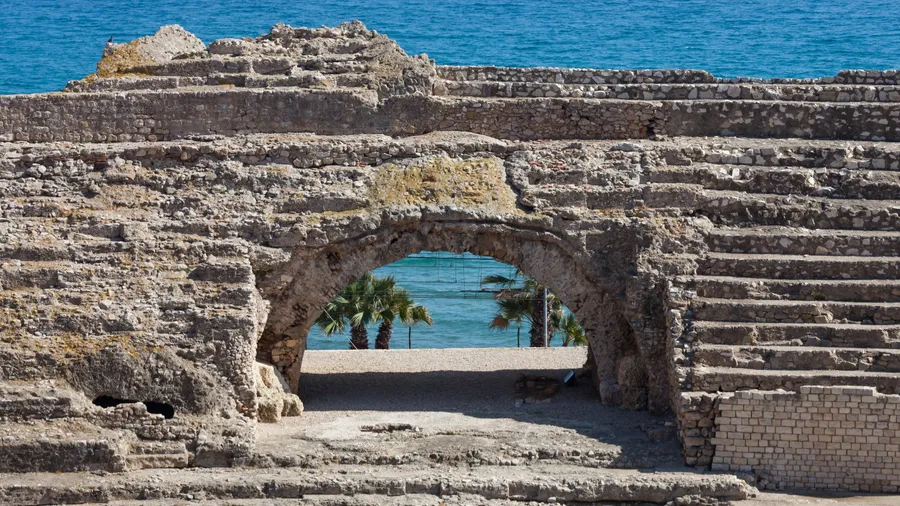
The Roman Amphitheatre of Tarragona is a monumental structure built in the 2nd century AD during the height of the Roman Empire. Located by the Mediterranean Sea, it was part of the archaeological ensemble of Tarraco, the ancient capital of the Roman province Hispania Citerior. This amphitheatre was used for public spectacles, mainly gladiator combats and other events that gathered thousands of spectators.

What You Will See at the Amphitheatre

When visiting the amphitheatre, you can appreciate the characteristic elliptical shape of these constructions, with visible remains of the arena, the stands, and the underground galleries where shows were prepared. Its proximity to the sea adds a unique landscape, with views of the Mediterranean contrasting with the ancient stone. Nearby, you can also see remains of an adjacent early Christian necropolis, reflecting the site's evolution after the Roman decline.

Historical Context

Tarraco was one of the most important cities in Hispania during the Roman Empire, and its amphitheatre reflects the cultural and social influence of Rome in the region. With a capacity of approximately 15,000 spectators, the amphitheatre was a center of entertainment and political power. After the fall of the Roman Empire, the building was reused and adapted, which explains the presence of later elements such as the necropolis.

Practical Information

The amphitheatre is located in Tarragona's historic center, accessible on foot from the city center. The visit allows you to explore the ruins with informative panels explaining its history and function. It is recommended to wear comfortable shoes to walk on uneven surfaces. Entry is free, and the site is largely accessible for people with reduced mobility. No prior reservation is required for the visit.

Key Information

Visit Duration

1-2 hours

Recommended Seasons

Spring, Autumn

Pricing

Free

Accessibility

Medium

Kid-Friendly Pet-Friendly No Booking Required

Related Destinations

Guide

Essential information for visiting Roman Amphitheatre of Tarragona

Location

In this area

Practical Information
Pricing
Free
Visit Duration
1-2 hours
Features & Services
  • Accessibility:Medium
  • Kid-Friendly:Yes
  • Pet-Friendly:No
  • Booking:No Booking Required
Planning Information

Recommended Seasons

Spring · Autumn

Best Time to Visit

Spring and autumn are the best seasons to visit, with pleasant temperatures and fewer tourists, allowing a more peaceful experience.

Visitor Tips

Visit the amphitheatre early to avoid peak crowds and enjoy the landscape in soft light. Bring water and wear comfortable shoes to explore the ruins and historic surroundings. Take the opportunity to also explore Tarragona's old town, which offers other Roman vestiges and Mediterranean views.

Historical Facts

The Roman Amphitheatre of Tarragona was built in the 2nd century AD and could hold up to 15,000 spectators. It was part of Tarraco, the Roman capital in Hispania, and hosted gladiator fights and public events. After the Roman decline, the site was reused and an early Christian necropolis was established nearby.

Frequently Asked Questions

Get answers about Roman Amphitheatre of Tarragona

Visiting hours may vary depending on the season and local management; it is recommended to check with Tarragona's tourist office.
The amphitheatre is located in the historic center, so it is best to access it on foot or by public transport.
Yes, it is an open and educational space suitable for accompanied children.
Yes, the site has adapted access for most of its route.
Pets are not recommended due to the site's status as a protected archaeological area.