The essentials of Vall de Núria

  • • 12.5 km rack railway climbing 1,000 m: the only motorised access to the valley
  • • Family ski resort with 7 runs and lift passes cheaper than the major stations
  • • Route to Puigmal (2,913 m), the highest peak in the eastern Catalan Pyrenees
  • • Sanctuary of Núria documented since the 11th century, beside a lake at 1,964 m
  • • Camí Vell: classic 7.5 km trail with 1,060 m elevation gain from Queralbs

Description

The Vall de Núria sits in a glacial cirque at 1,964 metres in the eastern Catalan Pyrenees, within the municipality of Queralbs (Ripollès district). No road reaches the valley: the only motorised access is the Cremallera de Núria, a rack railway of 12.5 km that departs from Ribes de Freser (905 m) and climbs 1,000 metres of elevation in 45 minutes, passing through the Núria river gorge between walls of gneiss and granite. The impossibility of arriving by car has kept the valley free of road traffic, where silence is broken only by wind in the black pines and the sound of water falling at the Finestrelles and Salt del Sastre cascades, with drops exceeding 50 metres.

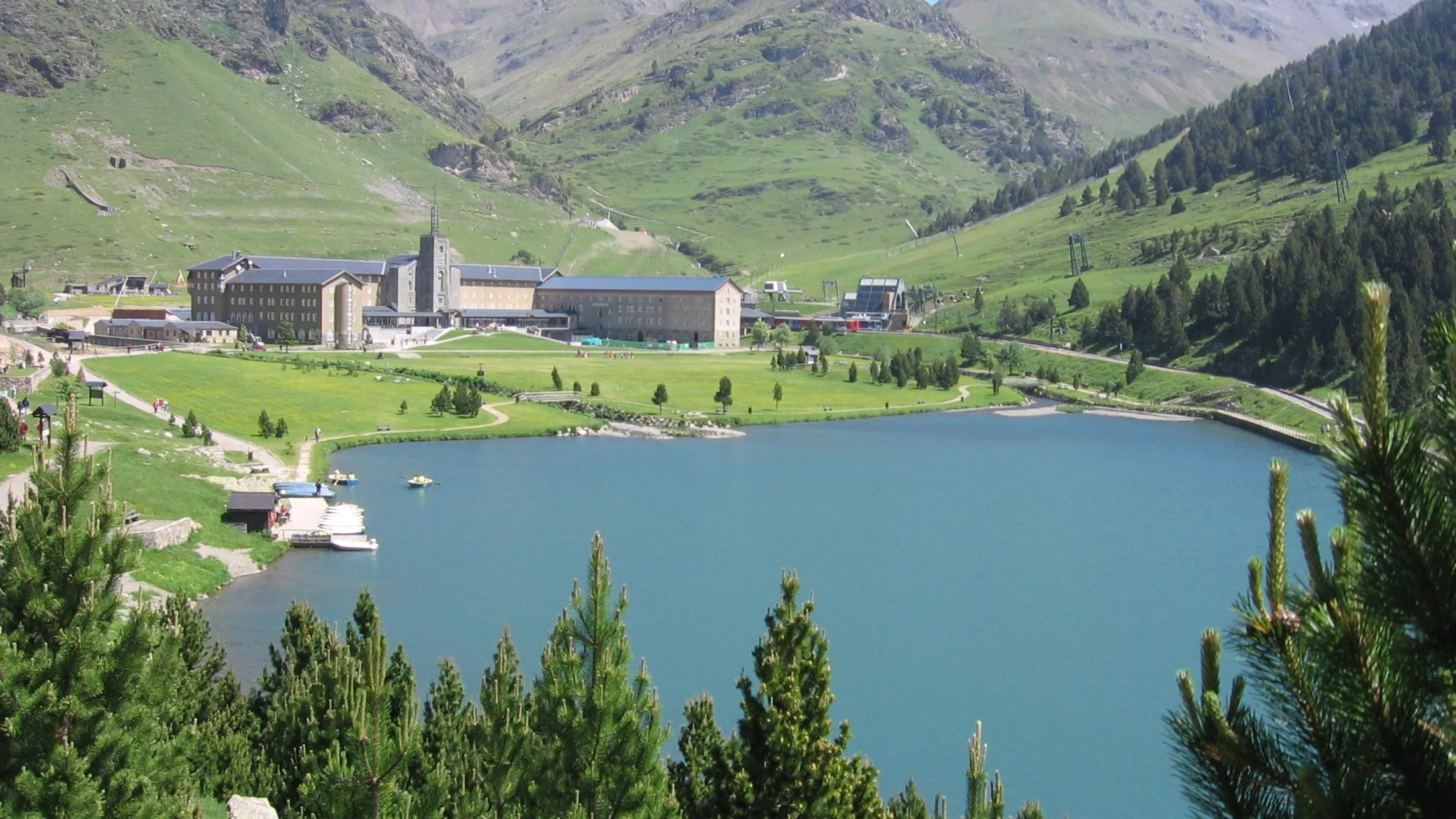
The valley floor is an oval glacial basin roughly 800 metres long, occupied by an artificial lake built in the 1950s to supply the hydroelectric plant serving the sanctuary. The Sanctuary of Núria, documented since the 11th century, is a grey-stone building with a bell tower housing the image of the Mare de Déu de Núria, patron of the district. Every 8 September, the Virgin's feast day draws a pilgrimage that fills the rack trains from first light. The present complex includes a hotel, restaurant, shop and a small side chapel. The esplanade in front of the sanctuary, on the lakeshore, serves as a meeting point and family play area with swings, a small pedal-kart circuit and boats on the lake during summer.

In winter, Vall de Núria operates as a ski resort aimed at families and beginners. It has 7 runs (green, blue and red) and 5 lifts covering a skiable drop of 345 metres, between 1,964 and 2,252 metres altitude. The snowpark includes beginner modules. Artificial snow covers 80% of runs, ensuring the season from December to April even in low-precipitation years. The 100-metre tubbing sled run is one of the most popular attractions for children. Lift-pass prices are notably lower than at the large Pyrenean resorts, positioning it as a day resort accessible from Barcelona (2.5 hours door to slope).

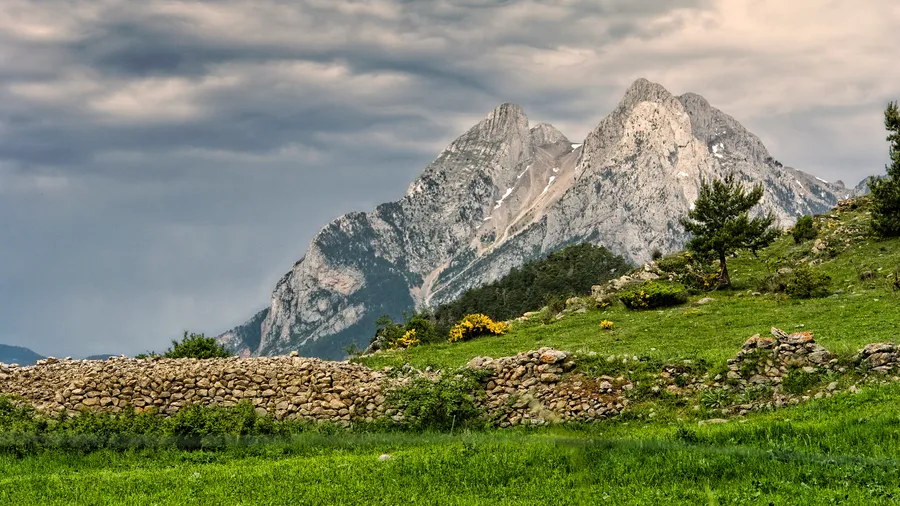
In summer the valley becomes a high-mountain hiking base. The most demanding route climbs Puigmal (2,913 m), the highest peak in the eastern Catalan Pyrenees, with 950 metres of elevation gain and 4–5 hours of walking from the sanctuary. The path crosses alpine meadows with gentians, buttercups and arnica where herds of isards (Pyrenean chamois, Rupicapra pyrenaica pyrenaica) graze in plain sight. Easier routes circle the lake (30 minutes, flat) or climb to the Creu d'en Riba viewpoint (1 hour, gentle gradient). The Camí Vell, the old footpath to the valley predating the railway, links Queralbs with Núria in 3 hours (7.5 km, 1,060 m elevation gain) and is one of Catalan hiking's classic routes. The final stretch, among cascades and wind-twisted black pines, delivers a sudden view of the glacial cirque upon cresting the last rise.

Wildlife includes the bearded vulture (reintroduced in the Catalan Pyrenees since 2006, with regular sightings above the valley), golden eagle, alpine marmot and Pyrenean brook newt in high-altitude pools. Alpine flora features rhododendrons, creeping junipers and fescue meadows that in June bloom in a carpet of colour. The annual mean temperature in the valley is 5 °C, with winter lows reaching -15 °C and summer highs rarely exceeding 22 °C. Snow covers the valley floor from November to April, and snow patches on the north-facing slopes of Puigmal can persist until July.
Practical information

Everything you need to know for your visit to Vall de Núria

How to get there
The rack railway departs from Ribes de Freser, reachable by car from Barcelona (120 km, N-152/C-17) or by Renfe Rodalies train (line R3, 2 hours from Barcelona-Plaça Catalunya). The rack railway runs year-round with variable frequency by season (every 1–2 hours). No road reaches the valley; parking is at Ribes de Freser or Queralbs.
Area Information
Hotel and restaurant at the Sanctuary of Núria (the only accommodation in the valley). Souvenir and mountain-gear shop. Children's play area by the lake: swings, pedal karts, boats. Ski and snowboard hire at the base of the slopes in winter. No alternative accommodation in the valley; further options in Ribes de Freser and Queralbs.
Geography
Glacial cirque at 1,964 m altitude in the eastern Pyrenees. Oval basin 800 m long with an artificial lake. Surrounded by gneiss and granite peaks reaching 2,913 m (Puigmal). Finestrelles and Salt del Sastre waterfalls with drops exceeding 50 m.
Flora & Fauna
Isard (Pyrenean chamois, Rupicapra pyrenaica) on alpine meadows. Bearded vulture reintroduced since 2006, with regular sightings. Golden eagle, alpine marmot and Pyrenean brook newt. Black pine, rhododendrons, creeping junipers and fescue meadows with gentians and arnica in June.

Things to do

Find the best plans and things to do in Vall de Núria

20

Accommodations

Best accommodation options in Vall de Núria

Loading accommodation options...

Frequently Asked Questions

Get answers about Vall de Núria

Yes, on foot via the Camí Vell from Queralbs. It covers 7.5 km with 1,060 metres of elevation gain, roughly 3 hours up (2 hours down). The trail is well marked and passes waterfalls and black-pine forests. It is demanding but feasible for people of average fitness. No road reaches the valley, so the only options are the rack railway or walking. In winter the Camí Vell may be covered in snow and ice; crampons and winter mountaineering experience are recommended.
Vall de Núria is aimed at families and beginners. Its 7 runs cover 345 metres of skiable drop, mostly green and blue. There are no black runs or marked off-piste. For advanced skiers, the resort may feel small for a full day. However, the setting is exceptional (a glacial cirque with no cars) and prices are lower than at Baqueira or La Molina. It is a good option for a relaxed day of skiing or for families with children who are learning.
In summer (July–September), the route to Puigmal (2,913 m) from Núria is demanding but technically straightforward: no climbing gear or ropes are needed. It involves 950 metres of elevation gain and 4–5 hours of walking on a marked trail. Good fitness, mountain boots, sun protection and warm layers are essential (summit temperatures can be 15 °C below the valley). In autumn and winter the route requires crampons, an ice axe and winter mountaineering experience. Weather can change rapidly; check the forecast before setting out.
Only the Sanctuary of Núria hotel, with double and family rooms. The price includes rack-railway transport in some packages. Booking in advance is advisable, especially on peak weekends (winter skiing, bank holidays and August). If the hotel is full, the nearest alternatives are in Queralbs (3 hours on foot or 45 minutes by rack railway) and Ribes de Freser (the railway's departure station), where hotels, guesthouses and apartments are available.
In summer: rowing boats on the lake, pedal karts, a swing area and a family orienteering circuit. The flat loop around the lake (30 minutes) suits pushchairs. In winter: a 100-metre tubbing sled run, a snow garden for children aged 3–6 and a children's ski school. The enclosed setting of the glacial cirque and the absence of cars let children move about freely. The rack railway itself is an attraction for the youngest visitors.